Understanding your income is one of the most important parts of managing your personal finances. Whether you are creating a budget, applying for a loan, renting an apartment, comparing job offers, or completing a financial application, you will often see the term annual income.
But many people still ask what does annual income mean?
Annual income simply refers to the total amount of money a person earns during one year before or after certain deductions, depending on how the term is being used. It can include wages, salaries, bonuses, business profits, investment earnings, rental income, and other sources of money received over a 12 month period.
Knowing your annual income helps you understand your financial position. It allows you to estimate your spending ability, plan savings goals, evaluate employment opportunities, and make informed financial decisions.
However, annual income can sometimes be confusing because people may use different definitions, such as gross annual income, net annual income, taxable income, or household annual income. Each term represents something slightly different.
This guide explains what does annual income mean, how to calculate it, the difference between gross and net income, why lenders and financial institutions use it, and common mistakes people make when calculating their yearly earnings.
What Does Annual Income Mean?
Annual income is the total amount of money an individual or household earns during a year.
The word annual means yearly, so annual income represents earnings collected over a 12 month period.
For an employee, annual income usually refers to their yearly salary or total wages. For example, someone earning $5,000 per month has an annual income of
$5,000 × 12 months = $60,000 per year
Annual income may come from different sources, including
- Employment salary
- Hourly wages
- Bonuses
- Commissions
- Freelance work
- Business profits
- Rental income
- Investment income
- Pension payments
- Royalties
- Other regular earnings
The exact meaning depends on the situation where the information is requested.
For example
- A job application may ask for expected annual salary.
- A bank may ask for annual income before approving a loan.
- A landlord may ask for yearly earnings before approving a rental agreement.
- A tax form may require taxable annual income.
Understanding the context is important because different organizations may calculate income differently.
Quick Summary Table
| Term | Meaning |
| Annual Income | Total money earned during one year |
| Gross Annual Income | Income before taxes and deductions |
| Net Annual Income | Money remaining after taxes and deductions |
| Individual Income | Earnings of one person |
| Household Income | Combined earnings of people living together |
| Taxable Income | Income considered for tax purposes after eligible deductions |
| Monthly Income | Earnings received in one month |
| Hourly Income | Money earned per hour of work |
How Annual Income Works
Annual income works by adding together all sources of money received during a year.
For someone with a regular salary, calculating annual income is usually simple.
For example
A person earns
- Monthly salary $4,500
- Annual bonus $3,000
Salary calculation
$4,500 × 12 = $54,000
Adding bonus
$54,000 + $3,000 = $57,000
The persons gross annual income is therefore $57,000.
For people with multiple income sources, the calculation requires adding each source.
Example
- Job salary $50,000
- Freelance earnings $8,000
- Rental income $6,000
Total annual income
$50,000 + $8,000 + $6,000 = $64,000
Annual income provides a complete picture of yearly earnings rather than focusing only on one paycheck.
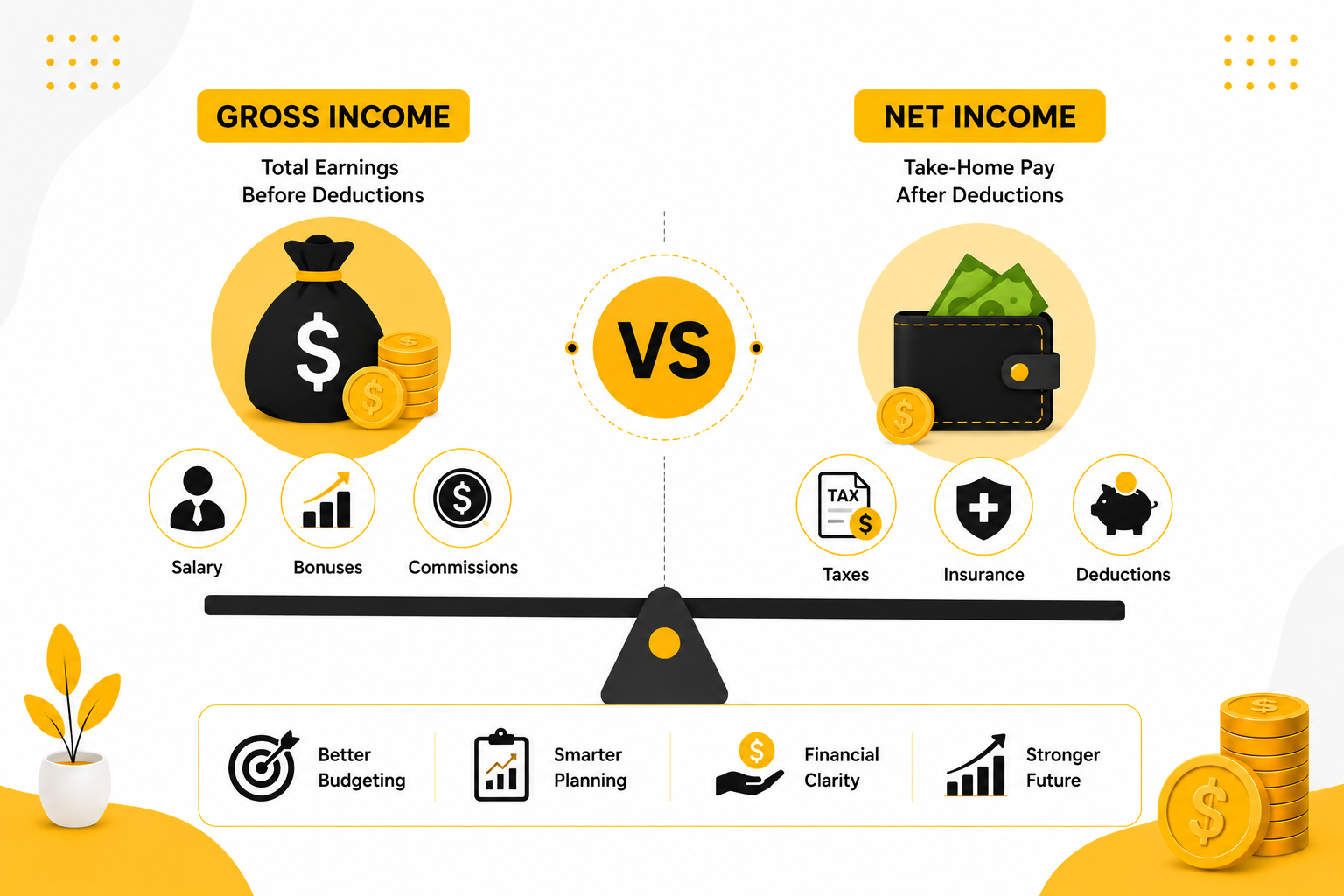
Gross Annual Income vs Net Annual Income
One of the biggest sources of confusion is the difference between gross and net annual income.
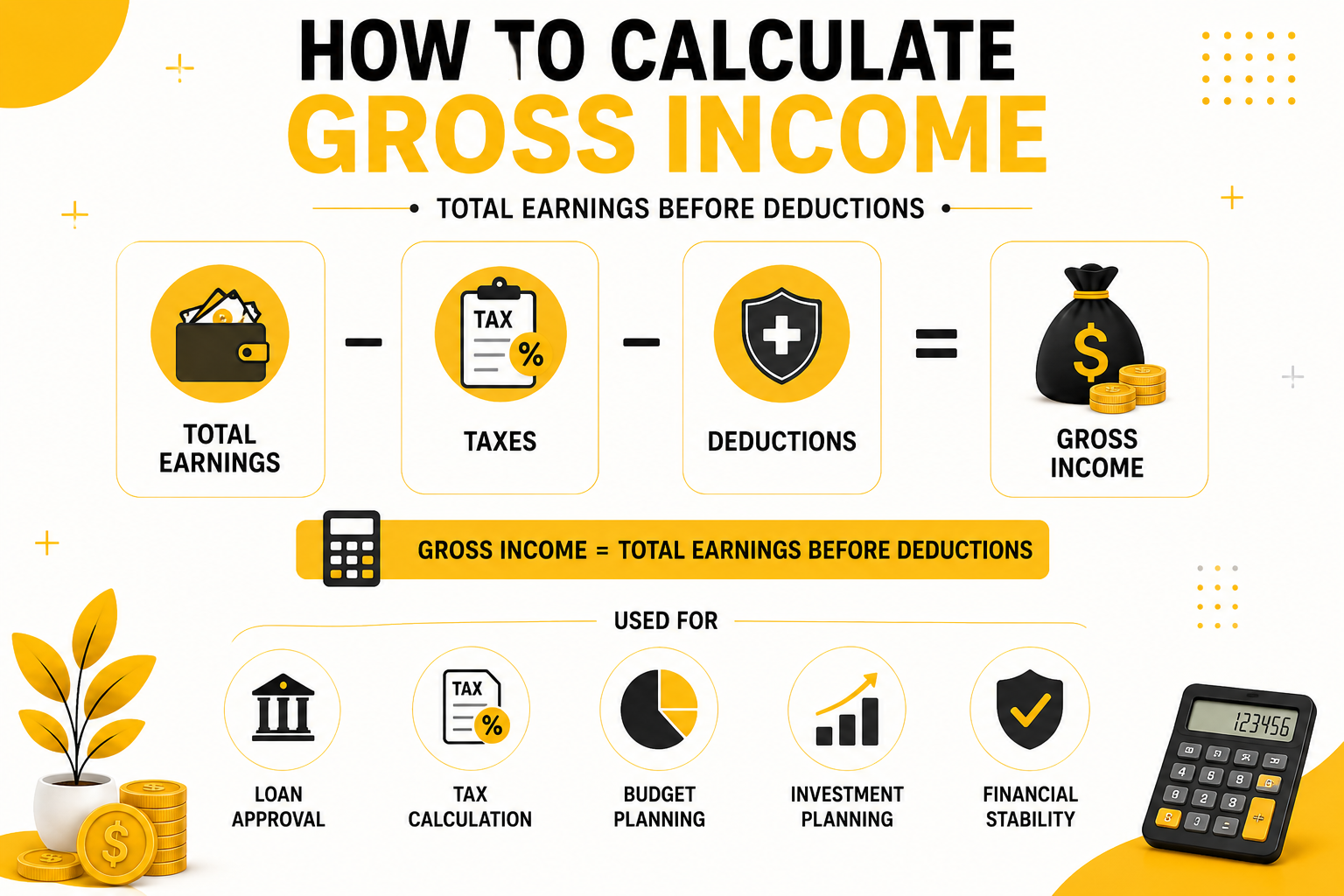
Gross Annual Income
Gross annual income is the total amount earned before deductions.
For employees, deductions may include
- Income taxes
- Retirement contributions
- Health insurance premiums
- Social security payments
- Other payroll deductions
Example
An employee earns
$70,000 salary before taxes.
Their gross annual income is $70,000.
Net Annual Income
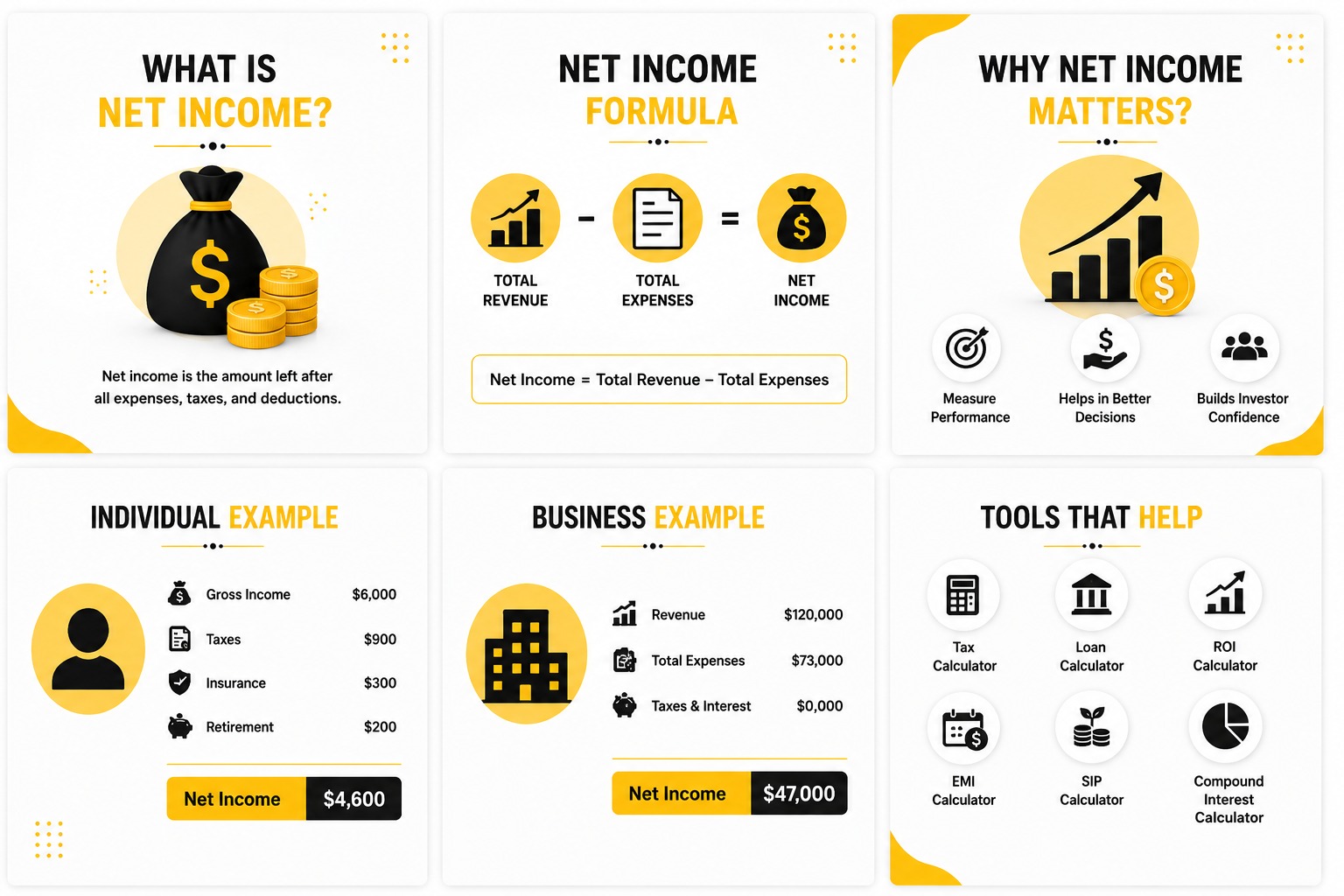
Net annual income is the amount received after deductions.
This is sometimes called take home income.
Example
Gross annual income
$70,000
After taxes and deductions
$55,000
The employees net annual income is $55,000.
Gross income shows earning power, while net income shows how much money is actually available for spending and saving.
Both numbers are important depending on the purpose.
Why Annual Income Matters in Personal Finance
Annual income plays an important role in many financial decisions.
Budget Planning
Knowing annual income helps people create realistic budgets.
A person who understands their yearly earnings can estimate
- Monthly expenses
- Savings goals
- Debt payments
- Emergency fund needs
- Investment contributions
Without knowing income, it is difficult to create a sustainable financial plan.
Loan Applications
Banks and lenders commonly ask about annual income when reviewing applications for
- Personal loans
- Mortgages
- Auto loans
- Credit cards
Income helps lenders evaluate whether a borrower has enough financial capacity to repay debt.
However, lenders usually consider multiple factors, including credit history, debt obligations, employment stability, and financial records.
Renting a Home
Many landlords request annual income information before approving tenants.
They may compare income with monthly rent to determine whether the applicant can reasonably afford housing costs.
Comparing Job Offers
Annual income helps employees compare compensation packages.
Two jobs may have similar monthly salaries but different benefits, bonuses, retirement plans, or additional compensation.
Looking at total annual compensation gives a clearer comparison.
Types of Income Included in Annual Income
Annual income can include different forms of earnings.
Employment Income
This includes
- Salary
- Hourly wages
- Overtime pay
- Bonuses
- Commissions
For most employees, employment income represents the largest portion of annual earnings.
Self Employment Income
Business owners and freelancers calculate annual income differently.
They may consider
- Revenue earned
- Business expenses
- Operating costs
- Final business profit
Self employed individuals should carefully separate business revenue from personal income.
Investment Income
Investment related earnings may include
- Interest payments
- Dividends
- Capital gains
Investment income can vary from year to year and should be calculated accurately.

Rental Income
Property owners may include rental earnings as part of annual income.
However, expenses such as maintenance, property taxes, insurance, and repairs may affect actual profit.
Other Income Sources
Other possible sources include
- Pension payments
- Government benefits
- Royalties
- Alimony payments where applicable
- Side business earnings
How to Calculate Annual Income
Calculating annual income depends on how you earn money.
Salary Employee Calculation
Formula
Monthly salary × 12 = Annual income
Example
Monthly salary
$4,000
Calculation
$4,000 × 12 = $48,000
Annual income
$48,000
Hourly Worker Calculation
Formula
Hourly rate × hours worked per week × weeks worked per year
Example
Hourly wage
$25
Hours per week
40
Working weeks
52
Calculation
$25 × 40 × 52 = $52,000
Annual income
$52,000
Multiple Income Sources Calculation
Formula
Income source one + income source two + additional earnings = total annual income
Example
Salary
$60,000
Freelance work
$10,000
Rental income
$5,000
Total
$75,000
Annual Income Example
Consider Sarah, who earns money from several sources.
Her yearly earnings include
- Full time job salary $55,000
- Online freelance projects $7,000
- Investment dividends $1,000
Her annual income calculation
$55,000 + $7,000 + $1,000
= $63,000
Sarahs gross annual income is $63,000.
After taxes and deductions, her actual take home income may be lower.
This example shows why understanding different income categories is important.
Benefits of Understanding Your Annual Income
Knowing your annual income provides several advantages.
Better Financial Planning
Income awareness helps you create realistic financial goals.
You can determine how much you can save, invest, or spend.
Improved Money Management
Understanding yearly earnings makes it easier to track financial progress.
More Accurate Loan Decisions
Knowing your income helps prevent borrowing more than you can comfortably repay.
Better Career Decisions
Annual income comparisons help evaluate job opportunities beyond just monthly pay.
Risks and Problems With Incorrect Income Calculations
Incorrect annual income calculations can create financial problems.
Applying for Unaffordable Loans
Overestimating income may result in taking on debt that becomes difficult to repay.
Incorrect Financial Planning
If your income estimate is inaccurate, your budget and savings goals may also be unrealistic.
Tax Reporting Problems
Incorrect income reporting can create issues with tax filings.
Always provide accurate information when reporting earnings.
Step by Step Guide to Finding Your Annual Income
Step One Identify Income Sources
List every source of money received during the year.
Include employment, business, investments, rental income, and other earnings.
Step Two Determine Whether Income Is Gross or Net
Decide whether you need income before deductions or after deductions.
Step Three Collect Financial Documents
Useful documents include
- Pay statements
- Tax documents
- Bank statements
- Business records
- Investment statements
Step Four Calculate Total Earnings
Add all applicable income sources.
Step Five Review Accuracy
Check calculations before using the information for loans, applications, or financial planning.
Common Mistakes When Calculating Annual Income
Confusing Gross and Net Income
Many people report take home pay when an organization is asking for gross income.
Always check the requirement.
Forgetting Additional Income
Some people only include salary and forget bonuses, freelance earnings, or investment income.
Including Temporary Money
One time gifts, loans, or borrowed money usually should not be counted as income.
Ignoring Business Expenses
Business owners should calculate profit rather than simply counting total sales.
Using Outdated Information
Income changes over time. Use current information when completing financial applications.
Latest Update Section
Annual income definitions generally remain consistent, but reporting requirements can change depending on government tax rules, lending standards, employment regulations, and financial institution policies.
For tax related income reporting, individuals should verify current rules with official government tax authorities because deductions, filing requirements, and income classifications may change over time.
When applying for loans, credit products, or financial services, always review the latest requirements from the specific institution.
Expert Tips for Managing Annual Income
- Track all income sources throughout the year.
- Separate gross income from take home income.
- Create a monthly budget based on realistic after tax income.
- Maintain emergency savings based on your financial situation.
- Review salary and compensation annually.
- Keep accurate financial records.
- Avoid increasing spending every time income increases.
- Use income growth opportunities to improve savings and reduce debt.
Conclusion
Understanding what does annual income mean is an essential part of personal finance. Annual income represents the total money earned during a year and can include salary, wages, business income, investments, rental earnings, and other sources.Knowing your annual income helps with budgeting, borrowing decisions, career planning, and financial goal setting. However, it is important to understand whether you are looking at gross income, net income, taxable income, or household income because each figure serves a different purpose.
FAQs
What does annual income mean?
Annual income means the total amount of money earned by an individual or household during a 12 month period. It may include salary, wages, business income, investments, and other earnings.
Is annual income before or after taxes?
Annual income can refer to either amount depending on context. Gross annual income is before taxes and deductions, while net annual income is the amount remaining after deductions.
How do I calculate annual income from monthly salary?
Multiply your monthly salary by 12.
For example, a $4,000 monthly salary equals $48,000 annual income before deductions.
Does annual income include bonuses?
Yes, bonuses may be included in annual income if they are part of your earnings during the year.
Why do banks ask for annual income?
Banks use annual income information to evaluate financial ability when reviewing loans, credit cards, and other financial applications.
Is household annual income different from personal income?
Yes. Personal income refers to one persons earnings, while household income combines earnings from multiple people living in the same household.
Does annual income include investment earnings?
Investment earnings such as dividends, interest, and certain gains may be included depending on the purpose of the income calculation.
Explore our finance tools

I am a professional finance content writer with expertise in personal finance investing, banking, loans, insurance, credit cards, budgeting, and market related topics. I create clear, SEO optimized, and reader friendly finance content that helps audiences understand complex financial concepts in simple words. My goal is to write trustworthy and engaging content that improves search visibility, builds credibility, and supports business growth.