Financial Management System: Complete Guide for Businesses and Individuals
Shanzay Arain·May 21, 2026
Managing money has become more complex than ever. From tracking expenses and paying bills to monitoring investments and planning long-term growth both businesses and individuals need a reliable way to stay financially organized. This is where a financial management systembecomes essential.
A financial management system helps users track income control spending manage budgets generate financial reports and make smarter financial decisions. Whether you run a small business operate a growing startup or simply want better control over your personal finances having the right system in place can improve financial stability and reduce costly mistakes.
In today’s digital economy financial management systems are no longer limited to large corporations. Cloud-based software automation tools and finance calculators have made financial management accessible to everyone. Businesses use these systems to improve cash flow and profitability while individuals use them to save money reduce debt and build wealth over time.
This guide explains how a financial management system works why it matters its key features common formulas real-world applications and how modern finance tools simplify financial planning.
Key Takeaways
A financial management system helps track organize and optimize financial activities.
Businesses use it for budgeting accounting payroll forecasting and reporting.
Individuals use financial systems for expense tracking savings loans and investment planning.
Modern systems automate calculations and reduce manual financial errors.
Finance calculators like EMI ROI SIP and tax calculators improve financial decision-making.
A good financial management system improves financial transparency and long-term growth.
What Is a Financial Management System?
A financial management system (FMS) is a structured process or software platform used to manage finances efficiently. It helps record transactions monitor budgets analyze financial performance and generate reports.
In simple terms it acts as the financial backbone of a business or personal finance setup.
Traditionally financial management relied heavily on spreadsheets and paper records. However digital transformation has changed the finance industry dramatically. Modern financial systems now include automation cloud storage artificial intelligence and real-time reporting capabilities.
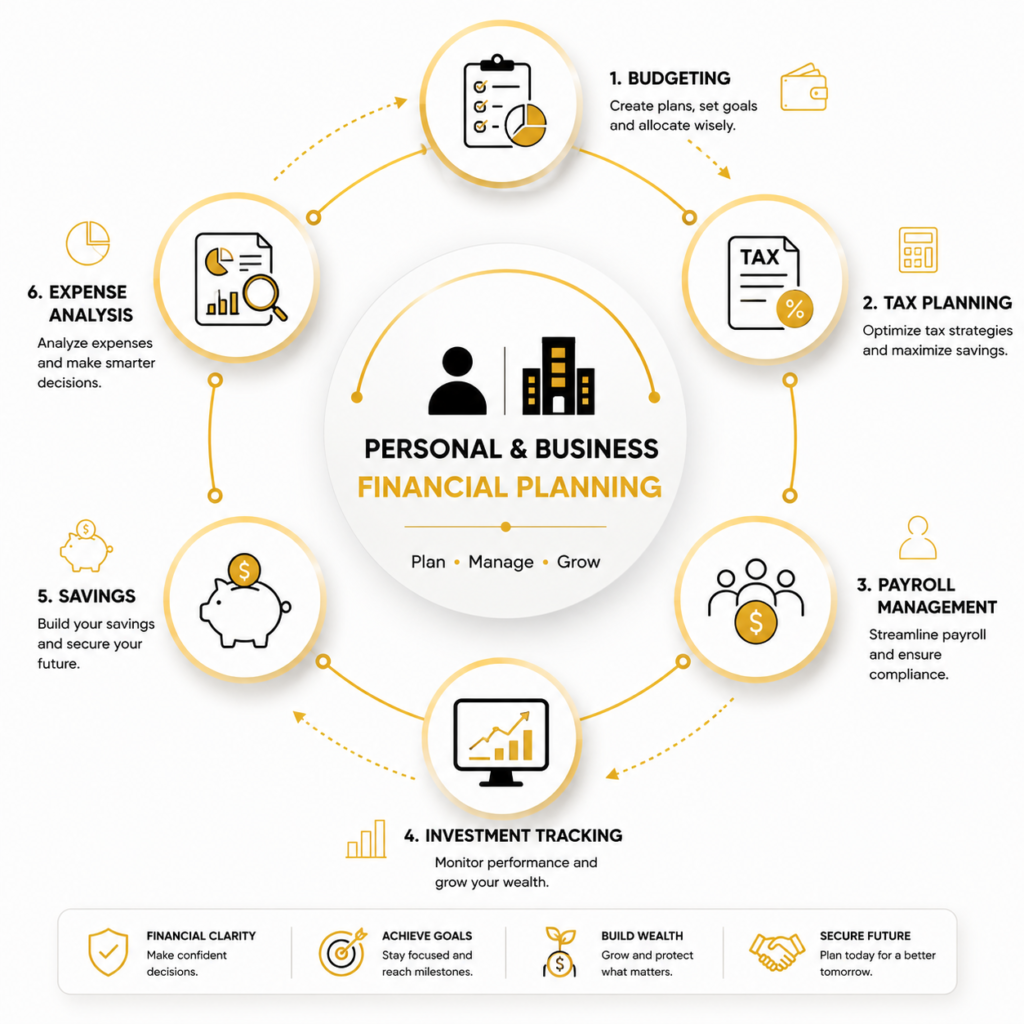
Businesses use financial management systems to handle:
Accounting
Payroll
Budgeting
Tax management
Cash flow tracking
Financial forecasting
Invoice management
Meanwhile individuals use these systems to:
Track monthly expenses
Manage loans
Calculate savings goals
Monitor investments
Plan retirement
Improve budgeting habits
The main objective of any financial management system is simple: improve financial control and help users make informed decisions.
Why Financial Management Systems Matter
Financial mistakes can quickly become expensive. Poor budgeting overspending inaccurate reporting or missed payments can create serious financial problems.
A financial management system helps reduce these risks by creating structure and visibility.
For businesses financial management systems improve operational efficiency. Company owners can track profits monitor expenses and identify financial trends before problems become severe.
For individuals these systems create financial discipline. Users can understand where money is going and identify opportunities to save or invest more effectively.
In modern finance data-driven decisions are critical. Financial management systems provide the insights needed to make better choices with confidence.
Core Components of a Financial Management System
A complete financial management system usually includes several important components working together.
Budgeting and Planning
Budgeting is one of the most important parts of financial management. It helps users allocate income effectively while controlling unnecessary spending.
Businesses create budgets for departments marketing campaigns payroll and operations. Individuals create budgets for rent food utilities transportation and savings.
Good budgeting improves financial stability and reduces financial stress.
Accounting and Bookkeeping
Accounting records every financial transaction. This includes income expenses taxes and liabilities.
Bookkeeping keeps financial records organized while accounting analyzes and interprets financial data.
Modern financial systems automate much of this process reducing manual work and minimizing human error.
Cash Flow Management
Cash flow refers to the movement of money in and out of a business or personal account.
Positive cash flow means more money is coming in than going out. Negative cash flow indicates financial pressure.
A financial management system helps monitor cash flow in real time making it easier to avoid liquidity problems.
Financial Reporting
Reports help users understand their financial condition clearly.
Common financial reports include:
Report Type
Purpose
Income Statement
Shows profit and loss
Balance Sheet
Shows assets and liabilities
Cash Flow Statement
Tracks money movement
Budget Report
Compares spending vs planned budget
These reports help businesses make strategic decisions and help individuals understand their financial habits.
Investment and Asset Management
Financial systems also assist with investment tracking and wealth management.
Users can monitor:
Stocks
Mutual funds
SIP investments
Retirement funds
Business assets
Real estate investments
This helps improve long-term financial planning.
Types of Financial Management Systems
Different users require different types of systems.
Personal Financial Management Systems
These systems are designed for individuals and families.
Suppose you invest $5000 at an annual interest rate of 8% compounded monthly for 5 years.
The formula calculates how much your investment grows over time through compounding.
This is why tools like a Compound Interest Calculator are extremely useful. They automate calculations instantly and help users estimate future savings.
Return on Investment (ROI) Formula
ROI measures profitability and investment efficiency.
ROI = \frac{\text{Net Profit}}{\text{Investment Cost}} \times 100
Example
If you invest $10000 in a business project and earn $15000 your net profit is $5000.
Your ROI becomes:
50%
Businesses use ROI calculations to evaluate investments marketing campaigns and expansion opportunities.
An ROI Calculator simplifies this process significantly.
Loan EMI Formula
Loan payments are another important area of financial management.
EMI = \frac{P \times r \times (1+r)^n}{(1+r)^n -1}
Variables Explained
P = Loan amount
r = Monthly interest rate
n = Loan tenure in months
Banks and borrowers use EMI calculations to determine monthly repayment amounts.
An EMI Calculator helps borrowers understand affordability before taking loans.
Important Features of Modern Financial Management Systems
Technology has transformed financial management systems significantly.
Automation
Automation reduces repetitive tasks such as:
Invoice generation
Payment reminders
Payroll processing
Expense categorization
This improves efficiency and reduces human error.
Cloud-Based Access
Cloud finance systems allow users to access financial data from anywhere.
This is especially useful for remote businesses and freelancers.
Cloud systems also improve data backup and security.
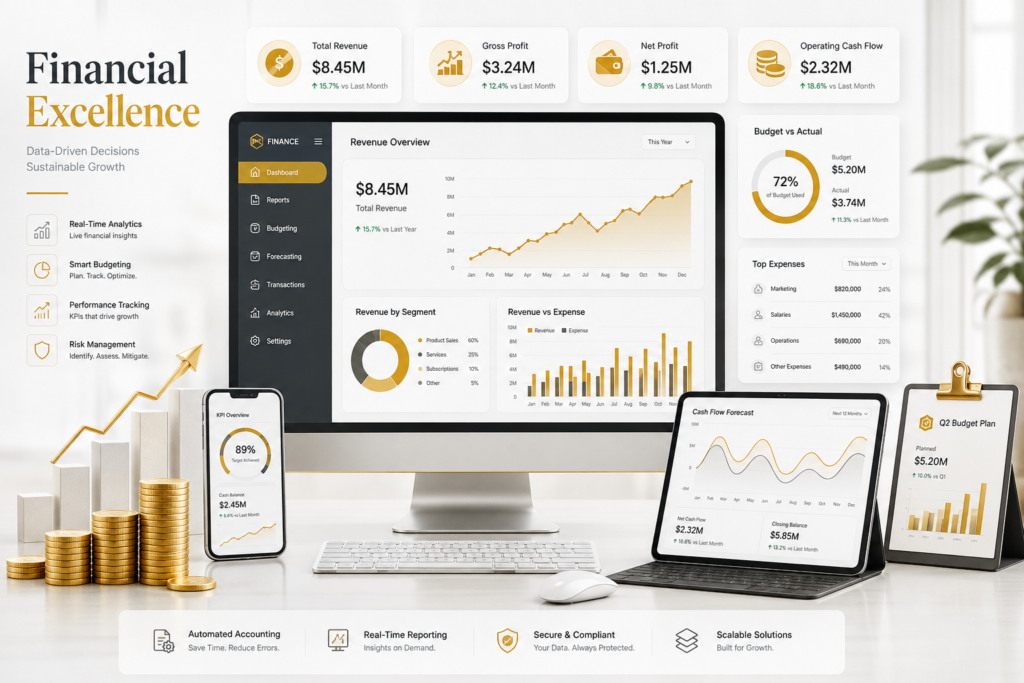
Real-Time Reporting
Modern systems generate live financial reports instantly.
Businesses can track daily revenue expenses and profits without waiting for monthly reports.
These tools improve financial understanding and help users make faster decisions.
For example before applying for a home loan users can compare multiple repayment options using an EMI calculator.
Similarly investors use SIP calculators to estimate long-term mutual fund returns.
Choosing the Right Financial Management System
Selecting the right system depends on financial goals and complexity.
For Individuals
Look for systems with:
Budget tracking
Mobile access
Expense categorization
Savings tools
For Small Businesses
Important features include:
Accounting automation
Payroll support
Tax reporting
Invoice management
For Enterprises
Large companies should prioritize:
Scalability
Security
ERP integration
Multi-user access
Advanced reporting
The Future of Financial Management Systems
Financial technology continues evolving rapidly.
Artificial intelligence machine learning and predictive analytics are shaping the future of finance.
Modern systems can now:
Predict spending patterns
Detect unusual transactions
Suggest savings opportunities
Automate financial forecasting
Blockchain technology may also improve financial transparency and security in the coming years.
As digital finance grows financial management systems will become even more important for businesses and consumers alike.
Conclusion
A financial management system is far more than a bookkeeping tool. It is a complete financial solution that helps businesses and individuals organize finances reduce errors improve budgeting and make smarter decisions.
In today’s fast-moving financial environment relying solely on manual tracking is no longer practical. Modern financial management systems provide automation real-time insights financial forecasting and improved accuracy that can significantly improve financial health.
Whether you are managing personal savings running a small business or overseeing a large organization the right financial management system can simplify financial operations and support long-term growth.
By combining financial planning with tools like EMI calculators ROI calculators SIP calculators and compound interest calculators users can gain deeper financial clarity and make more confident financial decisions.
FAQs
What is a financial management system?
A financial management system is a process or software used to manage budgeting accounting expenses investments and financial reporting efficiently.
Why is a financial management system important?
It helps improve financial control reduce errors monitor cash flow and support better financial decision-making.
What are the main components of a financial management system?
The main components include budgeting accounting reporting cash flow management forecasting and investment tracking.
Who uses financial management systems?
Businesses banks investors freelancers and individuals all use financial management systems for various financial activities.
What is the difference between accounting software and a financial management system?
Accounting software mainly records transactions while a financial management system includes broader tools like forecasting budgeting analytics and financial planning.
How do finance calculators help in financial management?
Finance calculators simplify complex calculations related to loans investments taxes and savings helping users make informed decisions faster.
Are cloud-based financial management systems secure?
Most modern cloud-based systems use encryption secure authentication and backups to protect financial data.
Can small businesses benefit from financial management systems?
Yes. Small businesses benefit greatly through automation better cash flow management tax preparation and improved financial organization.
I am a professional finance content writer with expertise in personal finance investing, banking, loans, insurance, credit cards, budgeting, and market related topics. I create clear, SEO optimized, and reader friendly finance content that helps audiences understand complex financial concepts in simple words. My goal is to write trustworthy and engaging content that improves search visibility, builds credibility, and supports business growth.
I am a professional finance content writer with expertise in personal finance investing, banking, loans, insurance, credit cards, budgeting, and market related topics. I create clear, SEO optimized, and reader friendly finance content that helps audiences understand complex financial concepts in simple words. My goal is to write trustworthy and engaging content that improves search visibility, builds credibility, and supports business growth.