Small Business Payables and Receivables: Complete Guide to Managing Business Cash Flow
Shanzay Arain·May 21, 2026
Running a successful company is not only about making sales. One of the biggest reasons small businesses struggle financially is poor management of small business payables and receivables. Even profitable businesses can face cash shortages if incoming payments are delayed or outgoing bills are not managed properly.
For small business owners understanding how money flows in and out of the business is critical. Accounts receivable represent the money customers owe to your business while accounts payable represent the money your business owes to suppliers vendors or service providers.
Together these two financial processes directly impact cash flow operational stability and long-term growth. When managed correctly payables and receivables help businesses maintain healthy finances avoid unnecessary debt and improve profitability.
In today’s digital business environment managing invoices payment cycles and vendor obligations has become easier thanks to accounting software and financial management tools. However many business owners still struggle with late payments poor invoicing systems and inefficient expense tracking.
This guide explains everything you need to know about small business payables and receivables including how they work why they matter key formulas real-world examples and best practices for improving financial management.
Key Takeaways
Accounts receivable refers to money customers owe your business.
Accounts payable refers to bills and obligations your business must pay.
Proper management of payables and receivables improves business cash flow.
Automation and accounting software simplify invoice and payment management.
Financial calculators and reporting tools help businesses make smarter financial decisions.
What Are Small Business Payables and Receivables?
Small business payables and receivables are two core accounting processes that track money entering and leaving a business.
What Are Accounts Receivable?
Accounts receivable (AR) is the money customers owe to your business for products or services delivered on credit.
For example if a graphic design agency completes a project for a client and sends a $2000 invoice with 30-day payment terms that amount becomes an account receivable until the client pays.
Receivables are considered assets because they represent future incoming cash.
What Are Accounts Payable?
Accounts payable (AP) refers to money your business owes to suppliers vendors contractors or service providers.
For example if a small retail business orders inventory from a supplier and agrees to pay within 45 days that unpaid bill becomes an account payable.
Payables are considered liabilities because the business must eventually pay them.
Why Payables and Receivables Matter for Small Businesses
Many small businesses focus heavily on sales but overlook cash flow management. This can create financial instability.
A business may appear profitable on paper while struggling to pay rent salaries or suppliers because customer payments are delayed.
Managing receivables helps ensure faster cash collection while managing payables helps maintain healthy relationships with vendors without damaging cash reserves.
Good payable and receivable management improves:
Cash flow stability
Business liquidity
Financial forecasting
Vendor relationships
Customer payment behavior
Overall profitability
Without proper systems in place businesses may rely heavily on loans or credit lines just to cover daily operations.
Understanding the Relationship Between Payables and Receivables
Payables and receivables work together to determine the financial health of a business.
If receivables are collected faster than payables are due the business maintains positive cash flow.
However if customers delay payments while bills continue arriving businesses may face liquidity problems.
Here is a simple comparison:
Feature
Accounts Receivable
Accounts Payable
Meaning
Money owed to the business
Money owed by the business
Financial Type
Asset
Liability
Source
Customers
Vendors or suppliers
Goal
Collect payments quickly
Manage outgoing payments wisely
Impact on Cash Flow
Increases cash inflow
Creates cash outflow
Balancing both sides effectively is one of the most important responsibilities in financial management.
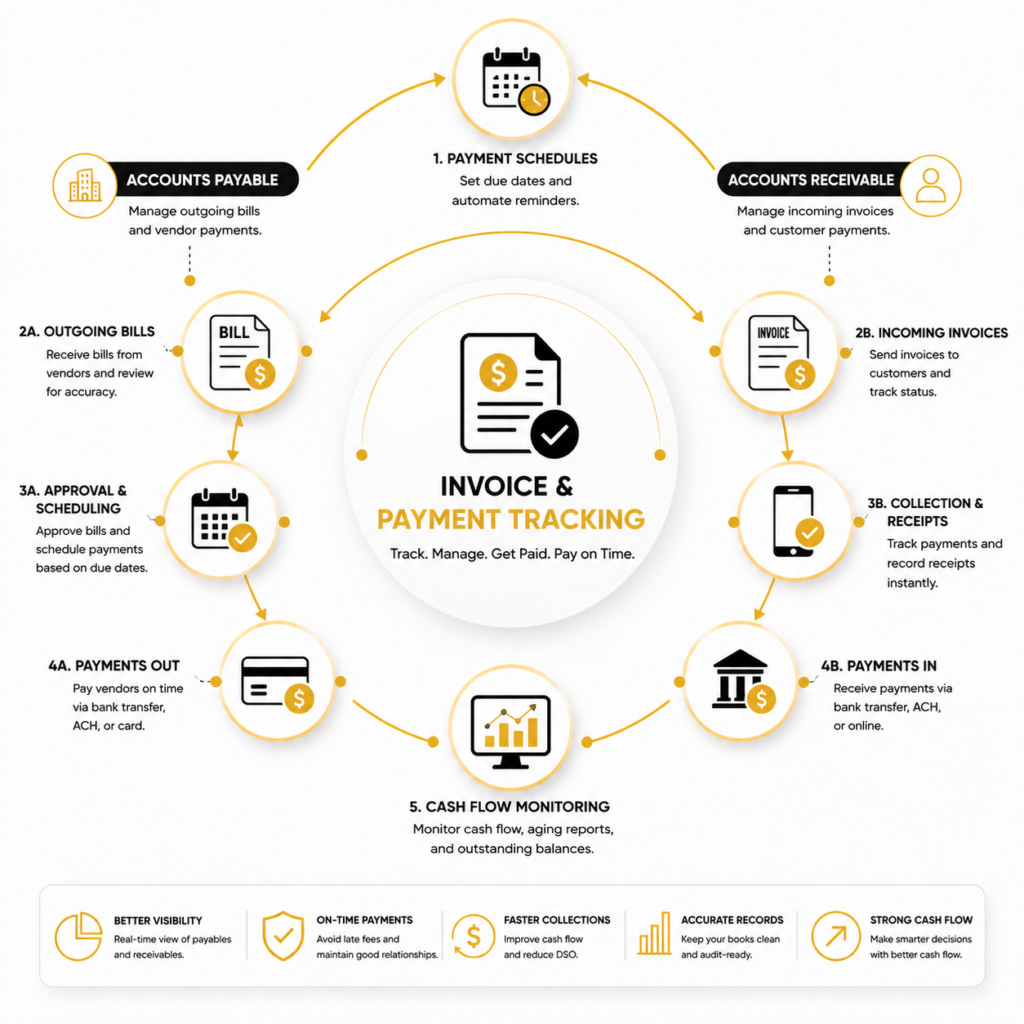
How Accounts Receivable Works
The accounts receivable process usually follows several stages.
Step 1: Delivering Products or Services
The business provides goods or services to customers.
Step 2: Sending an Invoice
An invoice is generated showing:
Amount due
Payment terms
Due date
Invoice number
Common payment terms include:
Net 15
Net 30
Net 60
These numbers represent the payment deadline in days.
Step 3: Waiting for Customer Payment
The customer pays the invoice within the agreed timeframe.
Late payments can disrupt business cash flow significantly.
Step 4: Recording Payment
Once payment is received the receivable is cleared from accounting records.
How Accounts Payable Works
The payable process is similar but operates in reverse.
Step 1: Receiving Goods or Services
The business purchases inventory equipment or services.
Step 2: Vendor Sends Invoice
The supplier provides an invoice with payment terms.
Step 3: Payment Scheduling
The business schedules payment while managing cash flow priorities.
Step 4: Paying the Vendor
Once payment is completed the payable liability is removed.
Common Challenges in Managing Payables and Receivables
Small businesses often face several challenges.
Late Customer Payments
Delayed receivables are one of the biggest cash flow problems.
Many customers miss deadlines forcing businesses to wait weeks or months for payment.
Poor Invoice Tracking
Manual invoicing systems often lead to missing or forgotten invoices.
Automation reduces this risk.
Overdue Vendor Bills
Failing to pay suppliers on time may damage business relationships and lead to penalties.
Cash Flow Gaps
When receivables arrive too slowly while expenses continue increasing businesses experience cash shortages.
Key Financial Ratios for Payables and Receivables
Financial ratios help businesses evaluate efficiency.
Accounts Receivable Turnover Ratio
This ratio measures how efficiently a business collects payments.
If annual supplier purchases equal $90000 and average payables equal $15000:
Turnover Ratio = 6
This indicates the business pays suppliers six times annually.
Days Sales Outstanding (DSO)
DSO measures how long customers take to pay invoices.
DSO = \frac{\text{Accounts Receivable}}{\text{Total Credit Sales}} \times \text{Number of Days}
A lower DSO usually indicates better collection efficiency.
Businesses closely monitor this metric to improve cash flow.
Importance of Cash Flow Management
Cash flow is the lifeblood of small businesses.
Even highly profitable businesses can fail due to poor cash flow management.
Imagine a business generating large sales volumes but waiting 90 days for customer payments while needing to pay suppliers within 30 days. This creates a financial gap.
Effective payable and receivable management reduces these risks.
Businesses should aim to:
Collect receivables faster
Negotiate favorable payment terms
Maintain emergency reserves
Monitor payment cycles regularly
Best Practices for Managing Small Business Receivables
Send Invoices Quickly
The faster invoices are sent the faster payments usually arrive.
Delays in invoicing often create delays in cash collection.
Offer Multiple Payment Options
Businesses that accept online payments bank transfers and digital wallets often receive payments faster.
Set Clear Payment Terms
Always define payment deadlines clearly.
Avoid vague agreements that create confusion.
Follow Up on Overdue Payments
Professional reminders improve collection rates significantly.
Many businesses automate reminder emails to reduce delays.
Reward Early Payments
Some companies offer small discounts for early payments.
This encourages customers to pay faster.
Best Practices for Managing Small Business Payables
Avoid Late Payments
Paying suppliers late may damage trust and lead to fees.
Use Payment Scheduling
Schedule payments strategically to maintain healthy cash flow.
Creative agencies and freelancers often struggle with delayed client payments.
Invoice automation tools improve collections.
Manufacturing Companies
Manufacturers handle large supplier networks and complex payment cycles.
Financial systems improve operational efficiency.
E-Commerce Businesses
Online businesses process large volumes of transactions daily.
Automation is essential for managing receivables efficiently.
Common Mistakes Small Businesses Should Avoid
Mixing Personal and Business Finances
This creates accounting confusion and inaccurate reporting.
Always separate business accounts from personal spending.
Ignoring Aging Reports
Aging reports show overdue invoices.
Ignoring them can increase bad debt risk.
Overextending Credit to Customers
Not every customer should receive long payment terms.
Businesses should evaluate customer reliability carefully.
Poor Recordkeeping
Disorganized financial records create tax and reporting problems.
Digital accounting systems improve organization.
Future Trends in Payables and Receivables Management
Financial technology continues changing rapidly.
Modern trends include:
AI-powered invoice automation
Real-time payment processing
Digital wallets
Blockchain-based transaction systems
Predictive cash flow analytics
These technologies improve speed transparency and financial efficiency.
As small businesses increasingly adopt digital finance tools payable and receivable management will become even more automated and intelligent.
Conclusion
Managing small business payables and receivableseffectively is essential for maintaining healthy cash flow and long-term financial stability. While many business owners focus mainly on increasing sales proper financial management ensures the business can actually sustain growth without running into liquidity problems.
Accounts receivable help businesses track incoming customer payments while accounts payable help manage outgoing obligations to suppliers and vendors. Balancing both processes carefully improves financial visibility strengthens vendor relationships and reduces financial stress.
Modern accounting software automation tools and finance calculators make payable and receivable management easier than ever before. By improving invoicing practices monitoring cash flow and using financial reporting tools effectively small businesses can build stronger financial foundations and improve profitability over time.
In today’s competitive business environment mastering payables and receivables is no longer optional — it is a critical part of sustainable business success.
FAQs
What are payables and receivables in small business accounting?
Payables are bills a business owes to suppliers while receivables are payments customers owe to the business.
Why are accounts receivable important?
Accounts receivable help businesses track incoming payments and maintain positive cash flow.
What happens if receivables are collected slowly?
Slow collections can create cash shortages and make it difficult to pay expenses on time.
How can small businesses improve receivables management?
Businesses can improve receivables by sending invoices quickly automating reminders and offering multiple payment methods.
What is the difference between accounts payable and accounts receivable?
I am a professional finance content writer with expertise in personal finance investing, banking, loans, insurance, credit cards, budgeting, and market related topics. I create clear, SEO optimized, and reader friendly finance content that helps audiences understand complex financial concepts in simple words. My goal is to write trustworthy and engaging content that improves search visibility, builds credibility, and supports business growth.
I am a professional finance content writer with expertise in personal finance investing, banking, loans, insurance, credit cards, budgeting, and market related topics. I create clear, SEO optimized, and reader friendly finance content that helps audiences understand complex financial concepts in simple words. My goal is to write trustworthy and engaging content that improves search visibility, builds credibility, and supports business growth.