Small Business Ideas: 35 Profitable Opportunities to Start and Grow in 2026
Shanzay Arain·Jun 06, 2026
Small Business Ideas starting a business has never been more accessible. Technology, remote work, e-commerce platforms, and changing consumer habits have created opportunities for entrepreneurs in nearly every industry. Whether you’re looking to build a side hustle, replace your full-time income, or create a scalable company, finding the right small business idea is often the first step.
Many people search for small business ideas because they want financial independence, flexible work arrangements, additional income, or a path toward long-term wealth creation. However, choosing the right business involves more than simply following trends. The most successful businesses solve real problems, serve clear customer needs, and align with the owner’s skills, resources, and goals.
This guide explores profitable small business ideas, startup considerations, legal requirements, financial planning strategies, and practical insights to help aspiring entrepreneurs make informed decisions in 2026.
Why Small Businesses Continue to Thrive in America
Small businesses remain a cornerstone of the U.S. economy. They create jobs, support local communities, drive innovation, and contribute significantly to economic growth. Advances in digital marketing, online marketplaces, cloud software, and automation have dramatically lowered the barriers to entry for entrepreneurs.
Today’s business owners can launch companies with relatively modest investments compared to previous generations. A freelance consultant, online retailer, content creator, or virtual service provider can often start operations with a laptop, internet connection, and a well-designed business plan. This accessibility has fueled a surge in entrepreneurship across industries.
Beyond economic opportunity, small businesses provide personal benefits. Entrepreneurs gain more control over their schedules, build valuable assets, and potentially create multiple income streams. While entrepreneurship involves risks, it also offers opportunities that traditional employment may not provide.
How to Choose the Right Small Business Idea
The best business idea is not necessarily the trendiest one. Successful entrepreneurs evaluate opportunities based on market demand, profitability, competition, startup costs, and their own expertise. A business that aligns with your skills often has a higher chance of long-term success.
Start by identifying problems people regularly face. Businesses that solve recurring challenges typically generate sustainable demand. Research customer pain points, online reviews, discussion forums, and industry trends. Look for gaps where consumers are dissatisfied with existing solutions.
You should also evaluate your financial resources and risk tolerance. Some businesses require significant capital investments, while others can start with minimal costs. Understanding your available budget helps narrow your options and prevents unnecessary financial strain.
Online Business Ideas with Low Startup Costs
Online businesses continue to attract entrepreneurs because they offer flexibility and scalability. Many can be launched from home with limited upfront expenses. Popular online business opportunities include freelance writing, virtual assistance, graphic design, social media management, and digital marketing services.
E-commerce remains one of the fastest-growing sectors. Entrepreneurs can sell physical products through online stores, dropshipping models, print-on-demand services, or marketplace platforms. With proper niche selection and marketing strategies, online retail businesses can reach customers nationwide.
Digital products represent another attractive opportunity. Courses, templates, software tools, memberships, and downloadable resources often provide higher profit margins because there are no ongoing inventory costs. Once created, digital products can generate recurring revenue with relatively low maintenance.
Service-Based Small Business Ideas
Service businesses often require less startup capital than product-based companies. Instead of investing heavily in inventory, entrepreneurs monetize their expertise and time. Popular examples include bookkeeping, consulting, personal training, tutoring, event planning, and business coaching.
Demand for specialized professional services continues to grow. Businesses increasingly outsource tasks such as accounting, marketing, customer support, and human resources. This trend creates opportunities for freelancers and agencies serving specific industries or niches.
One advantage of service businesses is faster cash flow. Clients typically pay for completed work, allowing entrepreneurs to generate revenue soon after launch. However, service businesses may face scalability challenges because income is often tied directly to labor unless systems and teams are developed.
Home-Based Business Opportunities
Many entrepreneurs prefer home-based businesses because they minimize overhead expenses. Without commercial rent, utilities, and commuting costs, owners can preserve cash during the early growth stages.
Home-based opportunities include online tutoring, content creation, affiliate marketing, virtual assistance, bookkeeping, consulting, podcast production, and web design. Many of these businesses can be operated entirely remotely, serving clients across the United States.
Running a home business requires discipline and organization. Establishing dedicated workspaces, maintaining professional communication, and separating personal and business finances are critical for long-term success. Proper planning helps ensure productivity while preserving work-life balance.
E-Commerce and Product-Based Business Ideas
E-commerce continues to reshape consumer purchasing habits. Entrepreneurs can sell products directly to consumers through branded websites, online marketplaces, or social commerce platforms. Product categories range from fashion and beauty to home goods and specialty hobbies.
Private-label products remain popular among entrepreneurs seeking brand ownership. By sourcing generic products and customizing branding, business owners can build customer loyalty and improve profit margins. However, inventory management and marketing expenses require careful planning.
Subscription box businesses have also gained popularity. These businesses deliver curated products regularly to customers, generating recurring revenue. Successful subscription businesses focus on niche audiences with specific interests, such as fitness, pets, skincare, or specialty foods.
Local Business Ideas with Strong Community Demand
Not every successful business operates online. Local businesses continue to thrive because many services require in-person interaction. Opportunities include cleaning services, landscaping, mobile car detailing, pet care, handyman services, and home maintenance businesses.
Local businesses often benefit from word-of-mouth referrals and community trust. Delivering consistent quality and excellent customer service can help establish a strong reputation that generates repeat business and referrals.
Many local service businesses can scale by hiring employees, expanding service areas, or adding complementary offerings. For example, a landscaping company might expand into irrigation installation, lawn treatments, or outdoor design services.
Technology and AI-Focused Business Opportunities
Artificial intelligence and automation are creating entirely new entrepreneurial opportunities. Businesses increasingly need assistance implementing AI tools, automating workflows, analyzing data, and improving operational efficiency.
Entrepreneurs with technical skills can offer AI consulting, chatbot development, automation setup, software integration, and data analytics services. Demand for these services is expected to continue growing as organizations adopt emerging technologies.
Even non-technical entrepreneurs can benefit from AI trends. Content creation agencies, marketing firms, and customer support providers increasingly use AI-powered tools to improve productivity and reduce costs while maintaining service quality.
Franchise Opportunities for New Entrepreneurs
Franchising offers a structured path to business ownership. Rather than building a brand from scratch, franchise owners operate under established systems, marketing strategies, and operational procedures.
Popular franchise categories include food service, fitness centers, cleaning companies, senior care services, and home improvement businesses. Franchises often provide training and support that help reduce some of the uncertainties associated with entrepreneurship.
However, franchise ownership requires careful evaluation. Initial franchise fees, royalty payments, and operational restrictions can impact profitability. Prospective franchisees should thoroughly review franchise disclosure documents and consult qualified legal and financial professionals before investing.
Financial Planning for a New Small Business
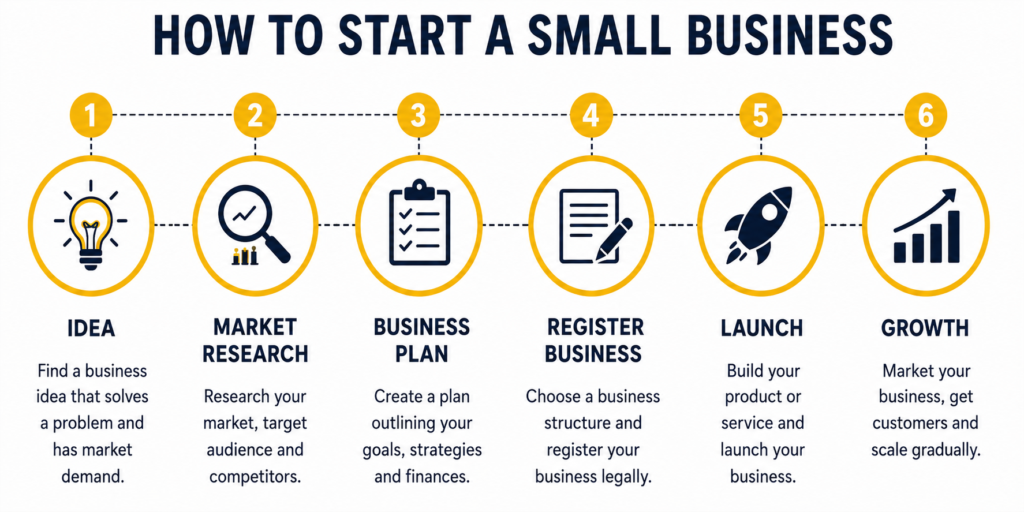
Financial planning is one of the most important aspects of starting a business. Entrepreneurs should estimate startup costs, operating expenses, expected revenue, and cash flow needs before launching.
A basic profitability calculation can help evaluate business viability:
Profit = Revenue – Expenses
For example, if a business generates $10,000 monthly revenue and incurs $6,500 in expenses, monthly profit equals $3,500. Understanding these numbers helps entrepreneurs make informed decisions regarding pricing, hiring, and growth investments.
Maintaining emergency reserves is equally important. Many businesses experience unpredictable revenue during the early stages. Adequate cash reserves can help cover expenses during slower periods and reduce financial stress.
Legal and Tax Considerations for Small Businesses
Business owners must understand federal, state, and local legal requirements. Common business structures include sole proprietorships, partnerships, limited liability companies (LLCs), and corporations. Each structure offers different legal protections and tax implications.
Many entrepreneurs choose LLCs because they provide liability protection while maintaining relatively simple administration. However, the appropriate structure depends on individual circumstances, business goals, and risk exposure.
Tax obligations can include federal income taxes, self-employment taxes, payroll taxes, sales taxes, and state taxes. Working with a qualified accountant or tax professional can help ensure compliance and identify legitimate deductions that reduce tax liability.
Common Risks and Challenges New Entrepreneurs Face
While entrepreneurship offers significant rewards, it also involves risks. Cash flow problems, intense competition, changing consumer preferences, and economic uncertainty can impact business performance.
Many new businesses struggle because they underestimate expenses or overestimate demand. Thorough market research and realistic financial projections can help mitigate these risks. Entrepreneurs should validate ideas before making large investments.
Burnout is another common challenge. Small business owners often wear multiple hats, managing operations, marketing, sales, customer service, and finances simultaneously. Building efficient systems and delegating tasks can improve sustainability and productivity.
How to Validate a Business Idea Before Investing
Testing a business concept before investing heavily can save time and money. Entrepreneurs can validate ideas through customer interviews, surveys, pilot programs, and minimum viable products.
A simple landing page, social media campaign, or small-scale product launch can provide valuable feedback regarding customer interest. Measuring engagement, inquiries, and sales helps determine whether demand exists before committing significant resources.
Validation also helps identify pricing strategies, customer expectations, and competitive advantages. Businesses that gather feedback early often adapt more effectively and improve their chances of success.
Building a Long-Term Growth Strategy
Launching a business is only the beginning. Sustainable growth requires strategic planning, customer retention, operational efficiency, and continuous improvement. Businesses that focus solely on acquiring new customers often overlook the importance of repeat business and referrals.
Successful entrepreneurs regularly analyze financial performance, customer feedback, market trends, and competitive developments. This information supports better decision-making and helps identify growth opportunities before competitors.
Investing in branding, marketing, technology, and employee development can strengthen long-term competitiveness. Businesses that consistently deliver value while adapting to changing market conditions are more likely to achieve sustainable growth.
Conclusion
Finding the right small business ideas requires more than chasing trends. The strongest opportunities combine market demand, profitability, personal expertise, and long-term sustainability. Whether you choose an online venture, local service business, technology-focused company, or product-based enterprise, careful planning and validation can significantly improve your chances of success.
Entrepreneurship involves risk, but it also offers opportunities for financial independence, wealth creation, and personal fulfillment. By researching the market, understanding financial fundamentals, complying with legal requirements, and focusing on customer value, aspiring entrepreneurs can build businesses that thrive in 2026 and beyond. The best small business ideas are often those that solve real problems while aligning with your strengths and goals.
FAQs
What are the best small business ideas for beginners?
Some beginner-friendly options include freelance services, virtual assistance, online tutoring, bookkeeping, content creation, social media management, and home cleaning services. These businesses generally require lower startup costs and can often be launched part-time.
Which small business has the highest profit potential?
Profit potential varies by industry, but consulting, software development, digital products, specialized professional services, and niche e-commerce businesses often generate strong margins due to lower ongoing costs and scalability.
How much money do I need to start a small business?
Startup costs range widely. Some online service businesses can begin with less than $1,000, while franchises and retail businesses may require tens of thousands of dollars or more. The required investment depends on the business model.
What is the easiest business to start from home?
Freelancing, virtual assistance, online tutoring, affiliate marketing, content creation, bookkeeping, and consulting are among the easiest home-based businesses to launch because they require minimal infrastructure.
Should I form an LLC for my small business?
Many entrepreneurs choose LLCs because they provide liability protection and operational flexibility. However, the best structure depends on your specific situation, industry, and financial goals. Professional legal advice can help determine the most appropriate option.
What are the biggest reasons small businesses fail?
Common causes include insufficient cash flow, poor market research, weak pricing strategies, ineffective marketing, inadequate planning, and failure to adapt to changing customer needs.
Can I start a business while working full-time?
Yes. Many successful entrepreneurs begin their businesses as side hustles while maintaining full-time employment. This approach can reduce financial risk and provide stable income during the early growth stages.
What industries are expected to grow in 2026?
Technology services, AI consulting, cybersecurity, healthcare support services, digital marketing, renewable energy solutions, and e-commerce-related businesses are expected to remain strong growth sectors.
How can I find customers for a new business?
Effective customer acquisition strategies include search engine optimization, content marketing, social media marketing, local networking, referrals, paid advertising, email marketing, and strategic partnerships.
Are small businesses still worth starting in 2026?
Yes. Despite economic uncertainty, new opportunities continue to emerge across digital services, local services, technology, healthcare, and e-commerce sectors. Success depends on solving real customer problems and executing effectively.
I am a professional finance content writer with expertise in personal finance investing, banking, loans, insurance, credit cards, budgeting, and market related topics. I create clear, SEO optimized, and reader friendly finance content that helps audiences understand complex financial concepts in simple words. My goal is to write trustworthy and engaging content that improves search visibility, builds credibility, and supports business growth.
I am a professional finance content writer with expertise in personal finance investing, banking, loans, insurance, credit cards, budgeting, and market related topics. I create clear, SEO optimized, and reader friendly finance content that helps audiences understand complex financial concepts in simple words. My goal is to write trustworthy and engaging content that improves search visibility, builds credibility, and supports business growth.