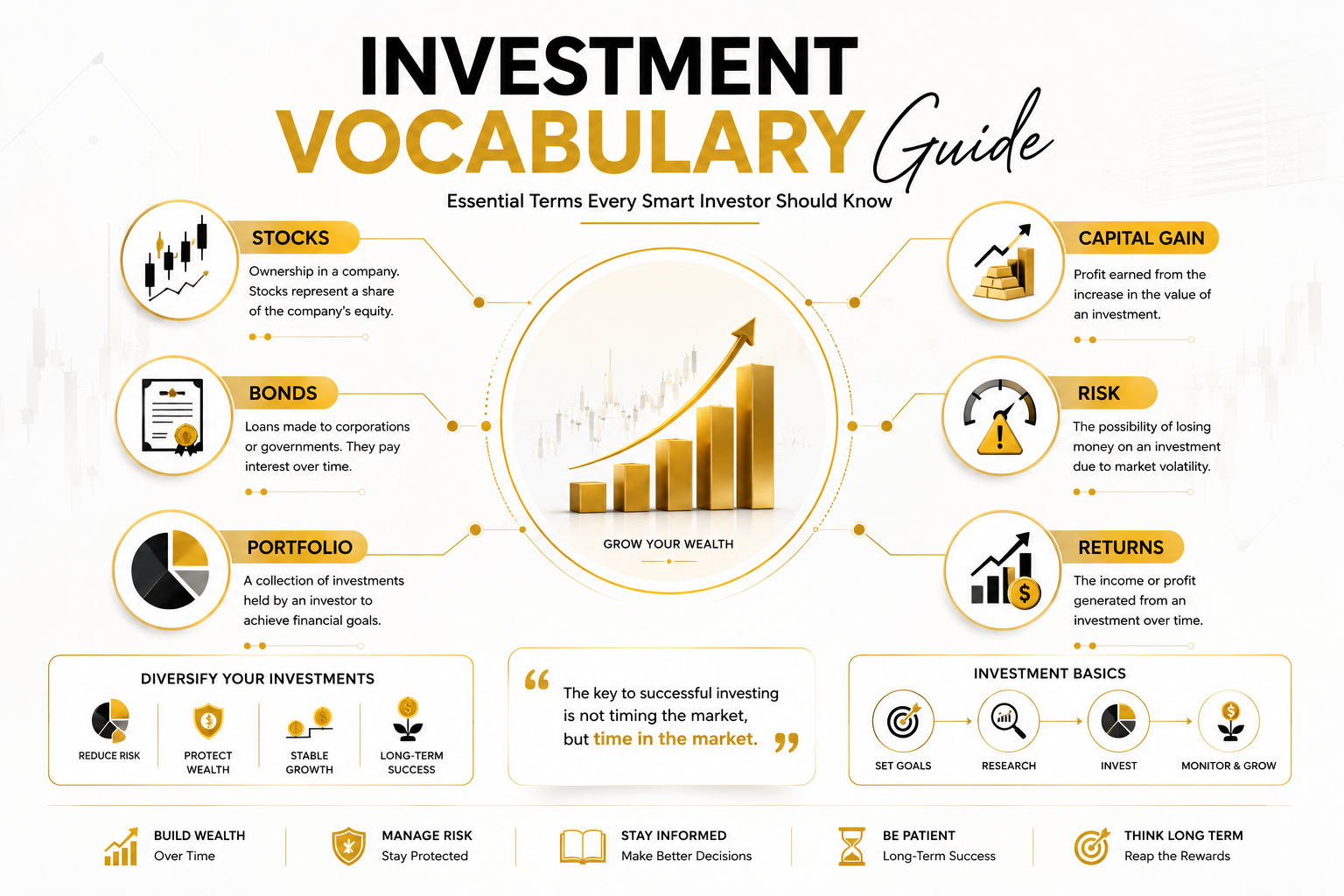

Investing in the stock market can feel complicated when hundreds of companies, financial ratios and daily price movements compete for attention. A Nifty 50 index fund offers a simpler approach instead of trying to identify the next winning stock, it attempts to follow the performance of 50 major companies represented in Indias benchmark Nifty 50 index.
This type of mutual fund uses a passive investment strategy. Its goal is not to outperform the market through frequent stock selection. It aims to replicate the underlying index as closely as reasonably possible, before accounting for expenses and tracking differences.
That simplicity can make index investing attractive to beginners and long term investors. However, a Nifty linked fund is still an equity investment. Its value can fall sharply during market corrections, and historical returns do not guarantee future performance.
This guide explains how the fund works, how to compare different schemes, which costs matter, what risks investors should consider and how Indian taxation may affect returns.
What Is a Nifty 50 Index Fund?
A Nifty 50 index fund is an open ended equity mutual fund designed to track the Nifty 50 index. The fund generally invests in the same companies included in the index and seeks to hold them in approximately the same proportions.
The Nifty 50 is a free float market capitalization weighted index managed by NSE Indices. It represents 50 large and liquid companies listed on the National Stock Exchange of India.
Free float market capitalization considers shares that are available for public trading rather than all shares issued by a company. As a result, a company with a larger freely tradable market value normally receives a higher weight in the index.
When a heavily weighted stock rises or falls, it has a greater effect on the index than a company with a smaller weight.
An index fund does not permanently own the same 50 stocks. The index provider periodically reviews the constituents. When a company enters or leaves the Nifty 50, index funds following it adjust their portfolios accordingly.
Quick Summary Table
| Feature | Nifty 50 index fund details |
| Investment type | Passive equity mutual fund |
| Underlying benchmark | Nifty 50 |
| Portfolio | Approximately 50 large Indian companies |
| Investment methods | SIP or lump sum |
| Demat account required | Generally no |
| Trading during market hours | No transactions use applicable mutual fund NAV |
| Management approach | Passive index replication |
| Main cost | Total expense ratio |
| Additional concern | Tracking difference and tracking error |
| Risk level | High equity market risk |
| Recommended horizon | Commonly considered for long term goals |
| Return guarantee | None |
| Diversification | Across 50 companies, but concentrated in large cap Indian equities |
| Tax category | Generally treated as an equity oriented mutual fund when regulatory conditions are satisfied |
| Suitable for | Investors seeking simple large cap market exposure |
This table provides general information. Every scheme has its own offer document, expense ratio, portfolio, minimum investment and risk disclosures.
How the Nifty 50 Index Works
The Nifty 50 is designed to represent the performance of leading companies across important areas of the Indian economy. Its constituents may include businesses from banking, financial services, information technology, energy, consumer goods, automobiles, telecommunications, pharmaceuticals and other industries.
The index is weighted using free float market capitalization. It is not equally divided into 50 identical positions. The largest eligible companies may therefore account for a substantial part of the index.
This structure allows the index to reflect how the market values its constituent companies, but it can also create concentration. If a few large companies or one major sector performs poorly, the overall index may be affected significantly.
Index membership is reviewed according to rules established by NSE Indices. Changes to the index can occur during scheduled reviews or in response to qualifying corporate events.
The current composition, sector weights, methodology and index value can change. Investors should verify the latest information through official NSE Indices resources rather than relying on an old list of companies.
How a Nifty 50 Index Fund Works
When investors put money into the fund, the asset management company pools that money and uses it to purchase the securities represented in the benchmark.
Suppose a hypothetical Nifty 50 index gives Company A a 10% weight, Company B an 8% weight and Company C a 6% weight. The fund manager generally attempts to invest in comparable proportions, while managing subscriptions, redemptions, corporate actions and operating expenses.
The funds net asset value, or NAV, changes according to the value of its portfolio. If the underlying companies rise collectively, the NAV will generally increase. If the market falls, the NAV will generally decline.
The funds return will not match the index perfectly. Management fees, transaction expenses, taxes, cash balances and timing differences can cause the fund to perform slightly above or, more commonly, below its benchmark over a given period.
This gap is why investors should evaluate tracking performance instead of looking only at the advertised expense ratio.
A Practical Investment Example
Assume an investor begins a monthly systematic investment plan of ₹5,000 in a Nifty 50 index fund. Each month, the investor receives units based on the applicable NAV.
When the NAV is lower, the same ₹5,000 purchases more units. When the NAV is higher, it purchases fewer units. This is commonly known as rupee cost averaging.
After one year, the investor will have contributed ₹60,000. The investment value may be higher or lower depending on market performance, fund expenses and tracking difference.
A SIP does not prevent losses or guarantee returns. Its main advantage is behavioral it allows investors to contribute regularly instead of attempting to predict the best day to enter the market.
A lump sum investment places the entire amount into the market at once. It may benefit more from an immediate market rise, but it also faces greater short term timing risk if the market declines soon after investment.
Benefits of Investing in a Nifty 50 Index Fund
Simplicity is one of the strongest benefits. Investors do not need to analyze and monitor dozens of individual companies continuously. The fund automatically follows the index composition.
Diversification is another advantage. A single investment provides exposure to 50 companies rather than concentrating all capital in one stock. This reduces company specific risk, although it does not remove market or sector risk.
Potential benefits include
- Exposure to established large cap Indian businesses
- Transparent investment strategy
- Lower portfolio management activity
- Generally competitive expense ratios
- Availability of SIP investments
- No need to maintain a demat account in most cases
- Automatic portfolio adjustment when the index changes
- Reduced dependence on a fund managers stock selection decisions
- Easy comparison between schemes tracking the same benchmark
- Potential suitability for long term wealth building goals
Passive funds may also reduce the temptation to switch strategies frequently based on short term market predictions. A disciplined approach can be more important than constantly searching for the highest recent return.
Risks of a Nifty 50 Index Fund
A Nifty 50 index fund remains exposed to stock market volatility. It may experience significant losses during economic slowdowns, financial crises, geopolitical events or changes in investor sentiment.
The fund does not move into cash simply because stocks appear expensive or the market outlook becomes uncertain. A passive strategy continues tracking the index through both rising and falling markets.
Important risks include
- Equity market risk
- Large cap concentration
- Sector concentration
- Valuation risk
- Tracking error
- Tracking difference
- Liquidity risk during stressed conditions
- Regulatory or taxation changes
- Business and governance risks within index companies
- Behavioral risk caused by panic selling
Diversification across 50 stocks does not provide complete diversification across asset classes. The portfolio remains concentrated in Indian large cap equities. It does not automatically provide meaningful exposure to bonds, international equities, small companies, gold or cash.
An investor may need other assets depending on financial goals, age, liabilities, time horizon and risk tolerance.
Understanding Tracking Error and Tracking Difference
Tracking difference is the difference between the return of an index fund and the return of its benchmark over a particular period.
For example, if the Nifty 50 Total Return Index gains 12% while a fund tracking it returns 11.4%, the tracking difference is negative 0.6 percentage points.
Tracking error measures the variability of those return differences over time. A lower tracking error generally indicates that the fund has followed its benchmark more consistently.
Factors that can create tracking differences include
- Total expense ratio
- Cash held for redemptions
- Transaction costs
- Timing of index rebalancing
- Corporate actions
- Dividend reinvestment timing
- Securities lending activity
- Operational delays
A fund with the lowest expense ratio does not automatically have the best tracking record. Investors should compare both costs and actual tracking performance.
Scheme documents typically explain the tracking objective and warn that exact replication cannot be guaranteed. SEBI describes tracking error as the extent to which a funds NAV movement differs from the underlying index. SEBI mutual fund information
What Is the Total Expense Ratio?
The total expense ratio, or TER, represents annual operating expenses charged to a mutual fund scheme. These costs are deducted from the schemes assets and reflected in its NAV rather than billed separately to each investor.
SEBI explains that an expense ratio of 1% means approximately 1% of the funds total assets is used annually to cover permitted expenses. Actual TERs can change, so investors should check the asset management companys current disclosure.
For an investment of ₹100,000, a TER of 0.20% would represent approximately ₹200 per year at that asset level. The actual cost changes as the investment value changes and is applied through daily NAV calculations.
Even small annual differences can compound over a long investment period. However, selecting a fund purely because it is cheaper may be a mistake if it has poor tracking, limited operating history or significant portfolio management issues.
Direct Plan Versus Regular Plan
A direct plan allows an investor to purchase mutual fund units without a distributor receiving a commission from the scheme. Because distribution expenses are excluded, a direct plan generally has a lower expense ratio than the corresponding regular plan.
A regular plan is purchased through a distributor or intermediary. It normally has a higher expense ratio because the cost includes distribution related compensation.
Both plans typically invest in the same underlying portfolio, but they have separate NAVs because their expenses differ.
A direct plan may suit an investor who can select and manage investments independently. A regular plan may be more appropriate when an investor values ongoing assistance from a qualified and properly registered professional.
Investors should understand how an intermediary is compensated and whether the recommendation is suitable. Lower costs are beneficial, but unsuitable self directed decisions can be more damaging than a reasonable advisory expense.
Growth Option Versus IDCW Option
Under a growth option, profits and income remain invested in the scheme. The NAV reflects the accumulated value, allowing compounding to continue until units are redeemed.
Under an Income Distribution cum Capital Withdrawal option, or IDCW, the fund may distribute amounts when declared. Such distributions are not guaranteed and can include a withdrawal from the investors capital.
An IDCW payment is not free additional income. The schemes NAV generally falls by approximately the distribution amount, subject to market movements and applicable adjustments.
For investors focused on long term accumulation, the growth option is often simpler. Investors needing cash flow should compare IDCW with a planned withdrawal strategy and consider the tax consequences of both.
Tax rules for distributions can change and vary by investor category. Verify the current treatment before selecting an option.
Nifty 50 Index Fund Versus Nifty 50 ETF
Both products attempt to track the same underlying index, but they operate differently.
| Feature | Nifty 50 index fund | Nifty 50 ETF |
| Purchase method | Through AMC or investment platform | Through a stock exchange |
| Demat account | Usually not required | Required |
| Pricing | Applicable end of day NAV | Market price during trading hours |
| SIP convenience | Generally straightforward | May require broker supported recurring orders |
| Brokerage | Usually none for direct AMC purchases | May apply |
| Bid ask spread | Not applicable in the same way | Can affect transaction cost |
| Fractional investing | Mutual fund units may be fractional | Exchange units generally cannot be fractional |
| Liquidity | Fund processes purchases and redemptions | Depends partly on exchange liquidity |
| Best suited for | Long term investors seeking convenience | Investors comfortable with exchange trading |
SEBI notes that ETFs trade like shares and can involve brokerage and demat charges. They also cannot ordinarily be purchased in fractions in the same manner as mutual fund units. SEBI ETF guidance
An ETF with a low published expense ratio may still carry trading costs and a bid ask spread. An index fund may have a slightly higher TER but offer greater convenience for small monthly investments.
Nifty 50 Index Fund Versus an Active Large Cap Fund
An active large cap fund employs a fund manager to select securities and adjust the portfolio with the objective of outperforming a benchmark.
A Nifty 50 index fund does not attempt to identify undervalued stocks or avoid overvalued index companies. It follows the benchmark, subject to tracking differences.
| Consideration | Nifty 50 index fund | Active large cap fund |
| Management | Passive | Active |
| Objective | Track the index | Attempt to outperform a benchmark |
| Expense ratio | Commonly lower | Commonly higher |
| Manager selection risk | Lower | Higher |
| Potential benchmark outperformance | Not the main objective | Possible but not guaranteed |
| Portfolio transparency | Usually high | Depends on disclosure schedule |
| Return certainty | None | None |
An active fund may outperform, but that outcome is not guaranteed. Investors should compare performance across full market cycles and account for expenses rather than selecting a fund based on one strong year.
Who May Consider a Nifty 50 Index Fund?
A Nifty 50 index fund may be suitable for investors who want long term exposure to large Indian companies without selecting individual stocks.
It may appeal to
- First time mutual fund investors
- Salaried individuals using monthly SIPs
- Investors seeking a low maintenance equity allocation
- People building long term retirement funds
- Parents investing for distant education goals
- Investors who prefer transparent passive strategies
- Active investors seeking a large cap core portfolio
It may be unsuitable for money required in the near future. Equity markets can decline at the exact time an investor needs to withdraw.
A person saving for an expense due within one or two years should not assume that a Nifty 50 fund will preserve the principal. Shorter term goals may require less volatile instruments, depending on individual circumstances.
How to Choose the Best Nifty 50 Index Fund
Several funds track the same benchmark, but their investor outcomes can differ slightly.
Compare the following factors
- Tracking difference
- Tracking error
- Total expense ratio
- Assets under management
- Fund operating history
- Consistency of index replication
- Direct and regular plan costs
- Minimum SIP or lump sum amount
- Redemption procedures
- Exit load, if applicable
- Quality of investor service
- Clarity of disclosures
Use the Nifty 50 Total Return Index as the relevant benchmark when possible. A price return index reflects only price movements, while a total return index also accounts for dividends from constituent companies.
Avoid choosing a scheme solely because it has delivered the highest recent return. Small short term differences may result from cash levels, rebalancing timing or measurement dates rather than superior long term management.
Review the latest factsheet, Scheme Information Document and Key Information Memorandum before investing.
Step by Step Guide to Investing
First, define the financial goal. Decide whether the money is intended for retirement, education, long term wealth creation or another objective.
Next, estimate the time horizon. Equity investments are generally more appropriate for goals far enough away to withstand market declines.
Assess your risk tolerance and overall asset allocation. Do not invest your emergency fund or money needed for essential short term expenses.
Complete the required Know Your Customer process using valid identity, tax and address documents. The exact requirements depend on current regulations and the investment channel.
Compare multiple Nifty 50 index funds using tracking difference, tracking error and TER. Select between direct and regular plans and between growth and IDCW options.
Choose a SIP or lump sum investment. A SIP may help with investment discipline, while a lump sum provides immediate market exposure.
Set up a bank mandate if investing regularly. Maintain enough balance to prevent failed SIP transactions.
Finally, review the portfolio periodically. Frequent daily monitoring is unnecessary for a long term strategy, but investors should check whether the fund continues to track its benchmark efficiently.
SIP Versus Lump Sum Investment
A SIP invests a fixed amount at regular intervals. It can reduce the pressure of timing a single entry point and align investing with a monthly salary.
A lump sum places the entire available amount into the fund immediately. It provides full market participation but exposes the full amount to short term volatility.
Neither method guarantees a better return. The more appropriate choice depends on
- Availability of funds
- Investor behavior
- Market risk tolerance
- Time horizon
- Existing asset allocation
- Financial goals
Holding a lump sum in cash indefinitely while waiting for a perfect market correction also carries opportunity risk. Investors uncomfortable with immediate deployment may consider a phased approach, while recognizing that phased investing does not guarantee protection from losses.
Taxation of a Nifty 50 Index Fund
A domestic Nifty 50 index fund is generally treated as an equity oriented mutual fund when it meets the applicable equity investment requirements.
Under the tax framework applicable after the July 2024 changes, gains on qualifying equity oriented mutual fund units held for up to 12 months are generally classified as short term capital gains. The applicable rate is generally 20%, plus relevant surcharge and cess.
Units held for more than 12 months generally produce long term capital gains. Qualifying long term equity gains exceeding the annual exemption threshold of ₹1.25 lakh are generally taxed at 12.5%, plus applicable surcharge and cess.
Tax is normally triggered when units are redeemed, switched or otherwise treated as transferred under tax law. A switch between schemes or plans can potentially be a taxable event even when no money reaches the investors bank account.
The Income Tax Department indicates that taxpayers with long term capital gains under the applicable equity provision exceeding ₹1.25 lakh may have additional return filing requirements. Income Tax Department guidance
Tax rules, rates and thresholds can change. Investors should verify the latest provisions through the Income Tax Department or consult a qualified Indian tax professional before filing.
Common Mistakes to Avoid
Expecting guaranteed returns is the biggest mistake. The funds value follows equity market conditions and can remain below the purchase value for an extended period.
Other mistakes include
- Investing emergency savings
- Selecting a fund only by its recent return
- Ignoring tracking difference
- Confusing a low NAV with a cheap fund
- Ignoring the expense ratio
- Buying several funds tracking the same index
- Stopping a SIP during every market decline
- Investing without a long enough time horizon
- Assuming 50 stocks provide complete asset diversification
- Confusing an index fund with a fixed income investment
- Ignoring capital gains tax
- Selecting IDCW because it appears to provide free income
- Following market predictions without a financial plan
Owning several Nifty 50 funds does not create meaningful additional diversification because they hold substantially similar portfolios.
Latest Nifty 50 Index Fund Update
As of July 2026, Nifty 50 index funds remain a widely available passive investment category in India. Investors can choose from multiple mutual fund schemes and exchange traded funds that seek to follow the benchmark.
SEBIs mutual fund framework requires schemes to disclose expenses, risks, portfolio information and performance comparisons. The regulator updated its mutual fund Master Circular in March 2026, consolidating applicable compliance guidance. SEBI Master Circular for Mutual Funds
Fund expense ratios, tracking data, index constituents and tax requirements may change. Investors should verify
- The latest total expense ratio
- Current tracking error and tracking difference
- Updated index constituents
- Scheme riskometer
- Exit load provisions
- Applicable tax rates
- Current minimum investment
Daily Nifty levels and short term performance have intentionally not been included because market values change continuously. Check the NSE or another reliable market data source for current information.
Expert Tips for Responsible Index Investing
Match the investment with a goal rather than investing simply because the index is rising.
Maintain an emergency fund before increasing equity exposure. This can reduce the need to sell investments during a market decline.
Use automated SIPs when regular investing supports your budget. Increase the SIP gradually as income grows, but do not commit more than you can maintain.
Compare the fund with the Nifty 50 Total Return Index, not only the price index. This provides a fairer comparison because it recognizes dividend income.
Prioritize a consistently low tracking difference over a tiny temporary difference in expense ratios.
Avoid checking the NAV several times per day. Long term investment decisions should not be driven by routine market fluctuations.
Rebalance the overall portfolio periodically. If strong equity gains make stocks a much larger part of the portfolio than intended, rebalancing may restore the chosen risk level.
Conclusion
A Nifty 50 index fund offers a straightforward way to participate in the performance of 50 major Indian companies through a passive mutual fund structure. It can provide transparency, diversification within large cap equities and convenient SIP investing at a relatively competitive cost.However, it is not risk free and does not guarantee wealth creation. Investors should compare tracking performance, expenses, plan options and tax implications while maintaining a time horizon suitable for equity volatility. Used as part of a diversified financial plan, a Nifty 50 index fund can serve as a simple core investment for suitable long term goals.
You may also read more blogs
alaska permanent fund dividend stimulus payment
FAQs
Is a Nifty 50 index fund safe?
It is regulated and diversified across 50 companies, but it is not protected from market losses. Its NAV can fall significantly during market corrections. Safe depends on the investors time horizon, goals and ability to tolerate volatility.
How much should I invest in a Nifty 50 index fund?
There is no universally correct amount. It depends on income, emergency savings, liabilities, financial goals, time horizon and asset allocation. Invest only money that can remain exposed to equity market risk.
Can I invest ₹500 per month in a Nifty 50 index fund?
Many schemes allow relatively small SIPs, potentially including ₹500, but minimum amounts vary. Check the latest scheme information before setting up the investment.
Which is better a Nifty 50 index fund or an ETF?
An index mutual fund may be more convenient for automatic SIPs and does not usually require a demat account. An ETF trades during market hours and may have a lower TER, but brokerage, demat fees and bid ask spreads can apply.
Can a Nifty 50 index fund give negative returns?
Yes. Its value can decline when the underlying market falls. Negative returns are possible over short and even extended periods, and there is no guaranteed recovery date.
Is a Nifty 50 index fund suitable for retirement?
It may form part of a long term retirement portfolio for investors who can tolerate equity risk. It should not automatically represent the entire portfolio because retirement planning may also require debt, cash and other diversified assets.
What is the ideal holding period for a Nifty 50 index fund?
There is no guaranteed ideal period, but equity index funds are generally considered more appropriate for long term goals than short term needs. Investors should choose a horizon that allows time to withstand market declines.

I am a professional finance content writer with expertise in personal finance investing, banking, loans, insurance, credit cards, budgeting, and market related topics. I create clear, SEO optimized, and reader friendly finance content that helps audiences understand complex financial concepts in simple words. My goal is to write trustworthy and engaging content that improves search visibility, builds credibility, and supports business growth.