Investment Mindset: The Ultimate Guide to Thinking Like a Smart Investor
Shanzay Arain·May 27, 2026
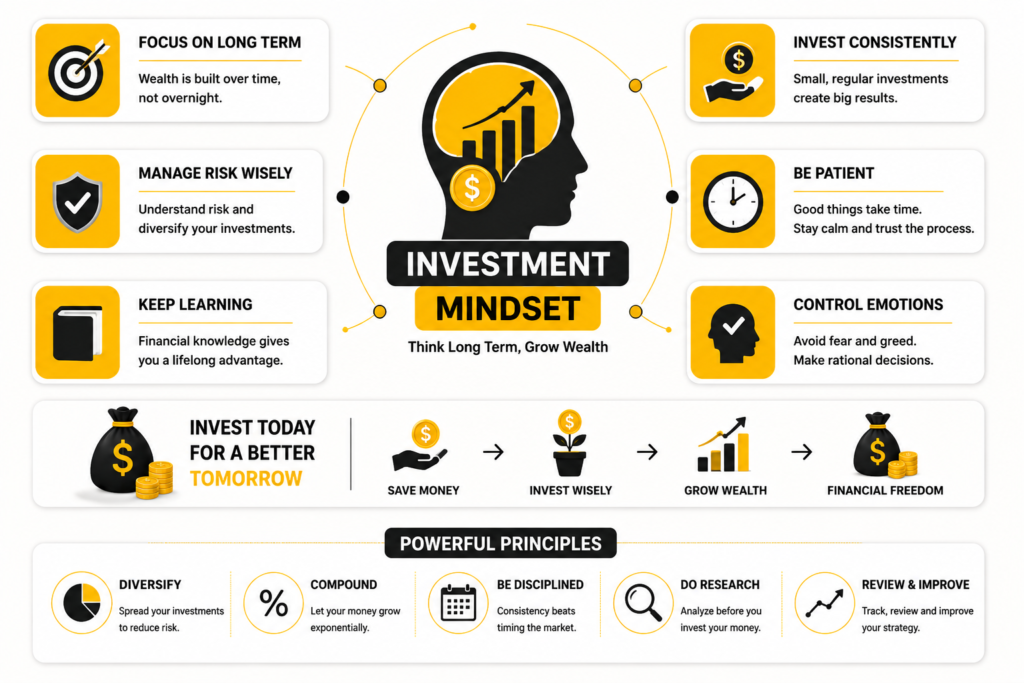
Building wealth is not only about how much money you earn. In many cases it depends more on how you think about money. This is where an investment mindset becomes important. People with a strong investment mindset understand that money should grow over time instead of sitting idle. They focus on long-term financial goals calculated risks patience and smart decision-making.
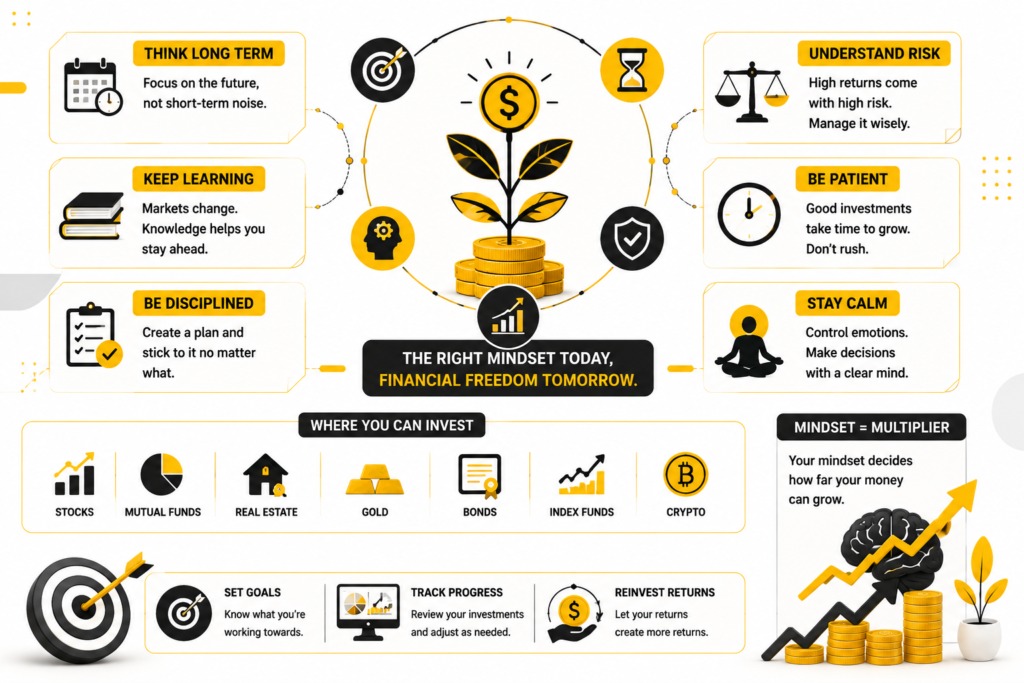
In today’s fast-changing financial world having the right investment mindset is more important than ever. Inflation continues to reduce purchasing power markets change rapidly and new investment opportunities appear almost daily. Whether someone is investing in stocks real estate mutual funds cryptocurrencies or a retirement fund mindset often determines success more than luck.
Many beginners think investing is only for wealthy people or financial experts. However the reality is different. Anyone can develop a smart investor mentality with proper knowledge discipline and consistent habits. A good investment mindset helps people avoid emotional decisions manage risks wisely and stay focused on long-term financial growth.
This guide explains everything you need to know about developing an investment mindset including practical strategies financial tools common mistakes and real-world applications.
Key Takeaways
An investment mindset focuses on long-term wealth creation rather than quick profits.
Emotional control and patience are essential for successful investing.
Smart investors understand risk before investing money.
Financial tools like ROI calculators and SIP calculators simplify investment planning.
Consistency often matters more than timing the market perfectly.
An investment mindset is a way of thinking that focuses on growing wealth over time through smart financial decisions. Instead of spending all income immediately investors allocate money toward assets that may increase in value or generate income in the future.
People with this mindset think differently about money. They usually ask questions like:
Will this expense improve my financial future?
Can this money grow if invested wisely?
What are the long-term benefits of this decision?
An investment mindset is not limited to stock market investing. It also applies to education business growth real estate savings and even personal development. Successful investors understand that every financial choice can either move them closer to or further away from financial freedom.
Why an Investment Mindset Matters in Modern Finance
Modern economies are heavily influenced by inflation technology and changing job markets. Saving money alone is often no longer enough to build long-term wealth. If inflation grows faster than your savings account interest your money slowly loses value.
An investment mindset helps people combat this problem by focusing on growth-oriented financial strategies. Instead of relying only on salaries investors build multiple income sources through investments.
For example someone who invests regularly in index funds or mutual funds may benefit from compound growth over decades. Over time small investments can become significant wealth.
This mindset also helps people handle financial uncertainty better. Investors usually think in long-term cycles rather than reacting emotionally to short-term market fluctuations.
The Psychology Behind Successful Investing
Emotional Discipline
One of the biggest differences between successful and unsuccessful investors is emotional control. Markets naturally rise and fall. Fear and greed often cause people to make poor decisions.
During market crashes inexperienced investors may panic and sell their investments at losses. On the other hand experienced investors often stay calm because they understand that markets historically recover over time.
Emotional discipline allows investors to:
Avoid panic selling
Ignore market hype
Stay focused on long-term goals
Make rational financial decisions
Patience and Long-Term Thinking
Wealth creation usually takes time. Most successful investors did not become wealthy overnight. Instead they consistently invested money for years or even decades.
A strong investment mindset values patience over quick profits. Long-term investors understand the power of compounding and allow investments to grow gradually.
For example investing $200 monthly into a diversified portfolio for 20 years may produce substantial returns due to compound growth.
Growth Mindset vs Fixed Mindset in Investing
Understanding the difference between these mindsets is important for financial success.
Growth Mindset
Fixed Mindset
Learns from investment mistakes
Fears making mistakes
Focuses on long-term improvement
Wants instant profits
Studies market trends
Avoids financial learning
Accepts calculated risks
Avoids all risks
Adapts to market changes
Resists change
Investors with a growth mindset continuously improve their financial knowledge and strategies.
Core Principles of a Strong Investment Mindset
Financial Education
Knowledge is one of the most valuable investment tools. Smart investors continuously learn about financial markets economic trends taxes budgeting and investment strategies.
Reading books studying financial news and using finance tools can significantly improve investment decisions.
Risk Management
Every investment carries some level of risk. A strong investment mindset does not ignore risks but learns how to manage them effectively.
Good risk management includes:
Diversifying investments
Avoiding emotional decisions
Researching before investing
Not investing money needed for emergencies
Consistency
Many people believe investing requires large amounts of money. However consistency matters more than starting with huge capital.
Small monthly investments can create long-term wealth when maintained consistently.
Delayed Gratification
Investors often sacrifice short-term pleasures for future financial security. This concept is known as delayed gratification.
For example investing extra income instead of spending it on unnecessary luxury purchases can significantly improve future wealth.
Common Investment Mindset Mistakes
Chasing Quick Profits
Many beginners enter financial markets hoping to become rich quickly. This often leads to risky decisions and major losses.
Sustainable investing focuses on steady long-term growth instead of gambling-like behavior.
Following the Crowd
Social media and market hype frequently influence investor decisions. Buying investments simply because others are buying them can be dangerous.
Successful investors conduct independent research before making decisions.
Ignoring Diversification
Putting all money into one investment increases financial risk. Diversification spreads risk across different asset classes.
For example an investor may divide funds among:
Stocks
Bonds
Real estate
Mutual funds
Gold
Letting Fear Control Decisions
Fear causes many investors to sell investments during market declines. However temporary downturns are normal in investing.
Long-term investors usually focus on overall portfolio growth rather than daily market movements.
The Role of Compound Interest in an Investment Mindset
Compound interest is one of the most powerful concepts in finance. It allows investors to earn returns not only on their original investment but also on previously earned returns.
Suppose you invest $5000 at an annual return rate of 8% compounded yearly for 20 years.
The investment may grow significantly due to compounding even without adding extra money.
This is why long-term investing is a major part of a strong investment mindset.
Investment Tools That Support Better Financial Decisions
ROI Calculator
An ROI Calculator helps investors measure profitability.
ROI formula:
ROI = \frac{Net\ Profit}{Investment\ Cost} \times 100
This tool is commonly used in:
Stock investing
Real estate investing
Business investments
Marketing campaigns
SIP Calculator
A SIP Calculator helps estimate returns from regular investments in mutual funds.
Investors use SIP calculators to plan long-term wealth goals like retirement education or buying property.
Compound Interest Calculator
This calculator helps investors estimate future investment growth using compounding principles.
It simplifies financial planning and shows the importance of long-term investing.
EMI Calculator
An EMI Calculator helps borrowers calculate monthly loan payments. Investors often use this tool before purchasing property or financing businesses.
Tax Calculator
Taxes affect investment returns. Tax calculators help investors estimate liabilities and improve tax planning strategies.
Real-World Applications of an Investment Mindset
Stock Market Investing
Investors with a strong mindset usually focus on company fundamentals rather than short-term market noise.
For example long-term investors often invest in businesses with:
Strong earnings
Stable management
Competitive advantages
Long-term growth potential
Real Estate Investment
Property investors use an investment mindset when analyzing rental income property appreciation and market trends.
Instead of emotional buying smart investors calculate potential returns carefully.
Retirement Planning
Retirement investing requires patience and consistency. People with an investment mindset start saving early and understand the value of compound growth.
Business Ownership
Entrepreneurs also benefit from investment thinking. Reinvesting profits into business expansion can create long-term wealth.
Personal Development
Investing in education skills and networking can also generate financial returns over time.
How Beginners Can Develop an Investment Mindset
Start Small
You do not need thousands of dollars to begin investing. Many platforms allow small investments into stocks ETFs or mutual funds.
Clear financial goals improve discipline and motivation.
Examples include:
Buying a house
Early retirement
Building passive income
Funding education
Investment Mindset and Risk Tolerance
Different investors have different risk tolerance levels. Younger investors may accept higher risks because they have more time to recover from market downturns.
Conservative investors often prefer stable investments like bonds or dividend-paying stocks.
Understanding your own comfort level with risk is essential for building a balanced investment strategy.
Historical Lessons About Investment Mindset
History shows that markets experience cycles of growth and decline. Investors who remained patient during economic downturns often benefited in the long run.
For example many stock markets recovered strongly after major financial crises over time. Investors who panicked and sold during downturns often missed later recoveries.
This highlights the importance of patience discipline and long-term thinking.
Technology and the Modern Investment Mindset
Technology has transformed investing dramatically. Mobile apps online brokerages and automated investing platforms have made investing accessible to almost everyone.
However easy access also increases emotional trading and impulsive decisions. A strong investment mindset helps investors avoid reacting emotionally to constant market updates.
Modern investors should balance technology convenience with disciplined financial strategies.
Building Wealth Through Multiple Investments
Many financially successful people build diversified income streams rather than relying on a single source of income.
Examples include:
Dividend stocks
Rental properties
Mutual funds
Businesses
Digital assets
Retirement accounts
An investment mindset encourages creating systems that generate long-term financial growth.
Conclusion
Developing an investment mindset is one of the most valuable financial skills anyone can build. It goes far beyond buying stocks or saving money. It is about learning how to think strategically manage risks wisely stay patient during uncertainty and focus on long-term wealth creation.
In today’s economy financial security often depends on making smart investment decisions consistently over time. People with a strong investment mindset understand that wealth usually grows gradually through discipline education and consistency.
Whether you are a beginner investor or someone looking to improve financial habits developing the right mindset can significantly improve your financial future. By learning continuously using financial tools wisely and focusing on long-term goals you can make more confident and informed investment decisions.
FAQs
What is an investment mindset?
An investment mindset is a way of thinking focused on long-term financial growth smart risk management and wealth creation through strategic investments.
Why is an investment mindset important?
It helps people make better financial decisions avoid emotional investing mistakes and build long-term wealth more effectively.
Can beginners develop an investment mindset?
Yes. Beginners can build an investment mindset through financial education consistent investing budgeting and long-term planning.
How does compound interest support investing?
Compound interest allows investments to grow faster because returns generate additional returns over time.
What are the biggest investment mindset mistakes?
Common mistakes include emotional investing chasing quick profits lack of diversification and following market hype blindly.
Which tools help investors make better decisions?
Popular finance tools include ROI calculators SIP calculators compound interest calculators EMI calculators and tax calculators.
Is investing risky?
All investments involve some level of risk. However proper diversification and long-term planning can help reduce financial risks.
How long does it take to build wealth through investing?
Building wealth usually takes years of consistent investing patience and disciplined financial habits.
I am a professional finance content writer with expertise in personal finance investing, banking, loans, insurance, credit cards, budgeting, and market related topics. I create clear, SEO optimized, and reader friendly finance content that helps audiences understand complex financial concepts in simple words. My goal is to write trustworthy and engaging content that improves search visibility, builds credibility, and supports business growth.
I am a professional finance content writer with expertise in personal finance investing, banking, loans, insurance, credit cards, budgeting, and market related topics. I create clear, SEO optimized, and reader friendly finance content that helps audiences understand complex financial concepts in simple words. My goal is to write trustworthy and engaging content that improves search visibility, builds credibility, and supports business growth.