Chronological Age Calculator: Accurate Age Calculation Guide
Shanzay Arain·Jun 02, 2026
A chronological age calculator may seem like a simple online tool but its practical value extends far beyond determining how old someone is. Whether you are planning for retirement applying for insurance evaluating investment timelines calculating eligibility for financial products or managing healthcare decisions understanding chronological age can play a surprisingly important role.
Many people search for a chronological age calculator because they want an exact age calculation in years months and days. However the concept carries broader implications in finance economics healthcare education and workforce planning. Age influences risk tolerance investment strategies retirement planning and even lending decisions. In a world increasingly driven by data accurate age calculations have become more important than ever.
As financial institutions employers healthcare providers and government agencies continue to rely on age-based assessments understanding how chronological age works can help individuals make better financial and life decisions. This guide explores everything you need to know about chronological age calculators how they work why they matter and how they intersect with modern financial planning.
What Is a Chronological Age Calculator?
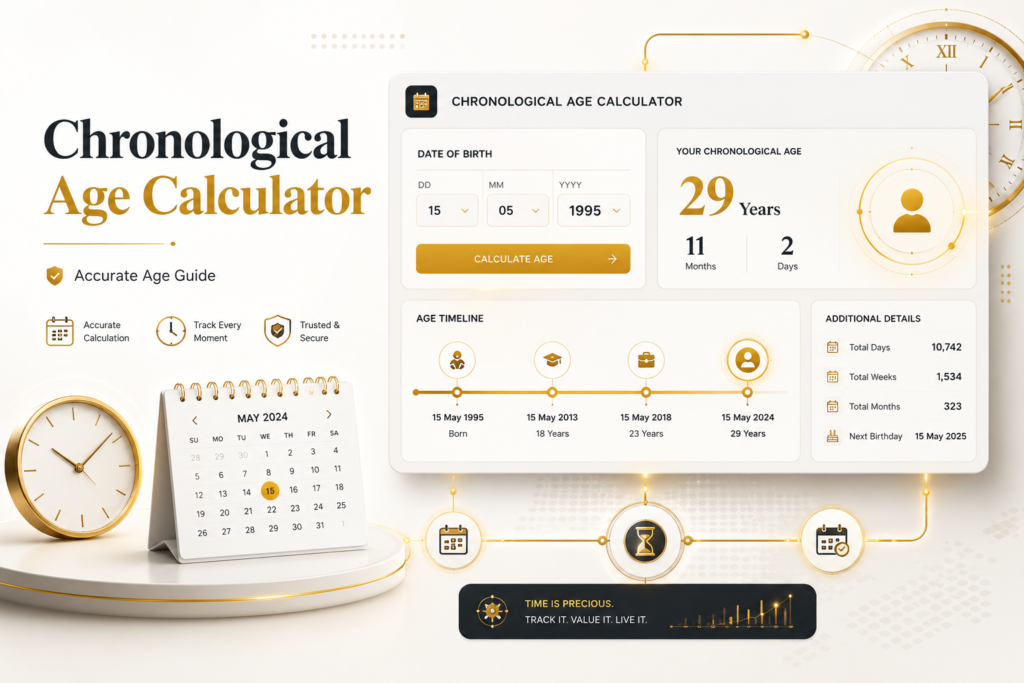
A chronological age calculator is a tool designed to determine a person’s exact age based on their date of birth and a specific reference date. The result is usually displayed in years months and days providing a more precise measurement than simply stating someone’s age in years.
Chronological age refers to the amount of time that has passed since a person’s birth. Unlike biological age which measures physiological health and aging chronological age is purely mathematical. It serves as the standard age measurement used by governments employers schools insurance companies and financial institutions worldwide.
The popularity of online chronological age calculators has increased significantly as people seek quick and accurate calculations for applications legal documents healthcare assessments and retirement planning. These tools eliminate manual errors and provide instant results.
For many individuals calculating exact age is necessary when applying for age-sensitive benefits pension programs educational opportunities or financial products. In these cases even a small calculation error can affect eligibility or planning decisions.
How a Chronological Age Calculator Works
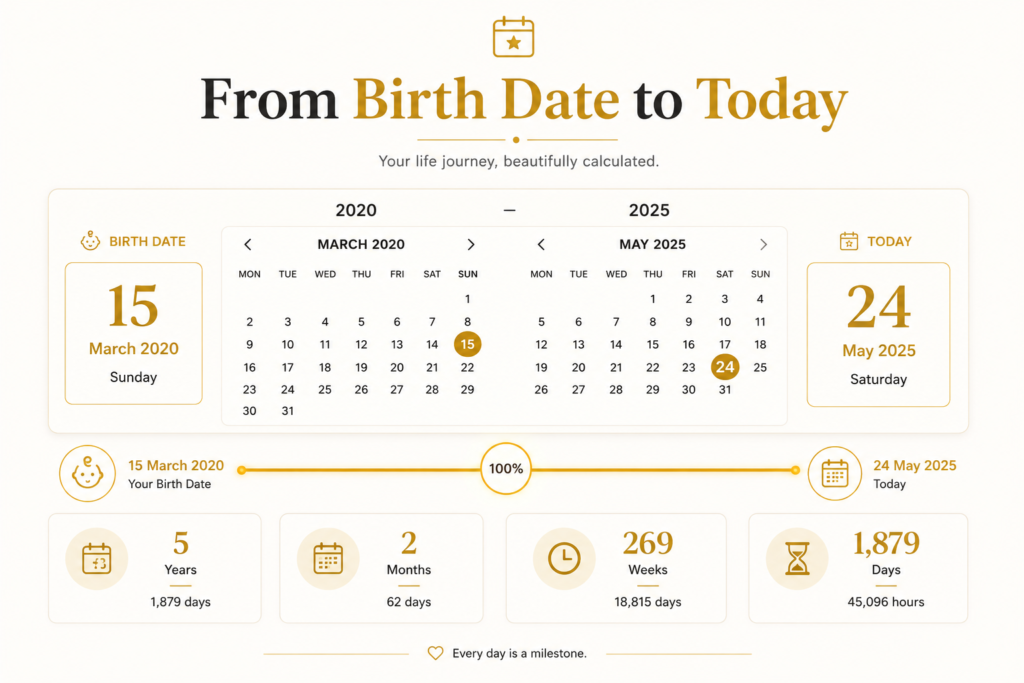
At its core a chronological age calculator compares two dates: the birth date and the current date or selected reference date. The difference between these dates is then converted into years months and days.
While the concept appears straightforward accurate calculations require accounting for leap years varying month lengths and date boundaries. Professional-grade calculators use calendar-based algorithms to ensure precision.
For example if an individual was born on January 15 1995 and the calculation date is June 2 2026 the calculator determines the exact elapsed time rather than simply subtracting years. This provides a more detailed and accurate result.
Modern calculators also support future date projections. This functionality helps individuals estimate their age at retirement determine future eligibility dates or plan long-term financial goals. Financial planners frequently use these calculations when modeling retirement scenarios and investment timelines.
Why Chronological Age Matters in Financial Planning
Chronological age plays a fundamental role in personal finance. Most financial decisions are linked directly or indirectly to age-related milestones. Retirement accounts pension eligibility insurance premiums investment strategies and social security benefits often depend on age calculations.
Younger investors generally have longer investment horizons allowing them to tolerate greater market volatility. Older investors on the other hand often prioritize capital preservation and income generation. Financial advisors use chronological age as one of the key factors when recommending asset allocation strategies.
Retirement planning provides another excellent example. Knowing your exact age helps determine how many years remain before retirement how aggressively you should save and how much risk your portfolio can reasonably assume.
Insurance providers also rely heavily on chronological age when calculating premiums. Life insurance health insurance and long-term care policies frequently use age as a major pricing factor. Accurate age calculations therefore influence both coverage options and costs.
Chronological Age and Retirement Readiness
Retirement planning is one of the most important applications of chronological age calculations. The number of years remaining until retirement affects savings goals investment choices and withdrawal strategies.
An individual who is 35 years old may have three decades or more to accumulate retirement assets. This longer timeframe allows compound interest to work effectively and provides opportunities to recover from market downturns. In contrast someone approaching retirement must focus more on protecting accumulated wealth.
Retirement readiness calculations often begin with age-based projections. Financial planners estimate future income needs expected investment growth inflation impacts and withdrawal rates using chronological age as a foundational variable.
Government retirement benefits and pension programs frequently establish eligibility thresholds based on exact age requirements. Therefore chronological age calculations are essential for determining when benefits can begin and how retirement income should be structured.
Chronological Age Versus Biological Age
One of the most common areas of confusion involves the difference between chronological age and biological age. While chronological age measures time since birth biological age reflects physical health and physiological condition.
A 50-year-old individual who exercises regularly maintains a healthy diet and manages stress effectively may have a biological age significantly younger than their chronological age. Conversely unhealthy lifestyle choices can accelerate biological aging.
This distinction has become increasingly important in financial planning and insurance underwriting. Some insurers and healthcare organizations now incorporate wellness metrics and health data into risk assessments alongside chronological age.
Investors and entrepreneurs are also paying attention to longevity trends. As life expectancy increases retirement planning strategies continue evolving. People may need larger retirement savings because they are living longer than previous generations.
The Role of Chronological Age in Wealth Building
Age strongly influences wealth accumulation patterns. Research consistently shows that wealth-building opportunities vary significantly across different life stages. Understanding these patterns helps individuals make smarter financial decisions.
In early adulthood income growth potential tends to be high making this an ideal period for aggressive investing and skill development. During middle age individuals often focus on balancing debt repayment family responsibilities and retirement contributions.
Later in life wealth preservation becomes increasingly important. Investors shift toward reducing portfolio risk while maintaining sufficient growth to support long-term financial goals.
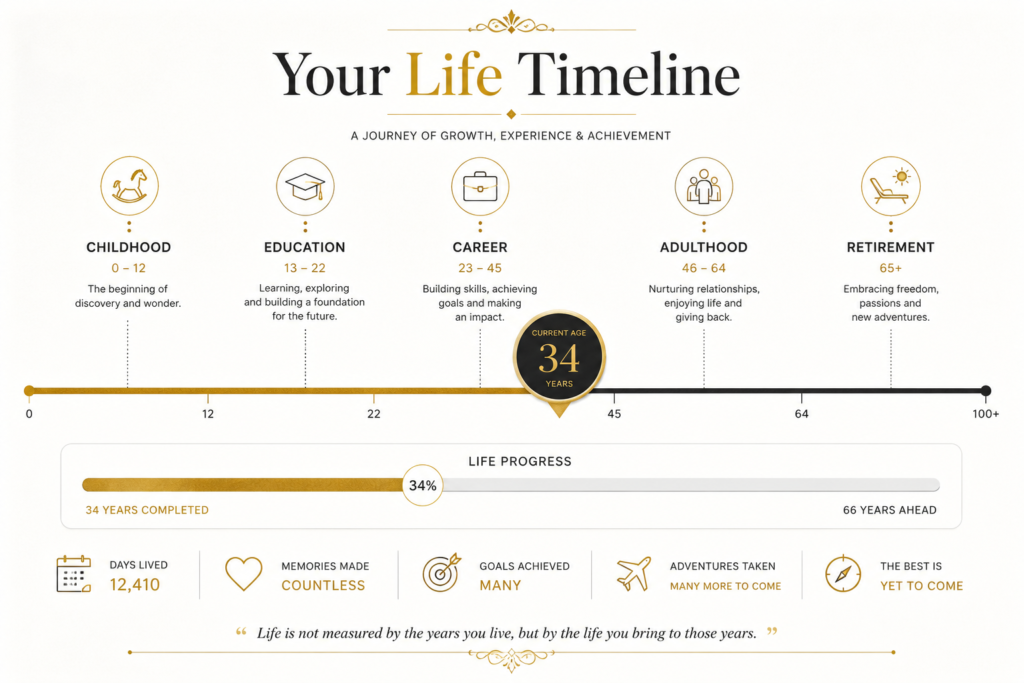
A chronological age calculator can assist individuals in understanding where they currently stand within their financial journey. By identifying age-based milestones people can better align their financial strategies with long-term objectives.
Age-Based Investing Strategies
Investment professionals frequently adjust portfolio recommendations based on chronological age. Although individual circumstances matter age remains one of the most important variables in investment planning.
Younger investors typically allocate larger portions of their portfolios to equities because they have time to recover from market volatility. This growth-oriented strategy can significantly increase long-term wealth accumulation.
As investors age portfolio allocations often become more conservative. Bonds dividend-producing assets and income-generating investments may play larger roles in preserving capital and reducing risk.
The concept of lifecycle investing is built around chronological age. Target-date retirement funds for example automatically adjust asset allocation over time based on anticipated retirement dates.
These age-based strategies demonstrate how a simple age calculation can influence major financial decisions that affect wealth accumulation over decades.
How Businesses and Institutions Use Chronological Age
Organizations across numerous industries rely on chronological age calculations. Educational institutions determine enrollment eligibility employers verify workforce requirements and healthcare providers assess developmental milestones.
Financial institutions use age when evaluating retirement products insurance policies and long-term financial plans. Banks and lenders may also consider age when assessing certain financial products and repayment timelines.
Governments depend heavily on age calculations for taxation social programs retirement benefits and healthcare eligibility. Accurate age records help ensure fair access to public services and regulatory compliance.
Businesses increasingly utilize age analytics to understand consumer behavior. Marketing campaigns product development and customer segmentation often incorporate age-related data to improve effectiveness.
Technology and the Evolution of Age Calculators
The digital transformation has significantly improved the accuracy and accessibility of chronological age calculators. Modern tools can instantly perform calculations that once required manual effort and extensive verification.
Artificial intelligence and advanced software systems are further enhancing age-based analytics. Financial technology companies increasingly integrate age calculations into budgeting apps retirement planning platforms and investment management tools.
Cloud computing has enabled real-time age calculations across multiple systems and databases. This integration reduces administrative errors while improving efficiency for organizations and consumers.
As personalization becomes more important age calculators are evolving beyond basic date calculations. Some platforms now combine age data with financial planning tools health metrics and retirement projections to provide comprehensive insights.
Future Trends in Age Analytics and Personal Finance
The relationship between age and financial planning is becoming increasingly sophisticated. Advances in data analytics are enabling more personalized financial recommendations based on age behavior income and life goals.
Financial technology platforms are beginning to integrate predictive modeling that uses age-related data to forecast retirement outcomes investment needs and wealth accumulation potential. These innovations can help consumers make more informed decisions.
The growing longevity economy also creates new opportunities. As populations age and life expectancy rises businesses are developing products and services tailored to older consumers. Understanding chronological age becomes essential for both consumers and companies operating in these markets.
Future financial planning tools may combine chronological age biological age lifestyle data and artificial intelligence to create highly personalized wealth-building strategies.
Conclusion
A chronological age calculator is far more than a simple date tool. It serves as a foundational resource for financial planning retirement preparation insurance decisions wealth management and long-term goal setting.
Understanding chronological age helps individuals make informed decisions about investing saving borrowing and retirement planning. Financial institutions healthcare providers governments and businesses all rely on accurate age calculations to deliver services and assess eligibility.
As technology continues to evolve chronological age calculators will likely become even more integrated into personal finance and decision-making platforms. While calculating age may seem basic on the surface its influence extends into nearly every aspect of modern life and financial planning.
FAQs
What is a chronological age calculator?
A chronological age calculator is a tool that determines a person’s exact age by calculating the time elapsed between their birth date and a selected reference date.
How accurate are online chronological age calculators?
Most reputable calculators are highly accurate because they account for leap years varying month lengths and calendar-specific calculations.
Why is chronological age important in finance?
Chronological age influences retirement planning investment strategies insurance premiums pension eligibility and other financial decisions.
What is the difference between chronological age and biological age?
Chronological age measures time since birth while biological age reflects physical health wellness and physiological aging.
Can a chronological age calculator help with retirement planning?
Yes. It helps determine retirement timelines eligibility for benefits investment horizons and long-term savings goals.
Do insurance companies use chronological age?
Yes. Age is one of the primary factors used when calculating life insurance health insurance and long-term care insurance premiums.
How often should financial plans be updated based on age?
Financial experts generally recommend reviewing and adjusting financial plans annually or whenever major life milestones occur.
I am a professional finance content writer with expertise in personal finance investing, banking, loans, insurance, credit cards, budgeting, and market related topics. I create clear, SEO optimized, and reader friendly finance content that helps audiences understand complex financial concepts in simple words. My goal is to write trustworthy and engaging content that improves search visibility, builds credibility, and supports business growth.
I am a professional finance content writer with expertise in personal finance investing, banking, loans, insurance, credit cards, budgeting, and market related topics. I create clear, SEO optimized, and reader friendly finance content that helps audiences understand complex financial concepts in simple words. My goal is to write trustworthy and engaging content that improves search visibility, builds credibility, and supports business growth.