
A small amount of money can grow into a much larger balance when it has enough time to earn returns. A compound interest calculator helps you see exactly how that growth may happen by showing how your initial deposit, interest rate, contribution amount, and investment period affect your future balance.
For example, if you invest $10,000 and earn an average annual return of 7%, your money could grow to about $38,697 after 20 years with annual compounding. The original $10,000 remains the same, but the additional growth comes from earning returns on both your initial money and the interest already added.
A compound interest calculator is useful for anyone planning savings goals, retirement contributions, investment strategies, education funds, or longterm financial plans. Instead of guessing how much money you may have in the future, you can test different scenarios and understand how small changes can influence your results.
FinoraLabs compound interest calculator should help users quickly estimate future balances by entering a few basic details, including starting amount, interest rate, contribution frequency, and time period. The calculation provides a clearer picture of how saving consistently and giving money more time to grow can affect longterm outcomes.
What Does a Compound Interest Calculator Do?
A compound interest calculator estimates how much money can grow over time when interest is added back into the balance and future interest is calculated on the larger amount.
The calculator usually requires several inputs
- Initial investment or starting balance
- Additional monthly or yearly contributions
- Expected annual interest rate or return
- Number of years the money will grow
- Compounding frequency
After entering these details, the calculator estimates
- Future account value
- Total amount contributed
- Total interest or investment growth
- Effect of changing contribution amounts or time periods
For example, two people may invest the same amount of money but receive very different results because one person starts earlier or contributes consistently for a longer period.
A calculator makes these differences easier to understand without requiring complicated financial formulas.
How Compound Interest Works
Compound interest works by allowing earned interest to become part of the balance that earns future interest.
With simple interest, returns are calculated only on the original amount. With compound interest, the calculation includes previously earned interest.
Imagine you deposit $5,000 into an account earning 6% annually.
After the first year
- Starting balance $5,000
- Interest earned $300
- New balance $5,300
During the second year, the 6% interest is calculated on $5,300 instead of $5,000.
The difference may seem small during the first few years, but over several decades the effect becomes much larger.
This is why longterm investors often focus on starting early, maintaining consistent contributions, and allowing time for growth.
Compound Interest Calculator Formula Explained
Most compound interest calculations use the following formula
A = P(1 + r/n)^(nt)
Where
- A = Future value of the investment
- P = Initial principal amount
- r = Annual interest rate expressed as a decimal
- n = Number of times interest compounds each year
- t = Number of years
A calculator performs this formula automatically, allowing users to adjust different variables and compare outcomes.
For example, changing the investment period from 10 years to 30 years can create a significant difference because the money has more time to generate additional earnings.
Compound Interest Example How $10,000 Can Grow
Lets calculate a realistic example.
Assume
- Initial investment $10,000
- Annual return 7%
- Time period 20 years
- Compounding Annually
- Additional contributions None
Formula
$10,000 × (1 + 0.07)^20
Estimated future value
Approximately $38,697
The breakdown
- Original investment $10,000
- Growth earned About $28,697
The investor did not add any additional money after the initial deposit. The increase came from the effect of compounding over two decades.
If the same person also added $200 every month, the final amount could be significantly higher because new contributions would also have time to grow.
How Monthly Contributions Affect Compound Growth
Many Americans build wealth through regular contributions rather than one large deposit.
For example
- Initial investment $5,000
- Monthly contribution $250
- Annual return assumption 7%
- Investment period 25 years
The investor contributes
$250 × 12 × 25 = $75,000
Plus the original $5,000.
Total contributions
$80,000
Because each contribution has time to potentially earn returns, the final account value may be much higher than the amount deposited.
This approach is common for retirement accounts, brokerage accounts, and longterm savings plans.
However, investment returns are not guaranteed. Marketbased investments can increase or decrease depending on market conditions.
Why Time Has a Major Impact on Compound Interest
Time is one of the strongest factors affecting compound growth.
A person who starts investing at age 25 may have several decades for their money to grow. Someone who starts at age 45 may need to contribute more money to reach a similar goal because they have fewer years for compounding.
Consider two examples
Investor A
- Starts investing at age 25
- Invests $200 per month
- Continues for 40 years
Investor B
- Starts investing at age 45
- Invests $400 per month
- Continues for 20 years
Even though Investor B contributes twice as much each month, Investor A benefits from having more time available for growth.
This example shows why many financial professionals encourage people to begin saving as early as possible.
Compound Interest vs Simple Interest
Compound interest and simple interest calculate growth differently.
| Feature | Compound Interest | Simple Interest |
| Interest calculation | Based on original amount plus previous interest | Based only on original amount |
| Growth pattern | Can accelerate over time | Usually grows at a fixed rate |
| Common examples | Savings accounts, investments | Certain loans and financial products |
| Longterm impact | Greater potential growth | Lower accumulated growth |
Compound interest generally has a stronger effect over long periods because the balance continues increasing.
How Compounding Frequency Changes Results
Interest may compound at different intervals depending on the financial product.
Common schedules include
- Annually
- Quarterly
- Monthly
- Daily
More frequent compounding can slightly increase growth because interest is added to the balance more often.
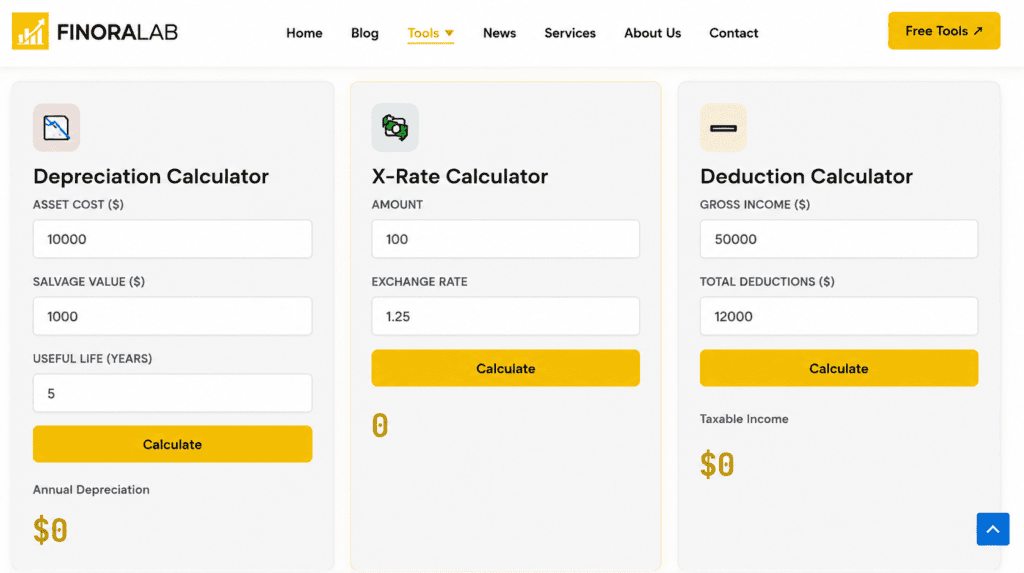
For example, a $10,000 investment earning 6% annually for 20 years may produce different results depending on whether interest compounds annually or monthly.
The difference may not appear large in short periods, but over many years even small changes can affect the final balance.
Using a Compound Interest Calculator for Retirement Planning
Many Americans use compound interest calculations to estimate retirement savings.
Retirement planning often involves several factors
- Current savings
- Monthly contributions
- Expected investment growth
- Years until retirement
- Inflation considerations
A calculator can help answer questions such as
- How much could my retirement account grow?
- How much should I contribute monthly?
- What happens if I increase my contributions?
- How does starting five years earlier affect my results?
Retirement accounts such as 401(k) plans and IRAs have specific tax rules and contribution limits that can change annually. Users should verify current limits through official IRS resources before making decisions.
Common Mistakes When Using a Compound Interest Calculator
Using Unrealistic Return Expectations
One common mistake is entering a very high annual return and assuming the result is guaranteed.
Historical investment performance does not guarantee future results. Market investments experience periods of growth and decline.
Ignoring Inflation
A future balance may look larger, but inflation can reduce purchasing power.
For example, $100,000 received decades from now may not buy the same amount of goods and services as $100,000 today.
Forgetting Fees
Investment fees can reduce longterm growth.
A small annual fee may appear insignificant, but over many years it can reduce the amount available for future goals.
Focusing Only on the Final Number
The final balance is only one part of financial planning.
A realistic plan should also consider income, expenses, emergency savings, debt, taxes, and personal goals.
Savings Accounts and Compound Interest
Compound interest does not only apply to investments.
Many savings products use compound interest, including
- Highyield savings accounts
- Certificates of deposit (CDs)
- Money market accounts
The interest rate offered by financial institutions changes over time. Consumers should review current account terms, fees, minimum balances, and withdrawal rules before opening an account.
The Federal Deposit Insurance Corporation (FDIC) provides information about deposit insurance coverage for eligible bank accounts.
Limitations of a Compound Interest Calculator
A calculator provides estimates, not guaranteed outcomes.
Actual results may differ because of
- Changing interest rates
- Investment market performance
- Taxes
- Fees
- Inflation
- Account rules
For savings accounts with fixed interest rates, calculations may be closer to actual results. For investments, future performance cannot be predicted with certainty.
A calculator is a planning tool that helps compare possibilities, not a promise of future earnings.
How FinoraLabs Compound Interest Calculator Can Help
A useful compound interest calculator should make financial planning easier by allowing users to test different scenarios.
Important features include
- Simple input fields
- Clear future value results
- Growth charts
- Contribution comparisons
- Interest earned breakdown
- Different compounding options
Instead of reading only about compound interest, users can immediately see how their own numbers change the outcome.
A calculator combined with educational content creates a better experience because readers can understand both the calculation and the financial concept behind it.
Conclusion
A compound interest calculator helps turn abstract financial concepts into practical numbers. By entering your starting balance, contributions, expected return, and investment timeline, you can estimate how your money may grow over time.The biggest factors affecting compound growth are usually time, consistency, contribution amount, and the rate of return. Starting earlier and contributing regularly can have a significant impact because your money has more opportunities to generate additional growth.However, calculator results are estimates. Real outcomes depend on account type, market performance, fees, taxes, and changing financial conditions.For U.S. savers and investors, using a compound interest calculator is a practical way to compare options, plan goals, and better understand the relationship between time and money.
You may also read more blogs
FAQs
How do I calculate compound interest?
Compound interest can be calculated using the formula A = P(1 + r/n)^(nt). A compound interest calculator performs this calculation automatically after you enter your investment amount, rate, time period, and compounding frequency.
What is the difference between compound interest and simple interest?
Simple interest is calculated only on the original amount, while compound interest includes previously earned interest. Over long periods, compound interest can create larger growth because earnings are added back into the balance.
Can a compound interest calculator predict investment returns?
No. A compound interest calculator provides estimates based on the numbers entered. Investment returns can change because markets, interest rates, fees, and economic conditions affect actual results.
How often should I use a compound interest calculator?
You can use one whenever your financial goals change. Many people use calculators when planning retirement savings, comparing investment options, or deciding how much they need to contribute toward a future goal.
Does compound interest apply to retirement accounts?
Yes. Retirement accounts can benefit from compound growth because contributions and earnings may accumulate over time. Tax rules and contribution limits depend on the account type and current IRS regulations.
Does adding money monthly increase compound interest?
Yes. Regular contributions give your money more opportunities to grow because each deposit can potentially earn returns over time.
Can compound interest work against me?
Yes. Compound interest can increase debt balances when interest accumulates on unpaid amounts. Credit cards and some loans may become more expensive if balances are not managed carefully.

I am a professional finance content writer with expertise in personal finance investing, banking, loans, insurance, credit cards, budgeting, and market related topics. I create clear, SEO optimized, and reader friendly finance content that helps audiences understand complex financial concepts in simple words. My goal is to write trustworthy and engaging content that improves search visibility, builds credibility, and supports business growth.






Pingback: Inflation Rate 2025 | Current Data, Trends & Impact
Pingback: What Is the Standard Deduction for 2025? Updated Amounts
Pingback: NerdWallet Mortgage Calculator: Complete 2026 Home Guide