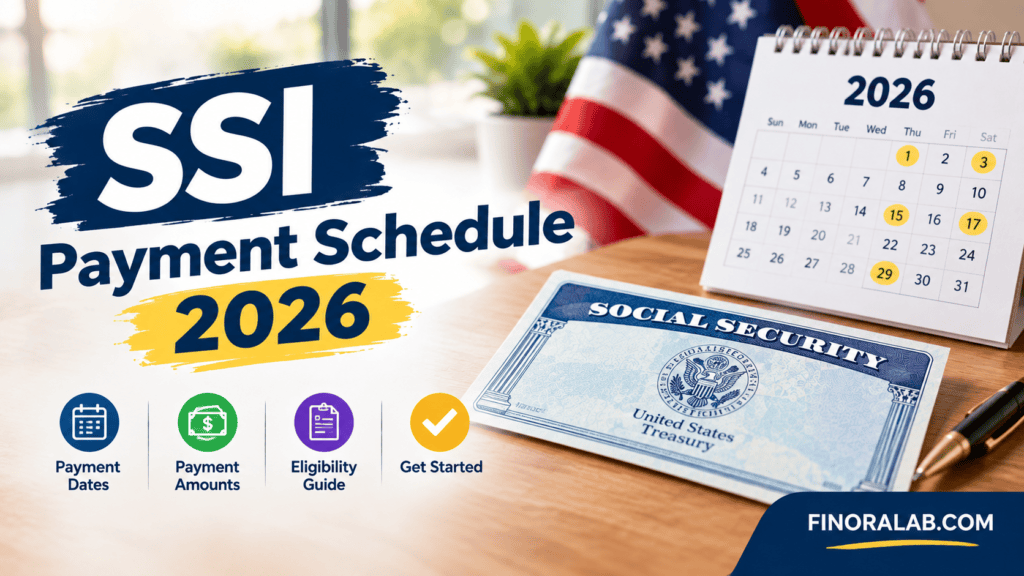
If you receive Supplemental Security Income, knowing your payment date can make it much easier to plan rent, groceries, utilities, prescriptions, and other monthly expenses. The SSI payment schedule 2026 follows a relatively simple rule SSI payments are generally issued on the first day of each month. If the first falls on a Saturday, Sunday, or federal holiday, the payment is generally issued on the last business day before that date.
That rule creates several months in 2026 when an SSI payment arrives before the calendar month it covers. For example, the January 2026 SSI payment was scheduled for December 31, 2025, because January 1 was New Years Day, a federal holiday. Similarly, the August 2026 payment was scheduled for July 31 because August 1 fell on a Saturday.
The schedule can therefore look unusual if you expect one SSI deposit during every calendar month. An early payment does not normally mean you are receiving an extra monthly benefit. It generally means the payment for the upcoming month was moved forward because the normal payment date fell on a weekend or holiday.
SSI Payment Schedule 2026 Monthly Dates
The Social Security Administrations official 2026 payment calendar shows the regular SSI payment pattern and the dates affected by weekends and holidays.
Here is the practical schedule for SSI payments covering the 2026 benefit months
SSI Benefit Month
Expected Payment Date
January 2026
December 31, 2025
February 2026
January 30, 2026
March 2026
February 27, 2026
April 2026
April 1, 2026
May 2026
May 1, 2026
June 2026
June 1, 2026
July 2026
July 1, 2026
August 2026
July 31, 2026
September 2026
September 1, 2026
October 2026
October 1, 2026
November 2026
October 30, 2026
December 2026
December 1, 2026
These dates follow SSAs rule that SSI is generally paid on the first of the month, with payment moved to the preceding business day when the first falls on a weekend or legal public holiday.
There is another date worth knowing if you are planning your budget into early 2027 the January 2027 SSI payment is scheduled for December 31, 2026, because January 1, 2027 is a federal holiday. That means someone receiving SSI may see two SSI payments during December 2026 even though one payment is actually for January 2027.
This is one of the most important points to remember about the SSI calendar. The date the money arrives in your bank account is not always the same as the benefit month for which the payment is intended.
Why SSI Payments Sometimes Arrive Early
SSI payments are normally due on the first day of the month. However, federal rules provide for payment on the last working day immediately before the first when the first day falls on a weekend or legal public holiday.
Suppose the first day of a month is Sunday. SSA cannot use Sunday as the normal payment date, so the payment is generally moved to the preceding Friday. If the first day is Saturday, the payment generally moves to Friday as well.
Federal holidays can produce the same result. For example, January 1, 2026, was a Thursday and a federal holiday. The January SSI payment was therefore made on December 31, 2025. SSA confirms that increased 2026 SSI payments began with the December 31, 2025 payment.
This scheduling system is not a special bonus or additional SSI payment. The early deposit is simply a change in the payment date.
For household budgeting, that distinction matters. If your January payment arrives in December, you should generally treat it as January income rather than assuming that December has an additional months SSI available for regular spending.
Which 2026 SSI Payments Were Moved?
Several 2026 SSI payment dates were affected by weekends or holidays.
The January payment was moved to December 31, 2025 because January 1 was New Years Day. The February payment was moved to January 30 because February 1 fell on Sunday. The March payment was moved to February 27 because March 1 fell on Sunday.
The August payment was moved to July 31 because August 1 fell on Saturday. The November payment was moved to October 30 because November 1 fell on Sunday.
There is also a year end scheduling effect. The December 2026 SSI payment itself is scheduled for December 1. But the January 2027 payment is scheduled for December 31, 2026 because January 1, 2027 is New Years Day.
As a result, a recipient can receive two SSI deposits in a single calendar month and then receive no SSI deposit during the following calendar month. This does not necessarily indicate a missing payment.
Example Why Two SSI Payments Can Appear in One Month
Imagine a recipient normally receives $700 in federal SSI after the applicable income calculation.
In July 2026, the recipient receives the regular July payment on July 1. The recipient then receives another $700 on July 31. The first payment is for July, while the July 31 payment is the August benefit.
From the recipients bank statement, it may appear that SSI was paid twice in July. But the person has not received two July benefits. One payment is the July benefit and the other is the August benefit.
The same concept applies at the end of 2026. A December 1 payment covers December, while a December 31 payment covers January 2027.
This distinction can prevent unnecessary concern about an apparent missing payment in the following month.
Does the SSI Payment Schedule Change the Amount You Receive?
No. A payment being moved earlier because of a weekend or holiday does not, by itself, increase the monthly SSI benefit.
Your SSI payment amount depends on your individual circumstances, including countable income and other factors used under SSI rules. The payment schedule determines when the benefit is delivered, while the eligibility and payment calculation determines how much you receive.
For 2026, the maximum federal SSI payment is $994 per month for an eligible individual and $1,491 per month for an eligible couple. The 2026 amounts reflect a 2.8% cost of living adjustment.
The maximum federal amount is not necessarily what every recipient receives. Countable income, living arrangements, and other circumstances can reduce the federal SSI payment. Some states also provide supplemental payments, so total benefits can vary depending on where a recipient lives.
For example, suppose a recipients calculated federal SSI benefit is $750. If that payment is scheduled early because the first of the month falls on a weekend, the recipient receives the same calculated benefit on the earlier date. The calendar shift does not automatically turn $750 into $994.
How the 2026 COLA Affects SSI Payments
The 2026 cost of living adjustment is another reason people searching for the SSI payment schedule may see different amounts than they received previously.
The Social Security Administration announced a 2.8% COLA for 2026 for Social Security and SSI payments. Increased SSI payments began with the payment made on December 31, 2025, because that payment represented the January 2026 SSI benefit.
This timing can cause confusion. A person might receive a higher SSI payment in late December 2025 and assume it is a December increase. It was actually the increased January 2026 SSI payment arriving early.
For example, if someone was receiving an SSI amount that increased as a result of the 2026 COLA, the first payment reflecting the increase was the December 31, 2025 payment for January 2026. The official benefit month matters more than the calendar month in which the money entered the account.
SSI Payment Dates vs. Social Security Payment Dates
SSI and Social Security retirement, survivor, or disability payments do not always follow the same schedule.
SSI generally follows the first of the month rule. Social Security retirement and other Social Security benefits commonly follow a different Wednesday based schedule depending on the beneficiarys birth date.
SSAs 2026 calendar states that Social Security benefits are generally paid on the second Wednesday for birthdays from the 1st through 10th, the third Wednesday for birthdays from the 11th through 20th, and the fourth Wednesday for birthdays from the 21st through 31st.
There are also special rules for some people who received Social Security before May 1997 or who receive both Social Security and SSI. SSAs official calendar states that, in those circumstances, Social Security is paid on the third of the month and SSI on the first.
That means two people who both describe themselves as Social Security recipients may have completely different deposit dates.
If you receive SSI only, the first of the month schedule is generally the relevant schedule. If you receive both SSI and another Social Security benefit, you should check the official calendar and your individual payment information rather than assuming that every Social Security payment follows the same date.
What If Your SSI Payment Does Not Arrive on the Expected Date?
A scheduled payment date does not always mean the money will appear at exactly the same time for every recipient.
Bank processing schedules can vary. Electronic deposits can also be affected by financial institution processing. SSAs official payment calendar advises people who do not receive a payment on the expected date to allow three additional mailing days before contacting Social Security.
If the expected payment date passes, first check your bank account and payment history. Make sure the payment was not deposited under a different transaction description or into another account associated with your benefit.
If the payment remains missing after the appropriate waiting period, contact Social Security through an official SSA channel. Avoid relying on unofficial payment calendars or social media posts for information about a missing benefit.
A delayed deposit can have different causes, so it is better to check your individual record than assume that the national payment schedule has changed.
Does SSI Arrive on Weekends?
SSI generally does not use a Saturday or Sunday as the payment date when the first day of the month falls on a weekend. Instead, the payment is generally moved to the preceding business day.
For example, February 1, 2026 was a Sunday, so the February SSI payment was scheduled for Friday, January 30. August 1, 2026 was a Saturday, so the August SSI payment was scheduled for Friday, July 31. November 1, 2026 was a Sunday, so the November payment was scheduled for Friday, October 30.
This explains why checking only the calendar date of the first day of each month can produce an incorrect expectation.
The official SSA calendar is the best reference because it accounts for the actual calendar and federal payment rules.
How to Budget Around an Early SSI Payment
Early SSI payments can make monthly budgeting slightly more complicated. The safest approach is to budget based on the benefit month, not simply the month in which the deposit appears.
Consider the July 31, 2026 payment. It is the August benefit. If you spend it as though it were additional July income, you could have less money available for August expenses.
A simple system is to identify each payment by its benefit month. If the payment arrives early, mark the money as belonging to the upcoming month. This can be especially useful for recipients who depend on SSI for recurring expenses such as rent, electricity, food, transportation, or medication.
The same approach can help in December. If you receive a December 31, 2026 SSI payment, remember that it is the January 2027 benefit. The payment may be visible in your December bank statement even though it is intended for the following benefit month.
This does not mean every recipient must place the money into a separate account. The key is simply recognizing the benefit month so an early deposit is not mistaken for extra income.
Can an Early SSI Payment Mean You Get Less Money Later?
An early payment can create the appearance of a skipped month, but the schedule itself does not remove a monthly SSI benefit.
Suppose the August benefit is paid on July 31. You will not normally receive another SSI payment on August 1 because the August payment has already been delivered.
This can feel like a missing August payment if someone looks only at bank deposits. In reality, the July 31 payment was the August payment.
The same thing happens with January. Because January 1 is a federal holiday, the January 2026 benefit was paid on December 31, 2025. A recipient who expected a deposit in January could mistakenly think Januarys payment was missing, even though it had already been delivered in December.
This is why benefit month labeling is useful for personal budgeting.
SSI and State Supplemental Payments
The federal SSI payment is only part of the potential benefit for some recipients. Certain states provide additional payments to eligible SSI recipients.
State supplements are separate from the federal maximum and can have their own rules. In some situations, the Social Security Administration administers the state supplement in others, the state administers its own program.
SSAs SSI program information recognizes that SSI payments can include federal and state amounts in states where SSA administers the state supplementation payment.
As a result, a recipient should not assume that another persons SSI deposit will be identical to theirs simply because both people qualify for SSI.
Living arrangement, income, state supplementation, and other factors can all affect the amount deposited.
What Changes Can Affect Your SSI Payment?
The payment calendar tells you when money should arrive, but it does not determine continued eligibility or the amount of the benefit.
SSI recipients must generally report changes that can affect their benefits. These may include changes in wages or other income, resources, living arrangements, marital status, and other relevant circumstances.
For example, starting a job can affect SSI because earned income is considered under the programs financial rules. Receiving money from another source can also affect the payment. A change in living arrangements may affect how shelter and food are treated.
If SSA determines that a recipient received more SSI than the person was eligible to receive, an overpayment can result. That can create a repayment obligation, so reporting changes accurately is an important part of maintaining a benefit.
The payment schedule therefore should not be viewed separately from eligibility. A person can have the correct scheduled payment date but still have a different payment amount because the underlying SSI calculation has changed.
Common SSI Payment Schedule Mistakes
One of the most common mistakes is treating an early payment as extra money. If SSI arrives twice during a calendar month, one of those payments may belong to the following benefit month.
Another mistake is assuming that every SSI payment arrives on the first calendar day of the month. Weekends and federal holidays can move the payment earlier.
It is also easy to confuse SSI with Social Security retirement or disability payments. The two programs can use different schedules, and a person receiving both may have multiple deposits during the same month.
Another mistake is relying on an old calendar. Payment dates change from year to year because the first day of the month falls on different weekdays, and federal holidays can change the applicable payment date.
Finally, some people see a payment arriving in December and automatically count it as December income for budgeting purposes. For SSI scheduling, that can be misleading because a December payment may represent Januarys benefit, particularly at the end of the year.
How to Check Your Personal SSI Payment Information
The published SSI payment schedule tells you the standard date, but your personal Social Security account can provide additional information about your benefits.
SSA provides online services through its official website, including access to personal benefit information. Your individual record is more useful than a generic calendar if you need to confirm your payment amount or other benefit details.
If you are expecting a payment and the money has not appeared, check your bank account first and compare the date with the official SSA schedule. If the payment is still missing after SSAs recommended waiting period, contact Social Security directly.
Be careful with websites that claim to provide special SSI payment dates, extra payments, stimulus payments, or guaranteed increases. A scheduled early payment caused by a weekend or holiday is not the same thing as an additional federal benefit.
SSI Payment Schedule 2026 and the Rest of the Year
For people planning the rest of 2026, the most unusual months are July, October, and December because of early payments associated with the following benefit month.
The August payment arrives July 31, the November payment arrives October 30, and the January 2027 payment arrives December 31.
That means someone relying on SSI may want to look ahead before making a monthly spending plan. The calendar can produce months with two deposits and months with no deposit, even though the recipient continues to receive one benefit for each applicable month.
The important question is not simply, How many SSI deposits did I receive this calendar month? Instead, ask, Which benefit month does each payment represent?
That distinction makes the 2026 schedule much easier to understand.
Conclusion
The SSI payment schedule 2026 follows the Social Security Administrations standard rule of paying SSI on the first day of the month, except when that date falls on a weekend or legal public holiday. In those situations, the payment generally moves to the preceding business day.For 2026, the January SSI benefit was paid on December 31, 2025. The February payment was made January 30, the March payment February 27, the August payment July 31, and the November payment October 30. The December 2026 payment is scheduled for December 1, while the January 2027 payment is scheduled for December 31, 2026.These early payments do not represent extra SSI benefits. They are payments for the upcoming benefit month that have been moved earlier because of the calendar. This is why a recipient may see two SSI deposits during one calendar month and none during the next.The 2026 federal SSI maximum is $994 per month for an eligible individual and $1,491 for an eligible couple, following the 2.8% COLA. Actual payments can be lower because SSI calculations take income and other circumstances into account.For budgeting purposes, the most useful habit is to track each deposit according to its benefit month, rather than simply the date it reaches your bank account. If a payment is missing on its scheduled date, SSA recommends allowing three additional mailing days before contacting the agency.
SSI is generally scheduled for the first day of each month. When the first falls on a Saturday, Sunday, or legal public holiday, the payment generally moves to the preceding business day. The exact 2026 dates therefore include several payments made during the preceding calendar month.
What is the January 2026 SSI payment date?
The January 2026 SSI benefit was paid on December 31, 2025. January 1, 2026 was New Years Day, a federal holiday, so the payment was moved to the preceding business day. SSA confirmed that the increased 2026 SSI payment began with this December 31 payment.
Why am I getting two SSI payments in one month?
You can receive two SSI deposits in one calendar month when a payment for the following benefit month is moved early because of a weekend or federal holiday. For example, the August 2026 benefit was scheduled for July 31 because August 1 fell on Saturday. The second payment is not an extra SSI benefit.
What day will SSI be paid in December 2026?
The December 2026 SSI payment is scheduled for December 1, 2026. However, the January 2027 SSI payment is scheduled for December 31, 2026, because January 1, 2027 is a federal holiday. Therefore, eligible recipients can see two SSI payments in December 2026.
Does SSI pay on weekends?
SSI generally does not use a weekend as the payment date when the first day of the month falls on Saturday or Sunday. Instead, the payment is generally moved to the preceding business day. This is why the February 2026 payment was scheduled for January 30 and the August 2026 payment for July 31.
How much is the maximum SSI payment in 2026?
The maximum federal SSI payment for 2026 is $994 per month for an eligible individual and $1,491 for an eligible couple. These are maximum federal amounts, not necessarily the amount every recipient receives. Countable income, living arrangements, and other circumstances can reduce the actual payment, and some states provide additional supplements.
What should I do if my SSI payment is late?
First, check your bank account and compare the deposit date with the official SSA schedule. SSAs 2026 payment calendar advises recipients to allow three additional mailing days if a payment does not arrive on the expected date before contacting Social Security.
Is the SSI payment schedule the same as the Social Security payment schedule?
No. SSI generally follows a first of the month schedule, while many Social Security retirement, survivor, and disability payments are scheduled according to the beneficiarys birth date and are commonly paid on the second, third, or fourth Wednesday. People receiving both SSI and Social Security can therefore have more than one payment date to track.
I am a professional finance content writer with expertise in personal finance investing, banking, loans, insurance, credit cards, budgeting, and market related topics. I create clear, SEO optimized, and reader friendly finance content that helps audiences understand complex financial concepts in simple words. My goal is to write trustworthy and engaging content that improves search visibility, builds credibility, and supports business growth.
I am a professional finance content writer with expertise in personal finance investing, banking, loans, insurance, credit cards, budgeting, and market related topics. I create clear, SEO optimized, and reader friendly finance content that helps audiences understand complex financial concepts in simple words. My goal is to write trustworthy and engaging content that improves search visibility, builds credibility, and supports business growth.