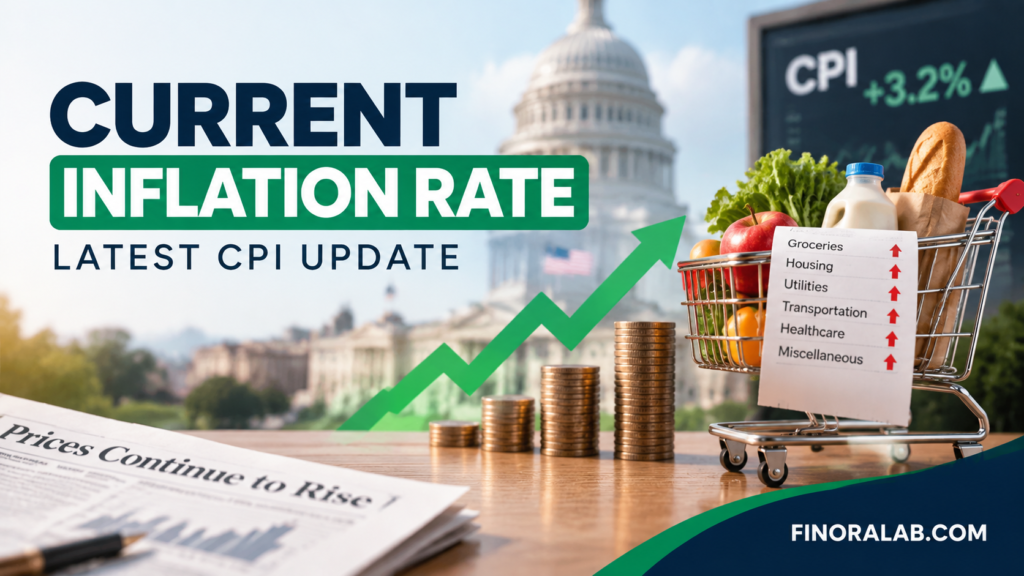
The current inflation rate is one of the most important economic numbers affecting everyday Americans. It influences how much people pay for groceries, housing, transportation, insurance, and other essential expenses. It also affects savings decisions, borrowing costs, investment returns, and household budgets.
As of the latest available U.S. inflation data, consumer prices continue to rise compared with the previous year. The Consumer Price Index (CPI), published by the Bureau of Labor Statistics (BLS), is one of the primary measures used to track inflation in the United States. Recent CPI reports show that inflation remains above the Federal Reserves long term 2% goal, although the rate has changed significantly compared with the high inflation period after the pandemic.
For consumers, the inflation rate does not simply represent a percentage on an economic report. It affects real financial decisions
How much money is needed for monthly expenses
Whether savings are keeping pace with rising prices
How expensive loans may become
How businesses price products and services
How much purchasing power a paycheck provides
For example, if inflation is 3% annually, something that costs $100 today may cost about $103 next year if the same inflation rate continues. The actual price change varies because different categories, such as housing, food, and energy, can move at different rates.
What Is the Current Inflation Rate in the United States?
The current inflation rate refers to the percentage increase in the overall price level of goods and services compared with a previous period, usually measured over 12 months.
In the United States, the most commonly followed measure is the Consumer Price Index (CPI). The CPI tracks changes in the prices consumers pay for a broad basket of goods and services, including
Housing
Food
Transportation
Medical care
Clothing
Recreation
Education
Other household expenses
Recent BLS CPI data shows that inflation has remained above the Federal Reserves 2% longer run objective, with monthly readings changing as different categories contribute to price increases or declines.
The exact inflation rate changes every month because prices do not move at the same pace across the economy. For example, energy prices can rise quickly because of changes in oil markets, while other categories may increase more slowly.
When people discuss the current inflation rate, they are usually referring to the latest year over year CPI percentage reported by the BLS.
How Inflation Is Measured Using CPI
The Consumer Price Index measures inflation by comparing the current cost of a basket of consumer goods and services with the cost during an earlier period.
This means prices increased by approximately 3% compared with the previous period.
The CPI basket includes thousands of prices collected from businesses and service providers across the country. The BLS uses these prices to estimate how consumer costs are changing over time.
However, CPI represents an average. Individual households may experience different inflation rates depending on where they live and how they spend money.
A renter in a major city may experience higher housing cost increases than a homeowner with a fixed mortgage. A person who spends more on gasoline may feel energy inflation more strongly than someone who drives less.
Current Inflation Rate vs Core Inflation
Economists often look at two major inflation measures
Headline Inflation
Headline inflation includes all categories measured by CPI, including
Food
Energy
Housing
Transportation
Healthcare
This measure reflects the overall change consumers experience.
Core Inflation
Core inflation removes food and energy prices because those categories can change quickly.
For example
Gas prices may rise sharply because of oil market changes.
Food prices may move because of weather conditions or supply issues.
Core inflation attempts to show longer term price trends without some of the most volatile categories.
The Federal Reserve reviews multiple inflation indicators when making monetary policy decisions. CPI is important, but the Fed also closely follows other measures such as the Personal Consumption Expenditures (PCE) price index.
Why Inflation Matters for Your Everyday Budget
Inflation affects nearly every household budget category.
A family may not notice a single price increase, but multiple small increases can create significant changes over time.
Example
Monthly expenses before inflation
Groceries $600 Gas $150 Utilities $250 Insurance $200
Total
$1,200
If these expenses increase by 5%
New monthly cost
$1,260
Difference
$60 per month
Annual impact
$720
For households with limited financial flexibility, even moderate inflation can require adjustments.
People may respond by
Changing spending habits
Comparing prices
Reducing unnecessary expenses
Increasing income
Reviewing savings strategies
How Inflation Affects Savings
Inflation reduces the purchasing power of money over time.
Suppose you keep $10,000 in cash for one year.
If inflation is 3%, the purchasing power of that money decreases because prices have increased.
The account balance may still show
$10,000
But the amount of goods and services that money can purchase may be lower.
This is why savers compare interest rates with inflation.
Example
Savings account interest
4%
Inflation
3%
Approximate difference
1% before taxes
This does not guarantee a real return because taxes, account terms, and future inflation changes affect the outcome.
The key consideration is whether money growth is keeping pace with rising costs.
How Inflation Affects Wages and Income
Inflation affects whether income gains translate into improved purchasing power.
Example
Year 1
Salary
$60,000
Year 2
Salary increases to
$63,000
Increase
5%
If inflation during the same period is 6%, the employee has more dollars but may have less purchasing power.
Economists often examine inflation adjusted wages to understand whether workers are financially better off after accounting for price changes.
Inflation can influence Federal Reserve decisions regarding interest rates.
When inflation remains elevated, the Federal Reserve may use higher interest rates to slow borrowing and spending activity.
Changes in interest rates can affect
Mortgage rates
Auto loans
Credit cards
Personal loans
Business financing
Example
A borrower applying for a mortgage may face a different monthly payment depending on the interest rate environment.
A higher mortgage rate can increase the cost of borrowing even if the home price remains unchanged.
Consumers planning major purchases should consider both the purchase price and borrowing costs.
Inflation and Housing Costs
Housing is one of the largest expenses for many Americans, and it is also one of the most important categories in inflation measurements.
Housing related costs include
Rent
Homeowners equivalent rent
Utilities
Insurance
Maintenance
Renters may feel inflation through increasing lease prices.
Homeowners with fixed rate mortgages may have more predictable principal and interest payments, although property taxes, insurance, and maintenance costs can still change.
Example
A renter paying
$1,800 monthly
experiences a 5% increase
$90 additional per month
Annual increase
$1,080
Housing inflation can significantly affect household budgets because housing usually represents a large portion of income.
Inflations Effect on Investments
Inflation is an important consideration for investors because returns need to be compared with rising prices.
Example
Investment return
8%
Inflation
3%
Approximate inflation adjusted return
5% before taxes and fees
Different investments respond differently during inflationary periods.
Some investors consider assets such as
Stocks
Bonds
Real estate
Treasury Inflation Protected Securities (TIPS)
The appropriate strategy depends on personal goals, risk tolerance, and financial circumstances.
Inflation alone does not determine whether an investment will perform well.
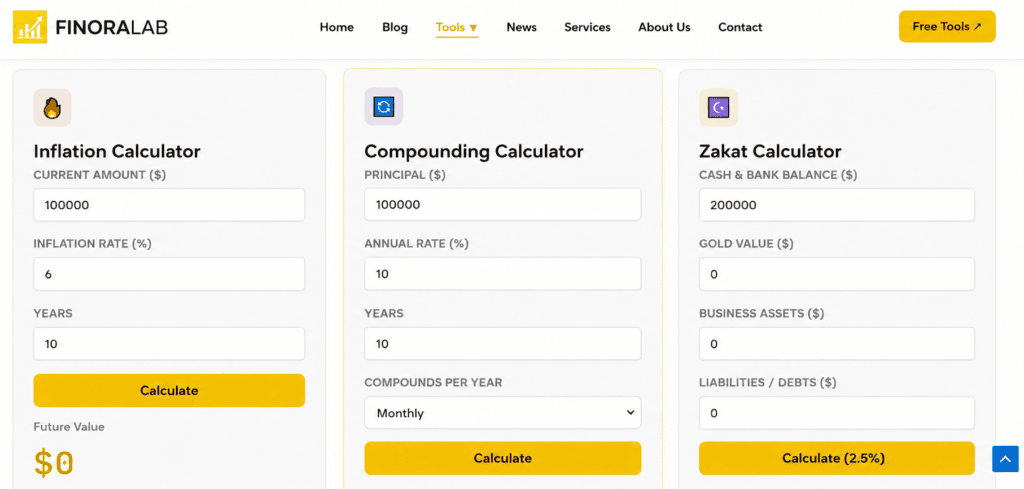
Using an Inflation Calculator
An inflation calculator helps people understand how money values change over time.
A common question is
How much would $50,000 from 1995 be worth today?
An inflation calculator estimates the equivalent purchasing power using historical price data.
It can help with
Comparing salaries across years
Understanding historical prices
Retirement planning
Long term financial decisions
Example
If a product cost $100 twenty years ago, an inflation calculator can estimate what amount would be needed today to purchase a similar amount of goods.
This helps people understand that a dollar amount does not always represent the same economic value.
Common Inflation Misunderstandings
Lower Inflation Does Not Mean Lower Prices
One common misunderstanding is thinking that lower inflation means prices return to previous levels.
That is usually not true.
If inflation falls from 8% to 3%, prices are still increasing, just more slowly.
Example
Year 1
$100 product
8% inflation
$108
Year 2
3% inflation
$111.24
The price increased both years.
Inflation Does Not Affect Everyone Equally
Different households experience different inflation levels.
A household spending more on rent, fuel, or groceries may feel inflation differently from someone with different spending patterns.
Inflation Is Not the Same as Price Increases for One Product
Inflation measures broad price changes across many categories.
A single product becoming more expensive does not automatically represent overall inflation.
How Consumers Can Prepare for Inflation
There is no single method that works for every household, but several financial habits can help manage rising prices.
Review Your Budget Regularly
A budget created several years ago may no longer reflect current expenses.
Review categories such as
Housing
Food
Insurance
Transportation
Subscriptions
Maintain Emergency Savings
Unexpected expenses become harder to handle when prices are rising.
Emergency savings can provide financial flexibility during periods of higher costs.
Review Debt Costs
Higher interest rates can increase borrowing costs.
Paying attention to credit card balances, loans, and refinancing opportunities can help manage expenses.
Consider Long Term Financial Goals
Inflation should be considered alongside retirement planning, investments, and savings decisions.
The current inflation rate is more than an economic statistic. It is a factor that influences daily financial choices.
A household planning for retirement needs to consider future living costs.
A business owner needs to consider changing supplier prices.
A borrower needs to consider interest rate conditions.
A saver needs to consider whether account returns are keeping pace with inflation.
Using tools such as inflation calculators, budget planners, and savings calculators can help consumers understand how inflation affects their personal finances.
Conclusion
The current inflation rate shows how quickly consumer prices are changing in the United States and provides important information about the cost of living, purchasing power, and economic conditions.Inflation affects more than grocery prices. It influences savings, wages, borrowing costs, housing decisions, and investment planning.
While national inflation data provides a broad picture, each household experiences inflation differently based on spending habits, location, income, and financial goals.The best way to respond to changing inflation conditions is to understand how rising prices affect your own finances. Reviewing budgets, monitoring savings growth, managing debt, and using financial calculators can help create a clearer plan.Inflation will continue to change over time, but understanding how it works allows consumers to make more informed financial decisions.
The current U.S. inflation rate changes monthly based on Consumer Price Index data released by the Bureau of Labor Statistics. Recent CPI reports show inflation remains above the Federal Reserves 2% longer run goal, although the rate changes as different categories affect prices.
How is the current inflation rate calculated?
The inflation rate is calculated by comparing changes in the Consumer Price Index over time. The CPI measures price changes for a broad basket of consumer goods and services.
Does inflation mean everything costs more?
Inflation means prices are increasing overall, but individual products and services may rise faster, slower, or even decrease. Different households may experience different effects depending on spending habits.
How does inflation affect my savings?
Inflation reduces purchasing power if money does not grow at a similar rate. Savings accounts, investments, and financial plans should be reviewed with inflation in mind.
Why does the Federal Reserve care about inflation?
The Federal Reserve monitors inflation because large or persistent price increases can affect economic stability. The Fed uses monetary policy tools to influence economic conditions.
Does lower inflation mean prices are falling?
No. Lower inflation means prices are rising more slowly. A decrease in inflation does not usually mean prices return to previous levels.
How can I protect my finances from inflation?
Consumers can review budgets, maintain emergency savings, manage debt, and consider long term financial planning strategies that account for changing purchasing power.
I am a professional finance content writer with expertise in personal finance investing, banking, loans, insurance, credit cards, budgeting, and market related topics. I create clear, SEO optimized, and reader friendly finance content that helps audiences understand complex financial concepts in simple words. My goal is to write trustworthy and engaging content that improves search visibility, builds credibility, and supports business growth.
I am a professional finance content writer with expertise in personal finance investing, banking, loans, insurance, credit cards, budgeting, and market related topics. I create clear, SEO optimized, and reader friendly finance content that helps audiences understand complex financial concepts in simple words. My goal is to write trustworthy and engaging content that improves search visibility, builds credibility, and supports business growth.