Federal Pell Grant: Eligibility, Amounts & How to Apply
Shanzay Arain·Aug 10, 2026
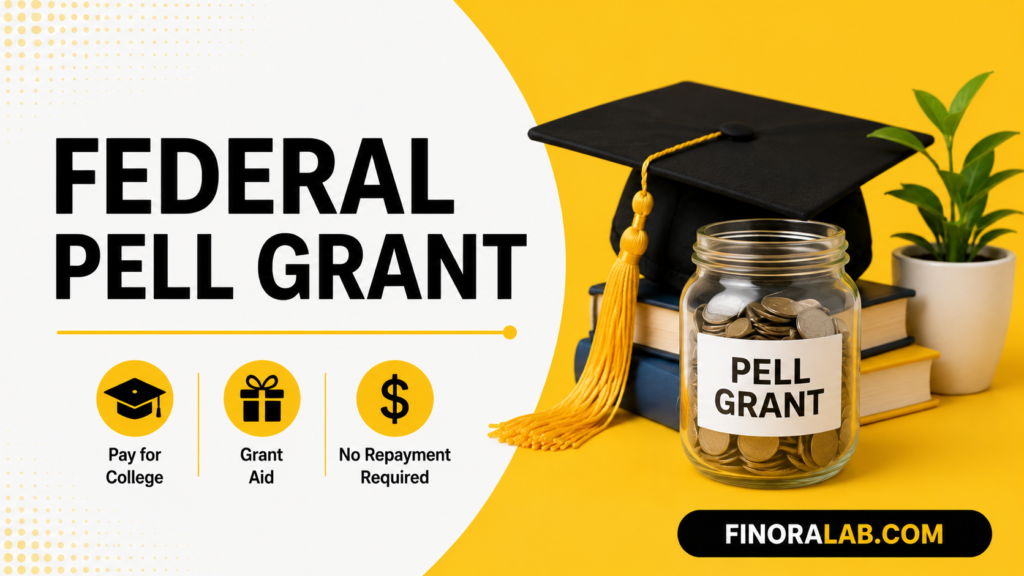
The federal Pell Grant is one of the most important sources of college financial aid for students with financial need. Unlike a student loan, a Pell Grant generally does not have to be repaid, making it particularly valuable for students trying to reduce the amount they borrow for college, career school, or other eligible education. For the 2026–27 award year, the maximum Federal Pell Grant award is $7,395. However, not every eligible student receives the maximum amount because awards depend on factors including financial need, family circumstances, enrollment, and the schools cost of attendance.
Understanding how the federal Pell Grant works can make a major difference in financial planning for education. Students and families often focus on tuition prices without considering grants that can reduce the actual amount they need to pay or borrow. The FAFSA is the central starting point for determining federal student aid eligibility, and submitting it can also help students access state and institutional aid. Because financial aid rules and award amounts can change, applicants should use official Federal Student Aid resources and their schools financial aid office when making important decisions.
What Is the Federal Pell Grant?
The Federal Pell Grant is a need based federal education grant generally designed for eligible undergraduate students who have not earned a bachelors, graduate, or professional degree. Unlike borrowed money, grant funding generally does not need to be repaid as long as the student remains eligible and meets applicable requirements. The program has supported students for decades and can be used at eligible colleges, universities, community colleges, career schools, trade schools, and qualifying online programs.
The Pell Grant is especially important because it can reduce the amount of money a student needs to obtain from other sources. Suppose a students eligible education costs are $12,000 and the student receives a $5,000 Pell Grant. The remaining $7,000 could potentially be covered through scholarships, savings, employment, institutional aid, payment plans, or student loans. This example does not mean every student will receive $5,000 or that the remaining amount must be borrowed. Instead, it illustrates why grants should generally be considered before taking on additional debt.
How Much Is the Federal Pell Grant in 2026–27?
For the 2026–27 award year, the maximum Federal Pell Grant award is $7,395. This is the maximum annual award, not an amount every student automatically receives. Actual eligibility can be lower depending on the students financial circumstances, enrollment status, cost of attendance, and other factors used in the federal aid calculation. Students should therefore avoid assuming that household income alone determines the award. The Department of Education considers multiple elements when determining Pell Grant eligibility.
For example, imagine two undergraduate students attending schools where eligible costs are at least $7,395. One student might qualify for the maximum award while another receives substantially less because their financial circumstances differ. The Federal Student Aid Estimator can provide an estimate before completing the FAFSA, but an estimate is not a guaranteed award. Once the FAFSA is processed and the student is admitted, the college or eligible school determines the actual financial aid offer.
Who Qualifies for a Federal Pell Grant?
Eligibility generally centers on undergraduate students who demonstrate financial need and have not already earned a bachelors, graduate, or professional degree. Age by itself does not automatically disqualify an undergraduate applicant. The Department of Education explains that financial need is determined using information such as family size, tax filing status, and federal poverty guidelines, rather than simply applying one universal income cutoff to every family. Certain special eligibility rules can also apply to particular students.
There are also circumstances that can affect eligibility beyond ordinary undergraduate enrollment. Federal Student Aid explains that Pell Grant access has been expanded to certain incarcerated students enrolled in approved prison education programs. Special provisions can also apply to certain younger students whose parent or guardian died in qualifying circumstances while serving as an armed forces member or public safety officer. Because these rules are specific, students should verify their individual circumstances through FAFSA and official Federal Student Aid resources rather than relying on general income assumptions.
How FAFSA Determines Pell Grant Eligibility
The Free Application for Federal Student Aid, commonly called the FAFSA, is the primary application used to access federal student aid. Completing and submitting the FAFSA is free. The information supplied can be used not only for federal aid but also by states, colleges, and some other financial aid providers when determining eligibility. This makes FAFSA completion an important part of education financial planning, even for families that believe they may not qualify for federal assistance.
After the FAFSA is processed, students receive a FAFSA Submission Summary. This summary can show an estimated Federal Pell Grant amount, the Student Aid Index, and other federal aid information. However, an estimated Pell Grant amount is not the same as a final school financial aid offer. The school makes the final determination after admission and reviews the students eligibility. Students should carefully check their FAFSA answers and correct errors because inaccurate financial or personal information can affect the aid calculation.
What Is the Student Aid Index?
The Student Aid Index, or SAI, is a number generated from FAFSA information and used by schools when determining a students financial aid eligibility. It is important to understand that the SAI is not a bill, and it is not the amount the family is required to pay for college. Instead, it is one component schools use when constructing a students financial aid package. A negative SAI can indicate particularly high financial need.
Students sometimes make the mistake of assuming that a lower SAI automatically means they will receive a specific Pell Grant amount. That is not necessarily the case. Pell eligibility involves additional federal calculations and requirements, while the school ultimately determines the students aid offer. A practical approach is to treat the SAI as one planning indicator rather than a final price tag. Students should compare the actual financial aid offers they receive from schools and calculate the remaining net cost before deciding where to enroll.
How Enrollment Status Affects Your Pell Grant
Enrollment status can affect how much Pell Grant funding a student receives. A student attending full time may qualify for a different annual award than a student attending less than full time. The exact calculation depends on federal rules and the students eligibility. This makes it important for part time students to avoid assuming that enrolling for fewer credits will automatically produce the same annual grant amount spread across fewer courses.
Year round Pell can also provide additional flexibility. Federal Student Aid explains that students who attend an additional term during an award year may be eligible to receive up to 150% of their scheduled annual Pell Grant award. For example, a student with a $3,000 annual Pell award might receive $1,500 during fall and $1,500 during spring and potentially another $1,500 during summer if the student meets applicable requirements.
What Can Pell Grant Money Pay For?
Pell Grant funds are intended to help with the cost of attending an eligible educational institution. Depending on the schools financial aid process and the students charges, grant funds can help cover eligible education expenses. Federal Student Aid identifies eligible settings including community colleges, career schools, trade schools, online schools, and four year colleges and universities. This makes Pell Grants relevant to more than traditional four year college students.
The practical value depends on the students total cost of attendance. Consider a community college student whose annual eligible education costs are relatively low. A substantial Pell Grant could cover a large portion of those expenses, potentially leaving less need for loans. By contrast, a student attending a higher cost institution may still have a significant funding gap after receiving the maximum Pell award. That is why students should compare net price, scholarships, grants, work study, payment plans, and borrowing rather than judging affordability from tuition alone.
Does the Pell Grant Have to Be Repaid?
In general, a Federal Pell Grant does not have to be repaid, which is one of its biggest advantages over student loans. However, does not usually need to be repaid does not mean the money is unconditional. Students need to remain eligible and comply with the requirements associated with their aid. Changes in enrollment, withdrawal from school, eligibility corrections, or other circumstances can sometimes affect the amount of aid a student is entitled to receive.
Students should also understand the difference between grants and loans when reviewing a financial aid offer. A $5,000 Pell Grant and a $5,000 federal student loan may appear similar on a financial aid document, but their economic consequences are very different. The grant generally does not create a repayment obligation, while the loan creates debt that can accumulate interest and eventually require monthly payments. When building an education budget, students should generally maximize eligible grants and scholarships before deciding how much borrowing is necessary.
Federal Pell Grant Lifetime Limits
Pell Grant eligibility is not unlimited. Federal law generally limits a students lifetime eligibility to the equivalent of 12 full time terms, or approximately six years. The Department of Education tracks this through a measurement called Lifetime Eligibility Used, or LEU. The maximum lifetime equivalent is generally 600%, with each years scheduled Pell eligibility contributing a percentage to that total.
For example, a student who uses 100% of a scheduled Pell award in one award year would generally use 100 percentage points of lifetime eligibility. If the student receives another full years scheduled award, another 100 percentage points would generally be used. Students do not have to use their eligibility in consecutive years, so someone can attend college, leave for several years, and return later while potentially retaining remaining eligibility. Students can check their Pell history and LEU through their StudentAid.gov account.
Can You Get Pell Grant Money for Summer School?
Summer enrollment can potentially provide additional Pell Grant funding through the year round Pell provision. Federal Student Aid explains that an eligible student can receive up to 150% of the students scheduled annual Pell Grant award during an award year when attending an additional term. This can be useful for students who want to accelerate their degree, make up credits, or maintain academic progress during the summer. However, students must satisfy the applicable enrollment and eligibility conditions.
A student should not assume that summer Pell funding is automatic. The school determines the students actual award based on the students circumstances and applicable rules. Before registering for summer courses, contact the financial aid office and ask how summer enrollment will affect Pell eligibility and other aid. This is particularly important for students who are close to their lifetime Pell limit. Using additional eligibility during summer can accelerate progress toward the 600% lifetime maximum, so students should consider both short term academic benefits and long term education plans.
Pell Grant vs. Student Loans
The biggest financial difference between a Pell Grant and a student loan is repayment. A Pell Grant generally provides aid without creating the same repayment obligation as borrowed money. A student loan, by contrast, must generally be repaid under its terms and may accumulate interest. For a student deciding how to finance school, this distinction is critical. Grant money can reduce the amount that needs to be borrowed, which can lower future monthly payments and total interest costs.
Suppose a student needs $15,000 to cover an education funding gap and receives $6,000 in Pell and other grants. The remaining gap may fall to $9,000 before other aid or savings are considered. If the student instead received no grant and borrowed the full $15,000, the future repayment obligation could be significantly larger. This simplified example demonstrates why students should carefully review grants before accepting loans. Borrow only what is reasonably necessary after considering scholarships, savings, employment, and affordable payment options.
Pell Grant vs. Scholarships
Pell Grants and scholarships can both reduce education costs without creating ordinary loan repayment obligations, but they come from different sources and have different eligibility rules. Pell Grants are federal need based aid determined through the federal student aid process. Scholarships can come from colleges, private organizations, employers, foundations, community groups, or other sources. Scholarship criteria may focus on academic performance, athletics, community involvement, career interests, geographic location, financial need, or other characteristics.
Students should therefore pursue both opportunities. Completing the FAFSA can establish eligibility for Pell and other financial aid, while scholarship applications can potentially reduce the remaining cost. A student receiving a $4,500 Pell Grant and a $2,000 scholarship could have $6,500 in grant and scholarship resources before considering other aid. The precise treatment of scholarships can depend on the schools financial aid package and applicable rules, so students should report awards to their financial aid office when required.
What Happens If You Do Not Receive Enough Pell Grant Money?
Receiving less Pell Grant funding than expected does not necessarily mean college is unaffordable. Federal Student Aid recommends several approaches for students whose financial aid does not fully cover education costs. These can include scholarships, requesting an adjustment to financial aid when circumstances have changed, exploring other need based programs, working part time, using a tuition payment plan, or considering additional federal or private borrowing where appropriate.
Students should begin with options that do not create expensive long term debt. Ask the financial aid office whether your family has experienced a significant financial change that could justify an aid adjustment. Search for scholarships through the school and legitimate community organizations. Compare payment plans with loan costs. If borrowing becomes necessary, understand the interest rate, fees, repayment terms, and total projected cost. The objective is not simply to fill todays funding gap but to prevent an education financing decision from creating an unsustainable financial burden after graduation.
Common Federal Pell Grant Mistakes
One common mistake is assuming that income alone determines eligibility. Federal Pell Grant calculations can consider family size, tax information, federal poverty guidelines, and other factors. Another mistake is failing to submit the FAFSA because a student assumes the family earns too much. The Department of Education specifically encourages students who are uncertain about eligibility to complete the FAFSA rather than guessing. FAFSA completion is free, and it can also open access to other forms of federal, state, and institutional aid.
Another mistake is treating the Pell Grant estimate in the FAFSA Submission Summary as guaranteed money. The summary provides estimates, while the schools financial aid offer determines the actual aid package after admission. Students should also monitor enrollment requirements, academic progress, and lifetime Pell usage. Keeping inaccurate FAFSA information can create problems later, so review the submission summary carefully and make corrections when necessary. These basic administrative steps can protect both the students financial aid eligibility and the accuracy of their education budget.
How to Apply for a Federal Pell Grant
There is not normally a separate application exclusively for the Federal Pell Grant. Instead, students generally begin by completing the FAFSA. The application is free and requires information necessary to determine federal student aid eligibility. Students should use the official Federal Student Aid website rather than paying a third party service simply to submit the FAFSA. The FAFSA can also be used by states and schools to determine eligibility for other financial aid programs.
After submitting the FAFSA, monitor your StudentAid.gov account and FAFSA Submission Summary. Review your personal and financial information for errors, check your estimated eligibility, and respond promptly if additional information or verification is requested. Then compare the financial aid offers from schools after admission. Remember that the FAFSA is the application and the schools aid offer is the final package. Students should compare net price and total borrowing requirements before choosing an institution.
How Pell Grants Fit Into Financial Planning
The Pell Grant should be considered part of a larger education financial plan rather than viewed as the entire funding solution. A strong plan starts with the schools total cost of attendance and subtracts grants and scholarships. The remaining amount can then be evaluated against family savings, employment income, payment plans, work study, and loans. This approach gives students a clearer view of the actual financial gap and prevents them from treating every dollar of financial aid as equally valuable.
The same principle applies to long term financial planning. Reducing student debt can leave more income available after graduation for emergency savings, retirement contributions, investing, housing, and other goals. Students should therefore consider the future cost of todays borrowing. If one school requires significantly more loans than another while offering a similar academic path, the lower debt option may be financially attractive. Education decisions should consider expected career outcomes, graduation rates, total cost, aid, and realistic borrowing—not tuition price alone.
How to Check Your Pell Grant Status
Students can monitor federal student aid through their StudentAid.gov account. Federal Student Aid explains that the account provides access to FAFSA information and records, including Pell Grant amounts and lifetime eligibility information. The My Grants section can show grant history, including the award year, school, grant type, amount, and disbursed amount. This can help students understand how much of their lifetime Pell eligibility has already been used.
The FAFSA Submission Summary is also an important document. Its eligibility overview can show an estimated Pell Grant amount and other federal aid information, while the form answers section allows students to review submitted information and begin corrections if necessary. Students should keep their StudentAid.gov login information secure and never share their account credentials. If something looks incorrect, contact the schools financial aid office or Federal Student Aid rather than relying on an unofficial website.
Conclusion
The Federal Pell Grant can substantially reduce the cost of higher education for eligible students with financial need. For the 2026–27 award year, the maximum award is $7,395, but the actual amount depends on the students circumstances, enrollment, and other federal eligibility factors. The grant generally does not need to be repaid, making it fundamentally different from student loans. Students can potentially use Pell funding at eligible community colleges, career schools, trade schools, online schools, and four year institutions.The most important action is to complete the FAFSA rather than guessing whether you qualify. Review the FAFSA Submission Summary, compare official financial aid offers, monitor your Pell lifetime eligibility, and speak with the schools financial aid office when circumstances change. For education financial planning, the best strategy is usually to prioritize grants and scholarships, understand the true net cost of each school, and minimize unnecessary borrowing. Pell Grants can be valuable, but they work best as one part of a broader plan for paying for education and managing future financial obligations.
A Federal Pell Grant is federal financial aid generally available to eligible undergraduate students who demonstrate financial need and have not earned a bachelors, graduate, or professional degree. Unlike a student loan, it generally does not need to be repaid. Eligibility and award amounts depend on federal requirements and the students circumstances.
How much is the Pell Grant for 2026–27?
The maximum Federal Pell Grant award for the 2026–27 award year is $7,395. Not every eligible student receives the maximum. The actual award can depend on financial need, enrollment status, cost of attendance, and other federal eligibility factors.
What income qualifies for a Pell Grant?
There is no single income number that guarantees or automatically eliminates Pell eligibility for every household. Federal calculations consider factors such as family size, tax filing status, federal poverty guidelines, and other information submitted through the FAFSA. The safest approach is to complete the FAFSA and let the federal aid process determine your eligibility.
Do Pell Grants have to be paid back?
Generally, no. Pell Grants usually do not need to be repaid, unlike student loans. However, students must maintain eligibility and meet applicable requirements. Changes in enrollment or other circumstances can sometimes affect eligibility, so students should contact their financial aid office if their situation changes.
Can you get a Pell Grant for community college?
Yes. Eligible community colleges can participate in the Federal Pell Grant program. Because community colleges can have lower costs than many four year institutions, a Pell Grant can potentially cover a substantial portion of a students eligible education expenses.
Can you get Pell Grant money for summer classes?
Potentially. Eligible students attending an additional term can receive up to 150% of their scheduled annual Pell Grant award under year round Pell rules. The exact amount depends on eligibility and enrollment requirements. Students should contact their schools financial aid office before registering for summer courses.
How long can you receive a Federal Pell Grant?
Federal law generally limits Pell Grant eligibility to the equivalent of 12 full time terms, or approximately six years. This is commonly expressed as a 600% lifetime eligibility limit. Students can check their Lifetime Eligibility Used through their StudentAid.gov account.
Does FAFSA automatically give you a Pell Grant?
No. Completing the FAFSA is the starting point for determining eligibility, but it does not guarantee a Pell Grant. After the FAFSA is processed, the student receives information about estimated eligibility, and the school makes the final financial aid offer after admission.
Can adults receive a Federal Pell Grant?
Yes, age alone does not automatically prevent an eligible undergraduate student from receiving Pell Grant funding. Federal Student Aid states that eligible undergraduate students of any age may qualify if they meet the applicable requirements and have not earned a bachelors, graduate, or professional degree.
Where can I check my Pell Grant eligibility?
You can review federal student aid information through your StudentAid.gov account. After completing the FAFSA, the FAFSA Submission Summary can show an estimated Pell Grant amount, while your account can also provide information about grants already received and your lifetime Pell usage.
I am a professional finance content writer with expertise in personal finance investing, banking, loans, insurance, credit cards, budgeting, and market related topics. I create clear, SEO optimized, and reader friendly finance content that helps audiences understand complex financial concepts in simple words. My goal is to write trustworthy and engaging content that improves search visibility, builds credibility, and supports business growth.
I am a professional finance content writer with expertise in personal finance investing, banking, loans, insurance, credit cards, budgeting, and market related topics. I create clear, SEO optimized, and reader friendly finance content that helps audiences understand complex financial concepts in simple words. My goal is to write trustworthy and engaging content that improves search visibility, builds credibility, and supports business growth.