Semester Grade Calculator 2026: Calculate Final Grades, GPA & What Score You Need
Shanzay Arain·Jul 24, 2026
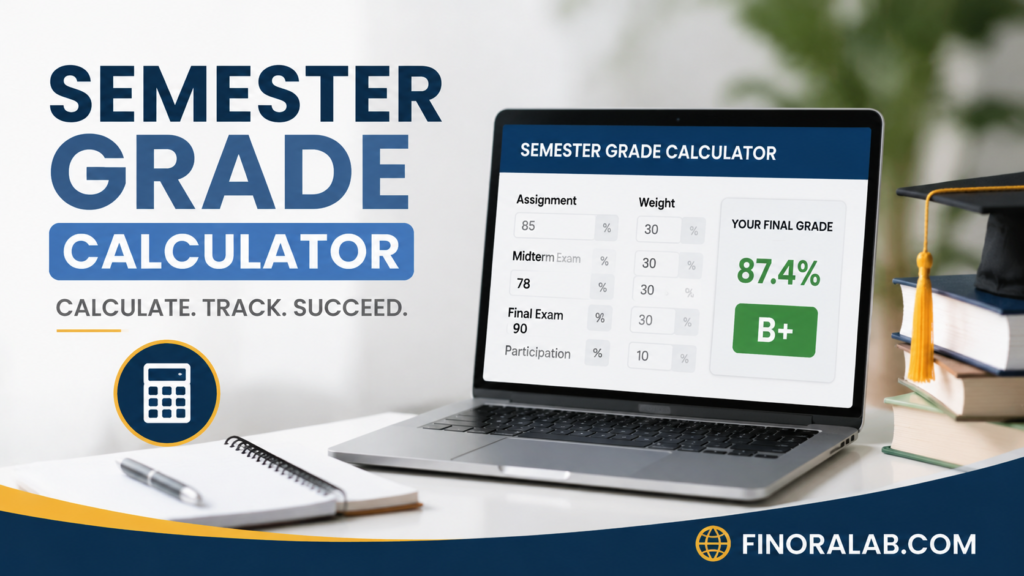
A semester grade calculator is a useful academic tool that helps students estimate their final course grades by combining completed assignments, exams, projects, quizzes, and other graded activities. Instead of waiting until final grades are released, students can use a calculator to understand their current performance, identify areas for improvement, and make informed decisions about their study strategies.
For students in high school, college, and university programs, understanding how grades are calculated is an important part of academic planning. A semester grade calculator helps simplify complex grading systems by showing how individual scores contribute to the overall course result. It can also help students determine what scores they need on upcoming exams or assignments to achieve a specific target grade.
Academic performance is closely connected with broader financial and career planning. Grades can influence scholarship eligibility, college admissions, graduate school opportunities, internships, and future employment options. By monitoring grades regularly, students can take proactive steps instead of making last minute decisions at the end of a semester.
This guide explains how a semester grade calculator works, how to calculate weighted grades manually, how GPA is affected, common mistakes students make, and how using academic planning tools can support long term educational and financial goals.
What Is a Semester Grade Calculator?
A semester grade calculator is an online or manual calculation tool designed to estimate a students final grade for a course during a semester. It uses information such as assignment scores, exam grades, project marks, participation points, and category weights to calculate an estimated overall percentage or letter grade.
Most courses do not calculate grades by simply averaging every score equally. Instead, teachers and universities often use weighted grading systems. For example, exams may represent 50% of a final grade, assignments may represent 30%, and participation may represent 20%. A semester grade calculator applies these weights to provide a more accurate result.
For example, if a student earns 90% on assignments worth 40% of the grade and 80% on exams worth 60% of the grade, the calculator determines the weighted average rather than simply averaging 90 and 80. This gives students a realistic understanding of their academic standing.
Students use these calculators for different purposes. Some want to know their current grade, while others want to calculate what score they need on a final exam to reach a specific goal. The tool can support better academic decisions by showing how future performance may affect the final outcome.
How Does a Semester Grade Calculator Work?
A semester grade calculator works by applying mathematical formulas to a students grades and course weighting system. The basic process involves entering each categorys score and assigning the percentage weight that category contributes to the final grade.
The general formula for calculating a weighted semester grade is
Final Grade = (Category Score × Category Weight) + (Category Score × Category Weight) + Other Weighted Categories
For example, imagine a college course has the following grading structure
Homework: 25%
Midterm Exam: 30%
Final Exam: 35%
Participation: 10%
If a student earns 85% in homework, 78% on the midterm, 90% on the final exam, and 95% participation, the semester grade calculator multiplies each score by its weight and adds the results together.
This method provides a more accurate calculation because every category contributes according to its importance. Without weighting, students may misunderstand their performance and incorrectly estimate their final grade.
Modern semester grade calculators often include additional features such as GPA conversion, target grade calculation, missing assignment adjustments, and scenario planning. These features allow students to explore different possibilities before making academic decisions.
Why Students Should Use a Semester Grade Calculator
A semester grade calculator helps students take control of their academic progress by providing a clear picture of their current performance. Instead of relying on assumptions or waiting until the semester ends, students can regularly monitor their grades and make adjustments when necessary.
One major benefit is goal planning. For example, a student aiming for an A in a course can calculate what scores are required on remaining assignments and exams. This information allows students to prioritize important tasks and focus their study efforts where they can have the greatest impact.
The calculator can also reduce academic stress. Many students experience uncertainty because they do not know how individual grades affect their final results. Having a realistic estimate provides clarity and helps students create practical study schedules.
Semester grade calculators are especially useful for students managing multiple responsibilities. College students often balance coursework, part time jobs, internships, and personal commitments. Understanding grade requirements helps them allocate time effectively and avoid unnecessary academic pressure.
Understanding Weighted Grades and Grade Categories
Weighted grades are one of the most important concepts when using a semester grade calculator. A weighted grading system assigns different levels of importance to different course activities. This means a major exam may influence the final grade more than a small homework assignment.
For example, completing ten homework assignments may feel significant, but if homework only represents 20% of the final grade, its impact may be smaller than a final exam worth 40%. Understanding these percentages helps students focus their efforts strategically.
Many schools use grading categories such as quizzes, tests, projects, labs, attendance, and participation. Each category contributes a specific percentage toward the final semester grade. The exact structure varies depending on the instructor, school, or university department.
Students should always check the official syllabus before entering information into a semester grade calculator. Incorrect weights can lead to inaccurate results. A calculator is only as reliable as the information provided by the user.
Understanding weighted grades also teaches valuable financial and decision making skills. Similar to budgeting or investment planning, students learn that different actions have different levels of impact. Prioritizing important areas can improve overall outcomes.
How to Calculate Your Semester Grade Manually
Although online tools make calculations easier, understanding the manual process helps students verify results and understand academic systems. The first step is identifying every grading category and its percentage weight.
Suppose a course has three categories
Assignments: 30% Midterm Exam: 30% Final Exam: 40%
A student receives
Assignments 88% Midterm 82% Final Exam 90%
The calculation would be
Assignments contribution 88 × 0.30 = 26.4
Midterm contribution 82 × 0.30 = 24.6
Final Exam contribution 90 × 0.40 = 36
Total semester grade 26.4 + 24.6 + 36 = 87%
The final semester grade would be 87%, which may correspond to a B+ or A depending on the institutions grading scale.
Manual calculations are useful because they help students understand how each score affects the final outcome. However, semester grade calculators reduce errors and save time, especially when courses include many assignments and complex grading structures.
Semester Grade Calculator and GPA Calculation
A semester grade calculator can also help students understand how individual course grades affect their Grade Point Average (GPA). GPA is a numerical representation of academic performance and is commonly used by colleges, scholarship programs, and employers.
Most U.S. universities use a 4.0 GPA scale. Letter grades are converted into grade points, which are then weighted based on course credits. For example
A = 4.0 B = 3.0 C = 2.0 D = 1.0 F = 0.0
If a student earns an A in a three credit course and a B in a four credit course, the GPA calculation considers both the grade value and credit hours.
Semester GPA is calculated by multiplying grade points by course credits, adding the results, and dividing by total credits attempted. A semester grade calculator with GPA features can simplify this process.
Understanding GPA is important because academic performance can affect scholarships, financial aid, graduate programs, and career opportunities. Students should monitor both individual course grades and overall GPA throughout their education.
How Semester Grades Affect Scholarships and Financial Planning
Academic performance is not only an educational concern it can also have financial consequences. Many scholarships, grants, and financial aid programs require students to maintain a minimum GPA. A semester grade calculator can help students understand whether they are meeting those requirements.
For example, a scholarship program may require a student to maintain a 3.0 GPA. If current grades suggest the student may fall below that level, they can take action early by improving study habits, seeking academic support, or communicating with instructors.
Education costs continue to be a major financial consideration for students and families. Tuition, textbooks, housing, transportation, and other expenses require careful planning. Maintaining strong grades can help students access financial support opportunities and reduce future education costs.
Academic planning is similar to financial planning because both require monitoring progress, setting goals, and making adjustments. A student who regularly checks grades is better positioned to make informed decisions about courses, workloads, and career preparation.
Common Mistakes When Using a Semester Grade Calculator
One common mistake students make is entering incorrect grading weights. If a course syllabus states that exams are worth 50% of the grade but a student enters 40%, the calculation will not accurately represent their situation.
Another mistake is forgetting missing assignments or incomplete grades. A semester grade calculator may show a higher result if missing work is not included. Students should enter all current information, including zeros or incomplete assignments, to receive realistic estimates.
Some students also focus only on the final number without understanding improvement opportunities. A calculator shows the mathematical result, but students must still decide how to respond. If an exam category has a high weight, improving performance there may create the biggest impact.
Students should also avoid using calculators as a replacement for communication with instructors. If grading policies are unclear, asking questions and reviewing course materials remain important steps.
A semester grade calculator is a planning tool, not a guarantee. Actual grades depend on instructor evaluations, academic policies, and final submitted work.
Using Grade Calculators for Better Academic Strategy
A semester grade calculator can become a powerful planning tool when used correctly. Instead of checking grades only at the end of the semester, students can use calculations throughout the term to create realistic academic goals.
For example, if a student currently has an 82% average and wants to finish with an A, the calculator can show whether that goal is mathematically possible based on remaining assignments. This prevents unrealistic expectations and helps students create better strategies.
Students can also use calculators to compare scenarios. They may ask questions such as, What happens if I score 90% on my final exam? or How will missing one assignment affect my grade? Scenario planning allows students to make informed choices.
This approach builds decision making skills that are valuable beyond school. Similar to managing a budget or evaluating financial goals, academic planning requires understanding current status, future possibilities, and the impact of individual actions.
Semester Grade Calculator for College Students
College students often benefit greatly from using a semester grade calculator because university courses usually involve multiple grading components, credit hours, and complex evaluation systems. Unlike simple percentage based grading, college courses may include exams, research papers, labs, presentations, discussion participation, and group projects that each contribute differently to the final grade.
A semester grade calculator allows college students to organize these components and understand how each assignment affects their overall performance. For example, a student taking a finance course may have exams worth 60%, homework worth 25%, and participation worth 15%. Knowing the impact of each category helps the student decide where to focus additional effort.
College students can also use these calculators when planning their semester workload. If one course requires significant improvement while another course is already secure, students can allocate their study time more effectively. This type of planning is especially valuable for students balancing classes with jobs, internships, family responsibilities, or extracurricular activities.
Academic performance in college can influence future opportunities, including graduate school admission, internships, scholarships, and employment opportunities. Regularly monitoring grades through a semester grade calculator helps students stay aware of their academic position and make adjustments before final grades are submitted.
Semester Grade Calculator for High School Students
High school students can use a semester grade calculator to better understand how assignments, tests, and exams influence their final course grades. Many high schools use weighted grading systems where advanced courses, honors classes, or Advanced Placement (AP) courses may have different grading structures compared with standard classes.
For younger students, learning how grades are calculated builds important academic responsibility. Instead of simply waiting for report cards, students can monitor their progress and understand how daily efforts contribute to long term results. This encourages better study habits and improved time management skills.
Parents and educators can also use grade calculators as communication tools. A clear calculation can help identify when a student needs additional support or when academic goals need adjustment. For example, if a student is close to meeting a required grade level, targeted improvement efforts may create a meaningful difference.
High school grades can also affect college admissions and scholarship opportunities. Students who understand their academic performance early are better prepared to make decisions about course selection, extracurricular activities, and future education planning.
How to Calculate the Grade Needed on a Final Exam
One of the most common reasons students use a semester grade calculator is to determine the score needed on a final exam. This feature helps students create realistic goals by showing exactly how much the final assessment can influence their overall grade.
The calculation requires three pieces of information
Current course grade Final exam weight Desired final course grade
For example, assume a student currently has an 84% grade in a course. The final exam is worth 30% of the semester grade, and the student wants to finish with an 88%.
The calculation would be
Current grade contribution 84 × 0.70 = 58.8
Required final exam contribution 88 58.8 = 29.2
Required exam score 29.2 ÷ 0.30 = 97.3%
This means the student would need approximately 97% on the final exam to achieve an 88% overall grade. Understanding this information helps students decide whether their goal is realistic or whether they should focus on other academic priorities.
Online Semester Grade Calculator Features
Modern semester grade calculators include many features that go beyond simple averaging. These tools are designed to make academic planning easier by handling complex calculations and providing quick estimates.
One common feature is weighted grade calculation. Students can enter multiple categories with different percentages, and the calculator automatically determines the overall result. This saves time and reduces mathematical errors.
Another useful feature is target grade planning. Students can enter their desired final grade, and the calculator estimates what scores they need on remaining assignments or exams. This is especially helpful before major tests or final assessments.
Some advanced calculators also include GPA conversion, credit hour calculations, and academic progress tracking. These features allow students to understand both individual course performance and overall academic standing.
However, students should remember that online calculators are tools rather than official grade records. The instructors gradebook and university policies remain the final authority when determining academic results.
Benefits of Using a Semester Grade Calculator
The biggest benefit of a semester grade calculator is improved awareness. Students who understand their current academic position can make better decisions about studying, assignments, and exam preparation.
Another advantage is improved motivation. Seeing how future performance can change final grades encourages students to set measurable goals. Instead of feeling overwhelmed by an entire semester, students can focus on specific improvements.
These calculators also support better time management. If a student knows that a final exam represents 50% of the course grade, they may prioritize preparation for that exam over smaller assignments with less impact.
Semester grade calculators can also support financial planning indirectly. Strong academic performance may help students maintain scholarships, reduce educational expenses, and improve access to career opportunities after graduation.
The tool encourages a proactive mindset. Similar to financial budgeting, academic success often comes from regularly tracking progress and making small improvements over time.
Limitations of Semester Grade Calculators
Although semester grade calculators are useful, they have limitations. The accuracy of the result depends entirely on the information entered by the student. Incorrect scores, missing assignments, or inaccurate category weights can produce misleading results.
Some courses also include factors that are difficult to calculate automatically. For example, participation grades, extra credit opportunities, attendance policies, or instructor adjustments may influence final results.
Another limitation is that calculators cannot predict future performance. A student may estimate a desired exam score, but actual results depend on preparation, understanding of course material, and exam conditions.
Students should also avoid becoming overly focused on numbers. Grades are important, but learning skills, knowledge development, and personal growth are also valuable parts of education.
The best approach is to use a semester grade calculator as a planning tool while combining it with effective study habits, communication with teachers, and consistent effort.
How Grade Tracking Supports Long Term Career Success
Academic performance can influence future career opportunities, especially in competitive industries. Employers, graduate schools, and professional programs often consider educational achievements when evaluating candidates.
A semester grade calculator helps students understand how consistent performance contributes to long term goals. For example, maintaining a strong GPA may improve eligibility for internships, scholarships, professional programs, or entry level career opportunities.
However, career success requires more than grades alone. Employers often value practical skills, communication abilities, teamwork, leadership experience, and problem solving capabilities. Students should balance academic achievement with professional development activities.
Financial planning is also connected to education choices. Students who perform well academically may access more affordable educational opportunities through scholarships or merit based support. This can reduce future student debt and improve financial stability.
By monitoring academic progress and making informed decisions, students develop habits that apply to many areas of life, including budgeting, investing, career planning, and personal development.
Tips for Improving Your Semester Grades
Improving semester grades requires a combination of planning, consistency, and effective learning strategies. A semester grade calculator can show where improvement is needed, but students must take action to achieve better results.
One effective strategy is identifying high impact assignments. If a final project or exam represents a large percentage of the grade, improving performance in that area may create a greater overall improvement than focusing only on smaller tasks.
Creating a realistic study schedule can also make a significant difference. Breaking large tasks into smaller steps reduces stress and improves retention. Students should avoid relying only on last minute studying because consistent preparation usually produces better results.
Seeking support is another important step. Teachers, academic advisors, tutoring centers, and classmates can provide valuable assistance when students struggle with course material.
Students should also maintain healthy habits. Proper sleep, balanced nutrition, and stress management contribute to better concentration and academic performance.
Semester Grade Calculator and Academic Decision Making
A semester grade calculator helps students make informed academic decisions by providing measurable information. Instead of guessing how one assignment or exam will affect the final grade, students can evaluate different scenarios.
For example, a student deciding whether to spend additional time improving a research paper or preparing for a final exam can use calculations to determine which activity has the greatest impact on the final grade.
This type of decision making is similar to financial planning. Individuals often compare different options before making investment, budgeting, or career decisions. Students who learn this process early develop valuable analytical skills.
The calculator also encourages accountability. Students become more aware of how daily choices affect long term outcomes. This understanding can improve motivation and create stronger academic habits.
Conclusion
A semester grade calculator is a valuable tool that helps students understand academic performance, calculate weighted grades, estimate final results, and create better study strategies. Whether used by high school students, college students, or university learners, it provides a simple way to track progress and make informed decisions.Understanding how grades are calculated allows students to move beyond guesswork. By analyzing current scores, future possibilities, and course weighting systems, students can focus their efforts where they matter most.While a semester grade calculator cannot replace hard work, effective learning methods, or communication with instructors, it can support better planning and reduce academic uncertainty. Students who regularly monitor their grades are more likely to identify challenges early and improve their outcomes.
A semester grade calculator is a tool that calculates a students estimated final course grade based on assignment scores, exam results, and grading category weights. It helps students understand their current performance and predict possible outcomes.
How do I calculate my semester grade?
To calculate a semester grade, multiply each category score by its percentage weight and add the results together. A semester grade calculator performs this process automatically when students enter their grades and course weights.
Can a semester grade calculator calculate GPA?
Many semester grade calculators include GPA features that convert letter grades into grade points and calculate semester GPA based on course credits. GPA calculation methods may vary between schools and universities.
How accurate are semester grade calculators?
Semester grade calculators are accurate when students enter correct information, including scores and grading weights. However, official grades are determined by instructors and institutional policies.
How can I use a semester grade calculator to improve my grades?
Students can use calculators to identify weak areas, set target grades, and determine what scores are needed on future assignments or exams. This allows for better study planning.
Can I calculate the grade needed on my final exam?
Yes. Many semester grade calculators allow students to enter their current grade, final exam weight, and desired final grade to estimate the score required on the final exam.
Do colleges use weighted semester grades?
Many colleges use weighted grading systems where exams, assignments, projects, and participation contribute different percentages to final course grades. The exact system depends on the institution and instructor.
Is a semester grade calculator useful for scholarship planning?
Yes. Students can use grade calculators to monitor GPA requirements for scholarships and financial aid programs. Maintaining required grades may help students continue receiving educational support.
What information do I need to use a semester grade calculator?
Students typically need their current scores, assignment categories, grading weights, and desired final grade. Some calculators may also require course credits for GPA calculations.
Can semester grades affect future opportunities?
Yes. Semester grades can influence scholarships, internships, college admissions, graduate programs, and career opportunities. Maintaining strong academic performance can create more options in the future.
I am a professional finance content writer with expertise in personal finance investing, banking, loans, insurance, credit cards, budgeting, and market related topics. I create clear, SEO optimized, and reader friendly finance content that helps audiences understand complex financial concepts in simple words. My goal is to write trustworthy and engaging content that improves search visibility, builds credibility, and supports business growth.
I am a professional finance content writer with expertise in personal finance investing, banking, loans, insurance, credit cards, budgeting, and market related topics. I create clear, SEO optimized, and reader friendly finance content that helps audiences understand complex financial concepts in simple words. My goal is to write trustworthy and engaging content that improves search visibility, builds credibility, and supports business growth.