Is Credit Karma Accurate? What Your Score Really Means
Shanzay Arain·Aug 07, 2026
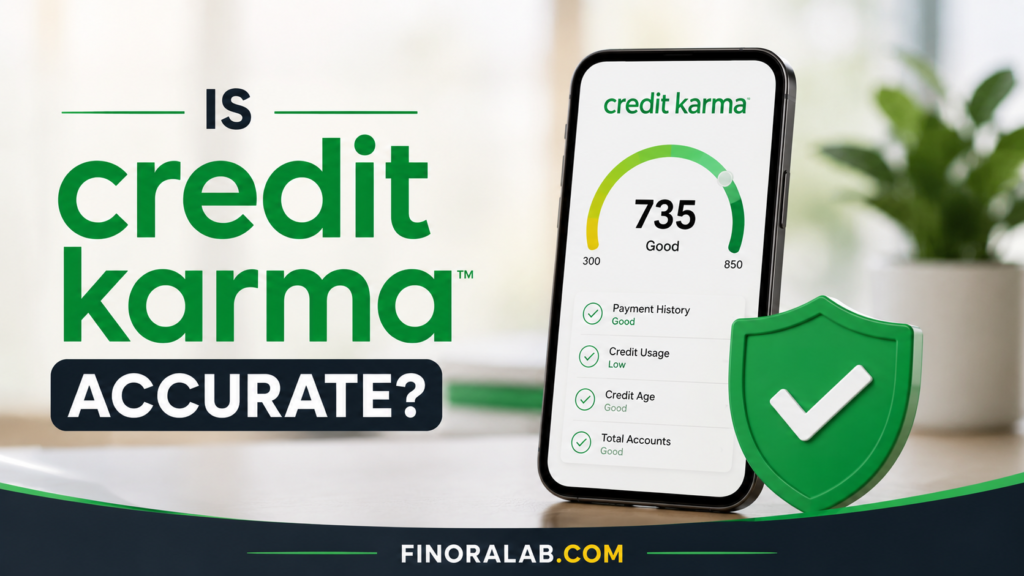
If you have ever checked your credit score on Credit Karma and then received a different number from a bank, credit card issuer, or lender, you may wonder is Credit Karma accurate? The short answer is yes, but there is an important distinction. Credit Karma provides legitimate credit scores based on information from Equifax and TransUnion, but the scores it displays are VantageScore 3.0 scores rather than necessarily the same score a particular lender will use. Understanding that distinction can prevent confusion when you apply for a credit card, auto loan, personal loan, or mortgage.
Credit scores are not universal numbers assigned permanently to consumers. Different scoring models can calculate different scores from similar credit report information, and lenders can use different models depending on the financial product. The Consumer Financial Protection Bureau explains that consumers can have multiple credit scores because lenders use different scoring formulas, credit reporting sources, and product specific models. Therefore, a difference between Credit Karma and another provider does not automatically mean that one score is wrong.
Is Credit Karma Accurate?
Credit Karmas scores are accurate representations of the VantageScore 3.0 model calculated using the credit report information available from Equifax and TransUnion. Credit Karma says it provides these scores directly from those two major credit bureaus. The important point is that Credit Karma is not creating an independent score from information it collects itself. Instead, it presents scores generated using the applicable bureau data and scoring model. If the underlying credit report is accurate and current, the displayed VantageScore can be useful for monitoring your credit profile and identifying changes.
However, accurate does not necessarily mean the exact score a lender will use. A lender could use a FICO Score, a different VantageScore version, an industry specific model, or its own underwriting criteria. FICO notes that lenders use multiple versions of its scores, including models designed for auto lending and credit card decisions. Consequently, your Credit Karma score may be perfectly accurate while still being different from the score pulled during a loan application.
Why Your Credit Karma Score Can Differ From Your FICO Score
The biggest reason for differences is the scoring model. Credit Karma currently provides VantageScore 3.0 scores from Equifax and TransUnion, while many lenders use FICO scoring models. VantageScore and FICO analyze information from credit reports, but their mathematical formulas and treatment of certain credit behaviors are not identical. The result can be two legitimate scores that are separated by several points or, in some circumstances, considerably more. The CFPB specifically warns consumers that different scoring models can produce different scores from credit information.
Consider a hypothetical consumer who sees a 720 VantageScore on Credit Karma but later discovers that a lender used a 695 FICO score. That does not necessarily indicate an error. The lender may have used a different bureau, scoring model, or version, while Credit Karma calculated its number using VantageScore 3.0 and a particular bureaus report. FICO also explains that consumers can have different scores depending on the credit bureau, timing, and model involved. In other words, comparing numbers without comparing the model and bureau can produce misleading conclusions.
What Credit Score Does Credit Karma Use?
Credit Karma uses the VantageScore 3.0 credit scoring model for the scores displayed to members. The scores come from two major credit bureaus Equifax and TransUnion. VantageScore was developed collaboratively by the three major consumer credit reporting agencies, but Credit Karmas displayed scores are based on Equifax and TransUnion data. This means you can potentially see two scores within Credit Karma, and those scores may not be identical because the underlying bureau reports can contain different information or have different update dates.
VantageScore 3.0 uses information from your credit reports to estimate credit risk. Credit Karma identifies factors such as payment history, credit depth, credit utilization, balances, recent credit activity, and available credit as relevant to the model. These factors can change as lenders report new information. Therefore, a score shown today should be viewed as a snapshot of your credit profile rather than a permanent financial rating. This is one reason monitoring trends can be more useful than obsessing over a single daily number.
Why Are My Credit Karma Scores Different From Each Other?
It is normal for your Equifax and TransUnion scores on Credit Karma to differ. The three major credit bureaus do not necessarily have identical information about every consumer. Some lenders report to all three bureaus, while others may report to only one or two. Even when a lender reports to multiple bureaus, the information may arrive at different times. Consequently, one report might show a recently updated credit card balance while another still reflects the previous balance.
Imagine that you have a $5,000 credit card limit and recently paid your balance from $2,000 down to $500. If the issuer reports the $500 balance to one bureau before the other, the two credit reports could temporarily show different utilization levels. Since credit utilization is an important credit factor, the corresponding scores can differ. This does not mean Equifax or TransUnion is necessarily more accurate. It may simply mean that each bureau has a different snapshot of your financial information at that moment.
Does Credit Karma Show the Score Lenders Use?
Credit Karma does not guarantee that the score displayed to you will be the score used by a particular lender. This distinction matters when you are preparing for a major borrowing decision. A credit card issuer could use one version of a FICO score, an auto lender could use an industry specific auto score, and a mortgage lender could use mortgage specific scoring models. The CFPB confirms that different types of credit can involve different scoring models, meaning there is no single score that universally controls every lending decision.
FICO reports that its scores are used by 90% of top U.S. lenders, but even FICO has multiple versions. Its models include base FICO scores as well as industry specific versions for products such as auto loans and credit cards. Therefore, simply knowing a FICO score is not always enough to predict precisely what a lender will see. The practical lesson is to treat Credit Karma as a valuable monitoring tool rather than a promise of approval or a guaranteed preview of every lenders underwriting score.
Is Credit Karma Accurate for Credit Monitoring?
Credit Karma can be highly useful for monitoring changes in your credit profile. It provides access to VantageScore 3.0 scores and credit reports from Equifax and TransUnion, allowing consumers to track account changes, balances, inquiries, and other information. Credit Karma says it checks the relevant credit reports daily, although noticeable score changes may occur less frequently because lenders generally report new information around billing cycles rather than continuously.
The monitoring function can be particularly helpful for detecting potential problems. For example, if a new account appears that you do not recognize, or a credit card balance suddenly changes, reviewing the underlying report can help you investigate the issue. Credit Karma itself is not a credit bureau and does not receive creditor information independently from the bureaus. If information is incorrect, the appropriate response is to review the underlying credit report and dispute inaccurate information through the relevant reporting agency or creditor.
Does Checking Credit Karma Lower Your Credit Score?
Checking your own credit score through Credit Karma does not lower your credit score. This type of activity is generally considered a soft inquiry, which is different from the hard inquiry that can occur when you apply for a new credit account. Credit Karma states that checking its scores does not negatively affect your credit and that monitoring activity does not appear as a hard inquiry on your credit reports. This makes routine credit monitoring a relatively low risk way to stay informed about changes in your credit profile.
The distinction becomes important when you are actively shopping for credit. Applying for a credit card, personal loan, or other credit product can generate a hard inquiry, depending on the application process. Hard inquiries can temporarily affect credit scores, although their impact is generally much smaller than major factors such as payment history and high balances. The CFPB recommends applying only for credit you need and reviewing your credit reports regularly for accuracy.
What Makes a Credit Score Change?
Credit scores can change when the information in your credit reports changes. Common influences include payment history, balances, credit utilization, account age, new credit activity, and the mix of credit accounts. For example, if you have a $10,000 total credit limit and your reported balances increase from $2,000 to $6,000, your utilization rises from 20% to 60%. Depending on the scoring model and the rest of your credit profile, that higher reported utilization could contribute to a lower score.
Timing also matters. Credit card issuers and other lenders generally report account information according to their own schedules. If you pay a balance today, the credit bureaus may not receive the updated balance immediately. That can explain why a score does not move when you expect it to. Credit Karma explains that lenders typically report about once per billing cycle, although different lenders can report at different times. Therefore, temporary score movements are not necessarily evidence of a problem.
How Accurate Is Credit Karma for Credit Card Applications?
Credit Karma can be useful when evaluating your general credit position before applying for a credit card, but you should not treat its score as a guaranteed approval threshold. Credit card issuers can use different scoring models and additional information when reviewing an application. A lender may evaluate your credit history, income, existing obligations, application information, and other risk factors. Therefore, a Credit Karma score can provide context, but it cannot fully reproduce the issuers underwriting process.
Credit Karmas product recommendations can also be useful, but consumers should understand that recommendations are not the same as guarantees. Credit Karma explains that advertisers may compensate it for offers and that compensation can influence how offers appear. Approval Odds can help consumers compare potential options, but actual approval depends on the lenders criteria and the information available when the application is processed. Before applying, review fees, annual percentage rates, rewards, introductory offers, and eligibility requirements rather than relying solely on a score.
Is Credit Karma Accurate for Auto Loans?
Credit Karma can help you understand your general credit health before shopping for an auto loan, but the score shown there may not be the same score an auto lender uses. FICO states that auto lenders often use industry specific FICO Auto Scores designed for auto lending risk assessment. Those models can evaluate credit report information differently from a general purpose VantageScore 3.0. As a result, your Credit Karma score should be viewed as an educational and monitoring reference rather than an exact prediction of your auto loan underwriting score.
Suppose Credit Karma shows a 740 VantageScore and you are preparing to finance a $30,000 vehicle. You might reasonably feel confident about your overall credit standing, but the final interest rate could still depend on the lender, loan term, income, debt obligations, down payment, vehicle, and specific score used. A better strategy is to use Credit Karma to identify potential credit issues before shopping, then compare actual loan offers from multiple lenders. This approach focuses on the final borrowing cost rather than one numerical score.
Is Credit Karma Accurate for Mortgages?
Mortgage borrowers should be especially careful when interpreting a Credit Karma score. Mortgage lenders can use specialized FICO scoring models rather than the VantageScore 3.0 score consumers see through Credit Karma. FICO identifies mortgage related versions that have historically been used in mortgage lending, while the CFPB notes that different scoring models may be used for different credit products. Therefore, a Credit Karma score can provide useful general information about your credit health without necessarily matching the score used in mortgage underwriting.
If you plan to buy a home, focus on the underlying credit reports as well as the score. Review payment history, balances, credit inquiries, collections, and other potentially negative information well before applying. This gives you time to dispute errors and improve financial habits. Because mortgage underwriting also considers factors such as income, debt, employment, assets, and loan characteristics, improving your credit score is only one part of preparing financially for a home purchase.
What Should You Do If Credit Karma Is Much Higher or Lower?
If your Credit Karma score is substantially different from a score shown elsewhere, first identify which scoring model and credit bureau each service uses. Comparing a VantageScore 3.0 from TransUnion with a FICO score from Experian is not an apples to apples comparison. Also check the dates of the underlying reports. One bureau may already have received an updated credit card balance or account status while another has not. Understanding these variables can explain many score differences without assuming that an error occurred.
Next, compare the actual credit report information. Look for unfamiliar accounts, incorrect balances, late payments that you believe were reported incorrectly, duplicate accounts, or outdated information. The CFPB recommends reviewing credit reports and disputing errors. Consumers can also obtain credit reports from all three major bureaus through the government authorized AnnualCreditReport.com website. Looking at all three reports can provide a more complete picture than relying on any single score or bureau.
How to Use Credit Karma the Right Way
The most effective way to use Credit Karma is as a credit health dashboard. Rather than checking the number repeatedly and worrying about every small movement, look for meaningful trends. Monitor whether balances are rising, whether payments are being reported correctly, whether new inquiries appear, and whether unfamiliar accounts show up. A score can fluctuate for reasons that are temporary, so the underlying information often matters more than a five or ten point movement from one day to another.
For major financial decisions, use a broader process. Check your Equifax, Experian, and TransUnion reports, understand which score model is likely relevant to your upcoming application, and compare actual loan or credit card offers. If youre preparing for a mortgage or auto loan, consider obtaining the relevant FICO scores if appropriate. The goal is not to find one perfect credit score. The goal is to maintain accurate credit reports, strong payment habits, manageable debt, and a financial profile that can withstand lender scrutiny.
Credit Karma vs. FICO Which Is More Accurate?
The question Is Credit Karma accurate or is FICO more accurate? is based on a misunderstanding. Credit Karma and FICO are not simply two companies reporting the same score. Credit Karma displays VantageScore 3.0 scores from Equifax and TransUnion, while FICO develops separate scoring models used by many lenders. Both can produce legitimate scores based on credit report data. The more important question is which score model and bureau are relevant to the financial decision you are making.
FICO reports that 90% of top lenders use FICO Scores, making FICO particularly relevant when you want to understand scores commonly used in lending. But even FICO has multiple versions, and lenders do not necessarily use the same version for every product. The CFPB similarly emphasizes that consumers have multiple credit scores. Therefore, Credit Karma is valuable for free monitoring and financial education, while a lenders actual scoring model is what ultimately matters for that lenders decision.
How to Improve the Credit Scores You See on Credit Karma
If you want to improve your credit profile, start with the behaviors that influence credit scoring most consistently. Paying bills on time is fundamental because payment history is a major component of credit scoring. Managing credit card balances can also help because utilization and balances affect scores. For example, someone with a $20,000 combined credit limit and $4,000 in reported revolving balances has 20% utilization. Reducing reported balances to $2,000 would bring utilization to 10%, although the precise score impact varies by scoring model and individual credit profile.
Avoid treating credit improvement as a quick money strategy. You do not need to carry a credit card balance or pay interest to build good credit. Instead, use credit responsibly, make payments on time, avoid unnecessary applications, and monitor your reports for errors. The CFPB recommends applying only for credit you need, keeping an eye on credit reports, and disputing inaccurate information. Consistent financial habits generally matter more than short term attempts to manipulate a score.
What Is the Most Accurate Credit Score to Check?
There is no single credit score that is universally the most accurate. A score is calculated according to a particular scoring model, using information available from a particular credit report at a particular point in time. That means accuracy should be understood in context. If the question is whether your Credit Karma VantageScore 3.0 is correctly calculated from the available Equifax or TransUnion data, it can be accurate. If the question is whether it exactly matches the score a mortgage lender will use, the answer may be no.
For everyday credit monitoring, Credit Karma can be a useful free resource because it provides regular access to scores and reports from two major bureaus. For a major borrowing decision, however, consumers should consider the scoring model relevant to that product and review all three credit reports. This broader approach reduces the risk of being surprised by a discrepancy. Most importantly, focus on the information behind the score payment history, balances, utilization, account history, inquiries, and potential errors.
Conclusion
So, is Credit Karma accurate? Yes, Credit Karma can provide accurate VantageScore 3.0 credit scores based on information from Equifax and TransUnion. The confusion usually arises because consumers expect every credit score to be identical. In reality, you can have multiple legitimate scores because different scoring models, credit bureaus, reporting dates, and financial products can produce different results. A Credit Karma score is therefore best understood as a useful snapshot of your credit health rather than a guaranteed preview of the number every lender will see.For everyday monitoring, Credit Karma can help you track changes and identify potential credit report problems. Before applying for a mortgage, auto loan, credit card, or other major financial product, go further by reviewing your credit reports from all three major bureaus and understanding which scoring model may be used. Strong financial habits remain the foundation pay bills on time, manage balances, limit unnecessary applications, and dispute inaccurate information. The objective is not to chase one perfect number but to maintain a healthy, accurate credit profile.
Yes. Credit Karma provides VantageScore 3.0 scores based on credit report information from Equifax and TransUnion. The scores can accurately represent that particular scoring model and bureau data. However, they may differ from FICO scores or other scores used by lenders because different scoring models can calculate different results from similar credit information.
Why is my Credit Karma score different from my FICO score?
The primary reason is that Credit Karma provides VantageScore 3.0, while FICO uses its own scoring formulas. Different models can weigh credit report information differently. Your scores can also differ because the underlying bureaus may have different information or reporting dates. Therefore, a difference does not automatically mean that either score is inaccurate.
Is Credit Karma the same as a FICO score?
No. Credit Karma displays VantageScore 3.0 scores from Equifax and TransUnion. FICO Scores are created by Fair Isaac Corporation and include multiple versions used for different lending purposes. FICO reports that its scores are used by 90% of top lenders, although the specific FICO version used can vary by lender and product.
Does checking Credit Karma hurt your credit?
No. Checking your own credit score through Credit Karma is considered a soft inquiry and does not lower your score. Hard inquiries generally occur when you apply for credit and can have a temporary effect. Simply monitoring your Credit Karma score does not create the type of hard inquiry associated with a credit application.
Which credit score do lenders use?
There is no single score used by every lender. Depending on the product, lenders can use different FICO versions, VantageScore models, or other proprietary scoring systems. Auto lenders may use industry specific auto scores, while mortgage lending can involve specialized FICO models. The lenders underwriting process ultimately determines which score or combination of information matters.
Is a Credit Karma score good enough to apply for a credit card?
It can help you assess your general credit position, but it should not be treated as a guarantee of approval. Credit card issuers can use different scoring models and consider additional factors such as income, existing obligations, and application information. Review the cards terms and eligibility criteria and understand that an advertised approval likelihood is not the same as a guaranteed approval.
Why are my Equifax and TransUnion scores different on Credit Karma?
Your Equifax and TransUnion reports can contain different information or receive updates at different times. Since Credit Karma uses VantageScore 3.0 with data from both bureaus, the resulting scores can differ. This is normal and does not automatically mean one bureau has made an error. Compare the underlying reports and the dates of the information before investigating further.
How often does Credit Karma update credit scores?
Credit Karma says it checks the relevant Equifax and TransUnion credit reports daily, allowing scores to be updated frequently. However, lenders generally report new information according to their own schedules, often around billing cycles. Therefore, checking every day does not necessarily mean your score will change every day.
Should I check all three credit bureaus?
Yes, particularly before a major financial decision. Credit Karma provides scores and reports from Equifax and TransUnion, but Experian is the third major consumer credit bureau. Reviewing all three reports can reveal information that appears on one report but not another. The CFPB recommends reviewing credit reports and disputing errors, especially when preparing for credit applications.
What should I do if Credit Karma shows incorrect information?
Start by reviewing the underlying credit report and identifying the specific account or information you believe is wrong. Credit Karma itself is not a credit bureau, so disputes generally need to be directed to the relevant credit reporting agency and, when appropriate, the creditor furnishing the information. Keep documentation supporting your claim and monitor the report afterward to confirm whether the issue has been corrected.
I am a professional finance content writer with expertise in personal finance investing, banking, loans, insurance, credit cards, budgeting, and market related topics. I create clear, SEO optimized, and reader friendly finance content that helps audiences understand complex financial concepts in simple words. My goal is to write trustworthy and engaging content that improves search visibility, builds credibility, and supports business growth.
I am a professional finance content writer with expertise in personal finance investing, banking, loans, insurance, credit cards, budgeting, and market related topics. I create clear, SEO optimized, and reader friendly finance content that helps audiences understand complex financial concepts in simple words. My goal is to write trustworthy and engaging content that improves search visibility, builds credibility, and supports business growth.