Milestone Mastercard: Fees, APR, Rewards & Credit Building
Shanzay Arain·Aug 09, 2026
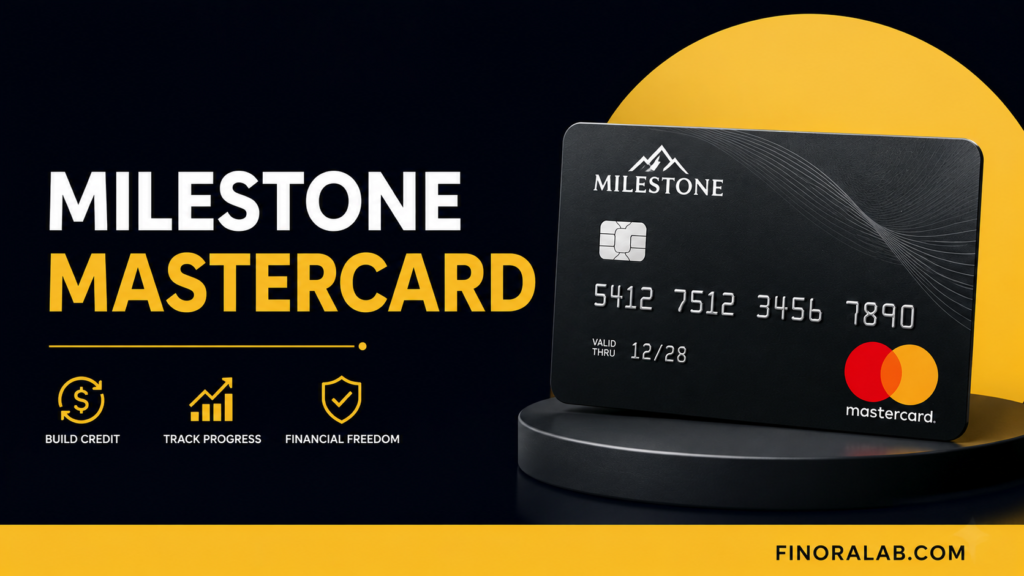
The Milestone Mastercard is a credit card designed primarily for consumers who may have limited, damaged, or less than perfect credit histories. Unlike premium rewards cards that emphasize travel points or cash back, the cards main appeal is access to an unsecured revolving credit account when qualifying for mainstream cards may be difficult. That can make it relevant to someone trying to establish a payment history, rebuild credit, or add another account to a developing credit profile. However, approval alone does not make a card financially attractive. The fees, APR, credit limit, and account terms deserve careful review before applying or accepting an offer.
Current Milestone card terms can vary depending on the specific offer and applicant. The issuer is The Bank of Missouri, and available terms published by Milestone show a purchase APR of 35.9% on certain offers, while fees can differ substantially between offers. For example, one currently published offer lists a $75 first year annual fee and $99 thereafter, while another lists a $175 first year annual fee plus a $49 renewal fee and a monthly fee beginning after the first year. That variation is why reading the exact disclosure attached to your offer is essential.
What Is the Milestone Mastercard?
The Milestone Mastercard is an unsecured credit card intended for consumers who may have difficulty qualifying for traditional credit cards. Unsecured means you generally do not have to provide a cash deposit as collateral to receive the account. Instead, the issuer evaluates your credit profile and other application information to determine whether to approve you and what terms to offer. This can be useful when the immediate goal is building or rebuilding credit rather than earning substantial rewards. However, the absence of a security deposit does not mean the card is inexpensive. Fees and interest can materially affect the overall cost.
Milestone cards are associated with The Bank of Missouri, while the account is serviced through the company handling the card program. The official Milestone terms state that the account is issued by The Bank of Missouri. Because offers may have different fees, consumers should not rely on an old review, advertisement, or another cardholders terms when evaluating their own account. The Consumer Financial Protection Bureau also maintains copies of card agreements, which can be useful when researching the legal terms behind a credit card.
Who Is the Milestone Mastercard Designed For?
The Milestone Mastercard may appeal to people with poor credit, limited credit history, or previous credit problems who want an unsecured card. Someone recovering from late payments, high balances, or other negative credit events may have fewer mainstream credit card choices. An unsecured card can provide a way to demonstrate responsible borrowing without first tying up money in a secured card deposit. The important distinction is that the card should be viewed as a credit building tool rather than a source of affordable long term borrowing.
Before applying, consider why you need the card. If you need to carry a balance from month to month, a high APR card can become expensive quickly. If your goal is simply to establish positive payment history, you may have other options, including secured credit cards, credit builder products, or cards from credit unions. A card with lower fees may be more valuable even if its initial credit limit is smaller. Your objective should be improving your financial position, not simply obtaining another account.
Milestone Mastercard Fees and Why They Matter
Fees are one of the most important issues to investigate before accepting a Milestone Mastercard offer. The official Milestone website currently displays different fee structures for different offers. One example lists a $75 annual fee during the first year and $99 annually afterward, with no monthly fee. Another published offer lists a $175 initial annual fee, followed by a $49 renewal fee and a $12.50 monthly fee beginning after the first year. These differences show why consumers should examine the specific Schumer Box and terms associated with their application rather than assuming every Milestone account has identical pricing.
Consider a hypothetical $300 credit limit with a $75 annual fee. The fee represents 25% of the starting credit line before you make a single purchase. If a card instead charges a $99 annual fee, that is equivalent to $8.25 per month when averaged across a year. Fees can therefore consume a meaningful portion of a small credit line. Some offers can also have setup or maintenance charges that reduce available credit. One Milestone disclosure specifically warns that certain fees can be assessed before the card is used and reduce initial available credit.
Milestone Mastercard APR and Interest Costs
The annual percentage rate, or APR, measures the yearly cost of borrowing on a credit card, excluding certain fees. The currently published Milestone terms for one Gold Mastercard offer show a 35.9% APR for purchases and cash advances. The same terms state that purchases can avoid interest when the entire balance is paid by the due date, while cash advances begin accruing interest on the transaction date. An APR at this level makes carrying a balance particularly expensive, so the card is generally more suitable for people who can pay purchases promptly.
Suppose you carried a $500 balance for a full year at a hypothetical 35.9% APR and ignored compounding and payment effects for a simple illustration. A rough annual interest estimate would be $500 × 0.359, or $179.50. Actual credit card interest is calculated according to the account agreement and balance methodology, so the real amount will differ. The practical lesson is more important than the exact estimate when APR is high, carrying debt can quickly overwhelm the value of having access to credit. Paying the statement balance in full is therefore a powerful cost control strategy.
Can the Milestone Mastercard Help Build Credit?
A credit card can support credit building when it is managed responsibly and the accounts activity is reported to the major credit bureaus. Payment history is one of the most important factors in common credit scoring models, while credit utilization—the percentage of available revolving credit being used—can also influence scores. Therefore, a card can potentially help establish a stronger credit profile when payments are consistently made on time and balances are kept manageable. The key is not simply having the card it is demonstrating reliable borrowing behavior over time.
For example, imagine a card with a $500 credit limit. A $50 balance represents 10% utilization, while a $400 balance represents 80%. Even if you intend to pay the entire $400 later, the higher reported balance could affect utilization depending on when the issuer reports account information. A practical approach is to use only what fits comfortably within your budget and pay before the due date. Credit building should happen alongside debt management, emergency savings, and budgeting rather than replacing them.
How to Use a Milestone Mastercard Responsibly
The safest way to use a high APR credit card is to treat it like a payment tool rather than extra income. Before making a purchase, ask whether you already have the cash available to pay for it. If you do, charging the expense and then paying the statement balance can allow you to build payment history without intentionally carrying interest bearing debt. Automatic payments can reduce the risk of forgetting a due date, although you should still review every statement for unauthorized charges and unexpected fees.
Keep your spending predictable and relatively small while you are rebuilding your financial profile. For instance, you could use the card for one recurring expense, such as a modest subscription or household purchase, and then pay the balance in full each month. Avoid cash advances unless absolutely necessary because the published terms charge a cash advance fee and begin interest on cash advances from the transaction date. This approach limits the accounts role while giving you an opportunity to demonstrate consistent financial behavior.
Milestone Mastercard Credit Limit and Credit Utilization
Your credit limit determines how much you can borrow at one time, subject to the account terms. A smaller limit is not automatically bad, especially if you are rebuilding credit. In fact, a modest credit line can make it easier to control spending. The bigger issue is how much of that limit you use. Credit utilization is generally calculated by comparing revolving balances with available revolving credit. A $100 balance on a $1,000 limit is 10%, whereas the same balance on a $300 limit is approximately 33%.
This creates an important budgeting consideration. Suppose your monthly expenses are $700 but your card provides only a $500 limit. Using the card for normal spending could push utilization very high even if you can afford the purchases. You do not need to manufacture spending simply to build credit. Instead, use the account for manageable purchases and keep enough cash in your bank account to cover the bill. As your credit profile improves, you can evaluate whether a different card with better pricing and a larger limit makes more financial sense.
Milestone Mastercard vs. a Secured Credit Card
A secured credit card and the Milestone Mastercard serve a similar broad purpose but operate differently. With a secured card, you typically provide a refundable security deposit that establishes or supports your credit line. Because the deposit reduces the lenders risk, secured cards can be accessible to people with limited or damaged credit. The disadvantage is that your money is tied up as collateral while the account is open, although the deposit may be returned when the account is closed or upgraded according to the issuers rules.
The Milestone Mastercard is unsecured, so you generally do not have to provide that type of security deposit. That can be attractive if you do not want to tie up cash. However, the trade off may be higher fees or interest costs depending on the offer. When comparing the two, look beyond the word secured. Calculate the first year cost, ongoing annual or monthly fees, APR, credit limit, reporting practices, and upgrade opportunities. A secured card with no annual fee can sometimes be a lower cost credit building tool even though it requires an upfront deposit.
Milestone Mastercard vs. Other Credit Building Options
The Milestone Mastercard is only one potential option for rebuilding credit. Other choices can include secured credit cards, credit union cards, credit builder loans, or becoming an authorized user on another persons well managed account. Each option has different requirements and risks. An authorized user arrangement, for example, can be useful when the primary cardholder has strong payment habits, but it depends on the issuers reporting practices and the account holders behavior. A credit builder loan works differently because the borrower makes scheduled payments toward a loan structure rather than using revolving credit.
The best option depends on your specific financial circumstances. If you can qualify for a low fee secured card, compare its total cost with the Milestone offer before applying. If you already have access to a trustworthy family members account, becoming an authorized user may be worth investigating. If you have enough income to make payments but lack a strong credit history, a credit builder product may also be relevant. The goal should be positive credit history at the lowest reasonable cost, not simply approval.
How the Milestone Mastercard Can Affect Your Budget
A credit card payment belongs in your monthly budget just like rent, utilities, insurance, and other recurring obligations. The mistake many consumers make is focusing only on the minimum payment. Minimum payments keep an account from becoming delinquent, but they can leave debt outstanding for a long period and allow interest to accumulate. With a high APR, paying only the minimum can make even modest purchases substantially more expensive. Your budget should therefore be based on the full statement balance you can realistically pay, not the minimum amount shown on the statement.
Consider someone earning $3,500 per month after taxes. If essential expenses consume $2,800 and another $300 goes toward savings and debt obligations, only $400 remains for discretionary spending and other financial goals. A $500 credit card purchase would not fit comfortably unless another expense is reduced. Using a credit card does not increase the households actual income. A strong budgeting system treats the card as a payment method while the bank account remains the source of repayment.
Credit Scores, Debt Management, and the Milestone Mastercard
Credit scores are influenced by multiple factors, including payment history, amounts owed, length of credit history, new credit, and credit mix, depending on the scoring model. Because no single factor guarantees a specific score change, consumers should avoid promises that one particular card will raise their score by a certain number of points. Consistent on time payments and responsible revolving credit management are more important than chasing a particular card. A credit building plan should also address existing debt, missed payments, collections, and spending habits.
Debt management is especially important when using a card with a high APR. If you already have substantial credit card balances, adding another account may not solve the underlying problem. Instead, consider creating a repayment plan, reducing discretionary expenses, and building a small emergency reserve so unexpected costs do not automatically become new debt. Your credit score matters, but financial stability matters more. A higher score is useful when it helps you qualify for better borrowing terms, not when it encourages you to borrow beyond what your income can support.
Is the Milestone Mastercard Worth It?
Whether the Milestone Mastercard is worth considering depends largely on the exact terms you receive and the alternatives available to you. For someone with severely damaged credit who cannot qualify for a lower cost unsecured card, an unsecured account may have practical value. The potential benefit is the opportunity to establish responsible credit behavior without providing a security deposit. But that benefit must be weighed against annual fees, possible monthly charges, a potentially high APR, and other transaction or penalty fees.
A useful decision framework is to calculate the cards total cost before applying. Add the first year annual fee, monthly fees, setup charges, and any other mandatory costs. Then compare that amount with alternatives. If another credit building card costs substantially less and you can qualify, it may be the better choice. If Milestone is your only realistic unsecured option, use it cautiously and focus on paying balances on time. The right decision is the one that improves your credit profile without creating unnecessary financial strain.
Common Milestone Mastercard Mistakes to Avoid
One common mistake is accepting an offer without reading the complete fee disclosure. Online advertisements and search results may show simplified descriptions, while the actual account agreement contains the binding terms. Milestones own website demonstrates why this matters because different published offers can have significantly different annual and monthly fee structures. Before accepting an offer, review the APR, annual fee, monthly fee, cash advance fee, foreign transaction fee, late payment fee, and any setup or maintenance charges.
Another mistake is using a high interest card to finance everyday purchases that cannot be paid off. A credit card should not be used to bridge a permanent gap between income and expenses. Avoid cash advances whenever possible, because the published Milestone terms impose a cash advance fee and start charging interest immediately. Also, never ignore statements. Review them monthly, verify transactions, check fees, and confirm that payments were credited correctly. Small mistakes can become expensive when they involve high interest revolving debt.
How to Decide When to Move to a Better Card
Credit rebuilding should be viewed as a progression rather than a permanent destination. After establishing a history of on time payments, keeping balances low, and improving your overall credit profile, you may become eligible for cards with lower fees, lower APRs, better rewards, or stronger benefits. There is no universal timeline for this transition. Instead, periodically review your credit reports, score trends, income, existing debts, and available card offers. The purpose is to determine whether the cost of your current account still makes sense.
Suppose you started with a high fee card because your credit was severely damaged. A year later, your payment history is clean and your credit profile has improved significantly. At that point, compare your existing account with cards that offer lower ongoing costs. If you qualify for a better product, calculate whether switching would reduce your annual expenses. Do not close an existing account automatically without considering utilization and account history, but also do not keep an expensive card indefinitely simply because you are worried about changing your credit profile.
Tax Planning, Investing, and Long Term Financial Goals
Credit rebuilding should fit into a larger financial plan. Once high interest debt is under control, consider directing more of your cash flow toward emergency savings, retirement contributions, and long term investments. An emergency fund can reduce the likelihood that an unexpected medical bill, car repair, or temporary income disruption becomes credit card debt. Retirement accounts and diversified investments can then support longer term goals. These steps are generally more important to financial health than maximizing credit card usage or collecting small rewards.
Tax planning also belongs in the broader picture. Your credit card account itself generally does not create ordinary taxable income simply because you have a balance or receive standard credit card rewards, but individual tax situations can become complicated when rewards relate to business activity, debt cancellation, or other special circumstances. Keep personal and business expenses separate when appropriate and maintain accurate records. Financial planning works best when credit, cash flow, taxes, insurance, investing, and retirement decisions are considered together rather than treated as isolated topics.
How to Manage the Milestone Mastercard Safely
A practical management system can make a high cost card less risky. First, activate account alerts for purchases, payment due dates, and unusual activity when available. Second, connect a reliable bank account for scheduled payments, but keep enough cash available to cover them. Third, review your statement every month. Fourth, track the balance against your credit limit so utilization does not become unnecessarily high. Finally, avoid treating available credit as available income. These simple controls can reduce missed payment risk and help you understand exactly what the account costs.
If you believe a fee or transaction is incorrect, address the issue promptly using the accounts dispute process. Keep copies of statements, payment confirmations, and relevant communications. The cardholder agreement contains important information about billing rights and dispute procedures, so consumers should consult the agreement for the process applicable to their account. If you are considering closing the account, first determine whether there is an outstanding balance and understand how closing could affect available credit and your overall credit profile.
Conclusion
The Milestone Mastercard can serve a specific purpose for consumers who have difficulty obtaining conventional credit cards and want an unsecured account for credit building purposes. Its potential value comes from access to revolving credit and the opportunity to establish responsible payment behavior. However, that value needs to be weighed against potentially high APRs and account fees. Current published Milestone offers demonstrate that pricing can vary significantly, so consumers should always evaluate the exact terms attached to their individual offer.The strongest strategy is to use the card conservatively, make payments on time, keep balances manageable, and avoid unnecessary interest and fees. At the same time, continue improving the broader financial picture through budgeting, debt management, emergency savings, and long term planning. Once your credit improves, reassess whether the Milestone account remains competitive. If a lower cost credit building or rewards card becomes available, moving to a better product may reduce expenses and improve your financial flexibility.
Is the Milestone Mastercard a good credit building card?
The Milestone Mastercard may be useful for consumers who have limited or damaged credit and cannot qualify for lower cost unsecured cards. Its potential advantage is that it does not require the typical security deposit associated with secured credit cards. However, whether it is a good choice depends on the exact offer. Fees and APR can be significant, so consumers should compare the total cost with secured cards, credit union products, and other credit building options before applying.
What credit score do you need for the Milestone Mastercard?
There is no single publicly guaranteed credit score cutoff that determines approval for every applicant. Credit card issuers generally consider multiple factors, and approval criteria can change. A consumer should therefore avoid assuming that a specific score guarantees approval or rejection. If the issuer offers a prequalification process that does not require a hard inquiry, that may provide useful information before submitting a full application. Always review the application disclosures to understand whether applying will result in a hard credit inquiry.
What is the APR on the Milestone Mastercard?
The APR depends on the specific Milestone offer. One currently published Milestone Gold Mastercard disclosure lists a 35.9% APR for purchases and cash advances. Because rates and fees can change between offers, applicants should review the exact terms presented to them before accepting an account. If you expect to carry a balance, compare the APR carefully with alternatives. A high APR can make even relatively small balances expensive when they remain unpaid over multiple billing cycles.
Does the Milestone Mastercard have an annual fee?
Yes, depending on the specific offer. Current published Milestone terms show different annual fee structures. One offer lists $75 for the first year and $99 thereafter, while another lists $175 during the first year and $49 thereafter, alongside a monthly fee after the first year. Because pricing varies, you should never assume another cardholders fee structure applies to your account. Read the fee table supplied with your application or account agreement.
Does Milestone Mastercard report to credit bureaus?
Credit reporting can be an important part of a credit building strategy, but consumers should verify the reporting practices applicable to their specific account. If an account reports activity to the major credit bureaus, responsible payment behavior may contribute to building a credit history. The most important habit is making payments on time. Keeping balances manageable can also help control utilization. Remember that credit scores are calculated using multiple factors, so no card can guarantee a specific score increase.
Can the Milestone Mastercard help improve a bad credit score?
Responsible use of a credit card can support credit rebuilding over time, particularly through consistent on time payments and controlled revolving balances. However, opening the account does not automatically increase a credit score. Other factors, such as existing debt, missed payments, collections, credit utilization, and the age of accounts, also matter. If your credit report contains errors, disputing inaccurate information may be more important than opening another card. Credit improvement is usually a gradual process rather than an immediate result.
Can I get cash from my Milestone Mastercard?
Cash advances may be available, but they can be expensive. The published Milestone terms list a cash advance fee of $5 or 5% of the transaction, whichever is greater, subject to the stated maximum. The same terms state that interest begins accruing on cash advances on the transaction date. Because of these costs, cash advances should generally be treated as an emergency option rather than a routine source of money.
What happens if I miss a Milestone Mastercard payment?
A missed payment can result in fees and may eventually affect your credit history if it becomes delinquent and is reported. The published terms list a late payment fee of up to $41. If you think you may miss a payment, review your account immediately and contact the issuer using the official account management or customer service channels. Setting up payment reminders or automatic payments can reduce the risk of forgetting a due date, although you should always make sure sufficient funds are available.
Should I close my Milestone Mastercard after my credit improves?
Possibly, but the decision should be based on the accounts ongoing cost and your overall credit profile. If the card has become expensive and you qualify for a lower cost alternative, switching may make sense. Before closing it, consider its credit limit, account age, annual or monthly fees, and how removing the account could affect your available revolving credit. If the card has fees you no longer want to pay, compare the cost of keeping it with the potential credit profile effects of closing it.
Is the Milestone Mastercard a secured credit card?
No. The Milestone Mastercard is an unsecured credit card, meaning it is not based on the typical refundable security deposit used by secured cards. That can make it attractive to consumers who want an unsecured credit line without tying up cash. The trade off is that unsecured cards designed for challenged credit can have higher fees or interest rates. A secured card may therefore be worth comparing, partic
I am a professional finance content writer with expertise in personal finance investing, banking, loans, insurance, credit cards, budgeting, and market related topics. I create clear, SEO optimized, and reader friendly finance content that helps audiences understand complex financial concepts in simple words. My goal is to write trustworthy and engaging content that improves search visibility, builds credibility, and supports business growth.
I am a professional finance content writer with expertise in personal finance investing, banking, loans, insurance, credit cards, budgeting, and market related topics. I create clear, SEO optimized, and reader friendly finance content that helps audiences understand complex financial concepts in simple words. My goal is to write trustworthy and engaging content that improves search visibility, builds credibility, and supports business growth.