Where Is the Routing Number on a Check?
If you are setting up direct deposit, paying a bill electronically, or linking your bank account to a financial service, you may be asked for your bank routing number. If you have a paper check nearby, finding it is usually simple.
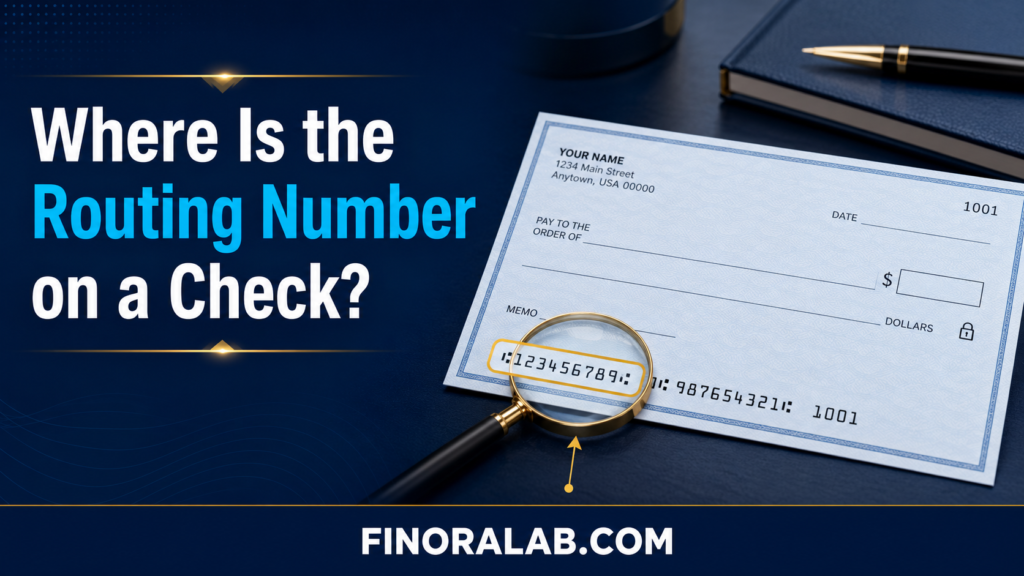
So, where is the routing number on a check? On most personal checks issued by U.S. financial institutions, the routing number is the first nine digit number printed along the bottom left corner. It normally appears before your bank account number and check number.
Although the location is generally consistent, the numbers printed along the bottom of a check can look confusing. Entering the wrong number may delay a payment, reject a direct deposit, or send a transfer to the wrong destination.
This guide explains how to locate a routing number, how it differs from an account number, when different routing numbers may apply, and how to verify the number before using it.
Quick Answer
Look at the line of numbers printed across the bottom of your check. This is known as the magnetic ink character recognition, or MICR, line.
The numbers commonly appear in this order
Routing number | Account number | Check number
The routing number is usually
- Located in the bottom left corner
- Exactly nine digits long
- Printed before the checking account number
- Surrounded by special MICR symbols
The Federal Reserve explains that the MICR line contains information such as the financial institutions routing number, the customers account number, and the check serial number. Banks use this machine readable information to process checks efficiently. Federal Reserve Check 21 FAQs
Quick Summary Table
| Information | Typical location on a personal check | Usual length | Main purpose |
| Routing number | Bottom left | 9 digits | Identifies the bank or credit union |
| Account number | Bottom center | Varies | Identifies your individual bank account |
| Check number | Bottom right | Usually shorter | Identifies the specific check |
| Check number copy | Upper right corner | Usually 3–4 digits | Helps track and record the check |
| Bank name | Top or upper left area | Not applicable | Identifies the financial institution |
| Account holder details | Upper left area | Not applicable | Identifies the check owner |
The exact arrangement can vary slightly, especially on business checks. Therefore, the nine digit length and your banks official records are more reliable than position alone.
What Is a Routing Number?
A routing number is a nine digit identifier associated with a U.S. bank, credit union, or other eligible financial institution. It is also called an ABA routing number, routing transit number, or ABA number.
The number helps payment systems identify the financial institution responsible for receiving or sending funds. It does not identify your personal account by itself.
A routing number contains nine digits eight routing digits and a final check digit used to help validate the number. According to the Federal Reserve, routing numbers are used to clear checks and support other forms of payment. Federal Reserve Micro Data Reference Manual
Routing numbers are commonly required for
- Payroll direct deposits
- Government benefit deposits
- Tax refunds
- ACH transfers
- Automatic bill payments
- Electronic withdrawals
- Bank account verification
- Transfers between financial institutions
- Processing paper checks
A routing number is not the same as a debit card number, credit card number, checking account number, or international SWIFT code.
Where Is the Routing Number on a Check?
On a standard personal check, the routing number is normally printed at the bottom left corner. It is generally the first group of numbers in the MICR line and contains exactly nine digits.
A typical check might show a number sequence like this
123456789 001234567890 1042
In this example
- 123456789 is the routing number
- 001234567890 is the account number
- 1042 is the check number
The symbols printed between these groups are machine readable characters. They help banking equipment distinguish one set of numbers from another.
The routing number may also appear in fractional form near the top of some checks. That fractional number is related to check processing, but it is not normally the version you should enter into an online direct deposit or ACH form. Use the nine digit routing number at the bottom unless your bank gives you different instructions.
How to Identify the Routing Number Step by Step
Find the MICR line
Place the check in front of you with the printed side facing upward. Look along the bottom edge for a line containing multiple groups of numbers and unusual symbols.
This is the MICR line used during check processing.
Examine the first number group
On most personal checks, the first group on the left is the routing number. Count its digits carefully.
A valid U.S. routing number should contain nine digits. If the first group is longer or shorter, you may be looking at a business check with a different layout.
Separate it from the account number
The account number usually comes after the routing number. Its length varies by financial institution, so it may contain eight, ten, twelve, or another number of digits.
Do not assume the longest number is always the account number without checking your banking records.
Locate the check number
The check number usually appears at the bottom right. The same number is commonly printed in the upper right corner of the check.
Matching these two numbers is an easy way to determine which group is the check number.
Verify everything with your bank
Before using the number for a large transfer, direct deposit, or recurring withdrawal, compare it with the routing information shown in your official mobile banking app, online account, bank statement, or direct deposit form.
This final check is important because some banks use different routing numbers for checks, ACH transactions, and wire transfers.
Routing Number vs. Account Number vs. Check Number
These three numbers serve different purposes, even though they appear close together.
Routing number
The routing number identifies the financial institution. Many customers at the same bank may use the same routing number, although large banks can have different routing numbers based on region or transaction type.
Account number
The account number identifies your individual checking or savings account. It is more personal and sensitive than the routing number because it directs a transaction to your specific account.
Your account number is not normally the same as the number printed on your debit card.
Check number
The check number identifies a particular paper check. It helps you and your bank track payments and organize financial records.
Check numbers usually increase sequentially as new checks are issued.
How Routing Numbers Work
Imagine that your employer is sending your salary by direct deposit. The payment instructions need to answer two questions
- Which bank should receive the payment?
- Which customer account at that bank should receive it?
The routing number answers the first question. Your checking account number answers the second.
When your employer submits payroll instructions, the payment travels through an electronic network to your financial institution. The bank uses your account number to credit the money to the correct account.
ACH transactions are electronic transfers made between banks and credit unions through the Automated Clearing House network. Consumer Financial Protection Bureau
For paper checks, financial institutions read the MICR line to identify the bank, account, and check involved in the transaction.
Common Uses of a Routing Number
Direct deposit
An employer may ask for your routing number and account number to deposit wages into your checking or savings account.
You may also need to indicate whether the account is a checking or savings account. Confirm that information before submitting your payroll form.
Automatic bill payments
Utility providers, lenders, insurers, subscription services, and other companies may use your bank information to withdraw recurring payments.
Only provide this information to a company you recognize and have authorized.
Tax refunds and government payments
Government agencies may request routing and account numbers when you choose direct deposit for a refund or benefit payment.
Always enter the information directly through an official government website or approved form.
Transfers between accounts
You may need a routing number when connecting accounts held at different banks. The bank may verify ownership through small trial deposits or another secure method.
Electronic check payments
Some merchants convert check information into an electronic transfer. This can involve the routing number, account number, and check serial number printed in the MICR line.
Can a Bank Have More Than One Routing Number?
Yes. A financial institution can have multiple routing numbers.
This is common when a large bank
- Operates in several states or regions
- Has acquired or merged with other banks
- Uses separate numbers for different transaction types
- Processes wire transfers separately from ACH payments
- Maintains older routing numbers for existing accounts
The routing number printed on your check may work for check processing and domestic ACH payments, but it may not be the correct number for a wire transfer.
Never assume that one routing number applies to every transaction. If the payment form specifically asks for an ACH, domestic wire, or international wire routing number, verify the appropriate instructions with your bank.
Check Routing Numbers, ACH Numbers and Wire Numbers
A routing number can be associated with different payment methods, but the correct number depends on your banks procedures.
| Transaction | Information commonly needed | What to verify |
| Paper check | Routing and account numbers from check | Check layout and bank details |
| ACH direct deposit | ACH routing and account numbers | Account type and ACH eligibility |
| Automatic payment | ACH routing and account numbers | Company authorization and payment date |
| Domestic wire | Wire routing number and account details | Bank specific wire instructions |
| International wire | SWIFTBIC and other bank details | Currency, fees and intermediary instructions |
An international transfer may require a SWIFT or BIC code rather than only a U.S. ABA routing number. Depending on the destination, an IBAN or other local banking identifier may also be needed.
Benefits and Risks of Using Routing Numbers
Benefits
Routing numbers make it possible to identify financial institutions accurately within payment systems. They help consumers receive direct deposits, pay bills automatically, process checks, and move money between accounts.
Electronic payments can also reduce the need to handle cash or wait for paper checks. When set up correctly, recurring payments may help consumers avoid missed due dates.
Risks
A routing number is not usually secret because many customers of the same financial institution share it. However, the combination of your routing number, account number, name, and other personal information is sensitive.
Someone with enough banking information could attempt an unauthorized withdrawal, create a fraudulent payment, or use your details in a scam. The Consumer Financial Protection Bureau warns that providing an account number and routing number gives another party the means to withdraw money, which is why consumers should share this information cautiously. Consumer Financial Protection Bureau
How to Find a Routing Number Without a Check
If you do not have a paper check, you still have several options.
Check your banking app
Sign in to your banks official mobile application. Routing and account information may appear under sections such as
- Account details
- Direct deposit
- Account information
- Manage account
- Wire instructions
Some apps hide part of the account number until you complete an identity verification step.
Use online banking
Your banks secure online portal may display your routing number on the account details page or provide a downloadable direct deposit form.
Make sure you are using the institutions official website and not a link received in an unexpected email or message.
Review a bank statement
A statement may show the routing number, although some banks only display an abbreviated account number for security.
Do not rely on a document if it relates to a different account or an account that has been closed.
Contact the bank
Call the customer service number printed on the back of your debit card or visit a branch. Explain what type of transaction you are making so the representative can provide the correct routing information.
For example, ask specifically whether you need the routing number for an ACH deposit or a domestic wire.
Use an official direct deposit form
Many banks allow customers to generate a prefilled direct deposit form. This can be safer than manually copying numbers because the form normally contains the appropriate bank and account details.
Common Mistakes to Avoid
Confusing the account number with the routing number
The routing number has nine digits, while the account number varies in length. Count the digits and confirm both numbers through official banking records.
Using a wire number for an ACH payment
Wire transfers and ACH payments are different payment methods. Using the wrong instructions can cause a transfer to be rejected or delayed.
Copying the check number
Because the check number appears at the end of the MICR line, some people mistakenly enter it as part of their account number.
Compare the final group with the number printed in the upper right corner of the check.
Using an old check
A check from an old account, a previous branch, or a bank that has merged may contain outdated information. Confirm that the account is active and the routing details are current.
Entering numbers without reviewing them
A single incorrect digit can create a serious payment problem. The CFPB advises consumers to double check account and routing numbers before sending a transfer because money sent using incorrect information may be difficult to recover. Consumer Financial Protection Bureau
Sharing a photo of a check
A check photo may expose your full name, address, bank name, routing number, account number, signature, and check number. Never post one publicly or send it through an unsecured channel.
Trusting an unexpected request
Be cautious if an unfamiliar person or business urgently requests your banking information. Contact the company through a verified phone number or official website before providing anything.
Expert Safety Tips
- Verify routing instructions through your banks official app or website.
- Confirm whether the transaction is a check, ACH payment, or wire transfer.
- Review every digit before submitting a financial form.
- Avoid sending check images through ordinary email or social media.
- Share account details only with trusted, verified recipients.
- Monitor your account after establishing a new automatic payment.
- Enable transaction notifications when your bank offers them.
- Report unauthorized transactions promptly.
- Store unused checks in a secure location.
- Destroy voided or outdated checks with a cross cut shredder.
- Never provide an online banking password, PIN, or verification code with routing details.
Latest Banking Update
The basic placement and purpose of routing numbers have not recently undergone a major consumer facing change. Routing numbers remain nine digit identifiers, and the MICR line at the bottom of a check continues to carry the bank routing number, customer account number, and check serial number.
However, banks can update payment instructions after mergers, system conversions, or operational changes. Digital banking platforms may also present different instructions for ACH and wire transfers.
For that reason, the most reliable current approach is to verify transaction specific details through your financial institution immediately before sending money. This is particularly important for high value or time sensitive transfers.
Conclusion
If you are wondering where is the routing number on a check, look at the bottom left corner for the first nine digit group in the MICR line. The number normally appears before your account number and identifies the bank or credit union responsible for processing the payment.Because check formats and bank procedures can vary, confirm the number through your banks official app, website, statement, or customer service team. Always verify whether the transaction requires a check, ACH, or wire routing number, and keep your full banking details private.
You may also read more blogs
FAQs
Is the routing number always the first number on a check?
It is usually the first number at the bottom left of a standard personal check. Some business or specialty checks may use a different arrangement, so confirm that the number contains nine digits and matches your banks official information.
How many digits are in a routing number?
A U.S. routing number contains exactly nine digits. It consists of routing information plus a final check digit used to help validate the number.
Which number on a check is the account number?
The account number is usually the middle group along the bottom of a personal check. It commonly appears after the nine digit routing number and before the check number. Its length varies by bank.
Is the routing number the same for checking and savings?
It may be the same, but this depends on the financial institution and transaction type. Savings accounts do not normally have paper checks, so confirm their routing and account information through online banking or directly with the bank.
Is my debit card number the same as my account number?
No. A debit card number identifies the card, while the account number identifies the bank account connected to it. Do not enter a debit card number when a form asks for a checking account number.
Can I use the routing number on my check for a wire transfer?
Not always. Some banks use one number for checks and ACH transfers and a different routing number for domestic wires. Ask your bank for its official wire instructions before sending money.
Is it safe to give someone my routing number?
A routing number alone generally identifies a financial institution, but it becomes sensitive when combined with your account number and personal details. Only provide the complete information to a verified employer, government agency, financial institution, or trusted company for an authorized purpose.

I am a professional finance content writer with expertise in personal finance investing, banking, loans, insurance, credit cards, budgeting, and market related topics. I create clear, SEO optimized, and reader friendly finance content that helps audiences understand complex financial concepts in simple words. My goal is to write trustworthy and engaging content that improves search visibility, builds credibility, and supports business growth.