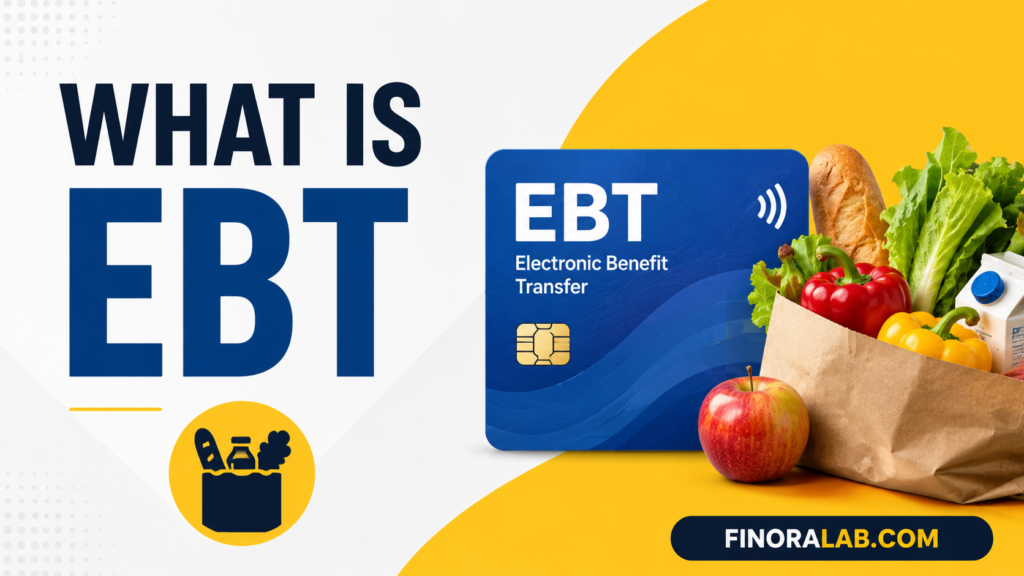
If you have searched for what is EBT, you are probably trying to understand how government benefits are delivered and how an EBT card works at a grocery store. EBT stands for Electronic Benefit Transfer. It is an electronic payment system used to deliver certain public assistance benefits through a card that generally works much like a debit card. The most familiar use is SNAP, the Supplemental Nutrition Assistance Program, which helps eligible households purchase food. USDA explains that SNAP benefits are deposited into EBT accounts and accessed through authorized retailers.
An EBT card is not a conventional bank debit card and does not automatically provide access to your checking account or personal cash. Instead, it provides access to benefits administered through a government program. The exact benefits, eligibility requirements, application process, deposit schedule, and card procedures can vary by state and program. That distinction matters because EBT is a payment mechanism, while SNAP and other assistance programs are the underlying benefit programs. Understanding the difference can help you budget accurately, avoid declined transactions, protect your benefits, and recognize scams.
What Is EBT and What Does Electronic Benefit Transfer Mean?
EBT means Electronic Benefit Transfer. In simple terms, it is a system that electronically distributes and tracks government assistance benefits through an account associated with an EBT card. USDA describes the EBT system as an electronic payment system through which household benefits are issued and stored and then accessed using electronic funds transfer technology. For SNAP participants, the card operates similarly to a debit card at authorized food retailers, but the money available through the card is restricted according to program rules.
The easiest way to understand EBT is to separate the card from the benefit. The EBT card is the access tool, while SNAP is one of the major programs that provides benefits through that tool. If you qualify for SNAP, your state agency establishes your benefit account and deposits approved benefits according to the applicable schedule. You then use your card and PIN to purchase eligible items. The amount of an approved purchase is deducted from the available benefit balance, rather than being charged to a traditional checking account or credit line.
How Does an EBT Card Work?
Once a household is approved for SNAP, benefits are automatically loaded into its EBT account each month. The exact deposit schedule depends on the state administering the program. At checkout, eligible food purchases are processed through the retailers point of sale system. You generally swipe, insert, or otherwise use the EBT card, enter the required PIN, and authorize the transaction. The purchase amount is then deducted from the available SNAP balance. USDA notes that receipts generally show the SNAP purchase amount and remaining EBT balance.
Consider a simple example. Suppose your EBT account has $450 available and you purchase $72 in eligible groceries. If the entire $72 qualifies for SNAP payment, your remaining balance would be $378. If you purchase $90 of groceries but $18 consists of noneligible household items, only $72 would normally be paid from SNAP, with another payment method needed for the remaining amount. This is why separating eligible and noneligible products at checkout can make transactions easier and reduce confusion.
What Is SNAP and How Is It Connected to EBT?
SNAP stands for Supplemental Nutrition Assistance Program. It is a federal nutrition assistance program administered through state agencies that helps eligible households supplement their food budgets. EBT is the delivery and payment mechanism commonly used for SNAP benefits. In other words, SNAP determines the assistance a qualified household receives, while EBT provides the electronic account and card through which those benefits can be accessed. USDA describes SNAP as a program designed to help low income families afford nutritious food and supplement their grocery budgets.
This distinction is important when searching for information online. Someone asking what is EBT may actually be looking for SNAP eligibility, an EBT balance, an application, or information about eligible purchases. These are related but different questions. SNAP eligibility is determined under program rules, while EBT card management is handled through the relevant state system. USDA does not directly accept SNAP applications applicants must work through their state, territory, Tribal, or local agency.
Who Can Qualify for EBT or SNAP Benefits?
Because EBT is a delivery system rather than a single standalone benefit program, eligibility depends on the particular assistance program. For SNAP, eligibility is based on federal rules and state administration, with factors such as household circumstances, income, resources, and other requirements potentially affecting eligibility. Household composition also matters. USDA explains that a SNAP household generally includes people who live together and purchase and prepare meals together, although specific household rules can apply to spouses, children, and certain elderly or disabled individuals.
Income alone does not tell you with certainty whether you will qualify. SNAP eligibility can involve several calculations and special rules, and states may administer the application process differently. This is why using an unofficial online calculator as a final answer can be misleading. If you think you may qualify, the practical approach is to apply or contact your state agency and allow the agency to evaluate your circumstances. USDA directs people seeking nutrition assistance to their state, territory, Tribal, or local agency rather than accepting applications directly.
What Can You Buy With an EBT Card?
For SNAP EBT, eligible purchases generally include food intended for household consumption. USDA lists fruits and vegetables, meat, poultry and fish, dairy products, breads and cereals, snack foods, nonalcoholic beverages, and seeds or plants that produce food for the household as eligible categories. This means an EBT card can cover many everyday grocery staples, but eligibility depends on the nature of the product and applicable program rules.
For example, a household could generally use SNAP benefits for items such as apples, rice, eggs, milk, chicken, cereal, canned vegetables, and many packaged foods. Seeds or plants that produce food for the household can also qualify under SNAP rules. This makes EBT particularly useful as a budgeting tool because households can allocate their benefit balance toward groceries that support meals throughout the month. However, stores and products can have different purchasing procedures, so checking the current rules before shopping can prevent surprises.
What Cannot Be Bought With SNAP EBT?
SNAP benefits have important restrictions. USDA states that SNAP cannot be used to purchase alcohol, tobacco, cannabis or CBD products, vitamins, medicines, supplements, live animals in most circumstances, hot foods at the point of sale, or nonfood products such as pet food, cleaning supplies, paper products, hygiene items, and cosmetics. Products labeled with a Supplement Facts panel are generally treated as supplements and are not eligible for SNAP purchase.
A practical example is a grocery basket containing $65 of food, $12 of cleaning products, and $8 of personal care items. The EBT eligible portion may be $65, while the other $20 would need to be paid separately. Another example is a prepared hot meal from a store deli, which generally cannot be purchased with SNAP even though it is technically food. Understanding these distinctions before reaching the register makes budgeting easier and helps avoid a declined EBT payment for an ineligible item.
Can You Use EBT at Grocery Stores and Online?
EBT cards can be used at retailers authorized to accept the applicable benefit. For SNAP, this commonly includes participating grocery stores and other authorized food retailers. At a physical store, the card is processed through a point of sale terminal, and the shopper enters a PIN. The retailers system identifies the eligible SNAP portion of the transaction and deducts the applicable amount from the account. USDA describes the process as similar to using a debit card, although SNAP purchases remain subject to program restrictions.
Online SNAP purchasing has also expanded, but availability depends on participating retailers and the applicable program infrastructure. USDA explains that online SNAP transactions still require the customers unique PIN and must use secure systems for PIN entry. Importantly, SNAP benefits cannot be used to pay fees such as delivery, service, or convenience fees under the federal online purchasing framework. Therefore, even if your EBT card works online, you may still need another payment method for certain additional charges.
How Do You Check Your EBT Balance?
Your EBT balance tells you how much benefit remains available for eligible purchases. The precise method for checking it depends on the state that issued your card. Common options may include reviewing a receipt after a purchase, using an official state website or mobile application, calling the official EBT customer service number, or checking another state approved account management system. USDA explains that SNAP receipts can show the remaining benefit balance, making receipts useful for everyday budgeting.
Keeping track of your balance is especially important when planning purchases near the end of a benefit period. Suppose you begin a month with $300 and make eight purchases averaging $28 each. Your estimated spending would be $224, leaving about $76 if every purchase was entirely SNAP eligible. Real transactions may differ because some purchases include noneligible items. Checking your actual balance rather than relying on mental calculations helps prevent declined transactions and makes it easier to spread benefits across the month.
How Do You Apply for EBT or SNAP?
There is no single nationwide EBT application that every household submits directly to USDA. SNAP applications are administered through state, territory, Tribal, or local agencies. USDA instructs applicants to locate the appropriate agency through its official contacts information and then contact that agency to learn about eligibility and application procedures. Depending on the state, applications may be available online, by mail, in person, or through other approved channels.
Before applying, it can be useful to organize information the agency may request, such as household details, income information, housing costs, and other relevant financial circumstances. Do not assume that an unofficial website is the correct place to submit sensitive information. When searching online, prioritize official government websites and verify that the site belongs to the appropriate state or government agency. This is particularly important because scammers sometimes create websites or messages designed to imitate benefit services and collect personal information.
What Is the Difference Between EBT, SNAP, and Food Stamps?
EBT, SNAP, and food stamps are related terms, but they do not mean exactly the same thing. SNAP is the current federal program name Supplemental Nutrition Assistance Program. EBT refers to the electronic system used to deliver and access benefits. Food stamps is an older term that remains common in everyday conversation, even though the modern program operates electronically rather than primarily through paper coupons. Using the correct terminology helps when searching official government resources or communicating with a state benefits agency.
The distinction can be summarized simply SNAP is the program, EBT is the electronic delivery and payment system, and the EBT card is the physical access method used by participants. For example, saying I need to check my SNAP EBT balance is more precise than saying I need to check my food stamp card. Understanding these terms also helps users distinguish SNAP from other benefit programs that may use electronic benefit technology or similar cards.
Can EBT Be Used for Cash Benefits?
The term EBT can refer more broadly to electronic delivery of public assistance, and some state systems can involve different types of benefits. Therefore, you should not assume every EBT card has exactly the same functionality. SNAP benefits are specifically intended for eligible food purchases and are subject to SNAP purchasing restrictions. Other public assistance programs can have different rules, account structures, and permitted uses depending on the program and state. The important point is that an EBT card does not automatically mean unrestricted cash is available.
If you are trying to determine whether your specific card contains cash assistance, the safest approach is to check your official state benefits account or contact the agency that issued the card. Do not rely on a generic explanation of EBT because program structures vary. This distinction can be especially important when budgeting. Treating a restricted food benefit as if it were ordinary checking account money could lead to an incorrect estimate of how much you have available for rent, transportation, utilities, debt payments, or other expenses.
How EBT Benefits Can Support Personal Financial Planning
EBT benefits can affect a household budget by reducing the amount of cash that needs to be spent on eligible groceries. If a household normally spends $500 per month on qualifying groceries and receives $350 in SNAP benefits, the household may need to allocate approximately $150 of its own cash toward those groceries, assuming the entire benefit can be used for the planned purchases. The benefit does not create additional unrestricted income, but it can free up some cash for other essential expenses. This can be meaningful when managing a tight monthly budget.
A practical budgeting strategy is to combine your EBT balance with a broader household spending plan. First, estimate the grocery needs for the month. Next, identify how much of that spending can reasonably be covered by SNAP. Then reserve cash for expenses that SNAP cannot cover, such as rent, utilities, transportation, household supplies, and debt payments. This approach reduces the risk of spending too much of either resource early in the month. It also creates a clearer picture of your actual disposable cash.
EBT, Budgeting, and Food Cost Management
Food prices can make monthly budgeting difficult, especially when a household has a limited amount of cash available for necessities. EBT benefits can help eligible households manage grocery spending, but the benefit amount still needs to be planned carefully. One useful strategy is dividing the monthly food budget into weekly targets. For example, if a household has $400 in available SNAP benefits and wants to spread the balance evenly across four weeks, a simple starting target would be approximately $100 per week. Actual spending can vary based on household needs and shopping patterns.
Planning meals around eligible staples can make the benefit last longer without requiring an unrealistic diet. Comparing unit prices, using seasonal produce, buying appropriate quantities, and planning meals before shopping can reduce unnecessary spending. It is also useful to distinguish between eligible and essential. An item may qualify for SNAP but still be expensive relative to alternatives. Good financial planning therefore involves both understanding program rules and making sensible purchasing decisions within those rules.
EBT Security, PIN Protection, and Common Scams
Protecting an EBT card is a financial security issue. USDA warns that criminals have used phishing messages and card skimming techniques to steal SNAP benefits. A scam message might falsely claim that an EBT account has been locked and instruct the recipient to call a suspicious number or provide card information. USDA recommends keeping your PIN secret, checking the account regularly for unauthorized charges, and being alert to suspicious equipment attached to card readers.
Never assume a text message is legitimate simply because it contains your name or appears to reference government benefits. Avoid clicking unfamiliar links or giving your card number and PIN to someone who contacts you unexpectedly. If you suspect your benefits were stolen, contact your state SNAP office through an official source rather than a phone number supplied in a suspicious message. Security habits are especially important because unauthorized transactions can reduce money intended for essential food purchases.
What Happens If Your EBT Card Is Lost or Stolen?
A lost or stolen EBT card should be treated seriously because someone who obtains the card and PIN may potentially use available benefits. The correct replacement procedure varies by state, so cardholders should contact the official state EBT or benefits agency as soon as possible. If you believe someone has learned your PIN, changing it through the approved state process may help prevent additional unauthorized transactions. USDA specifically advises SNAP participants to change their PIN immediately if they notice unauthorized charges related to potential skimming.
Do not wait until your next shopping trip to investigate suspicious activity. Check your transaction history and receipts regularly so you can identify unusual purchases quickly. If you receive an unexpected text claiming that your card has been compromised, do not automatically follow the instructions in the message. Instead, independently locate the official contact information for your state agency. This simple extra step can help protect you from phishing and impersonation scams that target benefit recipients.
EBT and Current Changes in SNAP Technology
EBT systems continue to evolve. USDA has been working on modernization efforts involving chip and contactless technology for SNAP EBT cards. In February 2026, USDA reported that SNAP EBT chip and tap cards were coming, while noting that retailers were not required to accept EBT tap payments at that time. Chip and tap transactions still require PIN entry. These changes are intended to modernize payment technology while preserving security and program controls.
Technology changes can improve convenience, but they do not eliminate the need to understand eligibility and purchasing restrictions. A newer card may look or function somewhat differently at checkout, yet SNAP rules still determine which purchases qualify. Similarly, online shopping capabilities continue to develop, but availability and procedures depend on participating retailers and state systems. For the most accurate information about your specific card, use the official resources associated with the state that issued your benefits.
Common EBT Mistakes to Avoid
One common mistake is assuming that every grocery store item can be paid for with SNAP simply because it is sold in the food section. Certain products, such as vitamins, supplements, alcohol, tobacco, and hot prepared foods, are restricted. Another mistake is failing to check the remaining balance before making a large purchase. A third is treating an EBT card like an unrestricted debit card. SNAP benefits are designed for eligible food purchases, and the payment system is built around those program restrictions.
Security mistakes can be even more costly. Sharing your PIN, responding to suspicious text messages, clicking unknown benefit related links, or ignoring unusual transactions can expose your benefits to theft. USDA specifically warns about phishing and skimming scams involving SNAP EBT accounts. A strong routine is straightforward protect your PIN, monitor transactions, use official websites and phone numbers, and report suspicious activity quickly. These steps are useful financial management practices regardless of your household income or benefit status.
EBT and Other Financial Resources
EBT benefits should be considered one part of a broader household financial plan rather than a replacement for income, savings, or emergency resources. A household may still need to plan for housing, utilities, transportation, healthcare, insurance, debt payments, and other expenses that SNAP does not cover. Separating restricted benefits from cash resources can make a budget more realistic. For example, if your household has $600 in cash and $300 in SNAP benefits, you should not treat that as $900 of unrestricted spending money.
A better approach is to assign each resource to the expenses it can actually cover. SNAP can support eligible grocery purchases, while cash can cover expenses outside SNAPs permitted categories. If you are also managing credit card balances, student loans, or other debt, avoid assuming that an EBT balance can be used to make those payments. Instead, consider how the grocery assistance changes your cash flow needs and whether the resulting cash savings can support emergency savings or high priority obligations.
Conclusion
EBT, or Electronic Benefit Transfer, is an electronic system used to deliver and manage certain public assistance benefits. For millions of households, its most familiar role is delivering SNAP benefits through an EBT card that works similarly to a debit card at authorized retailers. However, the card is subject to specific program rules, meaning it cannot be used like unrestricted cash. Understanding how EBT works, what SNAP covers, how balances are tracked, and where benefits can be used can make household budgeting significantly easier.The most important practical lessons are to understand your states rules, monitor your balance, plan grocery spending, protect your PIN, and use official government resources when applying for assistance or resolving account problems. SNAP rules and technology can change, including developments involving EBT chip and tap cards and online purchasing. Therefore, readers should verify current information with their state agency or USDA before making important decisions.
EBT stands for Electronic Benefit Transfer. It is an electronic system used to distribute and manage certain government assistance benefits through an account accessed with a card. The card commonly works like a debit card at authorized retailers, but the available benefits can have restrictions depending on the program. SNAP is the most familiar example. SNAP benefits are deposited electronically into an EBT account, and eligible participants use their card and PIN to purchase qualifying food.
Is EBT the same as food stamps?
EBT and food stamps are not exactly the same thing. Food stamps is a common older term associated with the nutrition assistance program now called SNAP. EBT refers to the electronic system used to deliver and access benefits. Modern SNAP benefits are generally provided electronically rather than through traditional paper food stamp coupons. Therefore, someone might casually say food stamps while actually referring to their SNAP EBT benefits.
What can you buy with EBT?
If you are using SNAP benefits through an EBT card, eligible purchases generally include fruits and vegetables, meat, poultry and fish, dairy products, breads and cereals, snack foods, nonalcoholic beverages, and certain seeds and plants that produce food. SNAP generally cannot be used for alcohol, tobacco, cannabis or CBD products, vitamins, medicines, supplements, hot foods at the point of sale, or nonfood household items.
Can you use EBT online?
SNAP EBT can be used for online grocery purchases through participating retailers and approved systems, although availability varies. Online transactions still require a PIN through a secure payment process. USDA states that SNAP benefits cannot be used to pay certain fees, including delivery, service, or convenience fees. Therefore, you may need another payment method for charges that are not eligible for SNAP payment.
How do I check my EBT balance?
Your EBT balance can generally be checked through the official system provided by the state that issued your card. Depending on the state, options may include an official website, mobile application, customer service system, or transaction receipt. USDA notes that SNAP receipts can show both the amount of the SNAP purchase and the remaining account balance. Because procedures differ by state, use your states official resources for the most accurate balance information.
Can I use EBT to buy household supplies?
SNAP benefits generally cannot be used to purchase nonfood household supplies. USDA specifically lists cleaning supplies, paper products, pet foods, hygiene products, and cosmetics among items that cannot be purchased with SNAP benefits. If a shopping cart contains both eligible groceries and restricted household products, you will generally need another payment method for the noneligible portion.
Can I use EBT to buy vitamins?
Generally, no. SNAP does not allow benefits to be used for vitamins, medicines, or supplements. USDA explains that an item carrying a Supplement Facts label is considered a supplement and is not eligible for SNAP purchase. This distinction can be confusing because some products are sold in grocery stores alongside ordinary food. When in doubt, check the product labeling and current USDA or state guidance.
What should I do if my EBT card is stolen?
If your EBT card is lost or stolen, contact the official state agency or EBT card service responsible for your account as soon as possible. If you notice unauthorized transactions or believe your PIN has been compromised, follow the states approved process for changing your PIN and reporting the activity. USDA also warns consumers about phishing and card skimming scams, so never provide your card information or PIN in response to a suspicious message.
Does EBT affect your credit score?
SNAP EBT benefits are not a credit account, so using SNAP benefits does not function like borrowing money on a credit card or taking out a loan. There is therefore no normal credit card balance or loan repayment associated with ordinary SNAP purchases. Credit scores are generally influenced by factors associated with credit accounts, such as payment history and amounts owed. EBT should instead be viewed as a restricted benefit resource for eligible household expenses.
Where do I apply for SNAP benefits?
You apply for SNAP through the state, territory, Tribal, or local agency that administers the program where you live. USDA does not accept SNAP applications directly. The federal agency provides information that can help applicants locate the appropriate local agency and learn how to apply. Because application procedures and eligibility details can vary, use official government resources rather than relying on third party websites that promise guaranteed benefits.
Is EBT the same as a debit card?
An EBT card can operate similarly to a debit card at checkout, but the underlying account is different. A debit card normally accesses money in a bank account, while a SNAP EBT card accesses authorized benefits in an EBT account. SNAP purchases are restricted to eligible items, and the benefit balance is reduced when qualifying purchases are made. USDA specifically describes SNAP EBT cards as functioning similarly to debit cards while maintaining program specific restrictions.
I am a professional finance content writer with expertise in personal finance investing, banking, loans, insurance, credit cards, budgeting, and market related topics. I create clear, SEO optimized, and reader friendly finance content that helps audiences understand complex financial concepts in simple words. My goal is to write trustworthy and engaging content that improves search visibility, builds credibility, and supports business growth.
I am a professional finance content writer with expertise in personal finance investing, banking, loans, insurance, credit cards, budgeting, and market related topics. I create clear, SEO optimized, and reader friendly finance content that helps audiences understand complex financial concepts in simple words. My goal is to write trustworthy and engaging content that improves search visibility, builds credibility, and supports business growth.