
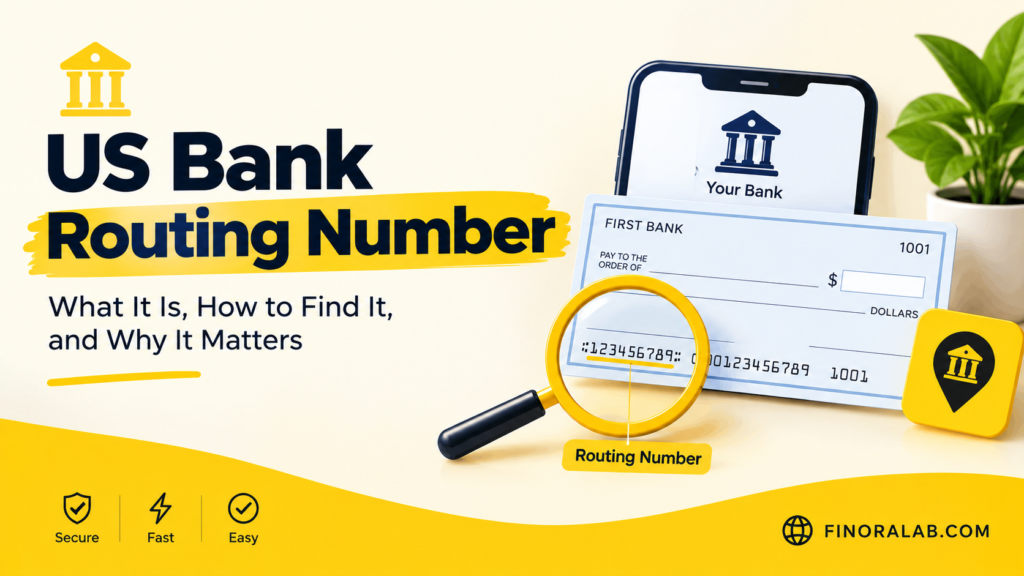
A US Bank routing number is a nine digit code that identifies a financial institution in the United States. You may need it when setting up direct deposit, receiving a tax refund, paying bills electronically, or transferring money between bank accounts. Although routing numbers may look like ordinary account details, they play an important role in directing payments to the correct financial institution. Using the wrong number can delay a deposit, cause a payment to fail, or require you to contact your bank to resolve a transaction issue.
If you bank with U.S. Bank, the American financial institution, finding the correct routing number depends on the type of payment you want to make and, in some cases, where you opened your account. U.S. Bank is different from the general term a US bank, which can refer to any American bank. This distinction matters because every financial institution has its own routing information, and a number that works for one bank may not work for another.
This guide explains how to find a U.S. Bank routing number, how routing numbers differ from account numbers, and which details you need for ACH payments, wire transfers, direct deposits, and other banking transactions. It also covers common mistakes, security precautions, and practical steps you can take before submitting your banking information.
What Is the U.S. Bank Routing Number?
The U.S. Bank routing number is a nine digit American Bankers Association (ABA) routing transit number used to identify a financial institution for eligible domestic banking transactions. U.S. Bank, National Association, may use different routing numbers depending on the accounts origin and the type of transaction. Therefore, there is not necessarily one routing number that every U.S. Bank customer should use for every payment. The safest approach is to verify the number through the banks official website, mobile app, or customer service before submitting a transfer request.
If you are looking for a routing number for U.S. Bank, visit its official ABA routing number page. You can also sign in to online banking or the U.S. Bank mobile app to view the information associated with your account. If you are searching for another American bank, use that institutions official website instead. Similar names can be confusing, and copying a routing number from an unrelated bank can result in an unsuccessful or misdirected payment.
How to Find Your U.S. Bank Routing Number
One of the easiest ways to find your routing number is to look at a personal check issued for your U.S. Bank checking account. The routing number is usually the first nine digit number printed along the bottom left of the check. The account number appears after it, followed by the check number, although the exact layout may vary. Make sure you use a check associated with the account you intend to use, particularly if you have more than one checking account or maintain separate personal and business accounts.
You can also find the number digitally without using a paper check. According to U.S. Banks official instructions, customers can sign in to the mobile app, select their account, and open the Manage tab followed by Account & routing number. In online banking, select the relevant account from the dashboard to view its routing number. The mobile apps Smart Assistant can also help locate the number. If you cannot access these options, contact U.S. Bank directly using contact details published on its official website.
U.S. Bank Routing Number for Direct Deposit and ACH Transfers
An ACH routing number is used for payments processed through the Automated Clearing House network. Common examples include employer direct deposits, certain government benefit payments, recurring utility bills, and electronic transfers between bank accounts. When setting up direct deposit, you will generally need the routing number, your account number, and the account type. Your employer or payment provider may also request a completed authorization form. Check the information carefully before submitting it because an incorrect number can delay your first deposit or cause a payment setup to fail.
The routing number needed for ACH transactions may differ from the number required for a wire transfer. Do not assume that a number printed on a check automatically applies to every type of payment. If your employer provides a form with separate fields for the bank routing number and account number, enter each value in the correct field. When receiving government benefits or a tax refund, follow the instructions provided by the paying agency and verify your bank details before confirming the request. Direct deposit changes can take one or two pay periods to take effect, depending on the employer or provider.
U.S. Bank Routing Number for Domestic and International Wire Transfers
A wire transfer is a method of moving money electronically between financial institutions. Domestic wire transfers in the United States generally require the receiving banks appropriate wire routing number, along with the recipients account number and identifying details. The sender may also need the recipients full legal name and address. Because wire transfers can be difficult to reverse once completed, verify the instructions directly with the receiving bank or a trusted recipient before sending money. Do not rely on an old email or a routing number copied from an unrelated transaction.
International wire transfers can require different information. U.S. Bank lists its SWIFT/BIC code as USBKUS44IMT for applicable international wire instructions. A SWIFT code identifies a financial institution within the international messaging system, while a domestic ABA routing number identifies a U.S. financial institution for domestic payment processing. Depending on the destination and receiving bank, you may also need an account number or International Bank Account Number (IBAN), intermediary bank details, and the recipients address. Confirm the exact instructions with U.S. Bank before initiating an international transfer because requirements vary by country and transaction.
Routing Number vs. Account Number vs. SWIFT Code
These banking identifiers serve different purposes, and using the wrong one can create delays. A routing number identifies the financial institution involved in a domestic transaction. Your bank account number identifies your specific checking or savings account within that institution. A SWIFT/BIC code helps identify a financial institution for international payment messaging. Although all three may appear in banking instructions, they are not interchangeable. A payment form asking for a routing number should not automatically be filled in with your account number or SWIFT code.
For example, suppose your employer asks for your U.S. Bank routing number and checking account number to establish direct deposit. You would provide the appropriate domestic routing number in the routing field and the account number for the checking account where you want your paycheck deposited. If someone abroad wants to send you an international wire, the sender may need U.S. Banks SWIFT/BIC code and your account information instead. The exact requirements depend on the transfer method, so read the form carefully and use the banks official instructions rather than guessing.
How to Read the Numbers on a U.S. Bank Check
A paper check contains several numbers that help banks process payments. The routing number is typically the nine digit number at the bottom left. The account number usually follows it, and the check number helps identify the individual check. These numbers may be printed in magnetic ink using a format designed for automated processing. If you need to provide your routing number for direct deposit or another electronic payment, read the number carefully and confirm it against your online banking information before using it.

A common mistake is confusing the check number with the account number. Check numbers are often shorter and may also appear in the upper right corner of the check. Account numbers vary in length, so do not identify them based on the number of digits alone. If the bottom line is difficult to read, use the account details shown in the official U.S. Bank app or online banking instead. Avoid sharing a photograph of a completed check publicly because it may expose banking details that should remain private.
Common Problems With Routing Numbers and How to Fix Them
One common problem occurs when a customer uses a routing number intended for a different payment type. A number that works for an ACH direct deposit may not be the right choice for a domestic wire transfer. Another issue arises when someone uses an outdated checkbook or copies information from an old account. If a payment form rejects your routing number, verify all nine digits and check whether the form is asking for an ACH number, a wire routing number, or an international banking identifier. Do not repeatedly submit guesses because that can delay processing or trigger additional verification.
If a direct deposit does not arrive when expected, first check the payment status with your employer or benefits provider and verify the banking information you submitted. Ask whether the payment was sent, rejected, or returned. Then contact U.S. Bank through an official channel if the payment was sent to the correct account details but has not appeared. For a wire transfer, request the transfer reference or confirmation number from the sender and provide it to the bank if needed. Processing times depend on the payment network, cutoff times, weekends, holidays, and any required security checks.
Banking Security Protect Your Routing and Account Information
A routing number is not usually secret in the same way as a password because it identifies a financial institution and may be printed on checks. However, your routing number combined with your account number can provide information that someone might misuse in an unauthorized payment attempt. Treat your complete bank details as private financial information. Share them only with a legitimate employer, payment provider, financial institution, or other party that needs them for a valid transaction. Never provide your online banking password, one time security code, or debit card PIN to someone who claims they need it to verify your routing number.
Before entering account information online, confirm that you are using the legitimate website or app of the bank, employer, government agency, or payment provider. Be cautious of unexpected emails or text messages requesting updated bank details, especially if they create urgency or threaten to suspend a payment. If you suspect that someone has obtained your account information and initiated an unauthorized transaction, contact your bank immediately using its official phone number or secure messaging service. Review your account activity, ask about protective measures, and follow the banks instructions for reporting unauthorized transactions.
How Routing Numbers Fit Into Your Personal Financial Plan
Correct routing information supports more than routine banking. It helps you receive wages, manage recurring bills, and organize money across checking and savings accounts. When you set up direct deposit, you may be able to divide your paycheck between everyday spending and savings, depending on your employers payroll system. For example, you could direct part of your pay into a savings account to build an emergency fund while sending the remainder to checking for bills. This can make saving more consistent, provided the split leaves enough money available for essential expenses.
Good banking practices also support debt management and long term planning. Confirming the correct account details for loan payments can help you avoid failed payments and potential late fees. If you automate retirement contributions or transfers into an investment account, verify the destination and payment schedule before activating the arrangement. Keep enough cash available to cover scheduled withdrawals, and periodically review your banking instructions after changing accounts or providers. A routing number does not determine your credit score, investment returns, or tax liability, but accurate payment setup can help you manage the financial activities that influence your broader goals.
Conclusion
Finding the correct U.S. Bank routing number is an important step when setting up direct deposit, paying bills, or sending and receiving money. Although routing numbers are always nine digits, the correct number can vary by account and transaction type. ACH payments, domestic wire transfers, and international transfers may require different banking information, so choosing the right identifier matters.For the most reliable information, check your U.S. Bank checkbook, sign in to the official mobile app or website, or contact customer service. Verify the routing number and account number before submitting payment instructions, keep your financial information secure, and retain confirmation of important transfers. These simple habits can help prevent payment delays and support more reliable everyday financial management.Editorial note This article provides general educational information about U.S. banking. Routing instructions can change, so confirm current requirements directly with U.S. Bank before initiating a transaction.
You may also read more blogs
FAQs
What is the U.S. Bank routing number?
U.S. Bank routing numbers are nine digit ABA identifiers used to direct domestic banking transactions. The correct number may depend on where your account was opened and the type of transaction. If you have a U.S. Bank account, use the banks official routing number page or check your account information in online banking. Do not assume that every U.S. Bank customer uses the same routing number.
How do I find my U.S. Bank routing number online?
Sign in to U.S. Bank online banking and select the checking or savings account you want to use. The account information area displays the routing number associated with that account. You can also use the U.S. Bank mobile app and select the accounts Manage tab, followed by Account & routing number. For security, access these details through the official website or app rather than a third party site asking for your login credentials.
Is the U.S. Bank routing number the same for everyone?
Not necessarily. U.S. Bank has multiple routing numbers, and the appropriate number can depend on the accounts origin and the transaction being made. A number used for direct deposit or ACH payments may not be suitable for a wire transfer. Confirm the required number with U.S. Bank before providing it to an employer, biller, or payment sender. This is especially important when receiving a large payment or setting up recurring transfers.
What is the U.S. Bank routing number for direct deposit?
The correct routing number for direct deposit is the one U.S. Bank specifies for your account and the applicable payment method. You will generally need that number, your account number, and your account type. You can locate these details in the mobile app, online banking, or on an eligible check. After updating your payroll information, confirm the change with your employer and allow time for the new instructions to take effect. U.S. Bank notes that direct deposit changes can take one or two pay periods, depending on the provider.
Is the U.S. Bank routing number the same for ACH and wire transfers?
You should not assume they are the same. ACH transfers and wire transfers use different payment systems, and banks may provide different routing instructions for each. ACH payments commonly include direct deposits and recurring electronic bill payments. Domestic wires require the appropriate wire routing number, while international wires may require a SWIFT/BIC code and additional beneficiary details. Always select the routing information intended for the specific transaction.
What is the U.S. Bank SWIFT code for international transfers?
U.S. Bank lists its SWIFT/BIC code as USBKUS44IMT for applicable international wire transfers. A SWIFT/BIC code is different from a domestic ABA routing number. Depending on the transfer, the sender may also need your full name, account number, address, and additional bank information. Confirm the current international wire instructions with U.S. Bank before sending money because the requirements may vary by country, currency, and receiving institution.
Where is the routing number on a U.S. Bank check?
The routing number is generally the nine digit number printed at the bottom left of your check. The account number usually appears next, followed by the check number. Because check layouts and the length of account numbers can vary, compare the printed information with your online banking details if you are unsure. Use a check associated with the account you want to receive or send the payment from, and keep completed checks secure.
Can I use my routing number without my account number?
A routing number alone generally identifies the bank rather than your individual account. Most direct deposits and bank to bank transfers also require an account number to identify the destination. Some services allow you to send or receive money through a username, phone number, email address, or digital wallet instead. These alternatives may have their own eligibility requirements, transaction limits, and fees. Choose a payment method that suits the transaction and verify the recipient before sending money.
What should I do if I enter the wrong routing number?
If you discover the mistake before submitting the payment, correct the information and verify it against your banks official instructions. If a payment has already been initiated, contact the payer or sending bank immediately and ask whether the transaction can be stopped or corrected. If the payment was sent, request its reference number and ask the relevant banks to investigate. The outcome depends on whether the payment was rejected, returned, delayed, or credited to another account. Do not assume that the money will automatically return.
Is it safe to share my U.S. Bank routing number?
Sharing a routing number with a legitimate employer or payment provider for a valid transaction is common. However, your routing number combined with your account number should be treated as private financial information. Provide it only when necessary and use trusted, secure channels. Never share your online banking password, PIN, or one time verification code. If you suspect unauthorized use of your account details, contact U.S. Bank promptly and review recent transactions.

Pingback: Online Checking Account: Fees, Benefits & Tips