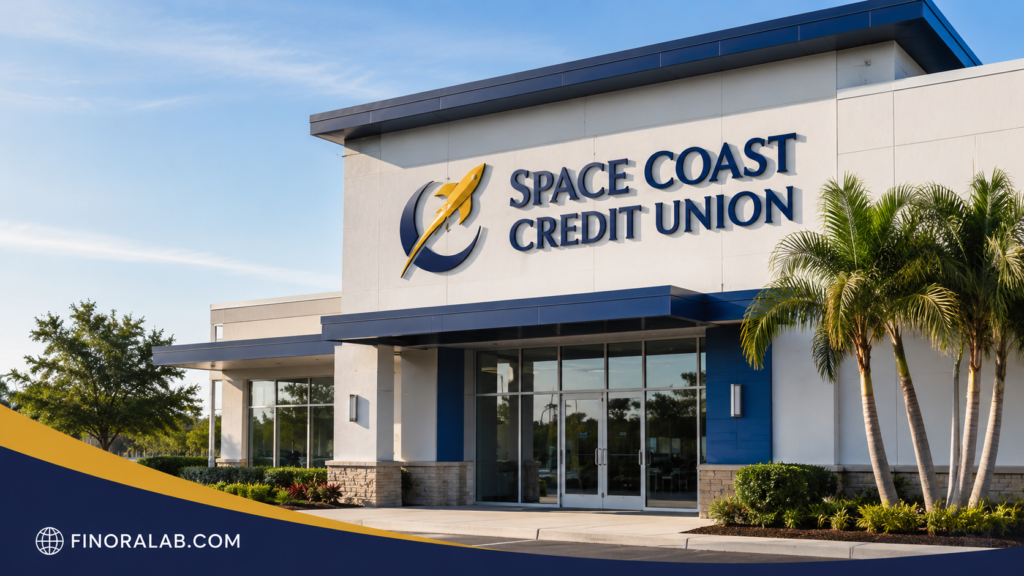
Space Coast Credit Union: Banking, Loans & Member Guide
Shanzay Arain·Aug 08, 2026
Space Coast Credit Union, commonly known as SCCU, is a Florida based credit union serving consumers across a large number of Florida counties. Unlike a traditional investor owned bank, a credit union is member owned and generally operates with a focus on providing financial products and services to its membership. SCCU offers consumer banking products that include checking and savings accounts, certificates of deposit, credit cards, personal loans, auto financing, mortgages, and other financial services. Its membership eligibility currently extends to people who live or work in numerous Florida counties, as well as relatives of existing members.
For someone searching for Space Coast Credit Union, the most important question is usually not simply whether SCCU is a credit union, but whether its products fit a particular financial situation. A checking account may be useful for everyday spending, while a CD may be more appropriate for money that can remain untouched until maturity. Similarly, an SCCU credit card or loan should be evaluated by its interest rate, fees, repayment terms, and your broader financial plan. This guide explains the major products, membership requirements, rates, costs, benefits, limitations, and practical considerations.
What Is Space Coast Credit Union?
Space Coast Credit Union is a Florida credit union that provides banking and borrowing services to eligible members. SCCU describes its approach around three principles honest people, trusted products, and valuing members time. The institution provides both digital and branch based services, giving members options for managing accounts, applying for financial products, and receiving assistance. Its current membership area includes counties throughout Florida, including Brevard, Broward, Miami Dade, Orange, Palm Beach, Seminole, Volusia, and many others. Eligibility can also extend to relatives of current members.
One important distinction is that credit unions generally use the term dividend rather than interest when describing earnings on certain deposit accounts. This does not necessarily mean the account works fundamentally differently from a bank deposit account from a consumers perspective. You still need to examine APY, minimum balances, fees, withdrawal rules, and other account terms. For financial planning purposes, the right comparison is not simply credit union versus bank. Instead, compare the actual cost, yield, convenience, insurance coverage, access, technology, and service associated with each institution.
Who Can Join Space Coast Credit Union?
Membership eligibility is one of the first issues to check before opening an SCCU account. According to SCCUs current information, people who live or work in a broad list of Florida counties can qualify. The eligible counties include Alachua, Brevard, Broward, Charlotte, Citrus, Clay, Collier, Duval, Flagler, Hernando, Hillsborough, Indian River, Lake, Lee, Manatee, Marion, Martin, Miami Dade, Monroe, Orange, Osceola, Palm Beach, Pasco, Pinellas, Polk, Sarasota, Seminole, St. Johns, St. Lucie, Sumter, Volusia, and others.
Family eligibility can also matter. SCCU states that relatives of current members may be eligible for membership, which means someone who does not personally live or work in the listed Florida counties may still have a potential pathway to membership. Before relying on an eligibility assumption, check SCCUs current requirements because membership rules and documentation requirements can change. If you qualify, the next step is to compare the specific account or loan you want against alternatives rather than opening an account solely because membership is available.
Space Coast Credit Union Checking Accounts
Checking accounts are designed for everyday money management, including direct deposit, bill payments, debit card purchases, ATM transactions, and recurring expenses. SCCU offers multiple checking options rather than a single account designed for everyone. Its interest checking account, for example, currently lists a $25 minimum opening deposit and a $1,500 minimum daily balance. The account has no monthly service fee, but a $15 monthly low balance fee can apply when requirements are not met. Rates vary according to balance, so consumers should examine the current APY and account conditions before opening one.
This balance requirement is particularly important for budgeting. Suppose you maintain only $1,000 in the account and the accounts conditions require a $1,500 daily balance. A $15 monthly fee could cost $180 over a year if it applies every month. That cost can easily outweigh a modest amount of interest earned. Someone with a fluctuating checking balance may therefore prefer a no fee option with fewer balance requirements. When comparing checking accounts, look beyond the advertised APY and ask whether your normal cash flow allows you to satisfy the accounts minimum balance without disrupting your emergency fund or bill payments.
Space Coast Credit Union Savings Accounts
A savings account is generally intended for money that you do not need for routine daily purchases but may need relatively soon. SCCUs regular savings account currently lists a $5 minimum daily balance and no monthly service fee or low balance fee. The published savings APY is currently 0.04%, although rates can change. At that yield, keeping $10,000 in the account for a year would produce roughly $4 in interest before considering compounding and any changes in the rate. That illustrates why consumers should compare savings yields rather than assuming every credit union account is designed to maximize interest earnings.
SCCU also offers its Saving Cents account, which uses a round up savings approach and currently advertises a 2.27% APY on balances up to $25,000, with a lower 1.26% APY above that threshold. The account has no minimum opening deposit and no monthly service or low balance fee listed. For someone who struggles to save consistently, automatic rounding can make saving more habitual. However, a higher yield savings account elsewhere could potentially provide a better return depending on current rates, so compare APY, accessibility, transfer limits, insurance, and account requirements before choosing.
Space Coast Credit Union CDs and Savings Rates
Certificates of deposit can be useful when you have money that you expect not to need for a specific period. Instead of leaving cash in an unrestricted savings account, you agree to keep it in the CD for a selected term. SCCU currently lists CD terms ranging from three months through 60 months, with a $500 minimum opening deposit. Its published rates include a 3.50% APY for a three month CD and up to 3.85% APY for certain 12 and 18 month terms based on the rates displayed for January 16, 2026. Rates can change, and early withdrawals may result in a penalty.
Consider a hypothetical $10,000 CD earning 3.85% APY for one year. Ignoring taxes and assuming the rate remains applicable for the full term, the account could generate approximately $385 in interest over the year. That is not a guaranteed return for every product because APY, compounding, taxes, and withdrawal terms matter. The key advantage of a CD is predictability, while the primary limitation is reduced liquidity. If you might need the money for an emergency, medical bill, home repair, or unexpected debt payment, keeping the entire amount locked in a CD may not be appropriate.
Space Coast Credit Union Credit Cards
SCCU offers several Visa credit card options designed for different spending and borrowing preferences. Its current lineup includes the Visa Signature, Visa Platinum, and Visa Low Rate credit cards. Depending on the card, features can include rewards, cash back, introductory APR offers, and lower ongoing rates. SCCU currently lists no annual fee for these cards and provides features such as contactless payments, digital wallet compatibility, card controls, and real time fraud alerts. The exact APR and rewards structure varies by product and creditworthiness, so consumers should read the applicable terms before applying.
A low interest card can be valuable when someone needs to carry a balance temporarily, because the interest cost can be lower than with a higher rate alternative. Rewards cards can make more sense for people who pay their statement balance in full each month. For example, earning rewards on $2,000 of normal monthly spending has little value if the cardholder then pays substantial interest because balances are carried forward. The correct decision depends on spending behavior, credit profile, repayment ability, fees, and whether the rewards genuinely compensate for the cost of borrowing.
Space Coast Credit Union Personal Loans and Auto Loans
Personal loans can help finance expenses that do not fit neatly into a mortgage or auto loan, but they should be evaluated carefully because borrowing creates a fixed financial obligation. Before taking a personal loan, calculate the total repayment amount rather than looking only at the monthly payment. A $10,000 loan with a seemingly manageable payment can still cost significantly more than $10,000 after interest and fees. The most useful comparison is the APR, repayment term, monthly payment, total interest, and any origination or other applicable charges.
Auto loans require similar analysis. A longer loan term may lower the monthly payment but increase the total amount of interest paid. For example, if a borrower chooses a seven year loan instead of a five year loan, the monthly obligation may be easier to manage, but the debt lasts longer and can create greater total borrowing costs. Before financing a vehicle, include insurance, fuel, maintenance, registration, taxes, and depreciation in the budget. A credit union loan can be competitive, but the strongest financial decision comes from comparing several lenders using the same loan amount and term.
Space Coast Credit Union Mortgage and Home Equity Options
For homebuyers, SCCU offers mortgage financing as well as refinancing and home equity products. Current published mortgage rates vary by loan type and term. For example, SCCUs displayed July 22, 2026 rates include a 30 year purchase mortgage at 6.625% interest and a 6.714% APR, while a 15 year purchase mortgage is listed at 5.875% with a 6.019% APR. These are as low as rates, meaning the rate an individual borrower receives can differ based on creditworthiness, loan characteristics, and other factors.
SCCU also publishes HELOC options, including a principal and interest product with an introductory rate displayed at 4.24% APR for the first 12 months and a 6.25% APR thereafter, subject to the stated conditions. A HELOC is generally a variable rate form of borrowing secured by home equity, so the rate and payment can change. Homeowners should avoid treating available equity as free money. Borrowing against a home can increase financial risk, especially when used for discretionary spending rather than necessary improvements, refinancing high cost debt under controlled circumstances, or other carefully planned purposes.
How Space Coast Credit Union Rates Compare With Your Financial Goals
Rates are among the most important factors when selecting a financial institution, but they should not be evaluated in isolation. SCCUs current published rates show that different products can have dramatically different yields. For example, the regular savings account currently displays a 0.04% APY, while Saving Cents displays 2.27% APY up to a stated balance threshold, and certain CDs display APYs around 3.85%. The differences demonstrate why consumers should match each dollar to the appropriate account rather than keeping every dollar in one place.
A practical financial strategy is to divide money according to its purpose. Keep the amount needed for immediate bills in checking. Maintain an emergency reserve in a liquid savings account. Consider CDs for money that has a known future use and can remain untouched until maturity. For long term goals such as retirement, investing may be more appropriate than keeping everything in cash, depending on risk tolerance and time horizon. The goal is not to chase the highest advertised rate. Instead, build a system that balances liquidity, return, risk, taxes, and convenience.
Space Coast Credit Union Fees and Account Requirements
Fees can materially change the value of a financial product. SCCU provides separate consumer and business fee schedules, account agreements, disclosures, credit card agreements, and other documents through its official disclosures section. This matters because an advertised rate or account benefit does not tell the entire story. Consumers should check minimum balance requirements, overdraft policies, transfer restrictions, early withdrawal penalties, ATM related costs, and other charges before opening or using an account.
The same principle applies to borrowing. A loan with a lower advertised rate may not always be cheaper if it carries additional costs that another lender does not charge. Likewise, a credit cards rewards can be less valuable if the card has a higher APR and the cardholder routinely carries a balance. When comparing SCCU with banks or other credit unions, create a simple worksheet containing APY or APR, annual fees, monthly fees, minimum balances, loan costs, and other relevant charges. This makes the decision more objective and reduces the chance of overlooking a costly condition.
Space Coast Credit Union Digital Banking and Member Services
Modern banking is not limited to physical branches. SCCU provides digital banking and mobile banking services, along with tools for managing cards, checking account information, handling payments, and accessing other financial services. The credit union also provides a Help Center covering areas such as digital banking, card assistance, financial wellness, loans, insurance, and other member services. For consumers who manage most finances online, these capabilities can be just as important as the advertised interest rate.
Security should also be part of the decision. SCCUs credit card offerings include features such as card controls, real time fraud alerts, contactless payments, digital wallet compatibility, and zero liability protection subject to applicable terms. Regardless of the institution, consumers should use strong passwords, enable available security notifications, review account activity regularly, and report suspicious transactions promptly. Financial convenience is useful only when paired with responsible account monitoring. A good banking relationship should make routine money management easier without encouraging careless spending or borrowing.
Is Space Coast Credit Union Good for Financial Planning?
SCCU can potentially fit into a broader financial plan when its products, rates, fees, access, and eligibility align with a persons needs. Someone may use a checking account for monthly expenses, savings for emergency cash, a CD for a planned purchase, and a loan for a major asset. SCCU also offers financial wellness resources and multiple consumer financial products. However, being able to consolidate accounts at one institution does not automatically make that institution the best option for every financial goal.
Financial planning should begin with priorities rather than products. First establish a realistic budget, then build an emergency fund, manage high interest debt, contribute appropriately toward retirement, and invest according to your time horizon and risk tolerance. Banking products should support that strategy. For example, an emergency fund should prioritize liquidity and stability over maximizing yield, while long term retirement money may require a different investment approach. A credit union can be one part of a financial system, but consumers should remain willing to compare products across institutions as rates, fees, and personal circumstances change.
Pros and Cons of Space Coast Credit Union
One potential advantage of SCCU is its broad Florida membership footprint and range of products. Eligible consumers can access checking, savings, CDs, credit cards, mortgages, home equity products, personal loans, and other services under one credit union relationship. The institution also offers digital banking and member support, while some products have competitive features such as no annual fee credit cards or CD rates that can be attractive depending on the current market. These benefits can make SCCU worth considering for eligible Florida residents and relatives of current members.
There are also limitations to consider. Some accounts have minimum balance requirements or fees, while certain published deposit rates are relatively low compared with potentially higher yielding alternatives. Mortgage and loan rates depend on individual circumstances, and advertised rates can change. Branch access may also matter if you frequently prefer face to face service. The right choice therefore depends on your situation. Someone seeking the highest possible savings yield may prioritize another institution, while someone valuing a broader member relationship, local access, and multiple financial products may find SCCU more appealing.
How to Decide Whether Space Coast Credit Union Is Right for You
Start by identifying the financial product you actually need. If you are searching for everyday banking, compare checking fees, minimum balances, ATM access, digital tools, and direct deposit features. If your objective is saving, compare APYs and liquidity. For CDs, compare terms, yields, minimum deposits, and early withdrawal penalties. For loans, compare APRs, repayment periods, fees, and total interest. This approach prevents a common mistake choosing a financial institution based on its brand or one attractive product without examining the full cost of the relationship.
Next, consider how the account fits your personal financial plan. A high yield account is not necessarily useful if transferring money is difficult or if minimum balance requirements create fees. A low rate credit card may be preferable to a rewards card for someone who occasionally carries a balance, while a rewards card can be attractive for a disciplined cardholder who pays in full. Compare SCCU with at least two alternatives before making a major borrowing or deposit decision. Rates and terms can change, so verify the latest information directly with the institution before applying.
Conclusion
Space Coast Credit Union is a Florida based credit union offering a broad selection of banking and lending products to eligible members. Its current offerings include checking, savings, Saving Cents, CDs, credit cards, personal lending, mortgages, HELOCs, digital banking, and other financial services. Current rates and terms vary substantially by product, balance, loan type, creditworthiness, and effective date. That makes direct comparison essential. SCCU can be a strong option for some consumers, but the best choice depends on whether its specific costs, yields, access, and features match your financial priorities.The most effective way to evaluate SCCU is to think beyond the headline rate. Examine APY, APR, fees, minimum balances, repayment terms, liquidity, insurance, convenience, and your personal financial goals. Use checking for routine expenses, savings for accessible reserves, CDs for appropriately timed goals, and borrowing only when the repayment cost fits your budget. If you are eligible for membership, compare SCCUs current offers with competing banks and credit unions before making a decision. Always verify current rates, fees, eligibility rules, and product disclosures because financial terms can change.
Space Coast Credit Union is a credit union rather than a conventional investor owned bank. Its products include deposit accounts, credit cards, loans, mortgages, and other financial services. Credit unions are generally structured around membership and provide services to eligible members. SCCUs current eligibility includes people who live or work in numerous Florida counties and certain relatives of current members. Before applying, verify your eligibility and review the current membership requirements directly with SCCU.
Who can join Space Coast Credit Union?
SCCU states that membership is available to people who live or work in numerous Florida counties across Florida. Relatives of existing members may also be eligible. The current eligible area list includes counties such as Brevard, Broward, Miami Dade, Orange, Palm Beach, Seminole, and Volusia, among many others. Because eligibility rules can change and documentation may be required, prospective members should confirm their specific qualification before beginning an application.
Does Space Coast Credit Union offer checking accounts?
Yes. SCCU offers multiple checking options, including an interest checking account. The currently published interest checking terms list a $25 minimum opening deposit and a $1,500 minimum daily balance, with a $15 monthly low balance fee when applicable. The account currently offers different APYs depending on balance. Consumers should compare these requirements with their normal cash flow because a balance related fee can offset the value of interest earned.
Does Space Coast Credit Union offer CDs?
Yes. SCCU offers certificates of deposit with terms ranging from short term options to five years. Its published information lists a $500 minimum deposit, and the displayed January 2026 rates include APYs as high as 3.85% for certain terms. CD rates are subject to change, and early withdrawals may incur penalties. Before opening a CD, make sure you will not need the money before maturity, because the account is designed around a fixed commitment period.
Does Space Coast Credit Union offer credit cards?
Yes. SCCU offers several Visa credit cards, including Signature, Platinum, and Low Rate options. Depending on the product, features may include rewards or cash back, introductory APR periods, digital wallet compatibility, contactless payments, fraud alerts, and card controls. The annual fee for the listed cards is currently $0, but APRs and other terms vary. Compare the cards APR and benefits with your spending and repayment habits before applying.
Does Space Coast Credit Union offer mortgages?
Yes. SCCU offers mortgage financing, refinancing, and home equity products. Its published mortgage rates vary according to the term and loan type, and advertised rates are subject to borrower qualifications and other conditions. For example, SCCU currently publishes separate rates for 15 year and 30 year mortgages. When comparing home loans, look at APR, closing costs, points, loan term, monthly payment, and total borrowing cost instead of choosing based solely on the lowest advertised interest rate.
Does Space Coast Credit Union have high yield savings?
SCCU offers multiple savings products with different rates. Its regular savings account currently displays a 0.04% APY, while its Saving Cents account currently displays a 2.27% APY for balances up to $25,000 and 1.26% above that threshold. Because rates can change, consumers should check the latest published APY before moving money. Also compare withdrawal access, minimum balances, fees, and whether another institution offers a higher yield for the same level of liquidity.
Is Space Coast Credit Union good for a mortgage or loan?
It can be worth considering, but there is no universal best lender. Your actual rate depends on factors such as credit history, loan type, loan amount, term, collateral, and other underwriting criteria. Compare SCCUs personalized offer with offers from banks, credit unions, and other lenders. Evaluate APR and total repayment cost, not just the monthly payment. A slightly lower payment can sometimes result from extending the loan term, which may increase the total interest paid over time.
What should I compare before joining Space Coast Credit Union?
Compare the exact products you intend to use. For deposits, examine APY, minimum balances, fees, withdrawal rules, and access. For credit cards, compare APR, rewards, annual fees, and balance transfer terms. For loans, compare APR, fees, term, monthly payment, and total interest. Also consider branch availability, digital banking, customer support, and your eligibility. Checking these factors before opening an account helps ensure that SCCU supports your financial plan rather than simply adding another financial relationship.
I am a professional finance content writer with expertise in personal finance investing, banking, loans, insurance, credit cards, budgeting, and market related topics. I create clear, SEO optimized, and reader friendly finance content that helps audiences understand complex financial concepts in simple words. My goal is to write trustworthy and engaging content that improves search visibility, builds credibility, and supports business growth.
I am a professional finance content writer with expertise in personal finance investing, banking, loans, insurance, credit cards, budgeting, and market related topics. I create clear, SEO optimized, and reader friendly finance content that helps audiences understand complex financial concepts in simple words. My goal is to write trustworthy and engaging content that improves search visibility, builds credibility, and supports business growth.