American Express Business Checking: Fees, Benefits & Review
Shanzay Arain·Aug 03, 2026
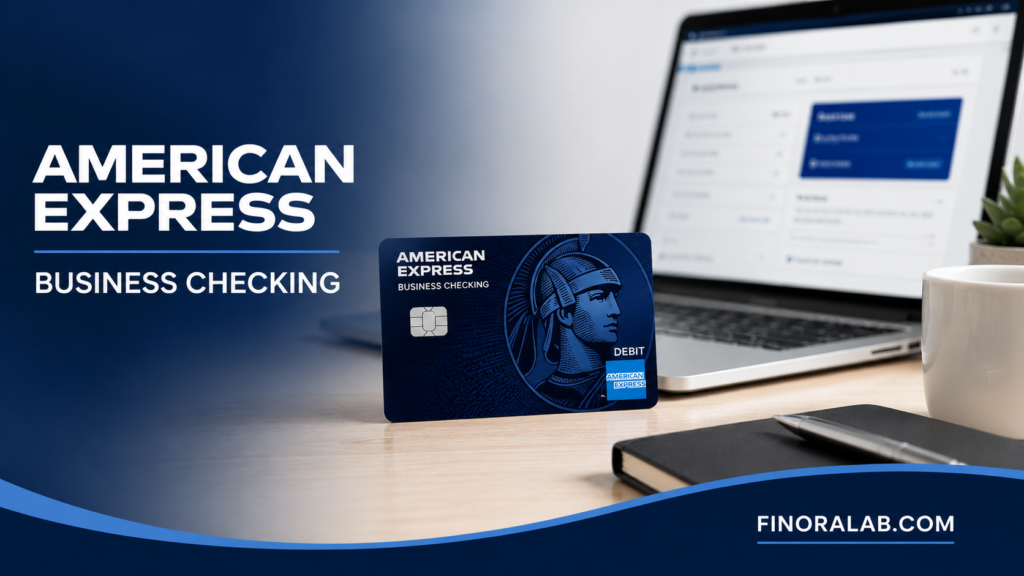
American Express Business Checking is an online business banking option designed for eligible U.S. businesses that want everyday checking functionality without a monthly maintenance fee. Offered through American Express National Bank, the account combines business checking services with interest earnings and Membership Rewards points on eligible debit card purchases. For entrepreneurs, freelancers, consultants, and small business owners, the account can be worth considering when the goal is to keep operating cash accessible while earning something on the balance.
The most important question is not simply whether American Express Business Checking is good, but whether its structure matches your companys banking needs. Business owners should consider the APY, balance requirements, transaction needs, ATM access, payment methods, wire fees, accounting integrations, deposit insurance, and rewards. Because rates, fees, eligibility rules, and promotional offers can change, prospective customers should review the current terms before opening an account. This guide explains the major features and limitations so you can make a more informed business banking decision.
What Is American Express Business Checking?
American Express Business Checking is a branchless business deposit account that can be managed online and through the American Express app. The account is designed for eligible U.S. businesses and provides tools for deposits, transfers, payments, debit card purchases, and business cash management. American Express says there is no monthly maintenance fee and no minimum balance requirement. The account is also offered by American Express National Bank, Member FDIC, subject to applicable FDIC insurance limits.
The account is part of the broader American Express Business Blueprint experience, which can provide a centralized digital view of eligible American Express business financial products. Business owners can connect accounting tools such as QuickBooks and manage transactions through digital banking. The branchless model can be convenient for businesses that rarely need to deposit physical cash or visit a banking location. However, companies that depend heavily on cash deposits, extensive branch services, or specialized commercial banking support may need to compare other institutions before deciding.
American Express Business Checking APY and Interest Earnings
One of the accounts major attractions is that eligible balances can earn interest. American Express currently advertises an APY on Business Checking balances up to $500,000, with the APY subject to change. The banks official disclosures make clear that balances above the applicable $500,000 threshold do not earn interest under the advertised structure. Because APY is variable, the rate you see today may not remain the same throughout the life of the account.
The value of this feature depends heavily on your average business balance. Suppose a company maintains $100,000 in operating cash and hypothetically earns a 3% APY for a full year. The approximate annual interest would be $3,000 before taxes, assuming the balance and rate remained constant. A business holding $20,000 under the same hypothetical rate would generate approximately $600. These examples are illustrations rather than a prediction of the accounts current earnings. Before opening an account, verify the current APY and the applicable balance limitations directly with American Express.
American Express Business Checking Fees
A major advantage of American Express Business Checking is its fee structure. American Express currently advertises no monthly maintenance fee, no account opening fee, and no minimum balance requirement. Its published fee information also lists domestic ACH transfers as having no fee, while certain other services, such as outgoing domestic wires and same day ACH, can involve charges. This distinction matters because an account with no monthly fee can still have transaction specific costs depending on how your company moves money.
Business owners should therefore evaluate fees according to actual banking behavior rather than focusing on one headline number. A company that primarily receives ACH payments and makes routine electronic transfers may encounter relatively few charges. Another company that sends frequent wires or requires specialized payment services could face higher costs. Fees can change, and some services may have separate terms or limitations. Before opening an account, review the current rates and fees schedule and estimate the annual cost based on your companys expected transaction volume.
American Express Business Checking Rewards
American Express Business Checking can also provide Membership Rewards points on eligible Business Debit Card purchases. According to American Express, account holders can earn 1 Membership Rewards point for every $2 spent on eligible Business Debit Card purchases. Those points may be redeemed in ways permitted under the Membership Rewards program, including deposits into an eligible American Express Business Checking account or transfers to participating travel partners, subject to applicable program terms.
The rewards feature can be useful when a business already has meaningful debit card spending and values Membership Rewards. However, business owners should not increase spending merely to earn points. A reward is only valuable when the underlying purchase is necessary and the accounts other economics make sense. The value of Membership Rewards points can vary based on redemption method, and participating partners and redemption options may change. Businesses should evaluate rewards as an additional benefit rather than treating them as a substitute for strong cash flow management or low operating costs.
Business Debit Card and ATM Access
American Express Business Checking includes a Business Debit Card that can be used for eligible purchases and ATM withdrawals. American Express says cardholders can make no fee withdrawals at more than 70,000 Allpoint and MoneyPass ATM locations nationwide. Withdrawals at other ATMs may be subject to fees from the ATM owner or network. This network based approach can work well for businesses whose owners and employees operate primarily in areas with convenient participating ATMs.
ATM access should be considered carefully if your business handles physical cash. American Express states that it does not currently accept ATM cash deposits into Business Checking. That limitation can be important for restaurants, retailers, service businesses, and other companies that regularly collect cash from customers. A business with mostly electronic revenue may not care about this limitation, while a cash heavy company may need a bank with branch based deposit capabilities. Your revenue mix and cash handling requirements should therefore influence the decision.
Mobile Banking and Digital Account Management
American Express Business Checking is designed around digital banking rather than a traditional branch network. The American Express app supports functions such as mobile check deposits, account management, payments, and transfers. The bank also says customers can receive support from specialists 24/7. For business owners who prefer handling routine banking remotely, these tools can reduce the need to visit a physical branch and make it easier to manage finances outside traditional banking hours.
Digital banking can also improve day to day financial organization when used consistently. A business owner can review transactions, monitor cash flow, reconcile activity with accounting records, and transfer money between accounts without traveling to a branch. However, digital convenience should not be confused with universal suitability. Businesses that need large cash deposits, frequent face to face banking services, or highly specialized treasury management may find a traditional commercial bank more appropriate. Consider how your company actually operates before prioritizing convenience over functionality.
QuickBooks Integration and Business Cash Management
Accounting integration is particularly relevant for small businesses that want banking activity to flow into their bookkeeping process. American Express says Business Checking can connect with QuickBooks, allowing eligible users to keep account information aligned with their accounting workflow. This can reduce manual data entry and potentially make reconciliation easier, although business owners should still review imported transactions for accuracy and proper categorization.
Good integration is valuable because business banking is not isolated from financial planning. Accurate transaction records help owners monitor revenue, operating expenses, taxes, debt payments, and available working capital. For example, a consulting business can use its checking account as the operating hub while maintaining separate savings reserves for estimated taxes and emergency liquidity. The goal should be a clean financial system in which banking, accounting, budgeting, and tax preparation work together rather than existing as disconnected tasks.
Eligibility and What You Need to Apply
American Express states that it is accepting applications from eligible U.S. businesses, although not all applicants will necessarily be approved. The application process can require information such as a taxpayer identification number, annual revenue, company structure, DBA certificate when applicable, and business owner information including Social Security number, date of birth, and current address. American Express says eligible applicants may be able to apply online in as little as 10 minutes, although the actual process can vary.
Preparing the required information in advance can make the application process smoother. Business owners should ensure that the legal entity name, taxpayer identification number, address, ownership information, and business structure are consistent across records. If the company uses a DBA, keep documentation available when required. A business should also avoid assuming that having an EIN automatically guarantees approval. Financial institutions may evaluate eligibility using information about the applicant and business, and approval terms can change. Review the current eligibility criteria before applying.
FDIC Insurance and Business Deposits
American Express Business Checking is offered by American Express National Bank, which is an FDIC insured institution. FDIC insurance is designed to protect eligible deposits up to applicable limits if an insured bank fails. The amount of coverage depends on factors such as the ownership category and the total qualifying deposits held at the institution. American Expresss current Business Checking agreement states that deposits are FDIC insured up to applicable limits and directs customers to the FDIC for additional information.
Business owners should understand that FDIC insurance is not the same as an investment guarantee. It protects qualifying deposits subject to federal insurance rules and limits, but it does not protect a company against poor budgeting, fraud initiated through unauthorized access, declining business revenue, or investment losses. If your company maintains significant cash reserves, consider how deposits are structured across accounts and institutions. Businesses with balances substantially above applicable insurance limits may need a broader cash management strategy to manage concentration and liquidity risk.
Pros and Cons of American Express Business Checking
The strongest benefits of American Express Business Checking are its lack of a monthly maintenance fee, no minimum balance requirement, interest earning potential, debit card rewards, digital banking capabilities, and access to a large network of participating ATMs. The combination can be particularly appealing to businesses that maintain substantial operating cash but do not require branch based banking. Earning interest on an otherwise idle operating balance can also improve cash efficiency, especially when the accounts APY is competitive with other business deposit options.
The limitations are equally important. The account is branchless, and businesses cannot currently make cash deposits through ATMs. Certain services, including some wire and same day ACH transactions, can involve fees. Businesses that require extensive cash handling, specialized treasury services, or frequent branch visits may therefore find another institution more suitable. The APY is variable and subject to change, while rewards have their own program rules. A strong choice for one company can be a poor fit for another, so the decision should be based on actual cash flow and payment requirements.
American Express Business Checking Compared With Traditional Business Banking
A traditional business checking account can offer features that a branchless account does not, including physical branch access, cash deposits, cashiers checks, and potentially a wider range of commercial banking services. For a local retailer receiving substantial cash every day, the ability to walk into a branch and deposit funds may be more valuable than earning interest on the balance. A digital account may be better suited to an online business that receives payments electronically and rarely handles physical currency.
Cost is another area where comparisons should go beyond monthly maintenance fees. A traditional account might charge a monthly fee but waive it when certain balance or activity requirements are met. Another account may offer a lower APY but more convenient payment services. When comparing American Express Business Checking with competitors, build a simple annual cost and benefit estimate that includes interest earned, monthly fees, wire charges, ATM costs, rewards value, transaction limits, and the value of required banking services.
Who May Benefit Most From American Express Business Checking?
American Express Business Checking may be particularly attractive to small businesses that maintain cash reserves, prefer online banking, use electronic payments, and want to avoid monthly maintenance fees. An independent consultant, online agency, technology company, freelancer with an established business structure, or professional services firm may have relatively little need for cash deposits. Such businesses can potentially benefit from combining accessible operating cash with interest earnings and debit card rewards.
It can also make sense for businesses that already use American Express products and value having eligible financial accounts connected through the broader Business Blueprint experience. However, existing loyalty should not override financial analysis. A business owner should compare the account with alternatives based on APY, fees, transaction features, customer support, cash deposit capabilities, accounting integration, and FDIC coverage. The best business bank account is the one that supports the companys actual operating model while minimizing avoidable costs and administrative friction.
How to Decide If American Express Business Checking Is Right for Your Business
Start by reviewing your companys monthly banking activity. Estimate the average checking balance, number of ACH transactions, number of outgoing wires, cash deposits, ATM withdrawals, debit card purchases, and checks. Then identify which services are essential and which are merely convenient. This process helps distinguish between a bank account that looks attractive in advertising and one that actually reduces costs or improves financial efficiency for your business.
Next, compare the economic value of the alternatives. If your company keeps $100,000 in cash, even a small difference in APY can translate into meaningful annual interest. Conversely, if your business sends frequent wires or deposits cash regularly, transaction fees and convenience may outweigh interest earnings. Also consider taxes, because business interest income and other rewards can have tax implications depending on the business structure and circumstances. When necessary, discuss those issues with a qualified tax professional rather than assuming rewards or interest receive a particular tax treatment.
Business Banking Strategies for Better Cash Flow
Opening a business checking account is only one part of effective cash management. Businesses should maintain a realistic operating budget, monitor accounts receivable, schedule recurring expenses, and maintain a liquidity reserve appropriate for their risk profile. Separating operating cash from tax reserves can also help prevent a business from accidentally spending money that needs to be available for quarterly estimated taxes or other obligations. The right banking structure should make these distinctions easier to maintain.
A practical approach is to establish a simple cash hierarchy. Keep the amount required for near term bills and payroll in the primary operating account, maintain a separate reserve for taxes and unexpected expenses, and consider other suitable deposit or investment vehicles for funds that do not need immediate access. The exact structure depends on the businesss financial situation and risk tolerance. The objective is not simply to maximize APY it is to balance liquidity, safety, return, operational convenience, and tax considerations.
Conclusion
American Express Business Checking can be an appealing option for eligible U.S. businesses seeking a digital first checking account with no monthly maintenance fee, interest earning potential, Membership Rewards opportunities, mobile banking, and access to a large ATM network. The account is particularly worth evaluating for companies that primarily move money electronically and maintain meaningful operating balances. Its FDIC insured deposit structure can also provide an important layer of protection for eligible deposits within applicable limits.However, the account is not automatically the best choice for every business. Its branchless structure and lack of ATM cash deposits can be significant disadvantages for cash intensive companies, while transaction specific fees can matter for businesses that frequently use wires or expedited payment services. Before applying, compare the current APY, fee schedule, rewards terms, eligibility requirements, deposit capabilities, and competing business checking accounts. The right decision should fit your companys cash flow, financial planning, payment habits, and long term banking strategy.
Is American Express Business Checking a real bank account?
Yes. American Express Business Checking is a business deposit account offered by American Express National Bank. The bank states that deposits are FDIC insured up to applicable limits. As with any deposit account, coverage depends on applicable federal insurance rules, ownership category, and total qualifying deposits. Business owners should review the current account agreement and FDIC guidance when evaluating how much protection applies to their particular situation.
Does American Express Business Checking have a monthly fee?
American Express currently advertises no monthly maintenance fee for Business Checking and no minimum balance requirement. However, having no monthly maintenance fee does not mean every banking service is free. Certain transactions and services can carry fees, including some wire and same day ACH transactions. Review the current rates and fees schedule before opening the account, especially if your business regularly sends wires, uses expedited payments, or needs specialized services.
What is the APY on American Express Business Checking?
The APY is variable and can change. American Express currently advertises an APY on Business Checking balances up to $500,000, but the exact rate should be verified on the official account page before applying. No interest is earned on balances above the applicable $500,000 threshold under the advertised structure. Because rates can change, businesses should compare the current APY rather than relying on historical rates or information from older articles.
Does American Express Business Checking have a minimum balance?
American Express currently states that there is no minimum balance required to open the account and no minimum balance requirement to avoid a monthly maintenance or periodic fee. This can make the account attractive to smaller businesses whose cash balances fluctuate. However, businesses should still maintain enough liquidity to cover expected expenses, payroll, taxes, and other obligations. A lack of a minimum balance requirement should not be interpreted as a recommendation to operate without an adequate cash reserve.
Can you deposit cash into American Express Business Checking?
American Express currently states that it does not accept ATM cash deposits into Business Checking. This is an important consideration for businesses that routinely receive physical cash from customers. Companies with mostly electronic revenue may find the limitation relatively minor, while restaurants, retailers, and other cash heavy businesses may prefer a bank with convenient branch or cash deposit services. Always review current deposit policies before opening an account because banking procedures can change.
Does American Express Business Checking earn Membership Rewards points?
Yes, eligible Business Checking debit card purchases can earn Membership Rewards points. American Express currently states that cardholders can earn 1 point for every $2 spent on eligible Business Debit Card purchases. Depending on the applicable program terms, points may be redeemed for deposits into the Business Checking account or transferred to participating travel partners. Redemption values and participating options can change, so businesses should review the current Membership Rewards terms before assigning a dollar value to the points.
Does American Express Business Checking integrate with QuickBooks?
American Express says Business Checking can integrate with QuickBooks, helping eligible customers connect banking activity with their accounting workflow. This can reduce manual entry and make reconciliation more convenient. Businesses should still review imported transactions, categorize expenses correctly, and reconcile their accounts regularly. Accounting software is a tool rather than a substitute for financial oversight, and businesses should maintain appropriate records for tax reporting and internal financial management.
Are American Express Business Checking deposits FDIC insured?
Yes, eligible deposits are FDIC insured through American Express National Bank, subject to applicable limits and rules. The amount of coverage can depend on the type of business ownership and the total qualifying deposits held at the institution. Businesses with substantial cash balances should understand how FDIC insurance categories and limits apply rather than assuming every dollar held at one bank receives unlimited coverage.
Is American Express Business Checking good for small businesses?
It can be a strong fit for certain small businesses, particularly those that prefer digital banking, receive electronic payments, maintain operating cash balances, and want to avoid monthly maintenance fees. It may be less suitable for businesses that regularly deposit cash, require branch access, or frequently use specialized payment services. The best choice depends on your companys transaction patterns, average balance, cash handling needs, fees, APY, rewards preferences, and broader financial management strategy.
How long does it take to open American Express Business Checking?
American Express says eligible businesses can apply online in as little as 10 minutes. That describes the application process rather than guaranteeing approval or immediate account availability. Applicants may need to provide information such as a taxpayer identification number, annual revenue, company structure, DBA documentation when applicable, and owner information. The actual time can vary based on verification requirements and the applicants circumstances.
I am a professional finance content writer with expertise in personal finance investing, banking, loans, insurance, credit cards, budgeting, and market related topics. I create clear, SEO optimized, and reader friendly finance content that helps audiences understand complex financial concepts in simple words. My goal is to write trustworthy and engaging content that improves search visibility, builds credibility, and supports business growth.
I am a professional finance content writer with expertise in personal finance investing, banking, loans, insurance, credit cards, budgeting, and market related topics. I create clear, SEO optimized, and reader friendly finance content that helps audiences understand complex financial concepts in simple words. My goal is to write trustworthy and engaging content that improves search visibility, builds credibility, and supports business growth.