
Waiting for a tax refund can create many questions Has the IRS received my return? Is my refund approved? When will the money arrive in my bank account?
A tax return status check helps taxpayers find out what is happening after filing a federal income tax return. The IRS provides online tools that allow taxpayers to track their refund progress, view updates, and understand whether additional action may be needed.
For most taxpayers, checking refund status is simple. The IRS Wheres My Refund? tool requires information from your tax return, including your Social Security number or Individual Taxpayer Identification Number (ITIN), filing status, and exact refund amount.
However, a tax return status does not always mean your refund has already been approved or sent. Different messages represent different stages of IRS processing.
Understanding these stages can help taxpayers know whether they need to wait, provide additional information, or take another step.
What Does Tax Return Status Mean?
Tax return status shows the current stage of your federal tax return after filing.
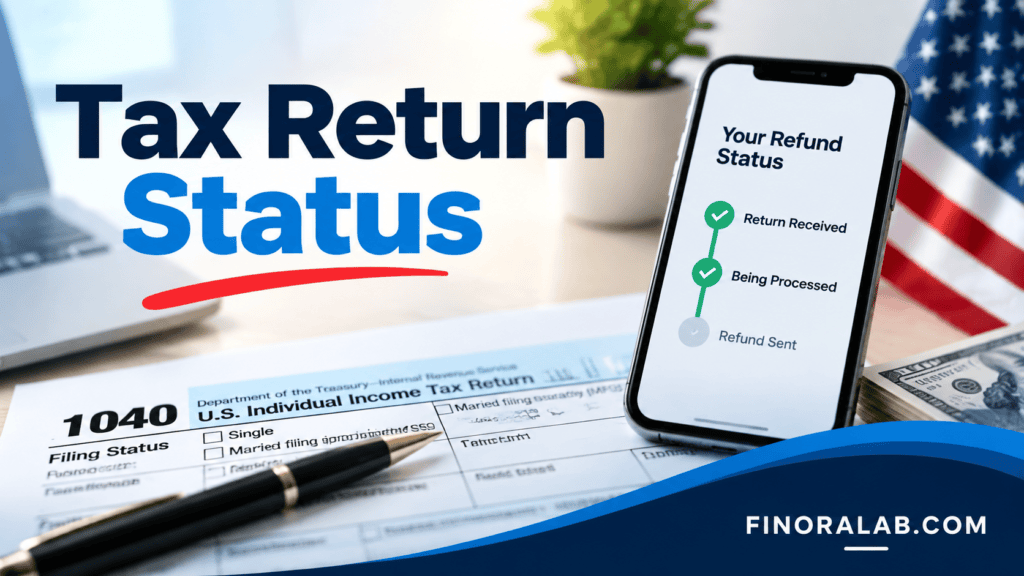
After submitting a tax return, the IRS generally moves through several steps
- Return received
- Return processing
- Refund approved
- Refund sent
Each stage provides different information.
For example, a taxpayer may see that the IRS has received the return but has not yet completed processing. Another taxpayer may see that the refund has been approved and a payment date has been provided.
A tax return status is not the same as a bank deposit notification. After the IRS sends a refund, the financial institution may require additional time to process the payment.
How to Check Your Tax Return Status
The fastest way to check federal refund status is through the IRS online refund tracking tool, Wheres My Refund? The IRS also provides access through the IRS2Go mobile application.
To check your status, you typically need
- Social Security number or ITIN
- Filing status
- Exact refund amount shown on your tax return
- Tax year information
The IRS updates refund information regularly. Checking repeatedly throughout the day usually does not provide new information because updates are not made continuously.
Taxpayers should use official IRS resources rather than third party websites requesting sensitive personal information.
How Long Does It Take for Tax Return Status to Update?
The timing depends on how the return was filed.
According to the IRS, refund status may become available
- About 24 hours after filing a current year return electronically
- About 3 days after filing a prior year return electronically
- About 4 weeks after mailing a paper return
Most electronically filed refunds are issued within about 21 days when there are no issues requiring additional review. Paper returns generally take longer.
Several factors can affect timing, including
- Errors on the tax return
- Missing information
- Identity verification requirements
- Additional IRS review
- Certain tax credits
Understanding IRS Tax Return Status Messages
The IRS uses different status messages to show refund progress.
Return Received
This status generally means the IRS has received your tax return and started processing it.
At this stage
- The return has entered the IRS system
- The refund has not necessarily been approved
- Additional review may still occur
Many taxpayers see this message shortly after filing electronically.
A received status does not guarantee that the refund amount will remain unchanged because the IRS may review information before approval.
Refund Approved
An approved refund means the IRS has completed processing and accepted the refund amount.
This status usually provides information about when the refund will be sent.
However, the deposit date may still depend on
- Banking processing times
- Payment method
- Weekends and holidays
Approval is an important step, but it does not mean the money is already available in your account.
Refund Sent
A refund sent status means the IRS has issued the payment.
At this point
- Direct deposits are sent to the bank account provided
- Financial institutions process the incoming payment
- Taxpayers should monitor their bank account
If a refund does not appear after the expected timeframe, taxpayers may need to check their banking information or contact the financial institution.
Why Is My Tax Return Status Still Processing?
Many taxpayers become concerned when their status does not change quickly.
A processing status does not automatically mean there is a problem.
The IRS may need additional time because of
- High filing volume
- Return corrections
- Verification procedures
- Missing information
- Tax credit reviews
Some returns require manual review instead of automatic processing.
For example, a taxpayer claiming certain credits may experience additional processing time because the IRS reviews eligibility and supporting information.
Common Reasons for Tax Refund Delays
Several situations can delay a refund.
Incorrect Information on the Return
Small mistakes can slow processing.
Examples include
- Incorrect Social Security numbers
- Incorrect bank account details
- Math errors
- Missing forms
- Incorrect income reporting
Taxpayers should carefully review returns before submitting them.
Identity Verification Requests
The IRS may hold a refund if additional identity verification is required.
This process helps protect taxpayers from refund fraud and identity theft.
If the IRS requests verification, the refund may remain delayed until the taxpayer completes the required steps.
Claiming Certain Tax Credits
Some tax credits have additional review requirements.
The IRS may delay refunds involving the Earned Income Tax Credit (EITC) or Additional Child Tax Credit (ACTC) because federal law requires additional review procedures for certain claims.
Paper Filing
Paper returns generally take longer than electronically filed returns because they require manual handling and processing.
Electronic filing is typically faster because information can be processed digitally.
Bank Account Problems
Incorrect or rejected direct deposit information can delay refund delivery.
Taxpayers should carefully verify
- Routing number
- Account number
- Account type
The IRS cannot change bank information over the phone after a return has been filed.
Tax Return Status vs Refund Status
Many people use these terms interchangeably, but they can represent slightly different ideas.
A tax return status focuses on the processing stage of the submitted return.
A refund status focuses specifically on money owed back to the taxpayer.
For example
Tax return status
Your return is being processed.
Refund status
Your refund has been approved.
The first relates to processing. The second relates to payment.
E Filed Returns vs Paper Returns
The filing method affects how quickly taxpayers receive updates.
Electronic Filing
Benefits include
- Faster IRS receipt
- Faster processing
- Easier tracking
The IRS states that most refunds for electronically filed returns are issued within 21 days if there are no issues requiring additional review.
Paper Filing
Paper returns generally take longer because the IRS must process physical documents.
Taxpayers who mail returns should allow additional time before checking status.
Direct Deposit and Tax Refund Timing
Direct deposit is commonly used because it allows refunds to be transferred electronically.
When filing a return, taxpayers provide banking information including
- Bank routing number
- Account number
- Account type
A refund sent by the IRS may not appear immediately because banks have their own processing schedules.
For example
IRS sends refund
Monday
Bank processes payment
Tuesday or Wednesday
Funds become available
Depending on bank policies
Amended Tax Return Status
An amended tax return is different from an original return.
Taxpayers file amended returns when they need to correct information after the original return has been submitted.
Examples include
- Correcting income information
- Changing deductions
- Updating credits
The IRS provides separate tracking information for amended returns because they follow a different processing process.
Amended returns generally take longer than regular returns because they require additional review.
Tax Return Status for State Refunds
Federal and state tax refunds are separate.
The IRS tracks federal tax returns, but state tax agencies manage state refunds.
For example
A taxpayer living in California may need to check
- IRS refund status for federal taxes
- California Franchise Tax Board tools for state taxes
Each state has different processing systems and timelines.
Taxpayers should use their states official tax agency website for state refund updates.
What to Do If Your Tax Return Status Has Not Changed
If your status remains unchanged, avoid immediately submitting another tax return.
Filing a second return can create additional complications.
Instead
- Check the IRS refund tracker
- Review any IRS notices received
- Confirm your filing information
- Wait the recommended processing period
If the IRS requires more information, it will generally contact the taxpayer through official communication.
Common Tax Return Status Mistakes
Checking Too Soon
Many taxpayers check immediately after filing and expect an update.
Electronic returns may need time before appearing in IRS systems.
Using Incorrect Refund Amount
The IRS requires the exact refund amount when checking status.
Entering an estimated or rounded amount may prevent access.
Trusting Unofficial Refund Websites
Tax information contains sensitive personal data.
Taxpayers should use official IRS tools and avoid sharing personal information with unknown websites.
Assuming Processing Means a Problem
A processing message does not necessarily indicate an error.
Many normal returns remain in processing while the IRS completes standard procedures.
How FinoraLabs Tax Tools Can Help
A useful tax planning platform can help users understand more than just refund tracking.
Related tools can help estimate
- Federal tax liability
- Expected refund
- Monthly income after taxes
- Paycheck withholding
- Tax planning scenarios
A tax return status tool answers
Where is my refund?
A tax calculator answers
How much tax may I owe?
Both tools help taxpayers make better financial decisions.
Conclusion
Checking your tax return status is one of the easiest ways to stay updated after filing a federal income tax return. The IRS provides official tools that allow taxpayers to track whether their return has been received, processed, approved, or sent.Most electronically filed refunds are processed within about 21 days when no issues require additional review, but some returns take longer because of errors, verification requirements, or additional IRS checks.A delayed status does not always mean something is wrong. Taxpayers should review IRS messages, avoid filing duplicate returns, and use official resources for accurate updates.Understanding refund stages and processing timelines can make tax season less stressful and help taxpayers know what steps to take next.
You may also read more blogs
FAQs
How do I check my tax return status?
You can check your federal tax return status through the IRS Wheres My Refund? tool. You will need your Social Security number or ITIN, filing status, and exact refund amount from your tax return.
How long after filing can I check my refund status?
For current year electronically filed returns, the IRS generally allows status checks about 24 hours after filing. Paper returns usually require more time before status information becomes available.
Why does my tax return say it is still processing?
A processing message means the IRS is still reviewing your return. This may happen because of normal processing, corrections, identity verification, or additional review requirements.
How long does a tax refund usually take?
The IRS generally issues most refunds within 21 days after accepting an electronically filed return when there are no issues. Some returns take longer because they require additional review.
Can I check my state tax refund using the IRS website?
No. The IRS only tracks federal tax refunds. State refunds must be checked through the appropriate state tax agency website.
Does refund approved mean my money has been sent?
Not necessarily. Approved means the IRS has completed processing and approved the refund. The payment still needs to be issued and processed by your financial institution.
Why is my refund delayed after approval?
Possible reasons include banking delays, incorrect account information, payment processing time, or additional administrative steps. Checking your bank information and IRS updates can help identify the issue.

I am a professional finance content writer with expertise in personal finance investing, banking, loans, insurance, credit cards, budgeting, and market related topics. I create clear, SEO optimized, and reader friendly finance content that helps audiences understand complex financial concepts in simple words. My goal is to write trustworthy and engaging content that improves search visibility, builds credibility, and supports business growth.