You got a raise, your annual income looks higher, and now you’re wondering if the government will take a much bigger cut. That fear is common, but it’s based on a misunderstanding of how taxes work.
The income tax brackets 2026 system does not apply one single rate to everything you earn. Only the dollars that fall inside each bracket are taxed at that specific rate.
Income Tax Brackets 2026: The Federal Tax Rates You Need to Know
The United States uses a progressive tax system. That means your income is divided into sections, and each section is taxed differently.
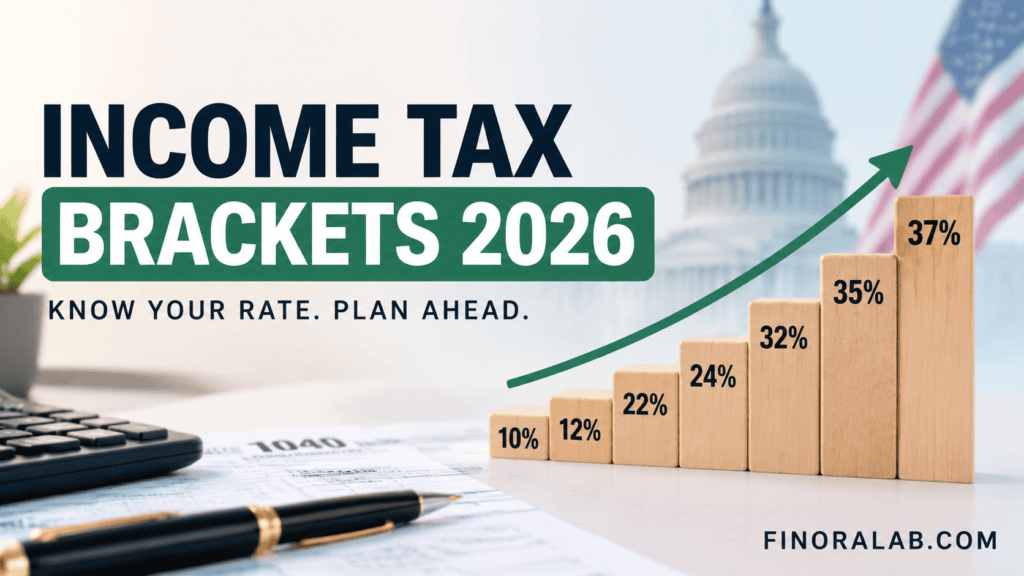
For tax year 2026, federal income tax rates are expected to remain structured around these seven brackets:
10%
12%
22%
24%
32%
35%
37%
The exact income thresholds should be verified with the latest IRS inflation-adjusted figures before filing because bracket amounts change periodically.
Your highest bracket is called your marginal tax rate. It applies only to your top portion of taxable income, not every dollar you earn.
2026 Federal Income Tax Brackets by Filing Status
Your filing status changes where your income falls inside the brackets.
The main categories are:
Single
Married filing jointly
Married filing separately
Head of household
A married couple and a single person earning the same amount can have different tax bills because their bracket ranges are different.
Why Filing Status Matters
Consider two taxpayers:
Alex files as single.
Maria files as head of household.
Both earn $70,000.
Their taxable income may not be the same because they may qualify for different deductions and tax benefits. That difference can affect the final amount they owe.
How Progressive Tax Brackets Actually Work
A lot of people misunderstand tax brackets.
They think:
“If I move into the 22% bracket, all my income gets taxed at 22%.”
That is incorrect.
Only the income above the previous bracket threshold gets taxed at the higher rate.
Think of tax brackets like steps on a staircase. Your money climbs each step, but it does not jump back down and get charged the highest rate from the beginning.
Example: Calculating a Simple Tax Bracket Scenario
Let’s say James earns $90,000 in 2026 and files as a single taxpayer.
After deductions, his taxable income is $75,000.
His income is not simply multiplied by one tax rate.
Instead:
The first portion is taxed at the lowest rate.
The next portion is taxed at the next rate.
Additional income moves into higher brackets.
His final tax bill depends on the exact 2026 IRS thresholds, deductions, credits, and other factors.
This is why someone earning $90,000 does not simply pay 22% of $90,000.
Tax Bracket vs Effective Tax Rate
These two terms confuse many taxpayers.
Marginal Tax Rate
Your marginal rate is the highest bracket your taxable income reaches.
Example:
You may fall into the 22% bracket, meaning your last dollars are taxed at 22%.
Effective Tax Rate
Your effective tax rate shows what percentage of your total taxable income actually goes toward federal income taxes.
Example:
A person may have a 22% marginal tax rate but an effective rate closer to 12%–15% after lower brackets, deductions, and credits are considered.
Your effective rate is usually the number that matters most for personal budgeting.
Standard Deduction and 2026 Taxable Income
Your salary is not always the amount the IRS taxes.
Your taxable income generally comes after adjustments and deductions.
Many taxpayers use the standard deduction because it is simple and often provides the best result.
You cannot choose your federal tax bracket, but you can often make choices that reduce taxable income.
Common strategies include:
Increase Retirement Contributions
Contributing to tax-advantaged accounts may reduce current taxable income.
Examples:
Traditional 401(k)
Traditional IRA (if eligible)
Claim Available Tax Credits
Credits reduce your tax bill directly.
Examples can include:
Child-related credits
Education credits
Energy-related credits
Track Self-Employment Expenses
Freelancers and business owners should keep accurate records.
Potential deductions may include:
Business software
Equipment
Professional services
Qualified business expenses
Good records matter.
Should You Worry About Your Tax Bracket?
For most people, no.
A tax bracket is not a penalty for earning more money. It is simply the method the IRS uses to calculate taxes.
The smarter questions are:
How much am I saving?
Am I using available deductions?
Am I preparing before tax season?
Am I keeping enough cash for my goals?
Taxes are one part of your financial plan, not the entire plan.
Conclusion
Understanding the income tax brackets 2026 rules can make tax planning less confusing.Do not focus only on the highest percentage you see online. Look at your taxable income, deductions, credits, and overall financial picture.Before making tax decisions, check the latest IRS updates because tax brackets and limits can change.Educational disclaimer: This article is for general educational purposes only and does not provide personalized tax advice. Federal tax rules, rates, deductions, and credits can change. Consider speaking with a qualified tax professional for guidance based on your personal situation.
The federal income tax system uses multiple brackets with rates ranging from 10% to 37%. The exact income thresholds depend on filing status and IRS inflation adjustments.
Does my entire income get taxed at my highest bracket?
No. Only the portion of income inside that bracket is taxed at the higher rate. Earlier portions of your income are taxed at lower rates.
How do I know my 2026 tax bracket?
You need your filing status and taxable income amount. Your taxable income is usually lower than your gross salary after deductions and adjustments.
Is a higher tax bracket bad?
No. A higher tax bracket means you earned more income. You still keep the majority of additional earnings after taxes.
Can retirement contributions lower my tax bracket?
Traditional retirement contributions may reduce taxable income, which could lower the amount of income taxed at higher rates.
Are federal and state tax brackets the same?
No. Federal and state tax systems operate separately. Some states have their own income tax brackets, while others do not charge state income tax.
When are 2026 tax brackets announced?
The IRS typically releases updated inflation-adjusted tax information before the tax year begins. Always confirm current figures before filing.
I am a professional finance content writer with expertise in personal finance investing, banking, loans, insurance, credit cards, budgeting, and market related topics. I create clear, SEO optimized, and reader friendly finance content that helps audiences understand complex financial concepts in simple words. My goal is to write trustworthy and engaging content that improves search visibility, builds credibility, and supports business growth.
I am a professional finance content writer with expertise in personal finance investing, banking, loans, insurance, credit cards, budgeting, and market related topics. I create clear, SEO optimized, and reader friendly finance content that helps audiences understand complex financial concepts in simple words. My goal is to write trustworthy and engaging content that improves search visibility, builds credibility, and supports business growth.










Pingback: IRS Payment Plan: Options, Rules & How to Apply
Pingback: OneMain Financial Review: Rates, Loans & Is It Worth It?