Federal Income Tax Brackets 2025, You got a raise this year, and the first thought that crosses your mind is probably Am I going to lose more of it to taxes?
That fear is common, but the way federal taxes work is often misunderstood. Moving into a higher tax bracket does not mean all your income suddenly gets taxed at that higher rate.
The federal income tax brackets 2025 help determine how different portions of your taxable income are taxed. Understanding them can help you plan your paycheck, retirement contributions, and year end financial decisions with fewer surprises.
Federal Income Tax Brackets 2025 Explained Simply
The federal income tax system uses a progressive tax structure. That means higher portions of income are taxed at higher rates, while lower portions of income are taxed at lower rates.
For tax year 2025, federal income tax rates remain structured across seven brackets
- 10%
- 12%
- 22%
- 24%
- 32%
- 35%
- 37%
The bracket you hear about is usually your highest marginal tax rate. Your marginal tax rate applies only to the last portion of your taxable income, not your entire income.
For example, someone earning $100,000 does not pay one single tax rate on the entire amount. Their income is divided across different tax brackets, with each portion taxed accordingly.
That difference matters because many people avoid earning more money because they think a higher salary will leave them worse off. That rarely happens under the federal tax system.
2025 Federal Tax Brackets for Single Filers
Single taxpayers use different income ranges than married couples or heads of household.
For 2025, single filers should verify the final IRS thresholds before filing because tax brackets are adjusted periodically for inflation.
The federal income tax brackets for single filers generally follow this structure
| Tax Rate | Taxable Income Range (Single Filers, 2025) |
| 10% | Up to about $11,925 |
| 12% | $11,926 to about $48,475 |
| 22% | $48,476 to about $103,350 |
| 24% | $103,351 to about $197,300 |
| 32% | $197,301 to about $250,525 |
| 35% | $250,526 to about $626,350 |
| 37% | Over about $626,350 |
These amounts apply to taxable income, not your total salary.
Your taxable income is usually lower because deductions and adjustments reduce the amount subject to federal tax.
2025 Federal Tax Brackets for Married Couples Filing Jointly
Married couples who file jointly generally have wider tax brackets than single taxpayers.
For 2025, joint filers should confirm official IRS figures before filing, but the brackets generally follow this pattern
| Tax Rate | Taxable Income Range (Married Filing Jointly) |
| 10% | Up to about $23,850 |
| 12% | $23,851 to about $96,950 |
| 22% | $96,951 to about $206,700 |
| 24% | $206,701 to about $394,600 |
| 32% | $394,601 to about $501,050 |
| 35% | $501,051 to about $751,600 |
| 37% | Over about $751,600 |
Filing jointly can provide advantages for many couples, but it is not automatically better in every situation.
Some couples compare joint filing with married filing separately, especially if one spouse has significant medical expenses, student loans, or other special circumstances.
How Marginal Tax Rates Actually Work
The biggest misunderstanding about tax brackets is how the rates apply.
Imagine Sarah is single and has $60,000 in taxable income in 2025.
She does not pay 22% on the entire $60,000.
Instead
- The first portion is taxed at 10%
- The next portion is taxed at 12%
- Only the income above the 22% threshold is taxed at 22%
This is called your marginal tax rate.
Your effective tax rate is usually lower because it represents your total tax divided by your total taxable income.
Example
Total federal tax
$8,000
Taxable income
$60,000
Effective tax rate
$8,000 ÷ $60,000 = about 13.3%
The person may be in the 22% bracket but actually pay a much lower overall percentage.
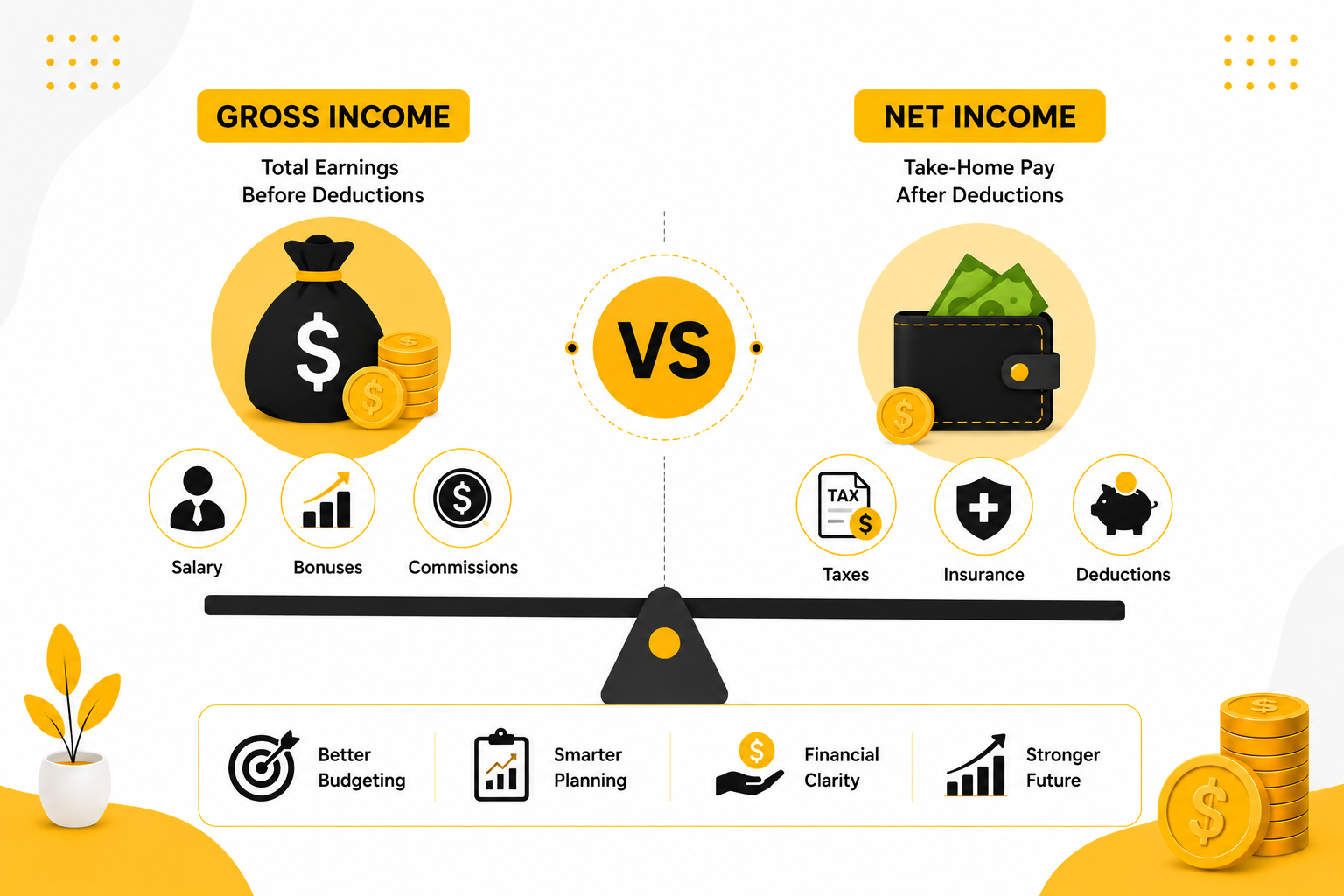
Taxable Income vs Gross Income in 2025
Your salary is not always the number used to determine your tax bracket.
The IRS calculates tax based on taxable income.
A simplified calculation looks like this
Gross income
− Adjustments
− Deductions
= Taxable income
Common adjustments may include
- Traditional retirement contributions
- Health savings account contributions
- Certain self employed deductions
Common deductions include
- Standard deduction
- Itemized deductions
Example
John earns $90,000.
He contributes
- $5,000 to a traditional retirement account
He takes the standard deduction.
His taxable income may be much lower than his original salary.

This is why two people earning the same salary can have different tax bills.
How the Standard Deduction Affects Your 2025 Taxes
Most taxpayers use the standard deduction because it is simple and often provides a larger benefit than itemizing.
For tax year 2025, the standard deduction amounts increased due to inflation adjustments.
Expected amounts include
- Single filers about $15,750
- Married filing jointly about $31,500
- Head of household about $23,625
Always confirm current IRS figures before filing.
Itemizing may make sense for people with significant qualifying expenses such as
- Mortgage interest
- Charitable contributions
- Certain medical expenses
- State and local taxes within federal limits
A common mistake is assuming itemizing is always better. Many taxpayers spend time tracking deductions that do not exceed the standard deduction.
How Retirement Contributions Can Lower Taxable Income
Retirement planning and taxes often go together.
Traditional retirement contributions may reduce your taxable income today.
For example
A worker earns $100,000.
They contribute $10,000 to a traditional 401(k).
Their taxable income may be reduced before applying deductions.
Roth contributions work differently. They generally do not reduce current taxable income because taxes are paid upfront.
The better choice depends on your situation.
Someone expecting a higher tax rate later may prefer Roth savings. Someone wanting a current tax deduction may prefer traditional contributions.
How Tax Brackets Affect Raises and Bonuses
Many people worry that earning more money will leave them with less after taxes.
That is usually not true.
If you receive a $10,000 raise and part of that income falls into a higher bracket, only that additional portion is taxed at the higher rate.
Example
Your salary increases from $90,000 to $100,000.
The extra $10,000 does not cause your entire salary to be taxed at a new rate.
You still benefit from earning more money.
However, your take home pay increase may be smaller than the gross increase because of
- Federal taxes
- State taxes
- Payroll taxes
- Retirement contributions
Understanding this helps you plan better after a promotion or job change.
Federal Tax Brackets vs State Income Taxes
Federal income tax is only one part of your total tax picture.
Many states also charge income taxes, while some states do not have a state income tax.
Your total tax burden may include
- Federal income tax
- State income tax
- Social Security tax
- Medicare tax
- Local taxes in some areas
For example, someone moving from Texas to California may experience a major difference because California has a state income tax while Texas does not.
A complete financial plan should consider your entire tax situation, not only federal brackets.
Common Mistakes People Make With Tax Brackets
Tax planning mistakes often come from misunderstanding how the system works.
Common mistakes include
- Assuming a higher bracket applies to all income
- Ignoring retirement contributions
- Forgetting tax credits
- Not adjusting withholding after a raise
- Waiting until filing season to plan
Another mistake is focusing only on deductions.
Tax credits can sometimes have a larger impact because they directly reduce your tax bill.
Good planning looks at income, deductions, credits, and timing together.
How Federal Income Tax Brackets 2025 Affect Financial Decisions
Your tax bracket can influence several money decisions.
Examples include
- Whether to contribute to a traditional or Roth retirement account
- When to sell investments
- Whether to accept additional income
- How to plan charitable donations
- How to manage business income
A person near the top of a tax bracket may consider strategies that reduce taxable income.
A person in a lower bracket may decide paying taxes now through Roth contributions could make sense.
Tax planning is about timing as much as it is about numbers.
Conclousion
Understanding the federal income tax brackets 2025 can help you make smarter choices with your money. Your tax bracket affects how much you pay on additional income, but it does not mean your entire paycheck is taxed at one rate.The most useful step is knowing your taxable income, not just your salary.Review your withholding, retirement contributions, and deductions before the year ends. Small adjustments can make a meaningful difference.Educational disclaimer This article provides general tax information and is not personalized tax advice. Tax brackets, deductions, credits, and IRS rules can change. Review current IRS guidance or consult a qualified tax professional for advice based on your situation.
You may also read more blogs
best high yield savings account
FAQs
What are the federal income tax brackets for 2025?
The federal income tax brackets for 2025 include rates of 10%, 12%, 22%, 24%, 32%, 35%, and 37%. Your taxable income determines which portions of your income fall into each bracket.
Does moving into a higher tax bracket mean I pay more taxes on everything?
No. Only the income within the higher bracket is taxed at that higher rate. Your earlier income remains taxed at the lower bracket rates.
What is the difference between marginal and effective tax rates?
Your marginal rate is the tax rate applied to your last dollar of income. Your effective rate is your total tax divided by your taxable income.
Do retirement contributions lower my tax bracket?
Traditional retirement contributions may reduce taxable income, which could lower the amount of income taxed at higher rates.
Are tax brackets based on salary or taxable income?
Tax brackets are based on taxable income after adjustments and deductions, not your total salary.
Can a tax bracket affect my investment decisions?
Yes. Your tax bracket can affect decisions involving investment sales, retirement accounts, and other taxable income sources.
Do tax brackets change every year?
Yes. The IRS adjusts tax brackets and other tax figures periodically, often to account for inflation and changes in tax law.

I am a professional finance content writer with expertise in personal finance investing, banking, loans, insurance, credit cards, budgeting, and market related topics. I create clear, SEO optimized, and reader friendly finance content that helps audiences understand complex financial concepts in simple words. My goal is to write trustworthy and engaging content that improves search visibility, builds credibility, and supports business growth.