2026 Federal Income Tax Rate: Brackets & Savings Guide
Shanzay Arain·Sep 12, 2026
You earned more this year, checked your paycheck, and wondered why your take home pay didnt jump as much as expected. The reason is that your tax bill is not based on one simple percentage. The federal income tax rate depends on your taxable income, filing status, deductions, and which tax brackets your income falls into.
Federal Income Tax Rate Explained How Much Do You Pay?
The U.S. uses a progressive tax system, meaning different portions of your income are taxed at different rates.
For tax year 2026, federal income tax brackets should be verified with the latest IRS updates before filing because inflation adjustments can change yearly thresholds.
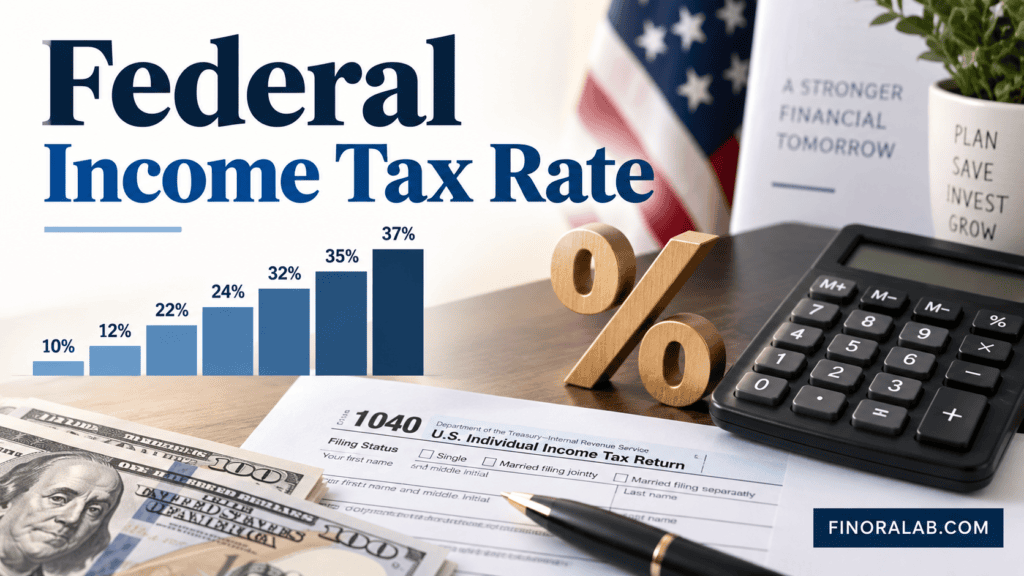
The federal income tax brackets generally include these rates
10%
12%
22%
24%
32%
35%
37%
Your highest tax bracket is called your marginal tax rate. It only applies to the last dollars you earn, not your entire income.
Your actual percentage paid after deductions and credits is usually lower. That number is your effective tax rate.
Why Your Federal Tax Rate Is Usually Lower Than You Think
Imagine you are a single taxpayer with $80,000 in income.
You might see a tax bracket percentage online and assume you owe that percentage on the full $80,000.
You dont.
Your income is split into sections
The first portion is taxed at the lowest rate.
The next portion is taxed at the next rate.
Only the income above each threshold moves into higher brackets.
This system prevents someone from suddenly losing money because they earned more.
A raise is still a raise.
Federal Income Tax Rate vs Tax Bracket Whats the Difference?
These terms are often mixed together, but they mean different things.
Term
Meaning
Tax bracket
The percentage applied to a specific range of income
Marginal tax rate
The rate applied to your highest taxable dollars
Effective tax rate
Your total federal tax divided by taxable income
Example
A person may be in the 22% tax bracket but have an effective federal tax rate closer to 12% or 15% after deductions and credits.
That difference matters for budgeting.
How Filing Status Changes Your Federal Tax Rate
Your filing status affects where your income falls inside the tax brackets.
The main federal filing statuses are
Single
Married filing jointly
Married filing separately
Head of household
Two people earning the same amount can have different tax bills because their filing situations are different.
For example
A married couple filing jointly may have wider tax brackets than a single taxpayer, which can reduce their taxable income burden in some situations.
Head of household status can also provide different tax benefits for eligible taxpayers supporting dependents.
Taxable Income Is Not the Same as Your Salary
A common mistake is looking at your paycheck and assuming that number is what the IRS taxes.
Your taxable income usually comes after adjustments and deductions.
A simplified example
Salary $75,000
Retirement contributions and other adjustments $5,000
Standard deduction reduces taxable income further
Remaining amount taxable income
The IRS applies tax rates to the taxable income number, not simply your gross salary.
Standard Deduction and Its Impact on Taxes
The standard deduction lowers the amount of income subject to federal tax.
Freelancers, contractors, and business owners may need to make quarterly estimated tax payments.
Ignoring this can lead to a large tax bill later.
Not Updating Withholding
Life changes can affect taxes
Marriage
Divorce
New child
Second job
Major income changes
Your paycheck withholding should reflect your current situation.
Federal Income Tax Rate Compared With State Taxes
Federal taxes are only one part of your tax picture.
Depending on where you live, you may also pay
State income tax
Local taxes
Property taxes
Sales taxes
Some states have no state income tax, while others have their own brackets and rules.
A person earning the same salary in two different states can have very different total tax costs.
Should You Hire a Tax Professional?
Not everyone needs professional help.
A simple tax return with one job and standard deductions may be manageable with tax software.
A professional may be worth the cost if you have
Self employment income
Rental properties
Investment sales
Multiple businesses
Complex deductions
Paying for good advice can sometimes save more than it costs.
Conclusion
Understanding your federal income tax rate helps you make better decisions about raises, retirement savings, and yearly planning.Dont focus only on the headline tax bracket.Look at your taxable income, deductions, credits, and overall financial picture.Before filing, verify current IRS rules because tax brackets and limits can change every year.Educational disclaimer This article provides general educational information and is not personalized tax advice. Federal tax rules, rates, deductions, and credits can change. Consider speaking with a qualified tax professional for advice based on your specific situation.
Federal income tax rates are progressive and include multiple brackets rather than one flat percentage. The rate you pay depends on taxable income and filing status.
Does a higher salary put me in a higher tax bracket?
Yes, but only the income above the bracket threshold is taxed at the higher rate. Your entire income does not suddenly get taxed at the new rate.
What is the lowest federal income tax rate?
The lowest federal income tax bracket is generally 10%, though the amount of income taxed at each rate depends on yearly IRS thresholds.
How do I calculate my federal income tax rate?
Start with your income, subtract eligible adjustments and deductions, then apply the tax brackets for your filing status. Your final tax divided by taxable income gives your effective tax rate.
Is federal income tax the same as payroll tax?
No. Federal income tax is separate from Social Security and Medicare payroll taxes withheld from paychecks.
Can deductions lower my federal tax rate?
Yes. Deductions reduce taxable income, which can lower the amount of federal tax you owe.
Why did my paycheck taxes increase after a raise?
A raise can increase withholding because your employer estimates a higher annual income. Your actual tax depends on your full year taxable income and tax situation.
I am a professional finance content writer with expertise in personal finance investing, banking, loans, insurance, credit cards, budgeting, and market related topics. I create clear, SEO optimized, and reader friendly finance content that helps audiences understand complex financial concepts in simple words. My goal is to write trustworthy and engaging content that improves search visibility, builds credibility, and supports business growth.
I am a professional finance content writer with expertise in personal finance investing, banking, loans, insurance, credit cards, budgeting, and market related topics. I create clear, SEO optimized, and reader friendly finance content that helps audiences understand complex financial concepts in simple words. My goal is to write trustworthy and engaging content that improves search visibility, builds credibility, and supports business growth.








Pingback: Income Tax Brackets 2026: Rates, Limits & Guide