Social Security Warning for Retirees: 7 Scams to Avoid
Shanzay Arain·Aug 10, 2026
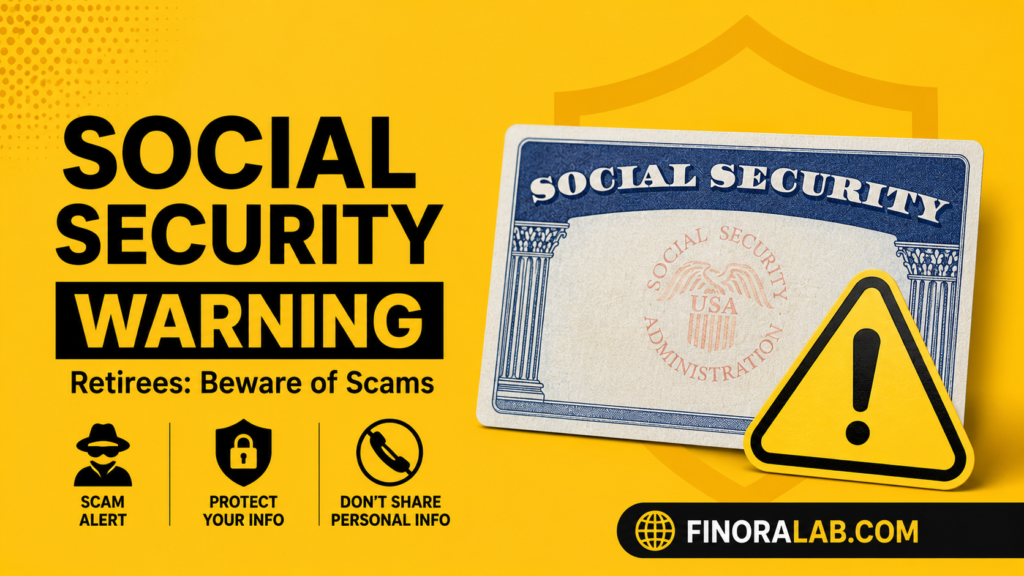
social security warning retirees scams, benefits are an important source of income for millions of Americans, which makes retirees and other beneficiaries attractive targets for fraudsters. A Social Security scam typically involves someone pretending to represent the Social Security Administration, another government agency, or law enforcement. The criminal may claim there is a problem with your Social Security number, benefits, bank account, or identity and then demand immediate action. Current warnings from the Social Security Administration and its Office of the Inspector General show that scammers are using phone calls, texts, emails, websites, letters, social media, and increasingly sophisticated tactics to appear legitimate.
The most important rule for retirees is simple do not allow fear or urgency to make financial decisions for you. Social Security scammers may use official looking documents, real employee names, fake badge images, spoofed caller ID, government logos, and convincing websites. In 2026, the SSA Office of the Inspector General specifically warned about criminals using real SSA employee names and fabricated credentials to build trust. Understanding how these schemes work can help you protect your Social Security benefits, bank accounts, retirement savings, Medicare information, and identity.
Why Retirees Are Targeted by Social Security Scams
Retirees can be attractive targets because Social Security benefits are predictable and recurring. A person who depends heavily on monthly benefits may be particularly worried about any message suggesting payments could stop. Scammers exploit that concern by claiming that a Social Security number has been suspended, benefits are in danger, an account has been compromised, or an investigation is underway. The goal is usually to make the victim react emotionally before verifying the claim. The SSA describes common government imposter tactics using four patterns pretending to be an authority, presenting a problem or prize, applying pressure, and demanding payment or information.
The risk extends beyond monthly benefits. A successful scam can expose a Social Security number, bank account information, passwords, credit card details, Medicare information, or other personally identifiable information. Criminals may use those details for identity theft, unauthorized account access, fraudulent applications, or additional scams. The problem is becoming more sophisticated because criminals can combine publicly available information with convincing digital communication and artificial intelligence. In June 2026, the SSA highlighted the growing use of sophisticated tactics, including AI, in scams targeting older adults.
The Biggest Social Security Scam Warning Signs
One of the clearest warning signs is a demand for immediate payment. A caller may say that your benefits will be suspended, your Social Security number will be blocked, or you will be arrested unless you pay a fine immediately. Legitimate government employees do not demand that you purchase gift cards, send cryptocurrency, wire money, mail cash, or transfer money to protect your funds. The SSA OIG specifically warns that these payment methods are common in Social Security related scams because they can be difficult to trace and recover.
Another warning sign is an unexpected request for sensitive information. Be cautious if someone suddenly asks for your Social Security number, bank account number, debit card number, credit card information, password, or security code. Scammers may already know your name, address, partial Social Security number, or other details, but that does not prove their identity. The OIG warns that criminals can use legitimate employee names and other authentic looking information to gain trust. A caller knowing personal information should never be treated as proof that the caller is genuine.
Fake Social Security Calls and Spoofed Caller ID
Phone scams remain one of the most recognizable forms of Social Security fraud. A scammer may call and introduce themselves as an SSA employee, investigator, government official, or law enforcement officer. The caller could claim that your Social Security number has been connected to criminal activity or that your benefits are about to be suspended. They may then demand money or sensitive information. The SSA explains that legitimate employees do sometimes contact people by telephone, particularly when someone has recently applied for benefits, already receives benefits and needs to update a record, or has specifically requested a call.
Do not rely on caller ID to determine whether a call is genuine. Criminals can spoof phone numbers so the screen appears to show a government agency, police department, or another trusted organization. They may also provide a badge number, employee name, case number, or telephone number as supposed proof. Those details can be fabricated or stolen from publicly available information. If you receive an unexpected call, hang up and independently verify the issue using official contact information. Do not call back using a number supplied by the suspicious caller.
Social Security Scam Emails, Texts, and Fake Websites
Email and text message scams are another major concern for retirees. A fraudulent message may claim that you need to review your Social Security statement, confirm your benefits, update account information, or complete an urgent security verification. The message can contain official looking logos, colors, government language, and links that resemble legitimate websites. In February 2026, the SSA OIG warned about a significant increase in fraudulent emails falsely claiming to provide access to Social Security statements. Clicking their links could expose victims to identity theft, financial loss, or compromised information.
A familiar logo or website design is not enough to establish authenticity. Instead, avoid clicking unexpected links or opening unsolicited attachments. If you want to check your Social Security information, independently open the official SSA website or use your established account rather than following a link from an email or text. The OIG also notes that official SSA communications originate from email addresses ending in .gov, although users should still verify the communication rather than relying on an address alone. Scammers can make messages look remarkably convincing.
Fake Social Security Benefit Increase Scams
Another common scheme involves promises of increased Social Security benefits. A criminal may claim that you qualify for a special increase, adjustment, refund, or government payment but need to pay a fee or provide personal information first. The promise can be especially appealing to retirees dealing with inflation, rising medical costs, housing expenses, or fixed income budgeting. However, an unsolicited offer that requires money or sensitive information to unlock a supposed benefit increase should be treated as a major warning sign. SSA OIG specifically warns that criminals may promise benefit increases or other assistance in exchange for payment.
Consider the financial consequences before responding. Suppose a retiree receives a message promising an additional $500 per month after paying a $250 processing fee. The supposed gain sounds attractive because the fee appears small compared with the promised benefit. But if the offer is fraudulent, the victim could lose the $250 and expose additional personal information. A legitimate benefit decision should not be evaluated through an unsolicited pressure tactic. Verify any claim independently through official Social Security resources before making a financial decision.
Fake Documents, Badges, and Government Employees
Scammers understand that retirees may trust government looking paperwork. They can send letters, emails, attachments, screenshots, or social media messages containing agency logos and official sounding language. More recent schemes have gone further by using the names of real SSA employees and fake badge images. The SSA OIG warned in April 2026 that criminals were using real employee names, fabricated credentials, fraudulent social media profiles, and spoofed phone numbers to make government imposter scams appear authentic.
The lesson is important evidence supplied by the person contacting you is not independent verification. A fake badge is still fake even if it contains a real employees name. A caller can also transfer you to another supposed government official or investigator as part of the same deception. The SSA OIG advises people not to trust caller ID, employee names, badge numbers, or other information provided by suspicious callers. Instead, end the interaction and independently contact the agency through an official channel.
What Social Security Will Never Ask You to Do
Understanding what Social Security will not do can make scam detection much easier. According to the SSA, the agency will not tell you that your Social Security number is suspended, demand immediate payment, threaten arrest because you refuse to pay immediately, request credit or debit card numbers over the phone in this type of scam scenario, or ask for gift cards or cash. Social Security also will not promise a benefit increase in exchange for money or personal information. These are major red flags that should cause you to stop communicating.
The agency also emphasizes that government officials will not tell you to move your money to protect it from fraud. That tactic can be particularly dangerous because a retiree may transfer a substantial amount from a bank or brokerage account based on a false warning. For example, a scammer could claim that your checking account has been compromised and instruct you to move $20,000 into a government protection account. There is no legitimate government protection account created through such an unsolicited call. Never transfer retirement savings because a stranger tells you to.
How to Verify a Social Security Warning Safely
When you receive a suspicious Social Security warning, your first step should be to pause. Do not argue with the caller, click a link, download an attachment, or provide additional information. Write down what the person claims, including the alleged issue and any reference number. Then end the interaction. A genuine problem can be investigated later, while an immediate transfer or disclosure of sensitive information may be difficult to reverse. The SSA recommends taking time to breathe, ignore or hang up on suspicious communications, and discuss the situation with someone you trust.
Verification should happen independently. Do not use a phone number, web address, email address, or callback method supplied by the suspicious message. Instead, navigate independently to the official Social Security Administration website or use contact information you already know to be legitimate. You can also access your established my Social Security account to review information securely. The SSA encourages adults to create a personal my Social Security account because it can help secure personal information and reduce the risk of unauthorized benefit activity.
How Retirees Can Protect Social Security Benefits and Retirement Money
Strong account security is one of the most practical defenses against identity theft. Consider creating and maintaining your personal my Social Security account, using a unique password, and enabling available security protections. Review your account and financial statements regularly for unfamiliar activity. Retirees should also consider separating everyday spending money from larger savings balances where practical, because reducing the amount immediately exposed in one account can limit the damage from certain types of fraud. Good security practices should complement, not replace, regular monitoring and careful financial planning.
Family members and trusted friends can also play a useful role. A scammer often succeeds by isolating the victim and creating a sense of secrecy or urgency. If someone says you must not tell your spouse, children, financial adviser, bank, or anyone else, treat that instruction as suspicious. A second person can help identify inconsistencies that are difficult to see when you are under pressure. This is particularly useful for retirees managing complex finances involving Social Security, pensions, investment accounts, Medicare, taxes, and required household expenses.
What to Do If You Already Shared Information
If you already provided personal information to a suspected scammer, do not assume it is too late to respond. First, stop communicating with the scammer. If you shared bank or card information, contact the relevant financial institution using a trusted number and explain what happened. Depending on the circumstances, you may need to change passwords, monitor accounts, replace cards, or take additional identity protection steps. If money was transferred, act quickly because some transactions may have a limited window for recovery or cancellation.
If you believe you were targeted or victimized, report the incident through appropriate official channels. The SSA OIG accepts reports involving Social Security related scams, while the Federal Trade Commission provides resources for reporting fraud. The OIG also advises victims to notify financial institutions and, when appropriate, file a police report. For online financial crime, the FBIs Internet Crime Complaint Center may also be relevant. Reporting does not guarantee that lost funds will be recovered, but it can help authorities identify patterns and protect others.
Social Security Scams and Retirement Planning
Fraud prevention belongs inside a broader retirement planning strategy. A retirees financial plan may involve Social Security, pensions, retirement accounts, taxable investments, bank deposits, insurance, housing costs, and healthcare expenses. Losing access to even one portion of those resources can create cash flow stress. That makes risk management important. Maintaining a household budget, keeping emergency savings, reviewing account activity, and limiting unnecessary disclosure of financial information can help strengthen financial resilience. Scam awareness is not merely a cybersecurity issue it is part of protecting the income and assets that support retirement.
Retirees should also be careful when making major financial decisions during emotionally stressful situations. A scammer may use a supposed Social Security emergency to push a victim into selling investments, withdrawing retirement funds, taking out a loan, or transferring cash. Those decisions can create taxes, penalties, investment losses, or long term damage. If a suspicious message claims you must make a large financial move immediately, stop and verify it first. Legitimate retirement planning should be based on documented information, personal circumstances, and careful evaluation rather than threats from an unknown caller.
Common Mistakes That Make Social Security Scams More Effective
One common mistake is assuming that a scam must be obvious. Modern fraud can involve polished websites, professional language, authentic government terminology, realistic caller ID, and real employee names. Another mistake is believing that a caller cannot be fraudulent because the caller already knows some personal information. Public records, data breaches, social media, previous scams, and purchased databases can provide criminals with details about potential victims. The SSA OIG specifically warns that scammers may possess some or all of a persons personal information while still being criminals.
A second mistake is making decisions while frightened. Scammers intentionally create situations in which the victim believes there is no time to think. The supposed deadline might be minutes or hours. But urgency itself is a warning sign when combined with demands for money, secrecy, or sensitive information. A safer approach is to establish a household rule no major financial transfer, account change, or disclosure of sensitive information will ever be made because of an unexpected call or message. Pause first, verify independently, and consult a trusted person when appropriate.
How to Talk to Older Family Members About Scams
Discussing scams with older relatives should focus on empowerment rather than embarrassment. Anyone can be targeted, and sophisticated fraud can fool people with extensive financial experience. Instead of saying that a person should have recognized the scam, explain that criminals deliberately use fear, authority, urgency, and convincing documentation. A useful family rule is that no one should ever feel pressured to keep a suspicious financial request secret. Creating a supportive environment makes it more likely that a retiree will ask for help before sending money or sharing sensitive information.
Families can also establish practical procedures before an emergency occurs. For example, family members can agree that an unexpected Social Security warning will be discussed with a trusted person before any money is transferred. Retirees can keep a list of official financial institutions and government resources in a secure location rather than relying on numbers provided by callers. Regularly reviewing account statements together can also help identify unusual activity early. These steps preserve independence while adding another layer of protection against financial exploitation.
Social Security Scams in the Broader Financial Picture
A Social Security scam can have consequences far beyond the immediate amount requested. If a criminal obtains a Social Security number, account credentials, or financial information, the information may be reused in later attacks. A retiree who responds to one fraudulent message could subsequently receive fake Medicare communications, bank security calls, investment offers, tax notices, or family emergency scams. This is why financial security should be viewed as a system rather than a single password or account. Protecting information today can reduce the risk of more complicated fraud tomorrow.
The broader lesson is that retirees should separate legitimate financial decisions from unsolicited instructions. Social Security claiming decisions, investment withdrawals, debt management, insurance purchases, and tax planning deserve careful consideration. They should not be rushed because someone on the phone claims to represent the government. Current SSA warnings emphasize that scammers may use increasingly sophisticated tactics, including AI, fake credentials, and spoofed numbers. Financial planning should therefore include both traditional risk management and modern fraud awareness.
Conclusion
Social Security warning retirees scams are designed to exploit trust, fear, and urgency. Criminals may pretend to be Social Security employees, investigators, law enforcement officials, or other government representatives. They can use phone calls, texts, emails, websites, letters, social media, fake documents, real employee names, and spoofed caller ID. The strongest defense is to pause and independently verify unexpected claims. Never allow a stranger to pressure you into sending money, revealing sensitive information, clicking an unfamiliar link, or moving retirement savings to supposedly protect them.For retirees, scam awareness is an important part of personal financial security. Protecting Social Security income means protecting the accounts, identity information, and financial decisions connected to that income. If you suspect fraud, stop communication, contact affected financial institutions, and report the incident through appropriate official channels. Most importantly, remember that legitimate government agencies do not use threats, secrecy, or unusual payment methods to force immediate compliance. A few minutes spent verifying a warning can prevent a devastating financial loss.
What is the most common Social Security scam targeting retirees?
Many Social Security scams involve criminals pretending to be government employees and claiming there is a problem with the victims Social Security number, benefits, account, or identity. The scammer then creates urgency and may demand money or personal information. Payment requests involving gift cards, cryptocurrency, wire transfers, cash, or prepaid debit cards are particularly strong warning signs. The SSA OIG advises that legitimate government employees will not demand these payment methods to resolve an unexpected Social Security problem.
Will Social Security ever call a retiree?
Yes. Social Security employees can contact members of the public by telephone for legitimate business purposes. The SSA says this can occur when someone has recently applied for benefits, already receives payments and needs to update a record, or has requested a phone call. However, a legitimate call does not mean you should automatically trust every caller claiming to be from Social Security. Caller ID can be spoofed, so independently verify unexpected requests rather than relying on the callers number or identity claims.
Can Social Security suspend my Social Security number?
A warning that your Social Security number has been suspended is a well known scam tactic. The SSA has specifically stated that it will not tell you your Social Security number is suspended as part of this type of fraud. A scammer may use that claim to frighten you into sharing information or sending money. If you receive such a message, stop communicating and independently contact Social Security through its official channels rather than using contact information supplied by the caller or message.
Does Social Security ask for gift cards or cryptocurrency?
No. Social Security will not require you to resolve a legitimate Social Security issue by purchasing retail gift cards, sending cryptocurrency, mailing cash, or making similar hard to trace payments. These demands are among the clearest signs of a government imposter scam. The same principle applies if someone claims the payment is needed to protect your bank account or Social Security benefits. Do not make the payment. End the interaction and verify the claim through an independently obtained official channel.
What should I do if a scammer has my Social Security number?
If a suspected scammer already knows your Social Security number, do not assume the person is legitimate. Criminals can obtain personal information from multiple sources and may use it to sound convincing. Stop communicating with the scammer and consider contacting relevant financial institutions if account information was also exposed. Monitor financial accounts carefully and review your established Social Security account for unusual activity. If you believe you have been targeted or victimized, report the incident to the SSA OIG and consider other appropriate fraud reporting channels.
How can retirees recognize a fake Social Security email?
Look for pressure, unexpected requests, unfamiliar links, attachments, and demands for personal or financial information. Be particularly cautious about messages claiming you must urgently access a Social Security statement or confirm benefits. In February 2026, the SSA OIG warned about fraudulent emails designed to look like official SSA communications and containing links that could lead to identity theft or financial loss. Rather than clicking the email, independently open the official SSA website and access your account through a trusted route.
Can scammers fake a Social Security employee badge or name?
Yes. In April 2026, the SSA OIG warned about a wave of scams involving real SSA employee names, fake badge images, fraudulent social media profiles, and other fabricated credentials. This means a name, badge photograph, or official looking identification should not be treated as independent proof of identity. Scammers can collect legitimate names online and combine them with fabricated documentation. If someone contacts you unexpectedly, end the interaction and verify the situation independently using official government contact information.
What should I do if I already sent money to a Social Security scammer?
Act quickly. Stop communicating with the scammer and contact the financial institution or payment provider involved using a trusted contact method. Explain that you believe you were defrauded and ask what protective or recovery steps are available. Depending on the transaction, the ability to recover money can vary, so prompt action matters. The SSA OIG also recommends notifying financial institutions and filing a police report when appropriate. You can report Social Security related scams to the SSA OIG and other applicable authorities.
How can family members help protect retirees from Social Security scams?
Families can establish a simple rule that no unexpected government related financial request will be acted on immediately. Encourage retirees to pause, independently verify the claim, and speak with a trusted person before transferring money or revealing sensitive information. Avoid making the conversation judgmental because embarrassment can discourage future reporting. Regular account reviews, strong passwords, secure online accounts, and awareness of common scam tactics can add protection. The SSA specifically encourages trusted family members and friends to help older adults recognize and respond to suspicious communications.
I am a professional finance content writer with expertise in personal finance investing, banking, loans, insurance, credit cards, budgeting, and market related topics. I create clear, SEO optimized, and reader friendly finance content that helps audiences understand complex financial concepts in simple words. My goal is to write trustworthy and engaging content that improves search visibility, builds credibility, and supports business growth.
I am a professional finance content writer with expertise in personal finance investing, banking, loans, insurance, credit cards, budgeting, and market related topics. I create clear, SEO optimized, and reader friendly finance content that helps audiences understand complex financial concepts in simple words. My goal is to write trustworthy and engaging content that improves search visibility, builds credibility, and supports business growth.