Will SNAP Benefits Be Issued in November 2025? What to Know
Shanzay Arain·Aug 11, 2026
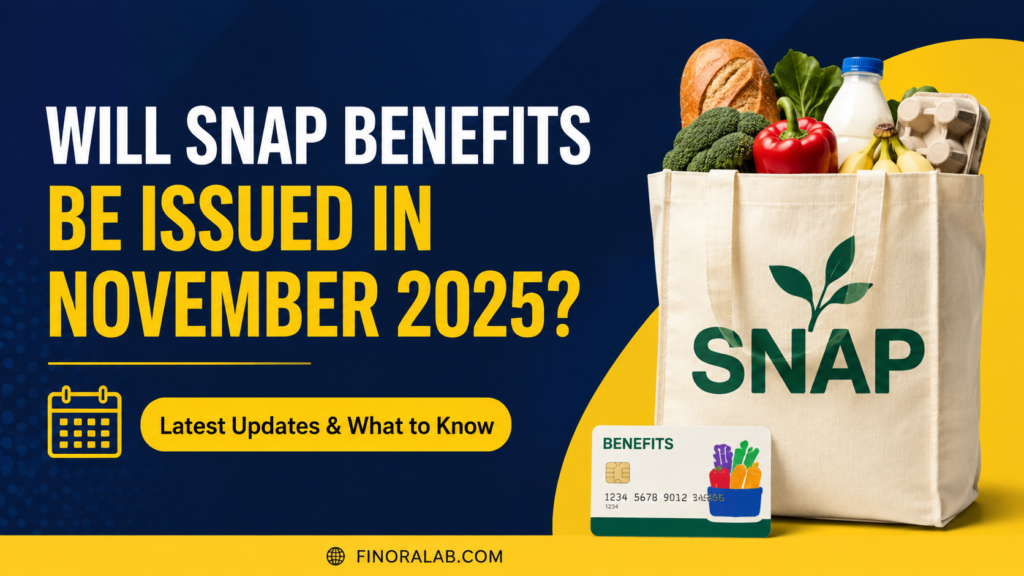
Will SNAP Benefits Be Issued in November 2025, Yes. SNAP benefits were ultimately issued for November 2025, although the federal government shutdown created uncertainty and delays for some households. The U.S. Department of Agriculture (USDA), which oversees the Supplemental Nutrition Assistance Program, issued several updates during November as funding and court decisions affected the timing of benefit distribution. USDA records show that the agency was working toward full November benefit issuances after a November 6 federal court order.
For households relying on an Electronic Benefit Transfer (EBT) card, the important distinction is between eligibility and timing. A person who remained eligible for SNAP did not automatically lose eligibility because of the shutdown. Instead, the main concern was when the monthly food assistance would be loaded onto the EBT account. State agencies administer SNAP, so exact deposit schedules and communication methods can differ by state. USDAs official records confirm that November 2025 benefit issuance remained an active federal priority.
What happened to SNAP benefits in November 2025?
The November 2025 SNAP situation was closely connected to the federal government shutdown. Because SNAP is federally funded but administered through state agencies, a lapse in federal government operations can create questions about whether funding and administrative support will continue normally. USDA had already recognized the importance of maintaining SNAP operations during a potential funding lapse. Its contingency planning stated that SNAP had access to multi year contingency funding that could support benefits and state administrative expenses during a shutdown. (USDA)
However, having contingency funding available did not mean every household would see benefits appear at exactly the same time as usual. USDA issued multiple policy updates on November 4, November 5, November 7, and November 8, 2025. These updates addressed November benefit issuance as circumstances developed. USDAs resource listings specifically state that the November 7 update involved implementing full November benefit issuances in compliance with a November 6 order from the U.S. District Court for the District of Rhode Island.
Why were people worried about November SNAP payments?
The concern was understandable because millions of American households depend on SNAP to purchase groceries. When federal funding operations become uncertain, recipients may wonder whether their monthly allotment will arrive on time, arrive partially, or be delayed. This uncertainty can be especially difficult for households with limited emergency savings, fixed incomes, children, or high food expenses. SNAP is designed to supplement household food budgets, so a disruption in benefits can affect grocery planning and other financial obligations quickly.
Another reason for confusion was the difference between federal announcements and state level implementation. SNAP is a federal program, but state agencies generally handle applications, eligibility determinations, account administration, and benefit distribution. That means a national announcement does not necessarily translate into an identical deposit date for every recipient. USDAs November 2025 updates demonstrate how the federal government communicated with state agencies as the situation changed.
Were full SNAP benefits issued in November 2025?
The answer is yes the federal government ultimately moved toward full November SNAP benefit issuance rather than simply canceling the months benefits. USDAs November 7 guidance explicitly stated that it was working toward implementing full November 2025 benefit issuances following the November 6 court order. A subsequent November 8 USDA update continued addressing the implementation of November benefits. These official records are important because they distinguish actual policy developments from social media claims suggesting that November SNAP benefits would disappear entirely.
The timing, however, was more complicated than a normal monthly cycle. Some recipients may have experienced uncertainty or different timing depending on their state and circumstances. The appropriate way to determine an individual households actual deposit date is therefore to check the states SNAP agency or official EBT account information rather than relying on a generalized nationwide date. USDAs SNAP data also confirms that November 2025 was included in national and state level SNAP participation and benefit reporting.
How SNAP and EBT benefits work
SNAP provides eligible low income households with monthly assistance that can be used for qualifying food purchases. Benefits are generally delivered electronically through an Electronic Benefit Transfer system. An EBT card functions somewhat like a payment card, although the funds are restricted to eligible purchases under SNAP rules. The monthly amount depends on household circumstances, including factors such as household size, income, and allowable deductions. Because SNAP is means tested, eligibility and benefit levels can change when household financial circumstances change.
For example, imagine a household normally receives $600 in SNAP benefits each month. If the household remains eligible, the key question during a payment disruption is not whether the household suddenly loses its eligibility, but whether the $600 monthly allotment is deposited according to the applicable schedule. A delayed deposit could still create serious budgeting problems because grocery purchases cannot always be postponed. This is why households should monitor their EBT balance and official state notices during unusual payment periods.
Does a government shutdown automatically stop SNAP?
A federal government shutdown does not necessarily mean that SNAP benefits immediately stop. The specific impact depends on available funding, statutory authority, agency contingency plans, and congressional action. USDAs fiscal year 2026 lapse plan specifically addressed SNAP and explained that contingency funding could be used during a federal government shutdown. The document also stated that certain USDA employees would remain available to support SNAP related operations, including policy, financial management, and communications.
This is an important personal finance lesson because headlines about a shutdown can sometimes be misleading. A shutdown may affect government operations without automatically eliminating every federally funded program. Households should distinguish between a temporary administrative disruption, a delayed payment, a funding expiration, and an actual change in eligibility rules. In November 2025, USDA issued repeated guidance rather than simply announcing the termination of SNAP benefits. That sequence of updates demonstrates why recipients should consult authoritative government information before making major financial decisions.
How November 2025 SNAP issuance differed by state
Although SNAP is federally funded, the practical experience of receiving benefits is state specific. Each state operates its own SNAP administration system and may use different EBT contractors, deposit schedules, online portals, phone systems, and communication methods. Some states distribute benefits over multiple days, while others use schedules based on case numbers, names, Social Security numbers, or other factors. Consequently, two eligible households in different states can have different monthly issuance dates.
For someone trying to determine whether November SNAP benefits were available, the most useful information would come from the states official SNAP website or EBT balance system. A household should look for an updated issuance calendar, account notification, or transaction history. USDAs national resources are useful for understanding federal policy, but they do not replace state specific instructions. USDA itself maintains SNAP information and state level data because administration involves both federal oversight and state implementation.
What should you do if November SNAP benefits were delayed?
If a November 2025 SNAP payment did not appear when expected, the first practical step was to check the EBT account balance and recent transaction history. Sometimes a benefit may be posted on a different date than a recipient expects, particularly when state schedules use staggered issuance. Checking the account directly can prevent unnecessary confusion. If the balance still appeared incorrect, the recipient should then contact the appropriate state SNAP agency using contact information obtained from an official government website.
It was also important to avoid immediately assuming that a missing deposit meant a household had been removed from SNAP. A delayed issuance, eligibility review, recertification problem, address issue, or administrative error can produce different outcomes. Recipients should review any official notices they received and determine whether the issue concerns payment timing or eligibility. If a household had recently submitted a renewal or reported income changes, those circumstances could affect the case independently of the federal shutdown.
Can SNAP benefits be reduced or changed?
SNAP benefit amounts can change for legitimate reasons even when there is no government shutdown. A households benefit calculation is affected by eligibility rules and financial circumstances. Changes in income, household size, allowable expenses, or other relevant factors may affect the amount received. Federal legislation can also modify eligibility requirements or program rules. Therefore, a recipient should not automatically interpret a lower payment as a shutdown related problem.
Changes announced in 2025 also made SNAP eligibility and work requirements an important area to monitor. USDA issued guidance concerning implementation of provisions of the One Big Beautiful Bill Act, including changes affecting certain noncitizen eligibility and able bodied adults without dependents. These policy changes are separate from the question of whether November 2025 benefits were issued. Understanding that distinction can help households avoid confusing an eligibility policy change with a temporary payment processing issue.
How to budget when you rely on SNAP benefits
Households that rely on SNAP can strengthen their financial planning by treating benefits as part of a monthly grocery budget rather than assuming every month will have identical circumstances. If a household receives $500 in SNAP and spends approximately $650 on eligible groceries, the household still needs to plan for the remaining $150. Tracking grocery expenses for several months can reveal whether the SNAP allotment is sufficient or whether additional cash resources need to be reserved.
A practical strategy is to maintain a small grocery emergency reserve when financially possible. For example, saving $10 per week creates approximately $40 over a month and about $520 over a year. Even a smaller amount can help during an unexpected delay. This does not replace SNAP or guarantee protection against a major disruption, but it can reduce the immediate pressure created by timing differences. Households should also explore legitimate community food resources when necessary.
SNAP, budgeting, and household financial planning
SNAP should be considered alongside broader household financial planning. Food is only one component of a household budget, and people receiving benefits may also face rent, utilities, transportation, medical costs, debt payments, insurance premiums, and other obligations. When resources are limited, prioritizing essential expenses becomes particularly important. A written budget can help identify which bills must be paid immediately and which expenses can potentially be adjusted.
For example, if a household receives $2,000 in monthly cash income and $500 in SNAP assistance, the SNAP benefit should not be treated as interchangeable cash. It has a specific purpose and generally can only be used for eligible food purchases. Understanding this distinction can make budgeting more accurate. The household can assign the SNAP amount to groceries while reserving cash income for housing, utilities, transportation, debt management, savings, and other expenses.
Common SNAP and EBT mistakes to avoid
One common mistake is relying on unofficial social media posts for benefit dates. SNAP schedules are complicated enough that generalized claims can easily become inaccurate. A post saying that everyone will receive benefits on November 1 or that no one will receive SNAP during a shutdown may not apply to every state or household. Official federal and state sources are more reliable, particularly when emergency policies or court orders affect normal procedures.
Another mistake is ignoring official notices from the state SNAP agency. Even if a household has received SNAP for years, a recertification requirement, income change, household change, or eligibility review can affect the case. Recipients should keep documentation related to applications, renewals, income, expenses, and agency communications. Good recordkeeping can make it easier to resolve an administrative problem if benefits do not appear as expected.
How to verify SNAP information safely
The safest approach to verifying SNAP information is to use official government sources. USDAs Food and Nutrition Service publishes federal SNAP policies and updates, while individual state agencies provide information about applications, eligibility, EBT accounts, and issuance schedules. USDAs November 2025 records show multiple official updates specifically addressing November benefit issuance, making them a useful source for understanding what happened during the shutdown period.
Recipients should also be cautious about scams involving EBT cards. Fraudsters may impersonate government agencies and ask for card numbers, PINs, passwords, or personal information. A legitimate recipient should avoid clicking suspicious links in unsolicited messages and should independently navigate to an official government website or use a verified state contact method. If an EBT account shows unauthorized transactions, the recipient should report the activity promptly through the appropriate state process.
What happened after November 2025?
The November 2025 SNAP situation eventually moved beyond the immediate issuance dispute. USDA records show that Congress enacted the Continuing Appropriations, Agriculture, Legislative Branch, Military Construction and Veterans Affairs, and Extensions Act, 2026, on November 12, 2025. USDA subsequently issued a November 13 memorandum concerning SNAP benefit issuance and the new legislation.
This development illustrates why SNAP recipients should focus on verified updates rather than predictions. During periods of political disagreement, court action, or funding uncertainty, program rules can evolve rapidly. The most reliable strategy is to check official federal and state announcements, monitor the EBT account, and maintain reasonable household financial contingency planning when possible. For future disruptions, households should not assume that a previous shutdown will produce exactly the same outcome.
What November 2025 means for future SNAP recipients
The November 2025 experience provides a useful reminder that federal benefit programs can face operational uncertainty during funding disputes. However, it would be inaccurate to conclude that every future shutdown will result in exactly the same SNAP schedule. Funding laws, contingency balances, congressional action, court orders, agency guidance, and state implementation can all influence the outcome. The circumstances surrounding November 2025 were specific to that period.
For SNAP recipients, the best long term strategy is preparation rather than speculation. Keep EBT information secure, know your states normal issuance schedule, maintain access to official agency contact information, and respond quickly to recertification requests. If possible, include a modest emergency food or cash reserve in the household budget. These practices can help reduce financial stress regardless of whether the next disruption involves SNAP, another government program, or an unrelated household emergency.
Conclusion
The answer to will SNAP benefits be issued in November 2025 is yes. November 2025 SNAP benefits were ultimately issued, although the federal government shutdown created uncertainty and required additional federal guidance. USDA issued several updates during the month, and its November 7 guidance specifically discussed moving toward full November benefit issuances following a federal court order.
The biggest lesson is that SNAP recipients should distinguish between eligibility, benefit amount, and payment timing. A shutdown does not automatically mean every eligible household immediately loses SNAP. State level issuance schedules can also vary. For accurate information, recipients should rely on USDA and their state SNAP agency, monitor their EBT account, and respond promptly to official notices. USDAs official records provide the strongest basis for understanding what actually occurred in November 2025.
Yes. November 2025 SNAP benefits were ultimately issued. USDA issued multiple updates addressing the timing and implementation of November benefits during the federal government shutdown. On November 7, USDA stated that it was working toward full November benefit issuances in compliance with a November 6 federal court order.
Did the government shutdown cancel SNAP benefits?
No. The shutdown did not simply cancel November SNAP benefits for all eligible households. USDAs contingency planning recognized that SNAP had access to funding mechanisms that could support operations during a federal shutdown. The actual November 2025 process involved changing guidance and additional administrative action rather than an across the board cancellation.
Were November 2025 SNAP benefits delayed?
Some households faced uncertainty regarding timing because November 2025 benefit issuance occurred during a federal government shutdown and changing federal guidance. Exact timing depended partly on state administration. USDA issued several updates during November, demonstrating that benefit implementation was being actively managed as circumstances developed.
Did every state issue SNAP benefits on the same day?
No. SNAP is federally funded but administered by individual states, which can use different issuance schedules and systems. Therefore, an EBT deposit date in one state does not necessarily apply to another. Recipients should check their states official SNAP agency or EBT account for the applicable schedule.
What should I do if my SNAP benefits do not appear?
Start by checking your EBT balance and transaction history. If the expected benefit is still missing, review any recent notices concerning eligibility, renewal, or case changes. Contact your state SNAP agency through an official government channel if the issue remains unresolved. Do not rely solely on social media posts or unofficial websites for account information.
Can SNAP benefits change because of income?
Yes. SNAP eligibility and benefit amounts can be affected by household income and other circumstances. Changes in household size, allowable expenses, eligibility rules, and other factors may also influence benefits. A lower amount should not automatically be attributed to a government shutdown because individual case circumstances can change independently.
Is SNAP the same as EBT?
No. SNAP is the federal nutrition assistance program, while EBT is the electronic system used to deliver benefits. SNAP benefits are generally loaded onto an EBT account and accessed using an EBT card. The EBT system can also be used for certain other government benefits, depending on the state and program.
Where can I find reliable SNAP updates?
The USDA Food and Nutrition Service is the primary federal source for SNAP policy information. State SNAP agencies provide household specific information about applications, eligibility, EBT accounts, and issuance dates. USDAs official November 2025 records include several updates concerning SNAP benefit issuance during the shutdown period.
Can a government shutdown affect future SNAP payments?
It can create operational uncertainty, but the exact impact depends on available funding, legislation, court orders, federal agency guidance, and state implementation. The November 2025 experience should not be treated as a guarantee for future shutdowns. Households should monitor official federal and state announcements rather than assuming future payments will follow the same pattern.
Are November 2025 SNAP benefits still relevant today?
November 2025 was a past benefit period, so anyone researching it now is primarily looking for historical information or trying to understand what happened during the shutdown. USDAs official records provide a useful historical record, including state level November 2025 SNAP data and federal guidance issued during that period.
I am a professional finance content writer with expertise in personal finance investing, banking, loans, insurance, credit cards, budgeting, and market related topics. I create clear, SEO optimized, and reader friendly finance content that helps audiences understand complex financial concepts in simple words. My goal is to write trustworthy and engaging content that improves search visibility, builds credibility, and supports business growth.
I am a professional finance content writer with expertise in personal finance investing, banking, loans, insurance, credit cards, budgeting, and market related topics. I create clear, SEO optimized, and reader friendly finance content that helps audiences understand complex financial concepts in simple words. My goal is to write trustworthy and engaging content that improves search visibility, builds credibility, and supports business growth.