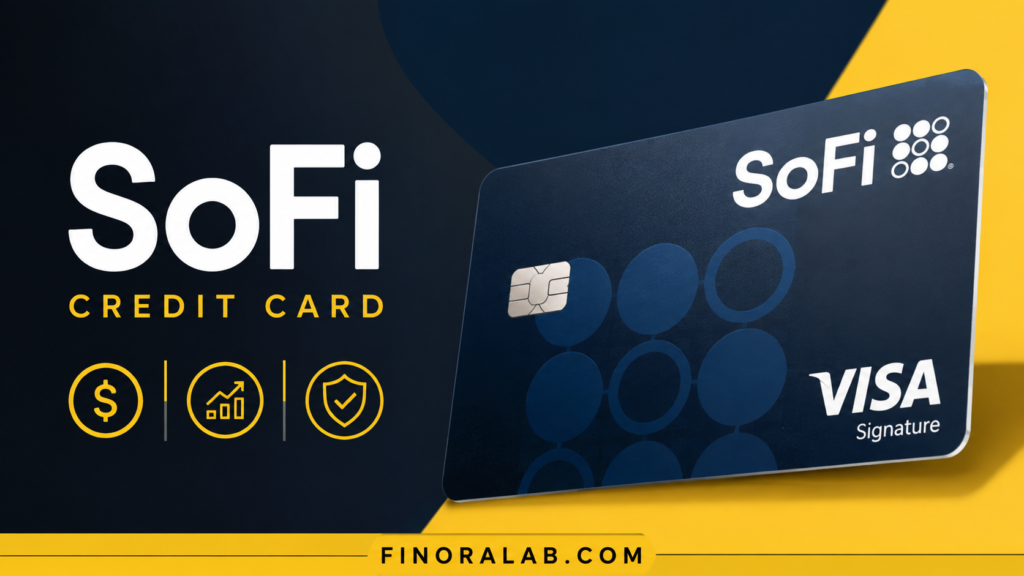
The SoFi Credit Card is designed for consumers who want a straightforward rewards card that can connect everyday spending with broader financial goals. SoFi currently offers multiple credit card options, including the SoFi Unlimited 2% Credit Card, the SoFi Everyday Cash Rewards Credit Card, and the SoFi Essential Credit Card. Availability and eligibility can vary, and some products are currently offered by invitation or through targeted offers. The cards are issued by SoFi Bank, N.A., under a license from Mastercard International.
For shoppers comparing the SoFi Credit Card with other cash back cards, the most important factors are not simply the advertised rewards rate. You should consider how rewards are earned and redeemed, the annual fee, APR, eligibility requirements, credit profile, fees, and how the card fits into your existing financial plan. A 2% cash back card may be attractive for simple everyday spending, while a category based card could produce more rewards for consumers who spend heavily on dining or groceries. The best choice depends on your actual spending patterns and whether you pay your balance in full.
What Is the SoFi Credit Card?
The SoFi Credit Card is a family of consumer credit products offered by SoFi. The current lineup includes the SoFi Unlimited 2% Credit Card, which earns unlimited 2% cash back on eligible purchases, the SoFi Everyday Cash Rewards Credit Card, which offers 3% on eligible dining, 2% on eligible grocery purchases, and 1% on other eligible purchases, and the SoFi Essential Credit Card, which focuses more heavily on credit building and fee simplicity.
This structure matters because the phrase SoFi Credit Card can refer to different products depending on the offer a consumer receives. The Unlimited 2% card is geared toward people who prefer a simple flat rate rewards system. The Everyday Cash Rewards card uses higher rates for selected spending categories. The Essential card is positioned differently, with features such as no annual fee, no overlimit fees, no returned payment fees, and enhanced fraud protection. Consumers should therefore review the specific offer and pricing terms before applying.
SoFi Unlimited 2% Credit Card Rewards
The SoFi Unlimited 2% Credit Card is built around a simple rewards formula eligible purchases earn unlimited 2% cash back, with no rotating bonus categories or spending caps. SoFi says rewards can be redeemed toward eligible SoFi accounts and certain SoFi products at a rate of one cent per point. The card also offers 3% cash back rewards on eligible trips booked through SoFi Travel. There is no annual fee, which can make the card easier to evaluate for consumers who want rewards without paying a yearly membership charge.
The simplicity of a flat rate card can be valuable. Suppose you spend $2,000 per month on eligible purchases. At 2%, that would equal approximately $40 in rewards for that month, assuming all purchases qualify. Over 12 months, $24,000 in eligible spending would produce $480 in rewards. That calculation is straightforward, but it should not encourage unnecessary spending. Credit card rewards only have meaningful financial value when purchases are already part of a responsible budget and the balance can be managed without expensive revolving interest.
SoFi Everyday Cash Rewards Credit Card
The SoFi Everyday Cash Rewards Credit Card uses a tiered rewards structure instead of a single rate. According to SoFi, eligible dining purchases earn 3% cash back, eligible grocery purchases earn 2%, and other eligible purchases earn 1%. The card has no annual fee. SoFi states that dining can include restaurants, cafes, fast food establishments, bakeries, takeout, and certain delivery platforms, while grocery rewards depend on eligible merchant coding.
The category structure can benefit someone whose spending naturally aligns with dining and groceries. Imagine a consumer spends $500 per month on eligible dining, $600 on eligible groceries, and $900 on other eligible purchases. The monthly rewards would be $15 from dining, $12 from groceries, and $9 from other spending, totaling $36. That equals $432 annually if the same spending pattern continued. However, merchant coding can affect whether a purchase qualifies for a bonus category, so consumers should not assume every food related purchase will automatically receive the higher rate.
SoFi Essential Credit Card and Credit Building
The SoFi Essential Credit Card has a different purpose from a traditional rewards focused card. SoFi describes it as a credit card designed to help consumers build credit, with no annual fee and features including no overlimit fees, no returned payment fees, and no foreign transaction fees. It also includes Zero Liability Fraud Protection. Because the product can be invitation only or dependent on eligibility, consumers should review the exact offer they receive instead of assuming every applicant will have access to identical terms.
For someone focused on establishing or strengthening credit, the most important habit is responsible payment behavior rather than rewards. Paying the minimum amount by the due date can keep an account current, but paying the statement balance in full can generally help avoid purchase interest when the account has a grace period and the terms are satisfied. Consumers should also keep credit utilization under control and avoid opening multiple accounts simply to chase rewards. A credit card should support a sustainable financial plan rather than encourage borrowing beyond what the budget can comfortably handle.
SoFi Credit Card APR and Interest Costs
The interest rate is one of the most important parts of any credit card decision. SoFis current Everyday Cash Rewards terms list a variable purchase APR of 19.99% to 29.99%, depending on creditworthiness, with the APR varying with the market based on the Prime Rate. The listed cash advance APR is 30.49%, and SoFi states that interest on cash advances begins from the applicable transaction date. The specific terms presented to an applicant should always be reviewed because pricing can depend on the product and offer.
Rewards can become insignificant if interest charges accumulate. For example, assume a consumer carries a $3,000 balance at a hypothetical 25% APR for an extended period. The annual interest cost can be substantial, although actual credit card interest depends on the daily balance, payments, transactions, and issuer calculation method. At that borrowing cost, earning 2% cash back does not compensate for routinely carrying a balance. A consumer who expects to revolve debt should therefore compare APR and debt management options first, rather than selecting a card primarily for rewards.
SoFi Credit Card Fees
One advantage of several SoFi cards is the absence of an annual fee. SoFis current terms for the Everyday Cash Rewards card list no annual fee. The terms also list a balance transfer fee of the greater of $10 or 5% of the balance transfer, a cash advance fee of 5%, and a potential late payment fee of up to $41. The exact terms applicable to a specific account should always be checked before making a transaction.
No annual fee does not mean the card is completely free to use in every circumstance. Interest, balance transfer fees, cash advance fees, and late fees can still create costs depending on account activity. For example, transferring a $5,000 balance with a 5% fee could cost $250 if the applicable fee is charged at that rate. A balance transfer can sometimes be useful as part of a structured debt payoff strategy, but consumers should calculate the transfer fee, promotional period, ongoing APR, and repayment schedule before moving debt.
How SoFi Credit Card Rewards Are Redeemed
The value of credit card rewards depends partly on how easily they can be used. SoFi says rewards from its credit cards can be directed toward certain eligible SoFi accounts and products. For the Unlimited 2% card, SoFis rewards information states that rewards redeem at one cent per point when applied toward eligible SoFi accounts or qualifying uses. This can make the program particularly relevant for people who already use SoFi for checking, savings, investing, travel, or eligible debt products.
The redemption connection can also make the card useful for broader financial planning. A consumer could potentially direct rewards toward savings or another eligible financial goal rather than treating every reward as extra spending money. For example, $300 of rewards directed toward an eligible account could increase savings without requiring an additional $300 from monthly income. However, rewards should be treated as a secondary benefit. Building an emergency fund, paying high interest debt, contributing to retirement accounts, and maintaining a sustainable budget generally have much greater financial importance than optimizing small differences in cash back rates.
Who Is the SoFi Credit Card Best For?
The SoFi Unlimited 2% Credit Card may be attractive to consumers who prefer a simple rewards structure and do not want to track rotating categories. Someone who spends across many categories could find a flat 2% rate easier to manage than a card requiring quarterly activations or detailed category tracking. The lack of an annual fee can also simplify the comparison because the consumer does not need to earn a specific amount of rewards merely to recover a yearly card fee.
The Everyday Cash Rewards card may be more appealing to consumers whose budgets naturally include substantial eligible dining and grocery purchases. A person who spends heavily in those categories could potentially earn more than with a flat rate card, depending on the exact spending mix. However, a card with 3% dining rewards is not automatically better for someone who rarely eats out. The best rewards card is the one that matches existing spending without encouraging additional purchases simply to earn rewards.
SoFi Credit Card and Credit Scores
Applying for a credit card can affect your credit profile, particularly if the application results in a hard inquiry. SoFi states that consumers can check whether they are prequalified for certain offers without impacting their credit score. Prequalification, however, is not necessarily the same as final approval. The issuer still makes a final credit decision, and eligibility can depend on creditworthiness and other application information.
Once a card is open, payment history and credit utilization become important considerations. Paying on time can help establish a positive payment history, while consistently using a large percentage of available credit can increase utilization. For example, someone with a $5,000 credit limit and a $4,000 reported balance has an 80% utilization rate for that balance. A consumer who wants to manage credit carefully should avoid using more credit than necessary and should prioritize paying bills on time, regardless of the rewards program.
SoFi Credit Card and Financial Planning
A credit card can fit into a broader financial plan when it is used as a payment tool rather than a source of ongoing borrowing. Consumers can incorporate card spending into a monthly budget, track recurring expenses, and automatically direct eligible rewards toward savings or other financial objectives. SoFis integration with other financial products can make this approach convenient for existing members, although consumers should still compare alternatives and consider whether keeping multiple financial products with one provider is actually beneficial.
A practical strategy is to treat the credit card like a debit transaction while preserving the benefits of a credit account. If your monthly budget allows $800 for groceries, you could charge eligible grocery purchases to the card and reserve $800 in your checking account to cover the statement. This approach prevents rewards from becoming an excuse to spend more. It also supports cash flow planning because every card purchase is already accounted for in the household budget.
SoFi Credit Card vs. Other Cash Back Cards
The biggest alternative to the SoFi Unlimited 2% card is another flat rate cash back card. If two cards both offer 2% on eligible purchases and both have no annual fee, the decision may depend on redemption options, issuer benefits, introductory offers, foreign transaction policies, customer service, and whether one card provides additional value for specific spending categories. A 2% rate can be competitive for general purchases, but consumers should compare the complete terms rather than focusing only on the headline percentage.
Category based cards can produce higher rewards when spending aligns with their bonus categories. For instance, a hypothetical card offering 5% on groceries might outperform a 2% flat rate card for a consumer spending $1,000 monthly on qualifying groceries. But if the 5% rate has a spending cap, the calculation changes after the cap is reached. This is why annualized spending patterns are more useful than isolated reward rates. Calculate expected rewards from your actual budget, then compare fees and terms before deciding.
SoFi Credit Card for Travel
Travelers may find the SoFi card family interesting because SoFi currently advertises 3% cash back rewards on trips booked through SoFi Travel. This is different from simply earning 3% on every travel purchase made anywhere. Consumers should distinguish between travel booked through the designated platform and other travel spending, such as airline tickets purchased directly from an airline or hotel bookings made through another website.
Travel rewards should also be evaluated alongside foreign transaction fees, insurance benefits, redemption flexibility, and travel protections. A card with a higher advertised reward rate may not necessarily be the best travel card if its benefits do not match your needs. Travelers should read the current cardholder agreement and rewards terms before making expensive reservations. For international travel, checking foreign transaction policies in advance is especially important because fees can reduce the value of rewards.
Risks and Limitations of the SoFi Credit Card
The biggest risk of any rewards credit card is overspending. A consumer might spend $1,000 on unnecessary purchases to earn $20 in cash back, creating a poor financial tradeoff. Rewards can also distract consumers from APR, fees, credit utilization, and debt repayment. A card should therefore be evaluated according to the entire financial picture. If you routinely carry balances, the interest cost can overwhelm the value of cash back rewards.
Another limitation is that rewards categories and eligibility rules can depend on merchant coding and specific terms. SoFi notes that dining and grocery rewards are determined using merchant codes, meaning a purchase that appears to fit a category to the consumer may not necessarily qualify for the elevated rate. Consumers should also remember that card terms, eligibility requirements, promotional benefits, and product availability can change. Always review current disclosures before applying or making a major financial decision.
How to Apply for a SoFi Credit Card
The application process begins with checking the offers available to you. SoFi currently promotes a prequalification process that allows eligible consumers to explore offers without an impact to their credit score. The company states that consumers can see available offers in minutes, although prequalification does not guarantee final approval. Final eligibility remains subject to the issuers credit approval process and applicable terms.
Before applying, review your credit report, income, existing debt, monthly budget, and current credit accounts. Decide why you want the card and what you expect to gain from it. If the objective is cash back, estimate annual rewards using actual spending. If the objective is credit building, focus on payment history and responsible utilization. If the goal is debt management, compare the cards APR and balance transfer terms with alternatives. Applying should be the final step after determining that the account fits your financial needs.
Is the SoFi Credit Card Worth It?
The SoFi Credit Card can be worth considering for consumers who value straightforward rewards, no annual fee, and integration with the broader SoFi financial ecosystem. The Unlimited 2% card is particularly simple because eligible purchases earn the same base rate without rotating categories or earning caps. The Everyday Cash Rewards card can be attractive to consumers whose spending is concentrated in eligible dining and grocery categories. However, the better card depends on personal spending patterns and the specific offer available.
A useful way to evaluate the card is to calculate expected annual rewards and compare them with all potential costs. If you spend $30,000 annually on eligible purchases at 2%, the theoretical rewards would be $600. If you carry balances and pay hundreds of dollars in interest, however, that reward value can quickly disappear. For someone who pays the statement balance consistently, avoids unnecessary fees, and uses rewards toward existing financial goals, the card may offer more practical value.
Conclusion
The SoFi Credit Card can be appealing for consumers who want a rewards program connected to a broader financial platform. Its current lineup includes a flat rate 2% cash back option, a category based Everyday Cash Rewards card, and an Essential card focused more heavily on credit building and fee simplicity. No annual fee is a notable advantage, while features such as SoFi Travel rewards and integration with eligible SoFi accounts may provide additional value for existing members.The right choice ultimately depends on spending habits, credit profile, financial goals, and payment behavior. Consumers should compare APR, fees, rewards categories, redemption options, credit requirements, and alternative cards before applying. Most importantly, rewards should never justify spending beyond a budget or carrying expensive revolving debt. If you can use the card for purchases you already planned to make and pay the balance responsibly, cash back rewards can become a useful part of a broader personal finance strategy.
The SoFi Credit Card refers to SoFis credit card offerings, which currently include the SoFi Unlimited 2% Credit Card, SoFi Everyday Cash Rewards Credit Card, and SoFi Essential Credit Card. Each product has different features and rewards structures, so consumers should review the specific offer available to them before applying.
Does the SoFi Credit Card have an annual fee?
The current SoFi credit card products described by SoFi have no annual fee. However, no annual fee does not mean there are no other possible costs. Interest, balance transfer fees, cash advance fees, and late payment fees can apply depending on the card and account activity.
Does the SoFi Credit Card earn 2% cash back?
The SoFi Unlimited 2% Credit Card earns unlimited 2% cash back on eligible purchases. SoFi also currently offers the Everyday Cash Rewards card, which uses a different structure 3% on eligible dining, 2% on eligible groceries, and 1% on other eligible purchases.
What credit score is needed for the SoFi Credit Card?
SoFi does not publish one universal credit score cutoff that guarantees approval for every applicant. Eligibility depends on creditworthiness and the specific product and offer. SoFi says consumers can check prequalified offers without affecting their credit score, but prequalification does not guarantee final approval.
Can SoFi Credit Card rewards be used for savings?
SoFi says eligible rewards can be directed toward certain SoFi accounts and products, including eligible checking and savings accounts, investing accounts, and certain eligible loan payments. Redemption rules and eligible destinations can vary, so cardholders should check the current rewards terms before redeeming.
Does the SoFi Credit Card have foreign transaction fees?
The exact answer depends on the specific SoFi card. SoFis Essential Credit Card currently advertises no foreign transaction fees. Consumers should review the pricing terms for the particular card they have or are considering because card products and terms can differ.
Is the SoFi Credit Card good for building credit?
The SoFi Essential Credit Card is specifically positioned as a product that can help consumers build credit. However, responsible credit behavior matters more than the card brand. Paying on time, keeping balances manageable, and avoiding unnecessary debt are important habits for maintaining a healthy credit profile.
Does SoFi offer a travel rewards credit card?
SoFi currently advertises 3% cash back rewards on trips booked through SoFi Travel for its credit card products. This should not be interpreted as 3% cash back on all travel purchases regardless of where they are booked. Consumers should review the current rewards terms to determine which travel purchases qualify.
Is the SoFi Credit Card worth it?
It can be worthwhile for consumers who value simple cash back, no annual fee, and integration with eligible SoFi products. The Unlimited 2% option may suit people who want a straightforward flat rate, while the Everyday Cash Rewards card may suit consumers with higher eligible dining and grocery spending. The best choice depends on your spending and repayment habits.
Can I carry a balance on the SoFi Credit Card?
Yes, credit cards generally allow eligible balances to be carried from one billing cycle to another, but interest can make revolving debt expensive. SoFis current Everyday Cash Rewards terms list a variable purchase APR ranging from 19.99% to 29.99%, based on creditworthiness. Consumers should avoid carrying balances unnecessarily when they can afford to pay in full.
I am a professional finance content writer with expertise in personal finance investing, banking, loans, insurance, credit cards, budgeting, and market related topics. I create clear, SEO optimized, and reader friendly finance content that helps audiences understand complex financial concepts in simple words. My goal is to write trustworthy and engaging content that improves search visibility, builds credibility, and supports business growth.
I am a professional finance content writer with expertise in personal finance investing, banking, loans, insurance, credit cards, budgeting, and market related topics. I create clear, SEO optimized, and reader friendly finance content that helps audiences understand complex financial concepts in simple words. My goal is to write trustworthy and engaging content that improves search visibility, builds credibility, and supports business growth.