What Is a Bank Statement? 7 Things You Should Know
Shanzay Arain·Aug 06, 2026
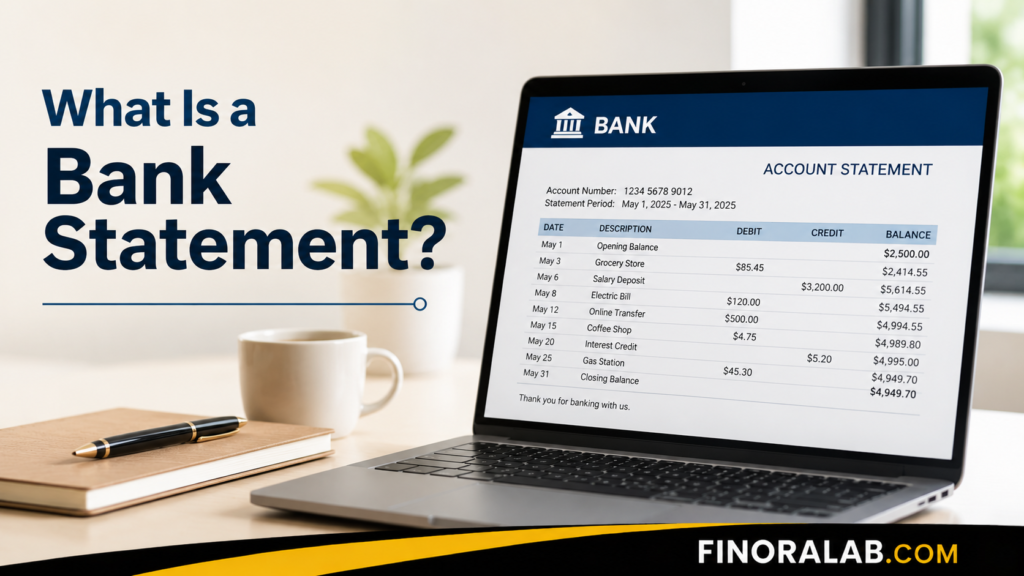
What is a bank statement? A bank statement is an official record provided by a bank or financial institution that summarizes activity in an account over a specific period. It typically shows the account holders name, account number or partial account number, beginning balance, deposits, withdrawals, transfers, fees, interest, and ending balance. Bank statements help consumers understand where their money went and verify whether account activity is accurate. They are also commonly used when applying for loans, renting a home, preparing taxes, documenting income, or resolving financial disputes.
Understanding a bank statement is an important personal finance skill because the document contains more than a simple list of transactions. It provides a snapshot of cash flow and can reveal recurring expenses, unnecessary fees, unusual withdrawals, and spending patterns. Reviewing statements regularly can support budgeting, debt management, savings goals, and financial planning. Whether the account is a checking account, savings account, business account, or another deposit account, learning how to read its details can make everyday financial decisions more informed and organized.
What Is a Bank Statement?
A bank statement is a periodic financial document that records transactions and balances associated with a bank account. Depending on the financial institution, statements may be generated monthly, quarterly, or according to another schedule. A statement normally covers a defined statement period, such as June 1 through June 30. During that period, the bank records deposits, withdrawals, electronic transfers, debit card transactions, checks, fees, and other activity affecting the account balance.
The statement generally begins with an opening balance and ends with a closing balance. The opening balance represents the amount in the account at the start of the statement period, while the closing balance reflects the account balance at the end. For example, if an account starts with $2,500, receives $3,000 in deposits, and has $2,200 in withdrawals and fees, the ending balance would generally be $3,300. Reviewing these figures helps account holders verify that the activity makes sense.
What Information Appears on a Bank Statement?
Most bank statements contain several categories of information designed to identify the account and explain its financial activity. Common details include the account holders name, mailing address, bank name, account type, statement period, beginning balance, ending balance, deposits, withdrawals, transfers, interest earned, and service charges. Some institutions display a complete account number, while others show only the last few digits for security. Statements can also contain customer service contact information and instructions for reporting errors.
Transaction descriptions are another important component. A statement might show a direct deposit from an employer, an ATM withdrawal, a debit card purchase, an electronic payment, or an automatic transfer to savings. The description may not always look exactly like the merchant name customers recognize. Understanding the date, amount, transaction type, and description can help determine whether every transaction was authorized and whether the account balance is correct.
How to Read a Bank Statement
The easiest way to read a bank statement is to work from the summary section toward the transaction details. Start by checking the account holder information and statement period. Then review the beginning balance, total deposits, total withdrawals, fees, and ending balance. These figures provide a high level picture of what happened during the month. If the numbers seem inconsistent with your own records, move to the individual transactions to identify the source of the difference.
Next, review each transaction carefully. Look for your paycheck deposits, transfers, recurring subscriptions, utility payments, ATM withdrawals, debit card purchases, and other activity. Pay attention to transactions you do not recognize, duplicate charges, unexpected fees, or payments that appear to have been processed twice. For example, if your statement shows two $75 payments to the same company but you authorized only one, you should investigate the discrepancy promptly rather than assuming it will automatically disappear.
What Is the Difference Between a Bank Statement and a Transaction History?
A bank statement and transaction history both provide information about account activity, but they are not necessarily the same document. A transaction history is often a continuously updated list available through online banking. It may show recent transactions as they occur, including pending charges that have not fully posted. A formal bank statement is generally produced for a specific period and becomes a fixed record of activity after that period closes.
This distinction matters when documentation is required. A lender, landlord, government agency, or other organization may specifically request a bank statement rather than a screenshot of an online transaction list. A statement generally contains identifying information, a statement period, and account balances that establish context. If someone asks for a three month bank statement, they typically want the official statements covering three completed statement periods rather than a manually copied list of transactions.
Why Do People Need Bank Statements?
Bank statements serve many purposes in personal and business finance. Lenders may request them during mortgage, auto loan, personal loan, or other credit applications to evaluate cash flow and verify available funds. Landlords may request statements as part of an application to help assess an applicants ability to pay rent. Financial institutions can also request statements when verifying information related to certain account or transaction activities.
Statements are also useful for financial recordkeeping. Someone preparing taxes may use bank records to identify interest income, deductible business expenses, charitable contributions, or other transactions that require documentation. A small business owner may use statements to reconcile business accounts and compare deposits with accounting records. Bank statements can therefore support both everyday budgeting and more formal financial documentation, although the exact documents required vary depending on the organization and situation.
How Bank Statements Help With Budgeting and Financial Planning
A bank statement can provide real world evidence of how money moves through your household. Instead of estimating how much you spend on restaurants, subscriptions, transportation, entertainment, or online purchases, you can review actual transactions. Categorizing expenses can reveal patterns that are easy to miss when looking only at your account balance. For example, five separate $20 purchases might feel insignificant individually but add up to $100 over a month.
This information can improve financial planning. Suppose a person earns $5,000 per month after taxes and discovers that recurring and discretionary spending averages $4,700. The apparent $300 monthly surplus may be too small to support an aggressive debt repayment or investment strategy. Reviewing statements could identify expenses that can be reduced or redirected toward emergency savings. Bank statements do not create a budget by themselves, but they provide reliable historical information that can make budgeting more realistic.
Bank Statements and Credit Scores
Bank statements generally do not directly determine your credit score. Credit scoring models primarily use information contained in credit reports, such as payment history, credit utilization, account age, credit mix, and recent applications, depending on the scoring model. A checking or savings account balance is normally not reported to the major credit bureaus simply because the account exists. Therefore, having a large bank balance does not automatically produce a higher credit score.
However, bank statements can still matter indirectly to credit and debt management. If your statements show frequent overdrafts or insufficient funds, that may indicate cash flow problems that could make it harder to keep credit card or loan payments current. Conversely, consistently maintaining enough cash to cover recurring obligations can support better financial habits. A strong financial plan should treat credit management and cash management as connected but separate parts of your overall financial health.
Bank Statements for Loans, Mortgages, and Rental Applications
Financial institutions often request bank statements when evaluating applications for mortgages, personal loans, or other forms of financing. Depending on the application, statements may help verify income deposits, available assets, down payment funds, cash reserves, and recurring financial obligations. Mortgage underwriting can be particularly detailed because lenders need to assess whether a borrower has the financial capacity to meet the proposed loan payments and other obligations.
Applicants should avoid moving large amounts of unexplained money into an account shortly before submitting financial documentation. A significant deposit may prompt questions about its source, particularly during mortgage underwriting. Legitimate transfers, gifts, asset sales, or other deposits may be perfectly acceptable, but documentation may be required. The exact requirements differ among lenders. The safest approach is to keep clear records and be prepared to explain unusual transactions rather than attempting to make account activity appear different from reality.
How to Get a Bank Statement Online
Most banks allow customers to access statements through online or mobile banking. After signing in, look for sections such as Statements, Documents, eStatements, or Account Documents. You can generally select the relevant account and statement period, then open or download the document. Many banks provide statements as PDF files, which can be saved for personal records or uploaded when a legitimate organization requests documentation.
If an older statement is unavailable online, contact the bank to ask about archived records. Some institutions may charge a fee for retrieving older documents, particularly if the statement is from a previous year. When downloading statements, store them in a secure location because they can contain sensitive financial information. Avoid sending full statements through unsecured channels when a safer upload portal or encrypted method is available.
How to Get a Bank Statement From a Branch
Customers who prefer in person banking can generally request account statements from a bank branch, although availability and fees vary by institution. A representative may be able to print recent statements or explain how to retrieve older records. You should bring appropriate identification and account information when visiting a branch. If you need statements for a specific application, confirm exactly which statement periods are required before making the request.
Some institutions may charge fees for printed copies or historical statements. If you need several years of records, requesting them electronically may be more convenient and less expensive. Before paying a fee, check your online banking account because the required documents may already be available for free. Keeping digital copies of important statements can also reduce the need to request replacements later.
What Is a Bank Statement for a Checking Account?
A checking account statement focuses on transactions involving an account commonly used for everyday spending and payments. It may include direct deposits, debit card purchases, ATM withdrawals, checks, electronic bill payments, transfers, overdraft fees, and other activity. Because checking accounts can have frequent transactions, reviewing these statements is especially useful for detecting unauthorized activity and understanding monthly cash flow.
Checking statements can also help identify recurring payments. A subscription that costs $15 per month may appear insignificant, but twelve months of charges equal $180. Several subscriptions can therefore represent a meaningful annual expense. Reviewing bank statements every month gives consumers an opportunity to cancel unwanted services, identify duplicate payments, and ensure that automatic withdrawals are still appropriate for their current financial circumstances.
What Is a Bank Statement for a Savings Account?
A savings account statement records activity involving money that is generally held for short or medium term financial goals. Transactions may be less frequent than those in a checking account, but statements can still show deposits, transfers, withdrawals, interest earned, and applicable fees. Reviewing savings statements helps account holders confirm that automatic transfers and interest credits are occurring as expected.
Savings statements can also support goal based financial planning. Suppose someone wants to build a $10,000 emergency fund and transfers $400 into savings each month. After twelve months, the person would have contributed $4,800 before considering interest or withdrawals. Comparing statements over time can show whether the actual savings pattern matches the plan. If transfers stop unexpectedly, reviewing statements can identify when the change occurred and help the account holder correct it.
What Is a Bank Statement for a Business Account?
A business bank statement records financial activity in an account used for business operations. It can show customer deposits, vendor payments, payroll transactions, tax payments, banking fees, transfers, and other business related activity. Keeping business and personal banking separate is an important organizational practice because it makes bookkeeping and financial reporting easier and can provide clearer evidence of business expenses.
Business owners can use statements to reconcile their accounting records. For example, if a company records $25,000 of monthly revenue but the bank statement shows only $23,500 in deposits, the difference should be investigated. The discrepancy could result from timing, outstanding payments, payment processor settlements, refunds, or an accounting error. Regular reconciliation helps businesses identify these differences before they create larger problems in financial reporting or tax preparation.
Bank Statements and Taxes
Bank statements can be useful when preparing taxes, but they are not automatically substitutes for tax forms or detailed supporting records. For employees, W 2 forms generally document wages and withholding. For independent contractors, 1099 forms may report certain payments. Bank statements can supplement those documents by helping taxpayers identify deposits and expenses, particularly when income or business activity involves numerous transactions.
Self employed individuals should be particularly careful about using bank statements to support deductions. A payment appearing on a statement does not automatically prove that an expense is deductible for federal tax purposes. The taxpayer must still satisfy applicable tax rules and maintain appropriate records. For example, a business related software purchase may be visible on a bank statement, but documentation describing the expense and its business purpose can provide stronger support than the transaction entry alone.
How Long Should You Keep Bank Statements?
The appropriate retention period depends on why the statement matters and the applicable legal, tax, financial, or contractual requirements. Many consumers choose to keep electronic statements for several years, while documents supporting tax returns or significant financial transactions may deserve longer retention. The IRS generally recommends keeping tax records for as long as they may be needed to administer the tax law, with specific periods varying according to circumstances.
A practical strategy is to preserve statements that document major financial events, such as home purchases, significant investment transactions, business expenses, loan payments, or tax related activity. Routine statements can often be stored digitally rather than physically. Organize files by year and financial institution so you can locate a document quickly when needed. Always consider the requirements of your bank, tax professional, lender, or other relevant institution before deleting records.
How to Protect Your Bank Statements
Bank statements contain sensitive information, including account identifiers, transaction details, and financial history. Protecting these documents is therefore an important part of financial security. If you download statements, store them on a password protected device or secure cloud account. Avoid leaving printed statements in places where other people can access them. When disposing of paper records, shredding them is safer than placing intact documents in ordinary household trash.
Be cautious when sharing statements with third parties. Before submitting one to a landlord, lender, financial institution, or other legitimate organization, determine what information is actually required. Never send bank statements in response to unsolicited messages requesting financial information. If you suspect that account information has been exposed, contact your bank promptly and monitor the account for unauthorized activity. Strong passwords, multifactor authentication, and transaction alerts can provide additional protection.
What Does a Bank Statement Show About Your Financial Health?
A bank statement can provide valuable clues about financial health, although it is not a complete financial assessment. Consistent deposits combined with manageable expenses may indicate stable cash flow, while repeated overdrafts, excessive fees, or spending that consistently exceeds income can signal financial stress. Looking at multiple months is more useful than judging financial health from one statement because temporary events can distort a single months activity.
For example, a person might have a low ending balance because of a one time insurance payment or annual property tax bill. That does not necessarily mean the household has a persistent cash flow problem. Conversely, repeated negative cash flow across several months is more concerning. A broader financial review should also include credit card balances, loans, emergency savings, investments, retirement accounts, insurance, and other assets and liabilities.
Common Bank Statement Mistakes to Avoid
One common mistake is checking only the ending balance without reviewing individual transactions. A balance can look reasonable even when unauthorized charges or duplicate transactions are present. Another mistake is ignoring bank fees because each charge appears small. Monthly maintenance fees, ATM charges, overdraft fees, and other costs can accumulate over time and reduce the amount available for savings or debt repayment.
Another issue is failing to reconcile statements with personal records. If you maintain a budget or spreadsheet, compare it with the banks official statement periodically. You may discover a forgotten subscription, an incorrectly recorded payment, or a transaction that posted later than expected. Promptly investigating discrepancies can prevent small errors from becoming recurring financial problems. If you find unauthorized transactions, contact the bank through an official channel and follow its procedures for reporting the issue.
Bank Statement vs. Credit Card Statement
A bank statement and credit card statement are different financial documents. A bank statement generally records activity in a deposit account, such as checking or savings. A credit card statement records purchases made using borrowed credit, payments made toward the balance, interest charges, fees, credits, and the amount owed. The financial implications are different because spending from a bank account usually reduces available cash immediately, while credit card purchases create debt that must later be repaid.
Both statements are important for personal finance. A bank statement helps you monitor cash flow and available funds, while a credit card statement helps you track borrowing and repayment. Reviewing both together can provide a more complete picture of household finances. Someone may have a healthy checking balance while carrying a growing credit card balance, for example. Looking at only one document could therefore create a misleading impression of overall financial health.
Bank Statements and Financial Planning
Bank statements can support several areas of financial planning. They help identify monthly income, fixed expenses, variable spending, debt payments, savings contributions, and recurring financial commitments. This information can be used to build a realistic household budget rather than relying on assumptions. Once spending is understood, you can decide how much to allocate toward emergency savings, retirement, debt reduction, investing, and other goals.
The value of a statement increases when you analyze trends instead of isolated transactions. Reviewing twelve months of statements can reveal annual expenses that monthly reviews may overlook, such as insurance premiums, property taxes, memberships, or professional fees. You can then divide those costs by twelve and include a monthly amount in your budget. For example, a $1,200 annual bill can be planned as a $100 monthly sinking fund contribution, reducing the risk of a large unexpected expense.
Conclusion
A bank statement is more than a document showing how much money is in an account. It is a detailed record of deposits, withdrawals, transfers, fees, interest, and balances during a defined period. Understanding how to read one can help you detect unauthorized transactions, control spending, reconcile financial records, prepare for loan applications, support tax documentation, and make better financial decisions.The best practice is to review bank statements regularly rather than waiting until a lender, landlord, tax professional, or other organization asks for one. Check the statement period, opening and closing balances, deposits, withdrawals, fees, and individual transactions. Keep important records securely and investigate discrepancies promptly. When combined with budgeting, credit management, saving, investing, and retirement planning, bank statement review becomes a simple but powerful part of long term financial management.
A bank statement is a record from your bank showing what happened in your account during a particular period. It normally lists deposits, withdrawals, transfers, fees, interest, and account balances. A monthly statement can help you understand your cash flow and verify that transactions are accurate.
What does a bank statement show?
A bank statement commonly shows the account holders information, statement period, beginning balance, deposits, withdrawals, transfers, fees, interest, and ending balance. It may also list individual transactions with dates, descriptions, and amounts. The exact layout depends on the financial institution and account type.
How do I get a bank statement?
You can generally download a bank statement through your banks website or mobile app. Look for options labeled Statements, Documents, or eStatements. You can also contact your bank or visit a branch to request copies. Older statements may have additional retrieval fees.
Can I use a bank statement as proof of income?
A bank statement can sometimes support income verification by showing regular deposits, but whether it qualifies as proof of income depends on who is requesting it. A lender, landlord, or government agency may require additional documents such as pay stubs, W 2s, tax returns, or 1099 forms.
Can a bank statement be used for proof of address?
A bank statement may be accepted as proof of address by some organizations if it displays your current name and address. However, requirements vary. Some organizations require a recent statement, while others may accept utility bills, government correspondence, leases, or other documents.
Does a bank statement show my credit score?
No. A standard bank statement generally does not show your credit score. Bank statements record activity in deposit accounts, while credit scores are calculated using information from credit reports. Your bank balance and your credit score are therefore separate measures of your financial situation.
How long should I keep bank statements?
There is no single retention period that applies to every bank statement. Keep documents longer when they support tax returns, business expenses, major purchases, loans, investments, or other important financial events. Digital storage can make long term recordkeeping easier, provided the files are stored securely.
Can a bank statement show unauthorized transactions?
Yes. Unauthorized debit card purchases, withdrawals, transfers, or other account activity may appear on a bank statement. Review statements regularly and report suspicious transactions to your bank promptly. Do not wait several months before investigating unfamiliar activity, because reporting procedures and protections can depend on circumstances and timing.
Is a bank statement the same as a transaction history?
Not necessarily. A transaction history is often a continuously updated list of account activity available through online banking. A formal bank statement generally covers a defined period and provides an official record of the accounts activity and balances. An organization requesting a bank statement may not accept a transaction history screenshot.
Why do lenders ask for bank statements?
Lenders may request bank statements to verify available assets, deposits, cash flow, and financial activity. Mortgage lenders, for example, may use statements as part of evaluating a borrowers ability to make payments and verifying funds for a down payment or reserves. Requirements vary by lender and loan type.
I am a professional finance content writer with expertise in personal finance investing, banking, loans, insurance, credit cards, budgeting, and market related topics. I create clear, SEO optimized, and reader friendly finance content that helps audiences understand complex financial concepts in simple words. My goal is to write trustworthy and engaging content that improves search visibility, builds credibility, and supports business growth.
I am a professional finance content writer with expertise in personal finance investing, banking, loans, insurance, credit cards, budgeting, and market related topics. I create clear, SEO optimized, and reader friendly finance content that helps audiences understand complex financial concepts in simple words. My goal is to write trustworthy and engaging content that improves search visibility, builds credibility, and supports business growth.