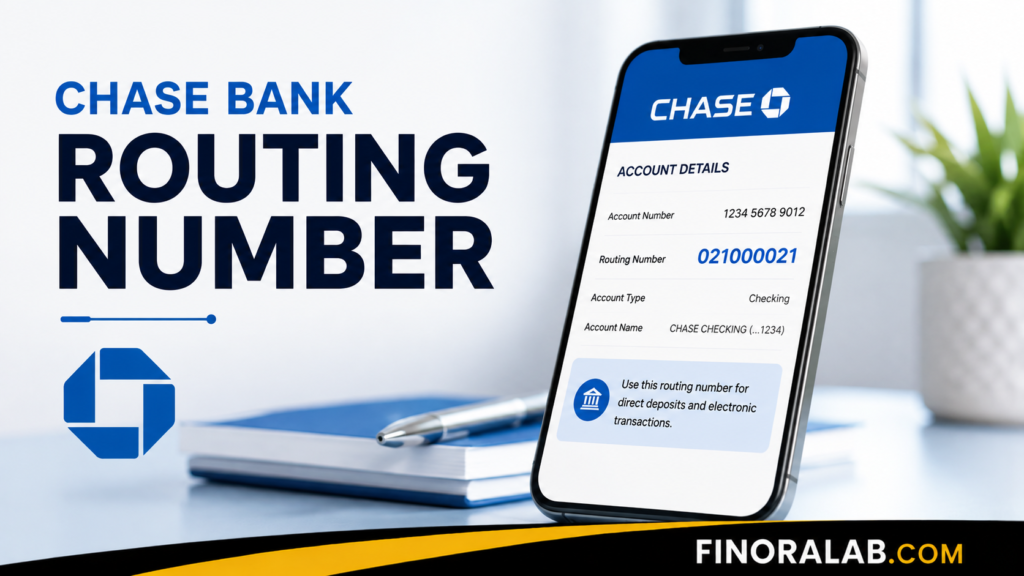
The chase bank routing number is a nine digit code used to identify JPMorgan Chase Bank in U.S. financial transactions. You may need it when setting up direct deposit, linking an external bank account, receiving certain payments, paying bills electronically, or arranging a domestic wire transfer. Because Chase is a large national bank with multiple routing numbers, using the correct number for your specific transaction matters. Chase itself recommends checking your account details through the Chase Mobile app, Chase.com, or the bottom of a paper check.
The important point is that there is not necessarily one universal Chase routing number for every situation. A routing number can depend on the type of transaction and, in some cases, the location associated with the account. For example, Chase identifies 021000021 as its routing number for receiving domestic wire transfers. ACH transactions and other banking services can have different requirements. Before submitting financial information, verify the number directly through your Chase account or the institution receiving your payment.
What Is a Chase Bank Routing Number?
A routing number is a nine digit identifier used by banks and credit unions to help direct financial transactions to the appropriate institution. It is commonly called an ABA routing number because routing numbers were developed through the American Bankers Association. The number identifies the financial institution, while your account number identifies your particular account at that institution. Together, these numbers help financial systems determine where money should be sent or withdrawn. Routing numbers are commonly used for direct deposits, electronic payments, bill payments, and domestic transfers.
Think of the routing number as identifying the bank and the account number as identifying the destination within that bank. For example, if an employer is establishing direct deposit for your paycheck, it generally needs both your routing number and account number. Entering incorrect information can cause a payment to be rejected, delayed, or potentially directed incorrectly. That is why consumers should avoid relying on an old document or an unverified third party website when current account information is available directly through Chase.
Chase Bank Routing Number for Different Transactions
One of the most important things to understand is that the correct chase bank routing number can depend on what you are trying to do. Chases official wire transfer information states that 021000021 is used for receiving domestic wire transfers. That does not mean you should automatically enter 021000021 whenever a website asks for a Chase routing number. ACH payments, direct deposits, checks, and domestic wires can have different routing number requirements. Always identify the transaction type before entering banking information.
For example, someone setting up payroll direct deposit may be asked for an ACH routing number, while someone receiving a domestic wire may need Chases wire routing information. If an online form simply says routing number, check the instructions carefully. The safest approach is to sign in to Chase and review the account details associated with your specific account. If the organization initiating the transaction provides instructions, follow those instructions rather than assuming every Chase transaction uses the same number.
How to Find Your Chase Bank Routing Number Online
The easiest way to find your personal Chase routing number is usually through the Chase Mobile app. Chase says customers can sign in, select their account tile, and tap Show details to access account information. On Chase.com, customers can sign in, select the account name, and choose Account & routing number. These methods are useful because they connect the information to your actual account rather than requiring you to determine the appropriate number from a generic list.
This method can be particularly helpful if you recently moved, opened a new account, or are unsure whether an old routing number still applies. It also reduces the risk of confusing a routing number with an account number. When setting up direct deposit or an external transfer, carefully copy both numbers exactly as displayed. If the receiving company asks whether the account is checking or savings, select the correct account type as well.
How to Find the Chase Routing Number on a Check
If you have paper checks for your Chase checking account, the routing number is printed along the bottom of the check. Chase explains that the first nine digits are the routing number, followed by the account number and then the check number. This makes a personal check another convenient way to locate the information required for certain banking transactions.
However, do not assume that the number printed on a check is automatically appropriate for every transaction. The purpose of the payment matters. A number used for checks or ACH related activity may not be the same information requested for a domestic wire. If you are completing a wire transfer, follow the wire specific instructions from Chase. For important payments, verifying the details through your online banking account is a sensible additional safeguard.
Chase Routing Number vs. Account Number
A routing number and an account number serve different purposes, although they are often requested together. The routing number identifies the financial institution, while the account number identifies the customers particular bank account. For example, if you have both a Chase checking account and a Chase savings account, those accounts can have different account numbers even though they may be associated with the same financial institution.
This distinction matters when completing direct deposit forms or connecting accounts between financial institutions. Entering the correct routing number with the wrong account number can cause the transaction to fail or require correction. Likewise, entering the correct account number with an incorrect routing number can create problems. Before submitting information, compare the numbers carefully and confirm whether the transaction requires an ACH routing number, wire routing number, or another banking identifier.
When You Need a Chase Bank Routing Number
You may need your Chase routing number when establishing direct deposit for employment income, receiving certain government payments, setting up electronic bill payments, linking an external bank account, or making other domestic electronic transactions. Chase specifically lists direct deposits, bill payments, and electronic payments among situations in which routing information can be required. Your tax refund may also require routing and account information when you choose direct deposit.
For example, imagine you start a new job and your employer offers direct deposit. The payroll department may request your bank name, routing number, account number, and account type. Similarly, when connecting a non Chase checking account to your Chase account, you may be asked to provide the other banks routing and account numbers. Chase says external account transfers typically take two to three business days, although timing can vary.
ACH Routing Numbers and Chase Bank Transfers
ACH stands for Automated Clearing House, a U.S. payment network used for many electronic transactions. ACH payments are commonly associated with direct deposits, recurring payments, account transfers, and other electronic bank transactions. A Chase customer might encounter ACH routing information when receiving a paycheck, linking an external bank account, or establishing an automatic payment. The exact information requested should be confirmed based on the specific transaction instead of assuming that every Chase routing number request has the same answer.
Chase explains that customers can link external accounts by entering the routing and account numbers from the other financial institution. The bank may use verification methods such as instant verification or small trial deposits. Chase says transfers to or from non Chase accounts typically take two to three business days. This illustrates why routing numbers are important they help the banking system identify the institution involved before the account number identifies the specific destination.
Chase Bank Routing Number for Domestic Wire Transfers
Domestic wire transfers are different from ordinary ACH transfers. A wire is generally designed for faster movement of funds and can involve different instructions and fees. Chase states that customers receiving a domestic wire transfer should provide their account number and Chases routing number, which Chase identifies as 021000021 for that purpose. This is an important example of why consumers should not automatically use the first Chase routing number they find online.
If you are receiving an international wire, the requirements change again. Chase states that international wires use its SWIFT or BIC code, CHASUS33, along with the appropriate account information. A SWIFT code and a routing number are not interchangeable. SWIFT codes are used for international banking communications, while routing numbers are primarily associated with U.S. transactions.
Routing Number vs. SWIFT Code vs. IBAN
A routing number is primarily used within the U.S. banking system, while a SWIFT code helps identify financial institutions for international transfers. Chase explains that SWIFT codes generally contain eight or 11 characters and can include letters and numbers, whereas U.S. routing numbers contain nine digits. If you are sending or receiving money across borders, the bank may ask for different information than it would for a domestic ACH payment.
An IBAN is another international banking identifier, but Chase states that it does not use an IBAN for its own U.S. accounts. For an international wire sent to a Chase account, Chase says the sender should use the appropriate Chase SWIFT/BIC information and account number. Understanding these differences can prevent a common mistake entering a domestic routing number into an international payment form that specifically requires a SWIFT or BIC code.
How to Use Your Chase Routing Number for Direct Deposit
Direct deposit is one of the most common reasons consumers search for a Chase routing number. When you authorize an employer to deposit your paycheck electronically, you generally provide the employer with your routing number and account number. You may also need to specify whether the destination is a checking or savings account. The information should be taken from your current Chase account details rather than copied from an unrelated online source.
A practical example is a worker moving from paper checks to direct deposit. The employee signs into Chase, opens the relevant account details, copies the routing number and account number, and supplies them through the employers payroll system. Before submitting the form, the employee should confirm the account type and review every digit. If the employer provides a bank verification process, completing that process can add another layer of accuracy before payroll begins.
How to Use a Chase Routing Number for Bill Payments
A Chase routing number may also be requested when establishing automatic payments or electronic bill payments. These arrangements can be useful for recurring expenses such as utilities, insurance premiums, rent, or loan payments. However, consumers should understand whether the payment is being established as an ACH debit, bill payment, or another type of transaction. The instructions from the biller or Chase should determine which banking details are required.
Automatic payments can simplify budgeting because recurring expenses may be paid without manually initiating every transaction. However, they also require cash flow management. If a payment is scheduled when your checking account balance is too low, you could face a returned payment, overdraft related consequences, or a late fee from the biller. A good personal finance practice is to maintain a sufficient cash buffer and review recurring transactions regularly rather than treating automatic payments as something that never needs attention.
Common Mistakes When Using a Chase Routing Number
One common mistake is assuming that all Chase customers use exactly the same routing number for every banking activity. Chase is a large financial institution, and routing information can differ depending on transaction type and account circumstances. Another mistake is confusing the routing number with the account number. Because both numbers appear together on checks and account screens, entering them in the wrong fields can cause processing problems.
Another risk is copying banking information from an outdated or unofficial source. Financial institutions can update information, and third party websites may contain errors. For important transactions, verify the details through Chases official website, mobile app, or customer service. Chase specifically provides account and routing information through its online banking tools, making those channels preferable to relying on an unverified search result.
Is It Safe to Share Your Chase Routing Number?
A routing number alone generally identifies the financial institution rather than giving someone direct access to your account. However, it should still be treated as sensitive financial information when combined with other details. Many legitimate transactions require both a routing number and account number, such as direct deposits and electronic payments. The fact that a routing number is commonly used does not mean every request for banking information is trustworthy.
Be especially cautious when someone asks for banking details unexpectedly. Verify the identity of the person or company requesting the information and understand why it is needed. Never provide online banking passwords, one time authentication codes, debit card PINs, or security credentials as part of a routine direct deposit setup. Chase advises customers with suspected fraudulent activity to contact the bank promptly through its official channels.
How Routing Numbers Affect Personal Financial Planning
Routing numbers may seem like a small banking detail, but accurate banking information supports effective personal financial management. Direct deposit can make income easier to organize, while automatic payments can help keep recurring bills on schedule. Linking accounts can also make it easier to move money between checking, savings, and other financial accounts. These systems work best when consumers regularly monitor balances and transactions.
A strong financial plan should connect banking decisions with budgeting, debt management, emergency savings, and long term goals. For example, someone might direct their paycheck into a Chase checking account, automatically transfer a portion into savings, and schedule recurring bills. The routing number enables the underlying transactions, but the broader goal is financial organization. Consumers should still monitor cash flow, maintain appropriate savings, and avoid unnecessary automatic payments that make budgeting harder.
What to Do If a Chase Transfer Goes Wrong
If a transfer does not arrive as expected, first review the information you submitted and determine whether the transaction was ACH, domestic wire, bill payment, or another type. Confirm the routing number, account number, account type, transaction date, and payment amount. If the payment was initiated by another institution, contact that institution as well because it may be able to provide transaction status or confirmation information.
For incoming domestic wires, Chase says that a transfer can take up to 24 hours to reflect after reaching Chase. If an expected wire does not appear, Chase recommends contacting the sender to confirm that it was sent and contacting Chase if necessary. Keeping confirmation numbers, receipts, and transaction details can make troubleshooting much easier, particularly when a payment involves a large amount.
How to Verify the Correct Chase Bank Routing Number
The most reliable verification method is to use Chases own banking tools. Sign in to the Chase Mobile app and open the relevant account to view its details, or sign in to Chase.com and select Account & routing number. If you have a paper check, you can also review the numbers printed at the bottom.
For wire transfers, use Chases wire specific instructions rather than assuming the routing number used for another transaction is appropriate. If a third party company provides a form and you are unsure which number it expects, ask whether the form requires ACH, domestic wire, or international wire information. This small clarification can prevent unnecessary payment delays and reduce the chance of entering incompatible banking information.
Chase Bank Routing Number and Banking Security Best Practices
Banking security is just as important as finding the correct routing number. Avoid entering account information on unfamiliar websites simply because they promise a fast payment, refund, loan, job opportunity, or financial service. Scammers can create convincing forms designed to collect banking details. Before providing information, independently verify the organization and navigate to its official website instead of clicking unexpected links.
It is also wise to monitor your Chase account for unusual activity. Chase provides account security resources and encourages customers who suspect fraudulent charges to contact the bank promptly. Consider enabling relevant account alerts, reviewing transactions frequently, and using strong authentication practices. These habits complement routing number accuracy because secure banking depends on both correct transaction information and careful protection of your account credentials.
Conclusion
The chase bank routing number is an essential piece of information for many U.S. banking transactions, but the correct number depends on what you are trying to accomplish. Direct deposits, ACH payments, account transfers, checks, and domestic wires can involve different routing requirements. Chase currently identifies 021000021 for receiving domestic wire transfers, while customers can find account specific routing information through the Chase Mobile app, Chase.com, or their checks.The safest approach is to verify the required information directly with Chase before submitting a payment or deposit form. Do not confuse your routing number with your account number, and do not use a domestic routing number when an international transfer requires SWIFT information. Taking a few minutes to verify the transaction type, account details, and recipient information can help prevent avoidable delays and protect your overall financial management.
You may also read more blogs
FAQs
What is the Chase Bank routing number?
A Chase Bank routing number is a nine digit identifier used to identify the financial institution for U.S. banking transactions. It can be required for direct deposits, electronic payments, transfers, and other financial activities. Chase notes that large financial institutions can have multiple routing numbers, so the appropriate number depends on the transaction and account circumstances.
What is Chases routing number for domestic wire transfers?
Chase states that 021000021 is the routing number used to receive a domestic wire transfer. However, you should not assume this is the correct number for every transaction. ACH transfers, direct deposits, checks, and wires can have different requirements. Always follow the specific instructions associated with your transaction.
Where can I find my Chase routing number?
You can find your routing number by signing in to the Chase Mobile app, selecting your account, and viewing the account details. On Chase.com, sign in, select the account name, and choose Account & routing number. If you have paper checks, the routing number is the first nine digits printed along the bottom.
Is a Chase routing number the same as my account number?
No. The routing number identifies the bank or financial institution, while the account number identifies your particular account. When setting up direct deposit or an electronic transfer, you may need to provide both numbers. Carefully enter each number into the correct field to reduce the possibility of processing errors.
Can I use the same Chase routing number for ACH and wire transfers?
Not necessarily. Different payment systems can require different routing information. Chase specifically lists 021000021 for receiving domestic wire transfers, while ACH and other electronic transactions can have different requirements. Before entering a routing number, determine whether the transaction is an ACH payment, domestic wire, international wire, or another type.
What routing number should I use for Chase direct deposit?
For direct deposit, use the routing information associated with your Chase account and the requirements provided by your employer or payment provider. The simplest method is to sign in to Chase and access your account and routing details. If the employers form specifies ACH information, make sure you are providing the appropriate routing number rather than a wire specific number.
Does Chase use a SWIFT code?
Yes. Chase states that its SWIFT/BIC code for international wire transfers is CHASUS33. SWIFT information is different from a U.S. routing number and is generally used for international transfers. If you are receiving money from outside the United States, follow Chases international wire instructions rather than providing only a domestic routing number.
Can I find my Chase routing number without a check?
Yes. You do not need a paper check to find it. Chase allows customers to access routing and account information through the Chase Mobile app and Chase.com. You can also contact Chase for assistance if you cannot access your online account or are unsure which routing information applies to your transaction.
Why are there different Chase routing numbers?
Large banks can have multiple routing numbers because routing information may vary according to account location, transaction type, or banking function. Chase explains that large national and multinational financial institutions may have several routing numbers. This is why checking the number associated with your account and transaction is safer than assuming one number applies universally.
What should I do if I entered the wrong Chase routing number?
If you realize that you entered incorrect routing information, contact the organization initiating the transaction and Chase as soon as possible. Explain whether the transaction is pending, completed, or rejected and provide any confirmation information available. The sooner an error is identified, the easier it may be to determine whether the payment can be stopped, corrected, or returned.

I am a professional finance content writer with expertise in personal finance investing, banking, loans, insurance, credit cards, budgeting, and market related topics. I create clear, SEO optimized, and reader friendly finance content that helps audiences understand complex financial concepts in simple words. My goal is to write trustworthy and engaging content that improves search visibility, builds credibility, and supports business growth.