Aspen Dental Savings Plan: Costs & Benefits in 2026
Shanzay Arain·Aug 17, 2026
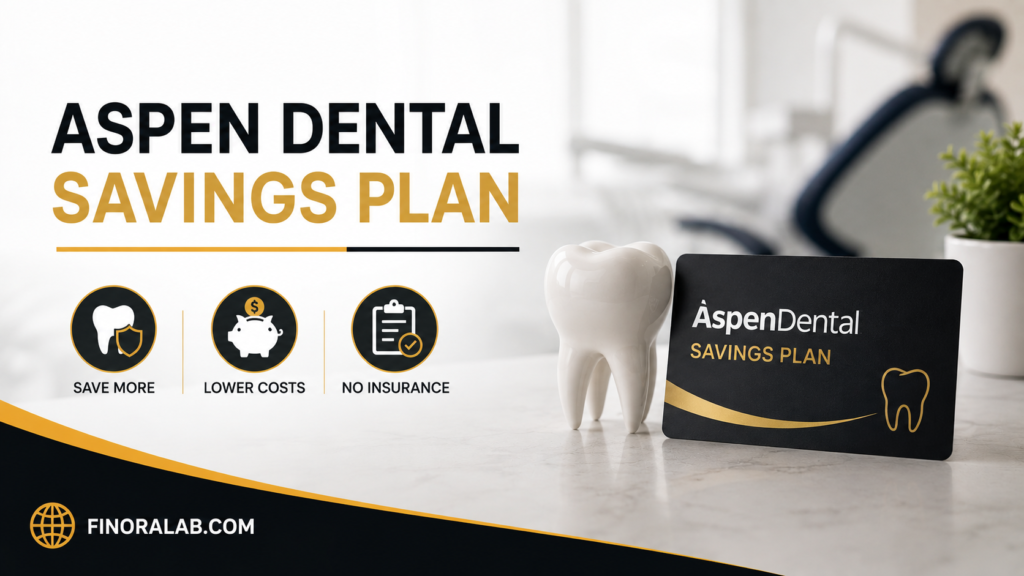
The Aspen Dental Savings Plan is a dental discount membership designed for people who want to reduce out of pocket dental costs without relying on traditional dental insurance. Instead of paying a monthly insurance premium and potentially dealing with deductibles, annual maximums, claims, or waiting periods, members pay an annual fee and receive discounts on eligible services at participating Aspen Dental locations. Aspen Dental currently lists the standard membership at $49 per year, while additional family members can be added for $29 each. The company emphasizes that the program is a savings plan, not dental insurance.
For consumers, the important question is not simply whether the Aspen Dental Savings Plan is inexpensive. The better question is whether the membership produces enough savings to justify its annual cost compared with dental insurance, paying cash, using another discount plan, or delaying nonurgent treatment. This article explains how the plan works, what services may receive discounts, how the economics can work, its limitations, and what consumers should check before enrolling. Prices and availability can vary by office, so patients should confirm specific terms before beginning treatment.
What Is the Aspen Dental Savings Plan?
The Aspen Dental Savings Plan is a membership based dental discount program rather than an insurance policy. Members pay an annual fee and receive reduced prices on eligible dental services. According to Aspen Dentals current information, the standard plan costs $49 per year, provides savings that can reach 30% on eligible services, and does not require a waiting period. The plan also includes free exams and X rays at participating locations under its listed benefits. Because it is not insurance, members generally pay the discounted price directly instead of submitting an insurance claim for reimbursement.
This structure can be particularly relevant for people who do not have employer sponsored dental coverage, are self employed, are retired, or need dental treatment before conventional insurance benefits become available. The financial advantage comes from replacing a potentially complicated insurance structure with an upfront membership fee and negotiated discounts. However, a discount is not the same as coverage. If a procedure costs $2,000 and the applicable discount is 20%, the patient would still be responsible for approximately $1,600 before considering any other applicable charges. The actual discount and treatment price should always be confirmed with the participating office.
How the Aspen Dental Savings Plan Works
Using the Aspen Dental Savings Plan is relatively straightforward. A consumer enrolls in the membership, confirms participation with an Aspen Dental location, schedules care, and receives the applicable member pricing when eligible services are performed. Aspen Dental says the plan has no waiting periods, so members can begin using available savings immediately rather than waiting several months for certain benefits. The company also says there are no annual maximums or deductibles associated with the savings structure, although specific services and plan terms still determine the discount available.
The absence of an annual maximum is one of the more important differences from many dental insurance policies. Traditional dental insurance often has a yearly maximum that limits how much the insurer will pay toward covered treatment. A discount membership works differently because it reduces the price instead of paying a percentage of the bill. For example, if an eligible $1,500 procedure receives a 20% discount, the members savings would be $300 and the remaining price would be $1,200. The membership does not transform the procedure into fully covered care.
Aspen Dental Savings Plan Cost and Potential Savings
The standard Aspen Dental Savings Plan is currently advertised at $49 annually. Aspen Dental also lists an additional member price of $29 per person, making the program potentially more economical for households that need dental services. The company advertises free exams and X rays and discounts on several categories of care, including preventive hygiene, dentures, gum disease treatment, crowns and bridges, implants, and Motto clear aligners. Listed discounts include 30% for preventive hygiene, 20% for several major treatment categories, and 10% for Motto clear aligners.
The value depends heavily on how much dental care you actually receive. Consider someone who pays the $49 membership fee and receives $250 worth of eligible services at a 20% discount. The gross discount would be $50, leaving the consumer about $1 ahead before considering any other benefits. If the same person receives $1,000 of eligible services at 20%, the discount would be $200, producing $151 of savings after the $49 membership fee. This illustrates why consumers should estimate expected treatment rather than assuming every member automatically saves money.
Services and Discounts Available Through the Plan
Aspen Dental currently lists free exams and X rays among the plans benefits and advertises discounts across multiple dental services. Its published information lists 30% off preventive hygiene, 20% off gum disease treatment, crowns and bridges, and implants, and 20% or more on certain dentures. It also lists a 10% discount on Motto clear aligners. Basic dentures may have specific advertised pricing rather than a simple percentage discount. These figures are useful for understanding the program, but they should not be treated as universal prices because participating office terms and treatment requirements can affect the final bill.
Consumers should also pay attention to exclusions and promotional restrictions. Aspen Dentals offer disclosures state that certain discounts may not apply to previous or ongoing work, may not be combined with other dental discounts, and may not apply to services provided by specialists. Some promotional offers also exclude particular denture products or orthodontic services. This matters because the advertised percentage is only meaningful when it applies to the exact procedure being considered. Before accepting a treatment plan, ask for the regular price, the applicable member price, and any services that are excluded from the discount.
Aspen Dental Savings Plan vs. Dental Insurance
Dental insurance and the Aspen Dental Savings Plan solve different financial problems. Insurance generally involves premiums and may include deductibles, copayments, coinsurance, waiting periods, provider networks, and annual benefit limits. In return, the insurer may pay part of the cost of eligible services. The savings plan instead charges an annual membership fee and applies predetermined discounts to eligible services. Aspen Dental describes its plan as having no annual maximums or deductibles and immediate access to savings.
For someone with comprehensive employer sponsored dental insurance, replacing insurance with a discount membership may not necessarily make financial sense. Employer contributions can significantly reduce the employees premium cost, while insurance may provide more valuable protection for certain covered procedures. Conversely, someone paying a high individual insurance premium and expecting substantial restorative treatment could find a discount plan easier to understand. The right comparison should include annual premiums, deductibles, expected treatment, coverage percentages, annual maximums, waiting periods, provider restrictions, and out of pocket costs rather than focusing on the monthly premium alone.
Who May Benefit Most From the Aspen Dental Savings Plan?
The Aspen Dental Savings Plan may be especially useful for consumers who currently lack dental insurance and expect to need dental care during the membership year. A person who needs several cleanings, restorative work, periodontal treatment, crowns, dentures, or other eligible services may have enough potential savings to make the annual membership worthwhile. Aspen Dental specifically identifies uninsured patients, seniors, self employed individuals, freelancers, and people who need immediate care as groups that may find the program useful.
It can also appeal to people who value predictable discounts and immediate access rather than traditional insurance administration. Someone who needs treatment now may not want to wait for an insurance waiting period to expire. However, consumers should not purchase the membership simply because it is inexpensive. If you rarely visit the dentist and expect minimal treatment, the savings may not exceed the annual fee. The decision should be based on expected dental spending, eligible discounts, location participation, and whether another option provides greater overall value.
How to Calculate Whether the Plan Is Worth It
A simple break even calculation can help determine whether the Aspen Dental Savings Plan makes financial sense. Suppose the annual membership costs $49 and your expected eligible treatment receives a 20% discount. You would need approximately $245 of eligible spending to generate $49 in gross discounts because $245 multiplied by 20% equals $49. In practice, the plan may provide additional value through benefits such as qualifying free exams and X rays, so the true economic comparison can be more favorable. Nevertheless, this calculation provides a useful starting point for evaluating the membership.
For a larger treatment plan, the potential savings become more significant. Imagine a patient expects $3,000 of eligible procedures that receive an average 20% discount. The estimated gross discount would be $600. Subtracting the $49 annual membership cost would leave approximately $551 in net savings, assuming the entire treatment qualifies and there are no other restrictions. A different patient with only $100 of eligible spending at a 20% discount would receive $20 in gross discounts and would not recover the $49 membership fee through that discount alone. The numbers demonstrate why treatment mix matters.
Important Limitations and Potential Risks
The biggest limitation is that the Aspen Dental Savings Plan is not insurance. A member does not receive an insurers payment toward a claim simply because a procedure is expensive. Instead, the member receives the applicable discount and remains responsible for the remaining balance. This distinction becomes especially important for major procedures such as implants, crowns, bridges, periodontal treatment, or dentures. Aspen Dentals published plan information indicates discounts on several major services, but the exact price depends on the recommended treatment and participating office.
Another consideration is that advertised savings may not apply universally to every treatment or situation. Certain offers have exclusions, restrictions, or limitations, and promotional discounts may not be combined with other discounts. Consumers should also distinguish between the memberships standard benefits and temporary promotional offers. A responsible financial decision therefore starts with obtaining a written treatment estimate. Ask the office to identify the procedure, standard charge, plan discount, final member price, and any additional services. This prevents an advertised percentage from creating unrealistic expectations about the final bill.
Using the Plan With Dental Insurance, HSA, or FSA Funds
Some consumers may already have dental insurance and wonder whether a dental savings membership can still provide value. Aspen Dental states that the savings plan can be used when insurance does not cover a particular service or after an annual insurance maximum has been reached, but the plans discounts cannot simply be stacked with insurance pricing for the same procedure. The company says patients may receive either applicable insurance pricing or the qualifying discount, depending on the circumstances. Confirm the specific billing treatment before assuming both discounts will reduce the same charge.
Aspen Dental also states that eligible dental treatments can generally be paid using HSA or FSA funds, subject to applicable account rules. Consumers should remember that an HSA or FSA is a payment mechanism with its own tax rules, not additional insurance coverage. The financially responsible approach is to use these accounts for qualified expenses and maintain receipts and documentation. If you are uncertain whether a particular procedure qualifies, check the applicable plan administrator or current IRS guidance rather than assuming every dental related expense receives the same tax treatment.
Aspen Dental Savings Plan for Dentures, Implants, and Major Dental Work
Major dental treatment is where a savings plan can potentially produce meaningful dollar savings, because percentage discounts become more valuable as the underlying treatment cost increases. For example, a 20% discount on a $500 service equals $100, while a 20% discount on a $3,000 treatment plan equals $600. Aspen Dental advertises discounts on implants, crowns and bridges, gum disease treatment, and certain dentures. It also currently advertises Basic dentures at specified prices under certain plan arrangements.
However, major treatment requires more careful financial analysis than routine preventive care. The price of a procedure may depend on diagnostics, extractions, laboratory work, follow up visits, materials, and other recommended services. For example, an advertised denture price may not include every additional service required for a particular patient. Aspen Dentals disclosures specifically note that additional charges can apply to some denture offers. Before agreeing to treatment, request a complete written estimate and ask whether the quoted price includes every expected component of care.
How to Make Dental Care More Affordable
The Aspen Dental Savings Plan should be considered as one part of a broader personal finance strategy rather than the only way to reduce dental expenses. Start by creating a healthcare budget that includes expected preventive visits and a separate emergency or major treatment reserve. If you know that a crown, denture, implant, or other procedure may be necessary, compare the total cost under several payment options. Those could include insurance, a dental savings plan, cash payment, a health savings account where eligible, or financing. Looking at the total dollar cost is more useful than choosing the option with the lowest advertised fee.
Financing deserves particular attention because lower monthly payments can make treatment easier to afford while increasing total costs through interest or fees. Aspen Dental says it offers financing through third party lenders and encourages patients to review available financing options. Consumers should evaluate the annual percentage rate, promotional period, deferred interest terms if applicable, minimum payments, and total repayment amount before accepting financing. A dental procedure can be medically important, but that does not mean every financing offer is financially attractive. The goal should be necessary care at a sustainable total cost.
Common Mistakes to Avoid
One common mistake is assuming that the Aspen Dental Savings Plan functions like traditional insurance. It does not. The membership reduces eligible prices, while the patient remains responsible for the discounted bill. Another mistake is focusing only on the annual membership fee without calculating expected treatment costs. A $49 membership may appear inexpensive, but its financial value depends on how much eligible care you receive and which discount applies to that care. Conversely, someone facing substantial eligible treatment may underestimate how quickly percentage discounts can offset the membership cost.
A second mistake is failing to verify the details before treatment begins. Consumers should confirm that their chosen office participates, that the exact procedure is eligible, and that the advertised discount applies to their circumstances. They should also ask whether other promotions can be combined with the savings plan. Finally, patients should request a treatment estimate and understand which charges are included. These steps are particularly important for major dental work, where a seemingly small misunderstanding about exclusions or additional services can create hundreds or thousands of dollars in unexpected costs.
Is the Aspen Dental Savings Plan Worth It?
The Aspen Dental Savings Plan can be financially worthwhile for many uninsured consumers, particularly those who expect to use dental services during the membership period. Its $49 annual fee is relatively straightforward, and the combination of immediate eligibility, free exams and X rays under listed benefits, and discounts on various services can create meaningful value. The economics become stronger when a patient expects several visits or expensive eligible treatment. Still, the plan should be evaluated using actual expected expenses rather than a general assumption that a membership is automatically cheaper.
For someone with low dental spending, employer sponsored insurance, or access to another dentist offering lower cash prices, the calculation could be different. The best decision is therefore to compare total annual costs. Estimate what you expect to spend, determine which services qualify, calculate the applicable discounts, and subtract the $49 membership fee. Then compare that result with insurance premiums, deductibles, coinsurance, annual limits, and alternative providers. Personal finance decisions are strongest when based on actual numbers rather than marketing claims, and dental care is no exception.
Conclusion
The Aspen Dental Savings Plan provides a straightforward alternative to traditional dental insurance for consumers who want immediate discounts without paying a monthly insurance premium. The current standard membership is advertised at $49 per year, with additional family members listed at $29 each. Benefits include free exams and X rays under the plans listed terms and discounts on multiple categories of dental services. Because the program is a discount membership rather than insurance, members still pay for treatment after the applicable discount is applied.Whether it is the right financial choice depends on individual dental needs, expected treatment, insurance availability, and local pricing. A consumer expecting several hundred or several thousand dollars of eligible dental care may have a strong opportunity to recover the membership cost through discounts. Someone expecting little or no treatment may see less value. Before enrolling or accepting major treatment, verify participation, exclusions, current prices, and the final member cost. Treat the savings plan as a financial tool, compare alternatives, and make the decision based on your complete expected cost.
No. The Aspen Dental Savings Plan is a dental discount membership, not an insurance policy. Members pay an annual membership fee and receive applicable discounts on eligible services. They remain responsible for the balance after the discount is applied. Aspen Dental explicitly states that the program is not insurance, so consumers should not expect an insurer to pay claims or provide traditional insurance coverage.
How much does the Aspen Dental Savings Plan cost?
Aspen Dental currently lists the standard Aspen Dental Savings Plan at $49 per year. The company also lists additional family members at $29 per person. Pricing and promotional offers can change, so consumers should verify the current membership price and applicable terms when enrolling. Certain groups may qualify for special pricing for example, Aspen Dental currently advertises a $29 annual rate for eligible veterans, active duty military members, and their families through a VFW partnership offer through December 31, 2026.
How much can you save with the Aspen Dental Savings Plan?
Aspen Dental currently advertises savings of up to 30% on eligible dental services. Its published benefit information lists 30% off preventive hygiene, 20% off several services such as crowns, bridges, implants, and gum disease treatment, and 10% off Motto clear aligners. The actual dollar savings depend on the service, treatment price, participating office, and applicable terms. Consumers should request the member price for their specific procedure rather than assuming every service receives the maximum advertised discount.
Can I use the Aspen Dental Savings Plan immediately?
Yes. Aspen Dental says the plan has no waiting periods and that members can begin using applicable savings immediately after enrollment. This can make the program particularly relevant to someone who needs dental treatment now rather than several months later. However, immediate eligibility does not mean every procedure is automatically discounted. The specific service must qualify under the plans terms, and the participating office should confirm the applicable price before treatment begins.
Can I use the Aspen Dental Savings Plan if I have dental insurance?
Aspen Dental says the savings plan can be useful when insurance does not cover a service or after an annual insurance maximum has been reached. However, consumers should not assume that insurance and the savings plan can be stacked on the same procedure. Aspen Dental explains that patients may receive either insurance plan pricing or the applicable discount, depending on the situation. Before treatment, ask the office to calculate your final out of pocket amount under each available option.
Does the Aspen Dental Savings Plan cover implants?
The plan does not cover implants in the same way dental insurance might cover a percentage of an eligible procedure. Instead, Aspen Dental lists a 20% discount on implants among its current plan benefits. The patients final cost depends on the treatment plan and applicable office pricing. Implant treatment can involve multiple components, so consumers should request a detailed estimate showing the procedure price, applicable membership discount, and any additional charges before committing to treatment.
Is the Aspen Dental Savings Plan good for dentures?
It can be useful for some patients who need dentures, but the value depends on the type of denture and the complete treatment required. Aspen Dental lists 20% or more off certain dentures and also advertises specific Basic denture pricing under qualifying savings plan arrangements. Additional services, such as extractions or relines, may create separate charges. Consumers should therefore compare the complete treatment estimate rather than evaluating the denture price alone.
Can I use HSA or FSA money with the plan?
Aspen Dental states that most dental treatments qualify as eligible expenses and that HSA or FSA funds can be used for eligible dental care. However, the tax rules governing these accounts are separate from the Aspen Dental Savings Plan itself. Eligibility can depend on the nature of the expense and the applicable account rules. Keep receipts and documentation, and check with your HSA or FSA administrator or current IRS guidance if you are unsure whether a specific expense qualifies.
Does the Aspen Dental Savings Plan automatically renew?
Aspen Dental states that the savings plan uses an annual subscription term that automatically renews. Members who do not want to continue should cancel auto renewal before the renewal date through the available membership dashboard or by contacting the plans support team. Consumers should review the renewal terms when enrolling and keep track of the renewal date. This is a useful budgeting practice because recurring memberships can continue charging after the initial purchase if the consumer forgets to cancel.
Is the Aspen Dental Savings Plan worth the $49 annual fee?
It can be, particularly when a consumer expects enough eligible dental treatment to generate discounts greater than the $49 membership cost. For example, $500 of eligible treatment at a 20% discount would produce $100 in gross savings, exceeding the annual fee by $51 before considering other qualifying benefits. But someone with very little dental spending may not recover the fee through discounts alone. The best approach is to estimate expected treatment, verify the applicable discount, and compare the result with insurance and other cash pay alternatives.
I am a professional finance content writer with expertise in personal finance investing, banking, loans, insurance, credit cards, budgeting, and market related topics. I create clear, SEO optimized, and reader friendly finance content that helps audiences understand complex financial concepts in simple words. My goal is to write trustworthy and engaging content that improves search visibility, builds credibility, and supports business growth.
I am a professional finance content writer with expertise in personal finance investing, banking, loans, insurance, credit cards, budgeting, and market related topics. I create clear, SEO optimized, and reader friendly finance content that helps audiences understand complex financial concepts in simple words. My goal is to write trustworthy and engaging content that improves search visibility, builds credibility, and supports business growth.