
A CD calculator rate helps you estimate how much interest you can earn by putting money into a certificate of deposit (CD). Enter your initial deposit, annual percentage yield (APY), and investment term to estimate your earnings and the total amount youll receive at maturity.
A CD can offer predictable returns when you agree to leave your money deposited for a fixed period. But the advertised interest rate is not the only number that matters. Compounding frequency, early withdrawal penalties, minimum deposits, and the CDs actual APY can affect your results.
This guide explains how to calculate CD interest, understand APY, compare CD offers, and estimate what your savings could be worth when the CD matures.
Key Takeaways
- A CD calculator estimates interest and the balance you may receive at maturity.
- APY accounts for the effect of compounding and is useful when comparing CD offers.
- Your deposit, APY, and term determine how much interest you can earn.
- Early withdrawals can reduce your earnings and sometimes affect your original deposit.
- CD interest is generally taxable, even if you leave the earnings in the account.
What Is a CD Calculator Rate?
A CD calculator rate is the interest rate you enter into a certificate of deposit calculator to estimate how much your deposit will earn.
A certificate of deposit is a savings product offered by banks and credit unions. You deposit money for an agreed period, such as several months or years. In exchange, the financial institution pays interest under the terms of the CD.
For example, you might deposit $5,000 into a CD with a 4% APY. The calculator estimates your interest and final balance based on the length of the deposit.
Three numbers matter most
- Initial deposit How much money you put into the CD.
- APY The annual percentage yield offered by the financial institution.
- CD term How long you agree to keep your money deposited.
The Consumer Financial Protection Bureau (CFPB) recommends comparing the CD term, interest rate, and early withdrawal penalty before opening an account.
Consumer Financial Protection Bureau+1
How to Calculate CD Interest
You can calculate CD interest using a compound interest formula. The right formula depends on whether you enter the nominal interest rate or the APY.
1. CD calculator formula using APY
If you know the APY, you can estimate your ending balance using
A=P(1+APY)t
Where
- A = Final account balance
- P = Initial deposit
- APY = Annual percentage yield expressed as a decimal
- t = Time in years
To find your interest
Interest=A P
For example, if your APY is 4%, enter 0.04 into the formula.
This formula assumes the quoted APY applies throughout the term and that the interest remains deposited. For an exact maturity amount, check the banks CD disclosure because its calculation may use the actual number of days in the term and its own interest crediting rules.
2. CD calculator formula using an interest rate
If the bank provides a nominal annual interest rate and the compounding frequency, use
A=P1+rnnt
Where
- P = Initial deposit
- r = Annual interest rate as a decimal
- n = Number of compounding periods per year
- t = Number of years
For example, monthly compounding means n=12, while daily compounding means n=365 under this simplified formula.
Important Do not enter an APY as though it were a nominal interest rate in this second formula. APY already reflects compounding.
CD Calculator Rate Two Worked Examples
These examples show how your deposit and APY affect the amount you could receive.
Example 1 A simple one year CD
Suppose you have $1,000 and find a CD offering 4% APY for one year.
| Detail | Amount |
| Initial deposit | $1,000 |
| Annual percentage yield | 4% |
| CD term | 1 year |
| Estimated interest | $40 |
| Final balance | $1,040 |
Calculation
\[ \$1,000 \times 1.04=\$1,040 \]
Your estimated interest is
\[ \$1,040 \$1,000=\$40 \]
You would have approximately $1,040 at maturity, assuming the CD pays the quoted APY for the full year and you make no withdrawals.
Example 2 A larger deposit over 18 months
Now suppose you have $10,000 and want to compare an 18 month CD offering 4.25% APY.
Using the APY formula
A=10,000(1.0425)1.5
| Detail | Amount |
| Initial deposit | $10,000 |
| APY | 4.25% |
| CD term | 18 months |
| Estimated interest | $644.23 |
| Estimated final balance | $10,644.23 |
The calculation estimates approximately $644.23 in interest.
This is an illustration, not a current bank offer. Actual maturity proceeds can differ because financial institutions may calculate interest using the exact term, daily accrual, and their account agreements.
APY vs. Interest Rate Whats the Difference?
APY and the stated interest rate are related, but they are not interchangeable.
The stated interest rate tells you the annual rate used to calculate interest. APY also reflects the effect of compounding over a year.
For example, two CDs may advertise the same nominal interest rate but have different APYs if their compounding arrangements differ.
The Federal Reserves Regulation DD explains how financial institutions calculate and disclose APY.
Supervision and Regulation+1
| Feature | Interest Rate | APY |
| Meaning | Stated annual rate | Annual yield including compounding |
| Compounding | Not reflected in the quoted rate alone | Reflected in the yield |
| Best use | Understanding the stated rate | Comparing deposit account yields |
| Calculator input | Requires compounding details | Useful for estimating annualized growth |
Which number should you use?
Use APY when comparing advertised CD yields. If your calculator asks for an interest rate and compounding frequency instead, enter those figures exactly as provided by the bank.
What Information Do You Need for a CD Calculator?
Before calculating your CD earnings, collect the following information.
| Input | What to enter |
| Initial deposit | Amount you plan to deposit |
| Interest rate or APY | Rate advertised by the bank |
| CD term | Number of months or years |
| Compounding frequency | Daily, monthly, quarterly, or annually, if required |
| Start date | Date the CD is opened, if the calculator requests it |
Some calculators also ask for additional deposits. Traditional fixed term CDs generally do not work like regular savings accounts, so do not assume you can keep adding money after opening one.
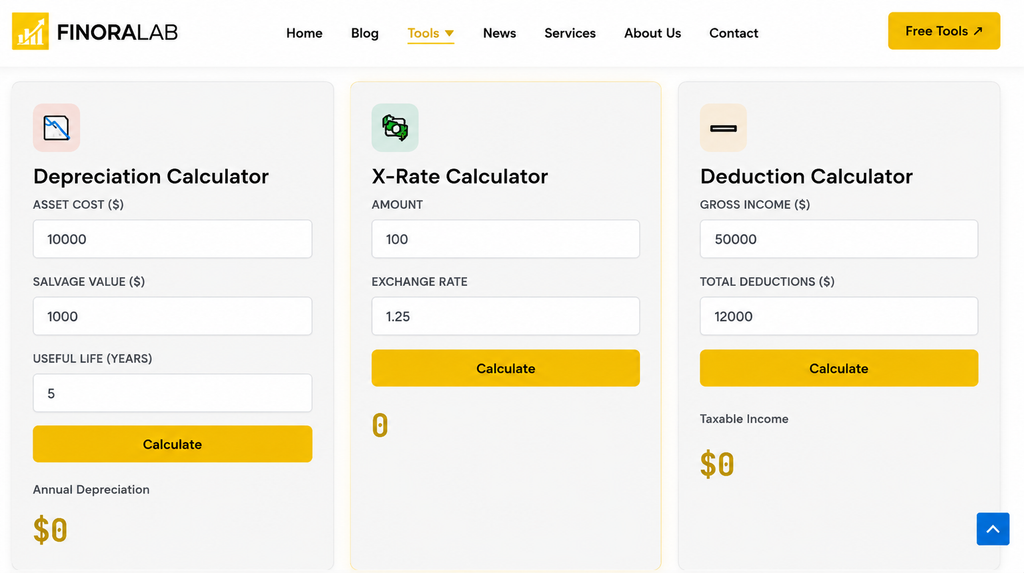
[INSERT CALCULATOR HERE Initial deposit, interest rate/APY, CD term, compounding frequency, estimated interest, and maturity balance.]
How to Compare CD Rates Before Depositing Money
A higher APY can mean more interest, but it should not be your only consideration.
Compare the following details before choosing a CD.
| Comparison factor | What to check |
| APY | The annual yield offered |
| CD term | How long your money will be locked in |
| Minimum deposit | Amount required to open the CD |
| Early withdrawal penalty | Interest or principal you could lose |
| Interest payments | Whether interest is paid monthly, annually, or at maturity |
| Renewal policy | What happens when the CD reaches maturity |
| Deposit insurance | Whether the institution and account qualify for federal coverage |
Compare the same CD terms
When comparing banks, try to compare CDs with similar maturity periods.
For example, comparing a six month CD with a five year CD may give you an incomplete picture. The longer CD may offer a different yield, but it also requires a longer commitment.
Check the banks official website and account disclosures for the current APY and conditions.
Check whether your deposit is insured
CDs at eligible FDIC insured banks are generally covered by FDIC deposit insurance, subject to applicable ownership category limits. Eligible credit union deposits are generally insured by the NCUA.
The standard coverage limit is $250,000 per depositor, per insured institution, per ownership category. Check the official FDIC or NCUA resources to confirm coverage for your accounts.
Consumer Financial Protection Bureau
What Happens If You Withdraw Money From a CD Early?
A CD is designed to keep your money deposited until its maturity date.
If you withdraw funds early, your bank may charge an early withdrawal penalty. Depending on the CD agreement, that penalty could reduce your interest earnings or even affect your original deposit.
For example
- You open a CD with a fixed maturity date.
- You later need the money before that date.
- The bank applies the early withdrawal rules in your agreement.
- You receive the remaining balance after any applicable penalty.
The penalty varies by financial institution and product. There is no single penalty that applies to every CD.
The Office of the Comptroller of the Currency (OCC) explains the federal minimum penalty rules for certain early withdrawals, but you should check your individual account agreement for the actual terms.
HelpWithMyBank.gov+1
Before opening a CD, check the penalty amount and whether the account allows any penalty free withdrawals.
Common CD Calculator Mistakes to Avoid
A calculator is only useful when you enter the correct information. These mistakes can produce misleading estimates.
1. Entering the interest rate instead of APY
APY includes the effect of compounding. Entering the wrong figure can cause your estimated earnings to be inaccurate.
How to avoid it Check whether the calculator asks for APY or nominal interest rate.
2. Choosing the wrong CD term
A six month CD and a two year CD will not produce the same earnings, even if they offer the same APY.
How to avoid it Enter the actual term stated in the CD offer.
3. Ignoring early withdrawal penalties
A calculator normally estimates earnings assuming you keep your money deposited until maturity.
It may not account for an early withdrawal penalty.
How to avoid it Read the banks penalty schedule separately.
4. Forgetting taxes
Your calculator may show interest before taxes. That does not necessarily represent the amount you keep after federal income taxes.
How to avoid it Treat calculator results as estimates of gross earnings, not guaranteed after tax income.
5. Assuming the APY will stay the same after maturity
A CDs advertised APY applies to its stated terms. If the CD automatically renews, the new CD may have a different rate.
How to avoid it Review the maturity notice and renewal terms before the CD reaches its end date.
Are CD Earnings Taxable?
Generally, interest earned on a bank CD is taxable for federal income tax purposes.
The IRS explains that interest income may need to be reported even if you do not receive a Form 1099 INT. The tax treatment and reporting year can depend on the CDs interest payment and maturity arrangements.
If your bank issues a Form 1099 INT, review it when preparing your federal tax return.
Internal Revenue Service+1
Keep in mind
- A calculators maturity estimate is generally a pre tax figure.
- Tax treatment may depend on how interest is credited or deferred.
- Early withdrawal penalties may have separate tax reporting consequences.
For current reporting requirements, consult IRS Publication 550 or a qualified tax professional.
Who Should Use a CD Calculator?
A CD calculator is useful for people who want to estimate savings growth before committing money to a fixed term deposit.
It may be useful if you
- Have money set aside for a future expense.
- Want to compare two or more CD offers.
- Need an estimate of your maturity balance.
- Want to understand the effect of different APYs.
- Are considering a short term or long term savings commitment.
It may not be the right tool if you
- Need immediate access to your savings.
- Want to make frequent deposits and withdrawals.
- Are looking for an investment with potentially higher but uncertain returns.
- Have not yet established an accessible emergency savings reserve.
A high APY does not automatically make a CD the right choice. Consider your access to cash, financial goals, and the terms of the account before deciding.
CD vs. High Yield Savings Account vs. Money Market Account
CDs are not the only way to earn interest on savings. High yield savings accounts and money market deposit accounts may also be worth comparing.
| Feature | CD | High Yield Savings | Money Market Deposit Account |
| Interest rate | Often fixed for the term | Usually variable | Usually variable |
| Access to funds | Generally restricted until maturity | Generally more flexible | Generally more flexible |
| Early withdrawal penalty | May apply | Usually no CD style penalty | Depends on account terms |
| Deposit requirements | May have a minimum | Depends on bank | Depends on bank |
| Best suited for | Money you can leave deposited | Accessible savings | Savings with account specific access features |
The account terms matter. Some savings and money market accounts have minimum balance requirements, transaction restrictions, or fees.
Check current terms with each financial institution before comparing products.
Conclusion:
A CD calculator helps you understand how much your savings could earn before you commit to a fixed term deposit. By entering your initial deposit, APY, and CD term, you can estimate your interest and maturity balance.Before opening an account, compare APYs, minimum deposits, maturity dates, early withdrawal penalties, and deposit insurance.Your next step Calculate your expected CD earnings, then compare offers from FDIC insured banks or eligible credit unions to find an account whose terms fit your savings plans.
You may also read more blogs
FAQs
How do I calculate interest on a CD?
Multiply your initial deposit by the growth factor based on the APY and investment period. For an APY based estimate, use
A=P(1+APY)t
Subtract your original deposit from the final balance to find estimated interest.
What is a good CD calculator rate?
There is no single rate that is best for everyone. Compare current APYs, CD terms, minimum deposits, and early withdrawal penalties. Check the rates directly with financial institutions because they change.
Is CD interest calculated monthly or daily?
It depends on the bank and CD agreement. Some CDs compound interest daily, while others use different compounding schedules. Check the account disclosure for the exact method.
Does a higher CD APY mean more money?
Generally, yes, when comparing CDs with the same deposit and term. However, minimum deposits, withdrawal penalties, and other account conditions can affect which offer is more suitable.
Can I withdraw my CD money before maturity?
You may be able to withdraw early, but your bank can charge an early withdrawal penalty. Depending on the agreement, the penalty may reduce your interest or principal.
Are CD earnings taxable?
Generally, yes. CD interest is taxable income for federal income tax purposes. The timing of reporting can depend on how the interest is paid or deferred. See IRS Publication 550 for details.
Is a CD better than a savings account?
A CD may suit someone who can leave money untouched for a fixed period. A savings account may be more appropriate for someone who needs easier access to their money. Compare the rates, account terms, and withdrawal restrictions before deciding.
