
Amended tax return status is an important update for taxpayers who have corrected a previously filed tax return and want to know whether the Internal Revenue Service (IRS) has accepted, processed, or completed their amendment. Filing an amended tax return can help fix mistakes involving income, deductions, tax credits, filing status, or other information that affects a taxpayers final tax calculation.
Unlike a regular tax return, an amended return usually requires additional review because the IRS must compare the original filing with the corrected information. Taxpayers often check their amended tax return status because they are waiting for a refund, need to know whether additional taxes are owed, or want confirmation that their corrections were successfully processed.
Understanding how amended tax return tracking works can reduce uncertainty and help taxpayers make better financial decisions. Knowing typical processing times, common status messages, possible delays, and next steps allows individuals to manage their budgets, tax obligations, and financial planning more effectively.
What Is an Amended Tax Return Status?
An amended tax return status refers to the current stage of processing for a corrected tax filing submitted to the IRS. When taxpayers file an amended return, they are changing information from an already submitted tax return. The IRS reviews those changes before updating the taxpayers account records.
Taxpayers usually check their amended return status to determine whether the IRS has received the filing, whether it is still being reviewed, or whether the processing has been completed. The status does not necessarily indicate whether a refund has been approved immediately because amended returns require additional verification.
For federal individual tax returns, amendments are generally submitted using IRS Form 1040 X. The status tracking process allows taxpayers to follow the progress of their correction and understand whether further action is required.
How to Check Your Amended Tax Return Status
Taxpayers can check their amended tax return status through the IRS online tracking tool designed specifically for amended returns. The system allows taxpayers to view updates by providing identifying information from their amended filing.
To check the status, taxpayers generally need their Social Security number, date of birth, and ZIP code from the tax return. The information must match IRS records to access the status update. If the information does not match, the system may not display results.
Checking status online is usually the fastest method because it provides updates without requiring a phone call. However, taxpayers should understand that the system may not update immediately after submission because the IRS needs time to receive and process the amendment.
Understanding Amended Tax Return Status Messages
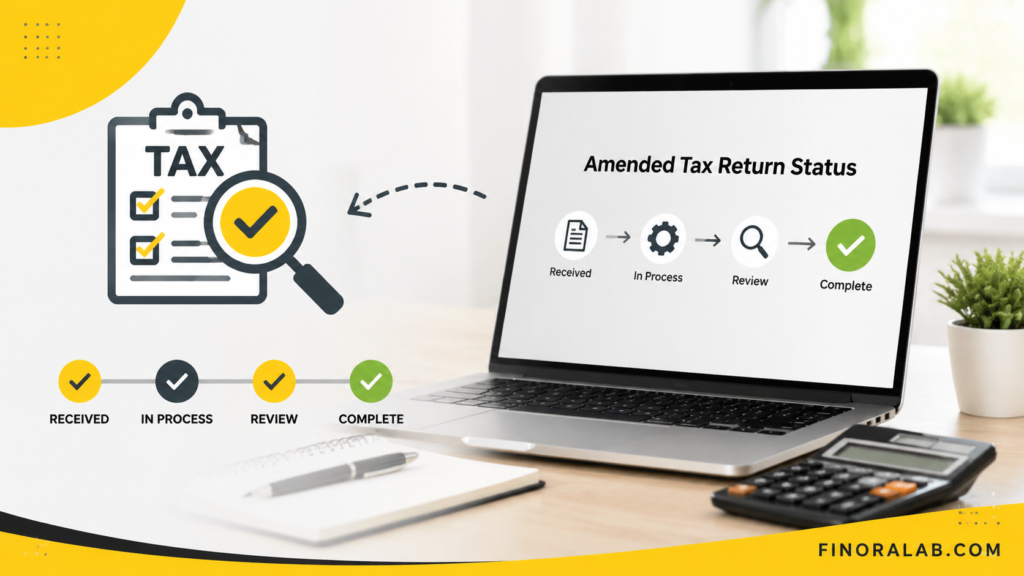
When checking an amended tax return status, taxpayers may see different processing stages. These messages generally indicate whether the IRS has received the amendment, whether it is being reviewed, or whether processing has been completed.
A status showing that the IRS has received the amendment means the agency has accepted the filing into its processing system. It does not necessarily mean the changes have been approved or that a refund will be issued immediately.
A status indicating that the amendment has been adjusted or completed usually means the IRS has finished reviewing the changes. If the amendment results in a refund, the taxpayer may receive payment after processing is finalized.
How Long Does an Amended Tax Return Take to Process?
Amended tax return processing times are generally longer than standard tax returns because the IRS must manually review changes and compare information from multiple filings. While processing times vary, amended returns often take several months to complete.
The timeline depends on factors such as filing method, IRS workload, complexity of the amendment, supporting documentation, and whether additional review is required. Returns involving multiple changes, large refund requests, or complicated tax situations may require more time.
Taxpayers should avoid making financial decisions based on expected amendment refunds until processing is complete. Because timing can change, it is better to continue managing budgets, savings goals, and debt payments independently of the expected tax outcome.
Common Reasons for Delays in Amended Tax Return Status Updates
One common reason for delays is incomplete information. If the IRS needs additional documents or clarification, processing may take longer. Taxpayers should respond quickly to any IRS communication requesting more information.
Another reason for delays is filing amendments during periods of high IRS volume. Tax season creates significant demand, and amended returns may require additional processing resources compared with regular filings.
Errors in the amended return can also slow processing. Incorrect taxpayer information, missing signatures, calculation mistakes, or inconsistent information between the original and amended returns may require additional review.
Why Your Amended Tax Return Status May Not Change
Some taxpayers become concerned when their amended tax return status remains unchanged for an extended period. However, a lack of updates does not always mean there is a problem. IRS processing systems may not display frequent changes while a return is under review.
Amended returns often move through internal review stages that are not visible to taxpayers. A return may appear unchanged online while IRS employees are actively working on the case.
If the processing time exceeds normal expectations, taxpayers may consider contacting the IRS for additional information. Before calling, they should gather important documents such as the original return, amended return copy, filing confirmation, and any IRS correspondence.
Amended Tax Return Status and Refund Processing
Many taxpayers check their amended tax return status because they are expecting a refund. If an amendment reduces tax liability, the IRS may issue an additional refund after completing the review process.
However, taxpayers should understand that amended return refunds are separate from original tax refunds. A taxpayer who already received a refund from the original return may receive another payment if the amendment creates an additional refund amount.
Refund timing depends on IRS approval and completion of processing. Taxpayers should avoid assuming that submitting an amendment guarantees a refund because the IRS may adjust the requested amount after reviewing supporting information.
Amended Tax Return Status and Additional Tax Payments
An amended tax return does not always result in receiving money from the IRS. Sometimes the correction shows that the taxpayer owes additional taxes. This can happen if income was underreported, deductions were incorrectly claimed, or credits were overstated.
When an amendment results in additional taxes owed, taxpayers should address the balance as soon as possible. Delaying payment may result in interest and penalties depending on the circumstances.
Proper tax planning can reduce future problems. Reviewing tax documents carefully, maintaining accurate records, and adjusting withholding or estimated payments can help taxpayers avoid unexpected balances in future years.
How an Amended Tax Return Affects Financial Planning
Understanding amended tax return status is part of broader personal financial management. A refund from an amendment may provide additional funds that can support financial goals such as paying down high interest debt, increasing emergency savings, or contributing to retirement accounts.
On the other hand, an unexpected tax bill may require budget adjustments. Taxpayers should maintain emergency funds and avoid relying entirely on expected refunds when planning monthly expenses.
Tax planning works best when combined with other financial strategies. Budgeting, debt management, investing, retirement planning, and risk management all depend on accurate financial information and responsible decision making.
Common Mistakes When Tracking an Amended Tax Return Status
One common mistake is checking the status too frequently immediately after filing. Because amended returns require additional processing time, status updates may not appear quickly. Constantly checking may create unnecessary stress without providing new information.
Another mistake is failing to keep copies of important documents. Taxpayers should save their original return, amended return, supporting documents, and IRS confirmation records. These documents can be valuable if questions arise later.
Some taxpayers also forget to update their state tax return after filing a federal amendment. If federal changes affect state tax calculations, a separate state amendment may be required depending on state rules.
What to Do If Your Amended Tax Return Is Taking Too Long
If an amended tax return appears delayed beyond normal processing expectations, taxpayers should first confirm that the filing information is correct and that the IRS has received the amendment. Online tracking tools can provide the latest available information.
If additional assistance is needed, taxpayers can contact the IRS directly. Before contacting the agency, having complete documentation available can make the conversation more efficient.
Taxpayers should remain cautious about third party services claiming they can speed up IRS processing. No private company can guarantee faster IRS approval. The best approach is accurate filing, proper documentation, and monitoring official IRS updates.
How Amended Tax Return Status Fits Into Tax Planning
Tax amendments provide taxpayers with a way to correct mistakes, but effective tax planning helps prevent many errors before filing. Organizing financial documents, reviewing income records, and understanding available deductions can improve filing accuracy.
Individuals can also use tax planning strategies throughout the year. Retirement contributions, estimated tax payments, business recordkeeping, and investment planning can all influence future tax outcomes.
A proactive approach to taxes supports stronger financial decisions. Rather than treating taxes as a once a year responsibility, taxpayers can incorporate tax awareness into their overall financial planning strategy.
Conclusion
Amended tax return status helps taxpayers understand the progress of corrected tax filings and provides insight into whether the IRS has received, reviewed, or completed their amendment. Because amended returns require additional review, patience and accurate tracking are important.Taxpayers should regularly check official IRS updates, maintain proper documentation, and understand that processing times can vary. Whether an amendment results in a refund or additional payment, managing the outcome responsibly supports better financial planning.Taxes are an important part of personal finance. By understanding the amended return process, tracking status updates, and maintaining accurate records, taxpayers can protect their financial health and remain compliant with tax obligations.
You may also read more blogs
FAQs
How do I check my amended tax return status?
You can check your amended tax return status through the IRS amended return tracking system. You generally need your Social Security number, date of birth, and ZIP code from the return to access updates.
How long does an amended tax return take?
Amended tax returns often take several months to process because they require additional review. Processing times vary based on IRS workload, filing method, and the complexity of the changes.
Why has my amended tax return status not changed?
A status that has not changed does not always indicate a problem. The IRS may be reviewing the amendment internally without frequent online updates.
Can I check an amended tax return status online?
Yes, taxpayers can check amended return progress through IRS online tracking tools designed specifically for Form 1040 X filings.
Does an amended tax return delay my refund?
If the amendment changes your refund amount, the additional refund will not be issued until the IRS completes processing and approves the correction.
What happens if my amended tax return is rejected?
If an amendment cannot be processed, the IRS may contact the taxpayer with information about corrections needed or additional documentation required.
Can I file another amended tax return while one is processing?
It may be possible to file another amendment, but taxpayers should carefully consider whether additional corrections are necessary and follow IRS guidance.
Does an amended tax return trigger an audit?
Filing an amended return does not automatically trigger an audit. However, any tax return can be reviewed by the IRS to verify accuracy and compliance.
Why did my amended tax return refund change?
The IRS may adjust a requested refund amount if it determines that the correction is different from the taxpayers calculation or if certain claims are not allowed.
Do I need to amend my state tax return after filing a federal amendment?
Possibly. If federal changes affect your state tax liability, you may need to file a separate state amended return according to your states tax rules.

I am a professional finance content writer with expertise in personal finance investing, banking, loans, insurance, credit cards, budgeting, and market related topics. I create clear, SEO optimized, and reader friendly finance content that helps audiences understand complex financial concepts in simple words. My goal is to write trustworthy and engaging content that improves search visibility, builds credibility, and supports business growth.







Pingback: Rocket Mortgage FieldHouse Guide: Everything You Should Know | FinoraLabs