How to Find EIN Number: 7 Easy Ways to Locate Your Tax ID
Shanzay Arain·Aug 03, 2026
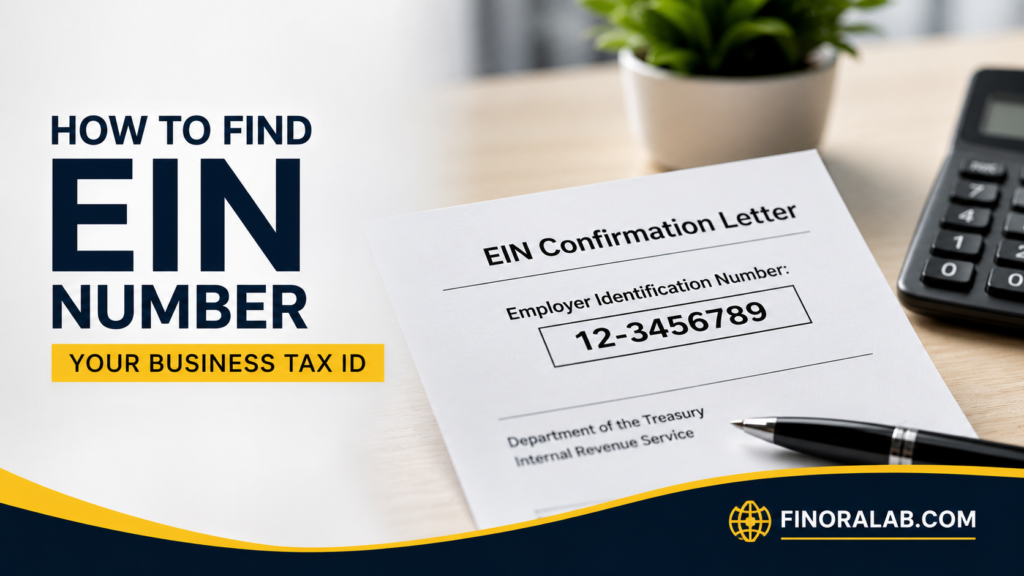
If you need to know how to find EIN number information for your business, the good news is that you may not need to apply for a new Employer Identification Number. An EIN, also called a federal employer identification number or federal tax ID, is a unique nine digit number issued by the Internal Revenue Service to identify a business or other entity for federal tax purposes. Businesses commonly need an EIN for tax filings, payroll, business bank accounts, financing, and other administrative tasks. If you previously received one but misplaced it, several reliable methods can help you locate it.
Finding an EIN is different from obtaining a new EIN. Your existing number generally remains associated with the same business entity unless the IRS determines that a new EIN is required. Searching through official IRS correspondence, prior tax returns, bank records, payroll documents, accounting files, and business formation records can often reveal the number. If those methods fail, the IRS has a process for authorized individuals to verify the EIN. Knowing where to look first can save time and reduce the risk of accidentally creating duplicate tax identification records.
What Is an EIN and Why Do Businesses Need One?
An Employer Identification Number is a federal tax identification number used by the IRS to identify businesses, estates, trusts, and certain other entities. An EIN is generally formatted as nine digits, such as 12 3456789. Despite the word employer in its name, a business does not necessarily need employees to have an EIN. Corporations, partnerships, and many other business structures may need one, while certain sole proprietors can use a Social Security number for federal tax purposes unless they meet circumstances requiring an EIN.
An EIN can become part of a businesss financial infrastructure. Banks may request it when opening a business checking account, lenders may require it during financing applications, and businesses may need it for federal employment tax reporting. It can also appear on federal tax returns, information returns, W 9 forms, payroll records, and correspondence from the IRS. Because an EIN is used across multiple systems, losing the number can create unnecessary administrative delays when completing otherwise routine financial or tax tasks.
How to Find EIN Number Information in IRS Documents
One of the best places to look for an existing EIN is in the original IRS documentation issued when the number was assigned. Businesses commonly receive an IRS confirmation notice after successfully obtaining an EIN. If you saved the original notice electronically or in a physical business records folder, it may contain the exact EIN. Search digital files using terms such as EIN, Employer Identification Number, IRS, or tax ID. Checking cloud storage, email attachments, accounting folders, and paper records can be surprisingly effective.
Prior IRS correspondence may also contain the businesss EIN, depending on the type of notice and document. Look through letters, notices, tax related correspondence, and other official documents retained for the business. If you use an accountant or tax preparer, that professional may also have copies of prior filings or IRS communications. When searching records, verify that the document belongs to the correct legal entity. Businesses with multiple entities, subsidiaries, or reorganized structures can have different EINs, making entity verification particularly important.
Find Your EIN on a Previous Business Tax Return
A previously filed federal business tax return is another useful place to find an EIN. Depending on the entity type and return, the EIN is typically included in the identifying information near the beginning of the filing. Look through copies of returns submitted for the business, including electronic PDFs stored by your accounting software, tax preparer, or business records system. If you have paper copies, search the first pages for the employer identification number or federal identification number.
This approach is especially useful when a business has operated for several years and maintains organized tax records. For example, a corporation might retain copies of its corporate income tax returns, while a partnership may have copies of partnership returns and related schedules. An LLCs tax treatment can vary depending on its classification, so the relevant federal return may differ. Always confirm that the EIN belongs to the entity you are currently dealing with before using it on a new tax filing or financial application.
Check Your Business Bank Account Records
Your business bank may have your EIN in its account opening documentation. When a business opens a checking account, savings account, merchant account, or certain other financial products, the bank may collect federal tax identification information. Look through the original account opening documents, online banking records, business profile information, or statements that contain tax related identifying details. If you cannot locate the number yourself, contacting the bank may help you determine whether it has the information on file and what verification is required.
Banks have strict identity and privacy procedures, so you should expect to verify that you are authorized to access the business information. The process may involve confirming your identity, business name, account details, or other information. If your business has changed ownership, officers, managers, or legal structure, additional documentation may be required. A bank record can be useful evidence, but for tax purposes you should still confirm that the number corresponds to the correct legal entity and has not been confused with another companys tax identification number.
Look at Payroll and Employment Tax Records
If your company has employees, payroll records can be another practical source for locating an EIN. Employers generally use their EIN when reporting federal employment taxes and related payroll information. Payroll software, payroll service providers, employment tax filings, and internal payroll reports may therefore contain the number. Search through historical payroll reports, quarterly filings, annual wage reporting records, and electronic documents maintained by your payroll provider or accounting department.
Payroll records can be particularly helpful when the business owner does not personally maintain every tax document. For example, a bookkeeper may have handled payroll while an outside accountant prepared income tax returns. In that situation, the payroll provider or accounting firm may be able to retrieve historical documents. Make sure you are looking at records for the correct company and tax period. If your business operates several entities, payroll may have been processed under a different legal entity with its own EIN.
Ask Your Accountant or Tax Professional
Your accountant, CPA, enrolled agent, or tax preparer may already have your EIN in their client records. Professionals who prepare business tax returns generally need identifying information about the entity, and an EIN may appear repeatedly throughout tax documents. If the professional has worked with your business over multiple years, they may be able to locate the number quickly from prior returns or supporting records.
When requesting the EIN, provide enough information for the professional to identify the correct entity. Give the legal business name and explain whether you are looking for the EIN of a corporation, partnership, LLC, nonprofit, or another entity. This matters because an owner can have multiple businesses and potentially multiple EINs. You should also avoid sending unnecessary sensitive information through insecure channels. If the accountant uses a secure client portal, it is generally preferable to ordinary unsecured email for confidential tax documents.
Check Business Formation and Corporate Records
Business formation records can help you reconstruct which legal entity owns a particular EIN, although the EIN itself may not always appear on state formation paperwork. Review your articles of incorporation or organization, operating agreement, corporate records, business licenses, annual reports, and other organizational documents. These records can establish the legal name and structure of the entity, which is useful when matching an EIN found elsewhere.
This step is especially important if your business has undergone changes. For example, an owner may have started as a sole proprietor, later formed an LLC, and eventually elected corporate tax treatment. These changes can create confusion about which EIN should be used. The legal entity and federal tax classification should be considered together. If you are uncertain whether an existing EIN belongs to the entity currently operating the business, consult a qualified tax professional before using it for important federal filings.
Use Business Tax and Financial Software Records
Accounting and bookkeeping software may contain your EIN in the companys profile, tax settings, reports, or previously generated documents. Programs used for invoicing, payroll, tax preparation, bookkeeping, and financial reporting frequently store business identification information. Search the softwares company settings or profile information, then examine previously generated tax reports and forms. If an outside bookkeeper manages your accounting system, ask whether they can retrieve the relevant information.
Digital records can be particularly valuable because they allow you to search thousands of files quickly. Search your computer and cloud storage for terms such as EIN, Employer Identification Number, W 9, tax return, IRS, and federal tax. However, do not assume that every document containing a number represents the current EIN. Businesses may have old records from discontinued entities or prior business structures. Confirm the legal entity before copying the number into a new form.
How to Find an EIN Through the IRS
If you cannot locate your EIN through business records, the IRS can provide assistance to authorized individuals. The IRS states that businesses can call its Business and Specialty Tax Line for assistance with locating an EIN that has already been assigned. The IRS will require information to establish that the person requesting the number is authorized to receive it. This protects business tax information from unauthorized disclosure.
The IRSs process is different from simply searching a public database. EINs are sensitive business tax identifiers, and the IRS does not provide a general public lookup tool where anyone can enter a business name and retrieve its EIN. If you contact the IRS, have relevant information available, including the legal name of the entity, responsible party information, address, and other details that can help establish your authority. Use official IRS resources to verify the current telephone number and procedures before calling.
What Information You May Need When Contacting the IRS
Before contacting the IRS about a missing EIN, gather documentation and information that can establish the identity of the business and your authority to receive its tax information. Useful information can include the legal name of the organization, trade name or DBA if applicable, business address, responsible partys name, entity type, and information from prior tax filings. The IRS may ask questions based on its records, so having accurate information available can make the process more efficient.
The responsible party is an important concept in the EIN application process. Generally, the responsible party is the individual who ultimately owns or controls the entity, although the exact requirements can depend on the entitys circumstances. If ownership or control has changed, the IRS may have records reflecting the previous responsible party. This is another reason to keep corporate records and tax filings organized. If your situation involves a merger, acquisition, dissolution, or complex ownership change, professional tax advice may be appropriate.
Can You Find an EIN Online?
You may be able to find your own EIN online through documents stored in your accounting, payroll, banking, tax preparation, or business management systems. However, there is no general public IRS website where anyone can enter a companys name and retrieve its EIN. The IRS treats tax identification information as protected information, so businesses should be cautious about websites claiming they can instantly provide confidential EIN information without authorization.
Some publicly available databases may contain EIN information for certain organizations, particularly nonprofits whose tax filings are public under applicable rules. That does not mean every private businesss EIN is publicly searchable. If you are trying to locate your own businesss number, official IRS records and your own financial documents are usually more reliable than third party databases. Avoid paying questionable websites simply because they advertise an instant EIN lookup service.
How to Find an EIN for a Nonprofit Organization
Nonprofit organizations can have different disclosure considerations from ordinary private businesses. Certain nonprofit organizations file Form 990, and those filings can contain the organizations EIN. Public nonprofit databases and copies of tax filings may therefore sometimes provide a way to identify an organizations federal tax identification number. However, availability depends on the organization and the records involved.
If you are an authorized representative of a nonprofit and need to recover the organizations EIN, begin with its IRS determination letter, prior Form 990 filings, accounting records, bank documents, and corporate records. The determination letter can be particularly valuable because it establishes the organizations federal tax exempt status and may contain identifying information. If those documents are unavailable, an authorized representative can contact the IRS using its procedures for tax exempt organizations.
How to Find an EIN for an LLC
Finding an EIN for an LLC starts with identifying how the LLC is treated for federal tax purposes. An LLC can be classified as a disregarded entity, partnership, or corporation depending on its ownership and elections. A single member LLC may sometimes use the owners taxpayer identification number for certain federal income tax purposes, but that does not mean every LLC situation is identical. An LLC may have an EIN for banking, employment, excise taxes, or other federal requirements.
Look for the LLCs IRS confirmation notice, federal tax returns, business bank records, payroll records, and accounting documents. Also review the LLCs legal name and state registration information to ensure you are matching the correct entity. If you are uncertain whether the LLC should use an existing EIN or whether a new EIN is required after a structural change, do not guess. The IRSs EIN guidance or a qualified tax professional can help determine the appropriate treatment.
How to Find an EIN for a Sole Proprietorship
Sole proprietors may have a different relationship with EINs than corporations and partnerships. A sole proprietor without employees may generally use a Social Security number for federal income tax reporting, although there are circumstances in which an EIN may be required or useful. For example, a sole proprietor with employees generally needs an EIN for employment tax purposes. A business owner may also obtain an EIN for banking or other business requirements.
If you previously obtained an EIN as a sole proprietor, check the IRS confirmation notice, business tax records, bank documents, payroll records, and accountants files. Remember that a sole proprietorship is not legally separate from its owner in the same way a corporation is. If you later form an LLC or corporation, do not automatically assume the old sole proprietor EIN should be used for the new entity. Entity changes can have important federal tax consequences.
How to Find an EIN on a W 9
A W 9 is a common business document used to provide a taxpayer identification number to another party, such as a client or payer. If you previously completed a W 9 for your business, a copy may contain the relevant EIN depending on how the business is classified. Search your accounting files, vendor records, client onboarding documents, and secure document storage for prior W 9 forms.
Because W 9 forms can contain sensitive taxpayer identification information, they should be stored securely. Do not upload them to unknown websites or send them through insecure channels simply to recover an EIN. If a client or vendor requests an updated W 9, verify the legal entity name and tax classification before completing it. Using an incorrect EIN can create mismatches in information reporting and may lead to additional tax administration problems.
How to Find an EIN on a 1099 or Other Tax Form
Business tax forms and information returns can sometimes provide another route to finding your EIN. Depending on the form, the businesss taxpayer identification information may appear in the payer or recipient sections. If your business receives 1099 forms, issues them to contractors, or has other reporting obligations, review your historical records. Your accounting software or tax professional may also maintain copies of information returns submitted for the company.
However, not every tax document will display your EIN in a way that makes it immediately obvious. Some forms contain multiple identification numbers belonging to different parties. Carefully determine which field corresponds to your business. If you are unsure, compare the number against an IRS notice or prior federal tax return. Cross checking multiple official records is a useful safeguard against accidentally using another partys taxpayer identification number.
EIN Versus Social Security Number
An EIN and Social Security number are both taxpayer identification numbers, but they serve different primary purposes. An SSN identifies an individual, while an EIN generally identifies a business or other qualifying entity for federal tax administration. Businesses often use an EIN for employer reporting, business tax filings, banking, and other commercial activities. Using an EIN where appropriate can also reduce the need to provide your personal SSN to customers and vendors.
However, an EIN does not replace every tax identification requirement. The correct identifier depends on the entity and transaction. For example, a sole proprietor may use an SSN for certain federal tax filings, while a corporation generally uses its EIN. LLCs can have more nuanced rules depending on their classification and elections. When completing a tax form, follow the instructions for the specific form and entity rather than assuming that an EIN and SSN are interchangeable.
What to Do If You Cannot Find Your EIN
If you have searched your IRS notices, tax returns, bank records, payroll documents, accounting software, W 9s, and professional records without success, the next step is generally to contact the IRS through its official business tax assistance process. Do not immediately apply for another EIN simply because you cannot find the first one. A duplicate EIN can create unnecessary confusion and may complicate tax administration if both numbers become associated with the same entity.
While waiting to recover the number, reconstruct your business records. Confirm the exact legal name, entity type, formation date, responsible party, address, prior tax filings, and banking relationships. This information can help you and your tax professional establish which entity is involved. If the business has changed ownership, merged, dissolved, reorganized, or changed its tax classification, explain those circumstances clearly because they can affect whether the existing EIN remains appropriate.
Should You Apply for a New EIN If You Lost the Old One?
Generally, losing an EIN does not by itself mean you need a new one. An EIN is assigned to an entity for federal tax administration, and the appropriate response to a missing number is usually to locate or verify the existing EIN rather than create another one. Applying for another number without determining whether one already exists can create duplicate records and administrative complications.
There are circumstances in which a business may legitimately need a new EIN, such as certain changes in ownership or entity structure. The rules are not identical for every business type, so the correct answer depends on what changed. For example, forming a new legal entity can have different consequences from changing a trade name or moving a business address. If your business has undergone a major structural change, consult IRS guidance or a qualified tax professional before applying for another EIN.
How to Protect Your EIN After Finding It
Once you recover your EIN, treat it as sensitive business information. Although an EIN is not the same thing as an individuals SSN, unauthorized disclosure can still create fraud, impersonation, or tax related risks. Store the IRS confirmation notice, federal tax returns, and other documents containing the EIN in a secure digital location. Limit access to employees, accountants, payroll providers, financial institutions, and other parties who have a legitimate business reason to receive the information.
It is also helpful to create a central business records file containing the legal entity name, EIN, formation documents, tax classification, bank information, insurance records, and key tax documents. Keep this information updated when the business changes. A well organized records system makes future tax filings and financial applications easier and reduces the likelihood that you will need to repeat the same search. Good recordkeeping is a basic but valuable part of business risk management.
Common Mistakes When Searching for an EIN
A common mistake is confusing an EIN with another business identification number. State tax identification numbers, sales tax permits, business license numbers, state registration numbers, and federal EINs can all appear in business records. They are not necessarily interchangeable. When a bank, tax form, or government agency asks for an EIN, confirm that it specifically wants the federal Employer Identification Number rather than a state issued registration or tax account number.
Another mistake is searching only one source. If your IRS confirmation letter is missing, you may still have the EIN on a federal tax return, W 9, bank document, payroll record, or accountants file. It is also risky to rely on unverified online lookup websites. For sensitive tax information, prioritize official IRS documentation and trusted professional records. Finally, do not apply for a second EIN simply because the first one cannot immediately be located. Verify the situation first.
Why Accurate EIN Records Matter for Business Finance
An EIN is not merely a number used for taxes. It can connect multiple parts of a companys financial infrastructure. Banks may associate the EIN with business accounts, lenders may use it during credit underwriting, payroll companies may use it for employment tax reporting, and accountants may use it across federal filings. An incorrect number can therefore cause mismatches across multiple systems. Maintaining accurate records helps reduce administrative errors and supports smoother financial operations.
The EIN also fits into broader financial planning and risk management. Businesses should maintain organized tax records, separate business and personal finances where appropriate, reconcile bank accounts, track deductible expenses, and retain supporting documentation. These practices can make tax preparation easier and improve financial visibility. For growing businesses, establishing reliable administrative systems early can prevent small recordkeeping problems from becoming significant issues during financing, audits, ownership changes, or tax reporting.
Conclusion
If you need to know how to find EIN number information, start with your own business records rather than applying for a new number. Search the IRS EIN confirmation notice, previous federal tax returns, W 9 forms, payroll records, accounting software, business bank documents, and files maintained by your accountant or tax professional. These sources often contain the existing EIN. Make sure the number belongs to the correct legal entity, particularly if you operate multiple businesses or have changed your business structure.If those records do not provide the answer, the IRS can assist an authorized person with locating an EIN under its verification procedures. Avoid questionable third party lookup services and do not automatically request another EIN simply because the original number has been misplaced. Once you recover the number, store it securely with your core business records. Maintaining accurate EIN information is a small but important part of sound tax administration, financial planning, and business risk management.
Start by checking your IRS EIN confirmation notice, previous federal tax returns, business bank records, payroll documents, W 9 forms, accounting software, and records held by your accountant. You can also search your email and cloud storage for terms such as EIN, IRS, Employer Identification Number, or tax ID. If you cannot locate it through your records, an authorized person can contact the IRS for assistance. You generally should not apply for a second EIN simply because the original document has been misplaced.
Can I look up my EIN online for free?
You may be able to find your EIN online through your own secure business records, accounting software, tax documents, bank portal, or previously saved IRS correspondence. However, the IRS does not operate a general public EIN lookup database where anyone can enter a business name and retrieve its EIN. Certain nonprofit organizations may have EIN information available through public tax filings. Be cautious of third party websites offering paid instant EIN lookups, particularly if they request unnecessary sensitive information.
How do I find my EIN number with the IRS?
If you cannot locate the EIN in your business records, an authorized person can contact the IRS using its Business and Specialty Tax Line procedures. The IRS will generally need to verify the callers identity and authority to receive the businesss tax information. Have the legal business name, address, entity type, responsible party information, and relevant tax records available. Before calling, use the official IRS website to confirm the current telephone number and business hours information because contact procedures can change.
Can I find an EIN using a business name?
It depends on the business and the type of records available. There is no universal public IRS database that lets anyone search every private companys EIN by business name. Certain nonprofit organizations may have EIN information available through publicly accessible tax filings. For your own business, it is better to search IRS notices, tax returns, bank documents, accounting records, payroll documents, and W 9s. If you are authorized to act for the company and cannot find the number, contact the IRS through its official process.
Is an EIN the same as a tax ID number?
An EIN is a type of federal taxpayer identification number and is commonly called a federal tax ID or federal employer identification number. However, tax ID can be a broader term that refers to different types of taxpayer identification numbers, including an individuals Social Security number. State tax identification numbers and business registration numbers are also different from an EIN. When a form requests a tax ID, read its instructions carefully to determine which specific identifier is required.
Can I get another EIN if I lost my old one?
You generally should not request a new EIN merely because you cannot locate your existing number. Losing the document does not normally mean the business needs another EIN. First search your records and, if necessary, contact the IRS to recover or verify the existing number. A new EIN may be required after certain changes in ownership or business structure, but those rules depend on the entity type and circumstances. Consult IRS guidance or a tax professional if your business has undergone a major structural change.
Where can I find an EIN on a tax return?
An EIN is generally included in the identifying information section of applicable federal business tax returns. The exact location depends on the type of return and entity. Search the first pages of your prior federal returns for labels such as Employer Identification Number or EIN. Make sure you are reviewing the correct entity and tax year. If your business owns multiple entities, compare the EIN against other official documents before using it on a new tax form.
Can I find an EIN on a W 9?
A completed W 9 may contain the businesss federal taxpayer identification number, depending on the businesss classification and how the form was completed. Look through copies of W 9 forms submitted to clients, vendors, banks, or other organizations. Because W 9s can contain sensitive taxpayer information, store and transmit them securely. If you find an EIN on an old W 9, verify the legal entity and compare it with an IRS notice or tax return before using the number for an important filing.
How do I find an EIN for an LLC?
Start by identifying the LLCs exact legal name and federal tax classification. Then check its IRS EIN confirmation notice, federal tax returns, business bank records, payroll records, W 9s, accounting software, and accountants files. LLCs can have different federal tax classifications, so do not assume that every LLC follows the same EIN rules. If the LLC has changed ownership, tax classification, or legal structure, determine whether the existing EIN remains appropriate before using it. A qualified tax professional can help with complicated entity changes.
Can someone steal my business identity with my EIN?
An EIN is not secret in the same way as a password, but it is still business sensitive information that should be protected. Fraudsters can potentially misuse business identifiers in scams, false filings, or impersonation attempts. Limit unnecessary disclosure, protect tax documents, and monitor business financial and tax activity. Maintain accurate records of organizations that receive your EIN. If you suspect that your businesss EIN has been misused, promptly review the situation with the IRS and appropriate financial or tax professionals and follow official identity theft reporting guidance.
I am a professional finance content writer with expertise in personal finance investing, banking, loans, insurance, credit cards, budgeting, and market related topics. I create clear, SEO optimized, and reader friendly finance content that helps audiences understand complex financial concepts in simple words. My goal is to write trustworthy and engaging content that improves search visibility, builds credibility, and supports business growth.
I am a professional finance content writer with expertise in personal finance investing, banking, loans, insurance, credit cards, budgeting, and market related topics. I create clear, SEO optimized, and reader friendly finance content that helps audiences understand complex financial concepts in simple words. My goal is to write trustworthy and engaging content that improves search visibility, builds credibility, and supports business growth.