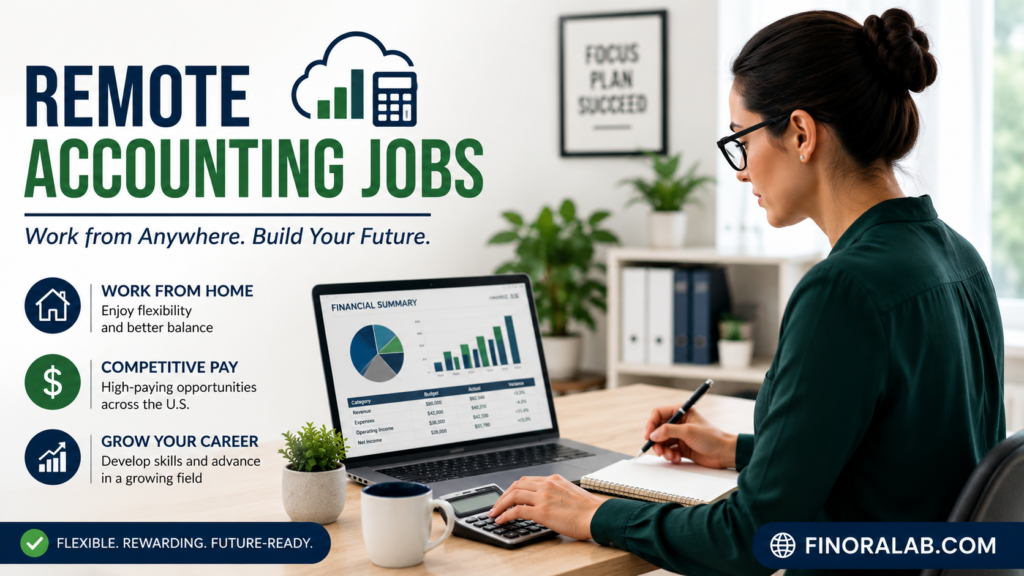
Remote accounting jobs have transformed the finance industry over the past several years. What was once considered a niche work arrangement has become a mainstream career option for accountants, bookkeepers, auditors, tax professionals, payroll specialists, and financial analysts. Businesses across the United States increasingly rely on cloud based accounting software, secure collaboration platforms, and digital workflows, making it easier than ever for finance professionals to work from virtually anywhere.
Whether youre a Certified Public Accountant (CPA), an entry level accounting graduate, or an experienced financial professional looking for better work life balance, remote accounting jobs offer flexibility without sacrificing career growth. Many companies now hire fully remote employees, while others offer hybrid opportunities that combine office collaboration with home based work.
The growing adoption of cloud accounting systems such as QuickBooks Online, Xero, NetSuite, Sage Intacct, FreshBooks, and enterprise ERP solutions has accelerated this shift. Organizations can securely manage financial records, payroll, tax compliance, accounts payable, and accounts receivable without requiring employees to sit in the same office.
Besides flexibility, remote accounting positions often provide competitive salaries, reduced commuting costs, improved productivity, and access to employers nationwide instead of limiting job seekers to local opportunities. However, finding legitimate remote accounting jobs requires understanding employer expectations, developing in demand skills, and avoiding common scams that target work from home job seekers.
This guide explains everything you need to know about remote accounting jobs, including available career paths, salary ranges, required qualifications, hiring trends, application strategies, financial planning considerations, and practical advice for building a successful long term remote accounting career.
What Are Remote Accounting Jobs?
Remote accounting jobs are accounting and finance positions performed primarily from home or another remote location using internet connected technology. Instead of working inside a traditional office every day, employees access company financial systems securely through cloud software, virtual private networks (VPNs), and encrypted collaboration platforms.
These positions cover nearly every accounting specialty. Businesses hire remote professionals to handle bookkeeping, financial reporting, tax preparation, payroll administration, budgeting, accounts payable, accounts receivable, financial analysis, compliance, internal controls, and audit support. Many employers also use remote accounting teams for month end closings, financial forecasting, and management reporting.
Remote work has become especially attractive for accounting because much of the profession already relies on digital documentation. Invoices, bank statements, tax forms, payroll reports, expense records, and financial statements are increasingly maintained electronically, reducing the need for physical paperwork. As cybersecurity technologies improve, organizations continue expanding remote finance teams while maintaining regulatory compliance and data security.
Companies ranging from small startups to Fortune 500 corporations now recruit remote accountants. Public accounting firms, healthcare organizations, financial institutions, technology companies, nonprofits, manufacturers, government contractors, and consulting firms all offer remote opportunities. This wide availability gives accounting professionals significantly more career options than were available just a decade ago.
Why Remote Accounting Jobs Are Growing
The rapid growth of remote accounting jobs is driven by technological advancements and changing workforce expectations. Cloud based accounting software allows finance teams to collaborate in real time regardless of geographic location. Documents can be shared instantly, approvals completed electronically, and financial reports generated automatically, making remote work highly practical for accounting departments.
Employers also recognize substantial cost savings associated with distributed workforces. Reducing office space, utilities, and operational expenses allows companies to invest more in talent acquisition and employee benefits. Hiring remotely also expands access to qualified candidates beyond local labor markets, helping organizations address accounting talent shortages across the United States.
Employees benefit equally from this shift. Remote accountants often experience improved work life balance, lower commuting expenses, greater scheduling flexibility, and increased productivity. Many professionals also relocate to lower cost areas while maintaining salaries associated with larger metropolitan employers. This geographic flexibility has become one of the most appealing aspects of remote finance careers.
The accounting profession itself continues evolving through automation and artificial intelligence. Rather than replacing accountants, modern software automates repetitive data entry tasks, allowing professionals to focus on analysis, strategic planning, forecasting, compliance, and business advisory services. These higher value responsibilities are well suited for remote work environments supported by digital collaboration tools.
Types of Remote Accounting Jobs Available
Remote accounting encompasses numerous specialized career paths suited to different education levels and professional experience. Entry level positions often focus on bookkeeping, accounts payable, payroll processing, or junior staff accounting, while experienced professionals may manage audits, corporate financial reporting, or tax consulting.
Bookkeepers maintain daily financial records, reconcile bank accounts, categorize business transactions, and prepare financial reports. Staff accountants perform journal entries, account reconciliations, month end closings, and financial statement preparation. Payroll specialists calculate employee compensation, tax withholdings, benefits deductions, and regulatory reporting requirements.
Tax accountants experience particularly strong demand during tax season. Many firms hire seasonal remote professionals to prepare individual and business tax returns, review financial documents, and communicate with clients through secure online portals. Certified Public Accountants frequently perform advisory services, financial consulting, audit support, and compliance work remotely throughout the year.
Financial analysts represent another growing remote accounting category. These professionals evaluate financial performance, prepare forecasts, analyze budgets, monitor business metrics, and support executive decision making. Their work often combines accounting knowledge with financial modeling, Excel expertise, and business intelligence software.
Additional remote accounting positions include
- Accounts Payable Specialist
- Accounts Receivable Specialist
- Cost Accountant
- Forensic Accountant
- Internal Auditor
- External Auditor
- Budget Analyst
- Revenue Accountant
- Controller
- Finance Manager
- Treasury Analyst
- Compliance Accountant
- Grant Accountant
- Government Accountant
- Nonprofit Accountant
These roles vary in salary, responsibilities, and educational requirements but increasingly support remote or hybrid work arrangements.
Skills Employers Look for in Remote Accountants
Technical accounting knowledge remains the foundation of every remote accounting career. Employers expect candidates to understand generally accepted accounting principles (GAAP), financial reporting standards, account reconciliation, journal entries, budgeting, and tax fundamentals appropriate to their role.
Software proficiency has become equally important. Most employers seek candidates experienced with platforms such as QuickBooks Online, Microsoft Excel, Xero, Oracle NetSuite, SAP, Sage Intacct, Workday Financial Management, Microsoft Dynamics 365, or other enterprise accounting systems. Familiarity with data visualization tools such as Power BI or Tableau can also strengthen job applications.
Communication skills are especially valuable in remote environments. Since team members interact primarily through email, video meetings, messaging platforms, and project management software, accountants must explain financial information clearly to managers, clients, and colleagues. Strong written communication reduces misunderstandings and improves workflow efficiency.
Successful remote accountants also demonstrate excellent organizational abilities. Managing deadlines, prioritizing month end tasks, maintaining documentation, protecting confidential financial information, and working independently require discipline and time management. Employers frequently evaluate these soft skills alongside technical expertise during hiring.
Modern finance teams increasingly value professionals who embrace continuous learning. Changes in tax regulations, accounting standards, cybersecurity practices, and financial technologies require ongoing professional development. Candidates who pursue certifications and software training often remain more competitive in the evolving remote job market.
Salary Expectations for Remote Accounting Jobs
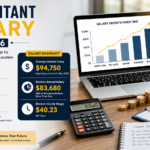
One of the biggest advantages of remote accounting careers is their strong earning potential. Salaries vary based on education, certifications, years of experience, industry specialization, geographic location, and employer size. Although remote positions sometimes adjust compensation based on cost of living, many employers offer nationally competitive salary packages.
Entry level remote accounting assistants and bookkeepers typically earn moderate salaries while gaining practical experience. Staff accountants generally earn higher compensation as they assume greater responsibility for financial reporting and reconciliations. Professionals holding CPA licenses, Certified Management Accountant (CMA) credentials, or specialized tax expertise often command premium salaries.
Senior accounting professionals including controllers, finance managers, tax managers, and accounting directors may earn six figure incomes, particularly in industries such as technology, healthcare, financial services, and consulting. Remote work also enables professionals to pursue freelance consulting opportunities, creating additional income streams beyond traditional employment.
Beyond base salary, many remote accounting positions include benefits such as health insurance, retirement plans with employer matching, paid time off, professional development reimbursement, CPA exam assistance, home office stipends, and performance bonuses. When comparing job offers, candidates should evaluate the entire compensation package rather than salary alone.
Best Websites to Find Remote Accounting Jobs
Finding legitimate remote accounting jobs requires using trusted job platforms and employer websites rather than relying on random social media advertisements. Many reputable companies post remote finance positions directly on their career pages before listing them on third party job boards. Searching multiple sources increases your chances of finding quality opportunities while reducing exposure to fraudulent job postings.
Popular employment websites allow applicants to filter positions by Remote, Work From Home, or Anywhere in the U.S. Candidates can also set up job alerts for keywords such as Remote Staff Accountant, Remote Bookkeeper, Work From Home CPA, or Remote Tax Accountant. This automation ensures youre notified quickly when new openings match your experience level.
Some of the best places to search include
- LinkedIn Jobs
- Indeed
- ZipRecruiter
- FlexJobs
- Robert Half
- Accountingfly
- Upwork (for freelance accounting)
- Fiverr Pro (for bookkeeping and accounting services)
- Company career pages
- Government finance job portals
Networking also remains one of the most effective ways to secure remote accounting positions. Joining professional accounting associations, participating in LinkedIn discussions, attending virtual finance conferences, and connecting with recruiters can lead to opportunities that never appear on public job boards.
Many accounting firms now recruit remotely year round because they serve clients nationwide. Building relationships within the accounting community can significantly shorten your job search and improve your chances of receiving interview invitations.
Certifications That Increase Your Chances of Getting Hired
Professional certifications demonstrate expertise and commitment to continuous learning. Although many entry level accounting jobs only require a bachelors degree, certifications often increase earning potential and make candidates more competitive for remote positions.
The Certified Public Accountant (CPA) credential remains the gold standard in accounting. CPAs are qualified to perform a wide range of accounting, auditing, tax, and advisory services. Many employers specifically require or strongly prefer CPA candidates for senior accounting and managerial roles.
Other valuable certifications include the Certified Management Accountant (CMA), Certified Internal Auditor (CIA), Enrolled Agent (EA), Certified Fraud Examiner (CFE), and Chartered Global Management Accountant (CGMA). These credentials help professionals specialize in management accounting, auditing, taxation, fraud investigation, or international finance.
Software certifications can also strengthen a resume. Employers frequently seek candidates certified in QuickBooks Online, Xero Advisor, Microsoft Excel Expert, Oracle NetSuite, or SAP Financials. Demonstrating proficiency in cloud accounting platforms reassures employers that youll require less onboarding and can contribute immediately.
Investing in professional education also supports long term career growth. Accounting standards, tax regulations, and financial reporting requirements change regularly, making continuing education an essential part of maintaining expertise in the profession.
How to Land a Remote Accounting Job Faster
Competition for remote accounting jobs has increased because applicants can apply nationwide instead of only within commuting distance. Standing out requires a strategic approach that goes beyond simply submitting resumes online.
Start by tailoring your resume for each position. Highlight accounting software proficiency, measurable achievements, industry experience, and remote collaboration skills. Rather than listing responsibilities, quantify accomplishments whenever possible. For example, mention reducing month end closing time by several days, improving invoice collection rates, or identifying cost savings through financial analysis.
A strong LinkedIn profile also plays an important role. Recruiters frequently search LinkedIn for candidates with accounting expertise. Maintaining an updated profile with certifications, software skills, recommendations, and professional accomplishments increases visibility to employers actively recruiting remote finance professionals.
Interview preparation is equally important. Remote interviews often include questions about communication, organization, cybersecurity awareness, and working independently. Employers want confidence that candidates can manage deadlines without constant supervision while maintaining confidentiality of sensitive financial information.
Building a portfolio can further differentiate applicants. While confidential client information should never be shared, candidates can prepare sample financial dashboards, budgeting templates, Excel models, or process improvement case studies that demonstrate technical capabilities and analytical thinking.
Finally, persistence matters. Qualified professionals often apply to dozens of positions before receiving offers. Tracking applications, following up professionally, and continuously refining application materials can significantly improve hiring success over time.
Common Remote Accounting Job Scams and How to Avoid Them
Unfortunately, the popularity of remote work has also attracted scammers who target job seekers. Fraudulent job postings often promise unusually high salaries for minimal qualifications or require applicants to pay upfront fees for training, equipment, or software.
Legitimate employers never ask candidates to purchase gift cards, transfer money, or provide sensitive financial information before completing the hiring process. Be cautious if an employer conducts interviews exclusively through messaging apps, refuses video meetings, or pressures you to accept an offer immediately.
Another common scam involves counterfeit checks. A fake employer may send a check for office equipment and instruct you to purchase supplies from a specific vendor. The check later bounces, leaving you responsible for the lost funds. Reputable companies typically provide equipment directly or reimburse approved purchases through established procedures.
Always research prospective employers before accepting interviews. Verify company websites, LinkedIn pages, business registrations, and employee reviews. If something feels suspicious, trust your instincts and investigate further before sharing personal information.
Protecting your identity is just as important as finding the right job. Never send copies of identification documents or banking information until youve confirmed the legitimacy of the employer and formally accepted a verified job offer.
Remote Accounting Jobs and Personal Financial Planning
A remote accounting career can positively influence your overall financial health. Eliminating daily commuting expenses, reducing transportation costs, lowering work wardrobe expenses, and spending less on meals outside the home can increase disposable income over time.
Many remote accountants redirect these savings toward emergency funds, retirement accounts, debt repayment, or investment portfolios. Contributing consistently to employer sponsored retirement plans, such as a 401(k), especially when matching contributions are available, can significantly improve long term financial security.
Working remotely also requires thoughtful budgeting. Home internet, office furniture, technology upgrades, electricity, and workspace improvements may become recurring expenses. While some employers provide home office stipends, professionals should still maintain budgets that account for these additional costs.
Tax considerations are another important aspect of remote employment. Depending on employment status and state tax laws, remote workers may face different filing requirements. Independent contractors and freelancers generally need to manage estimated tax payments, while traditional employees usually have taxes withheld through payroll. Consulting a qualified tax professional can help ensure compliance and optimize tax planning.
Balancing income growth with responsible financial planning allows remote accounting professionals to maximize the long term benefits of flexible employment while building wealth through disciplined saving and investing.
The Future of Remote Accounting Careers
The future of remote accounting appears promising as organizations continue embracing digital finance operations. Advances in cloud computing, artificial intelligence, robotic process automation (RPA), and machine learning are reshaping accounting workflows rather than eliminating accounting jobs.
Routine tasks such as invoice processing, bank reconciliations, expense categorization, and transaction matching are becoming increasingly automated. This shift allows accountants to focus on higher value activities including financial analysis, strategic planning, forecasting, regulatory compliance, and business advisory services.
Demand is expected to remain strong for professionals who combine accounting expertise with technology skills. Employers increasingly value accountants capable of analyzing financial data, interpreting business trends, supporting executive decision making, and implementing financial software solutions.
Cybersecurity knowledge is also becoming essential. Remote finance professionals handle highly sensitive financial information, making secure data management, fraud prevention, and regulatory compliance critical competencies for future accounting careers.
Continuous learning will remain the key to long term success. Professionals who embrace emerging technologies, pursue advanced certifications, and strengthen analytical capabilities will likely enjoy the greatest career opportunities in the evolving remote accounting landscape.
Conclusion
Remote accounting jobs have evolved from a temporary workplace trend into a permanent component of the modern finance industry. Businesses across virtually every sector now hire accountants, bookkeepers, auditors, payroll specialists, tax professionals, and financial analysts to work remotely using secure cloud based technology.For job seekers, remote accounting careers offer significant advantages, including greater flexibility, competitive salaries, improved work life balance, and access to nationwide employment opportunities. Success, however, requires more than accounting knowledge alone. Employers increasingly seek candidates with strong communication skills, technical software expertise, organizational abilities, cybersecurity awareness, and a commitment to continuous professional development.
You may also read more blogs
FAQs
What are remote accounting jobs?
Remote accounting jobs allow finance professionals to perform accounting tasks from home or another remote location using cloud based accounting software and secure online collaboration tools.
Do I need a CPA license to work remotely as an accountant?
No. Many remote bookkeeping, payroll, accounts payable, and staff accountant positions do not require a CPA license. However, earning a CPA can improve job opportunities, career advancement, and salary potential.
How much do remote accountants earn?
Salaries vary depending on experience, certifications, industry, and location. Entry level roles generally offer moderate pay, while experienced CPAs, controllers, finance managers, and tax specialists can earn well into six figures.
Can beginners get remote accounting jobs?
Yes. Many companies hire entry level accounting assistants, junior accountants, bookkeeping specialists, and payroll coordinators. Strong Excel skills, accounting software knowledge, and internships can improve your chances of being hired.
Which accounting software should I learn?
Popular platforms include QuickBooks Online, Xero, Oracle NetSuite, Sage Intacct, SAP, Microsoft Dynamics 365, and advanced Microsoft Excel. Learning multiple systems makes you more competitive in the job market.
Are remote accounting jobs legitimate?
Yes, many reputable employers offer legitimate remote accounting positions. However, job seekers should verify employers carefully and avoid opportunities that request upfront payments or personal financial information before hiring.
Is remote accounting a good long term career?
Yes. Digital transformation continues increasing demand for remote accounting professionals. Those who develop technical, analytical, and advisory skills are likely to enjoy strong long term career prospects.
Can remote accountants become freelancers?
Absolutely. Many experienced accountants provide freelance bookkeeping, tax preparation, payroll management, financial consulting, and CFO advisory services to multiple clients, creating flexible income opportunities.
What skills are most important for remote accountants?
Key skills include financial reporting, GAAP knowledge, Microsoft Excel, accounting software proficiency, communication, time management, problem solving, attention to detail, and cybersecurity awareness.
How can I improve my chances of getting hired?
Customize your resume, earn relevant certifications, master cloud accounting software, strengthen your LinkedIn profile, prepare thoroughly for remote interviews, network with accounting professionals, and apply consistently to quality opportunities.

I am a professional finance content writer with expertise in personal finance investing, banking, loans, insurance, credit cards, budgeting, and market related topics. I create clear, SEO optimized, and reader friendly finance content that helps audiences understand complex financial concepts in simple words. My goal is to write trustworthy and engaging content that improves search visibility, builds credibility, and supports business growth.