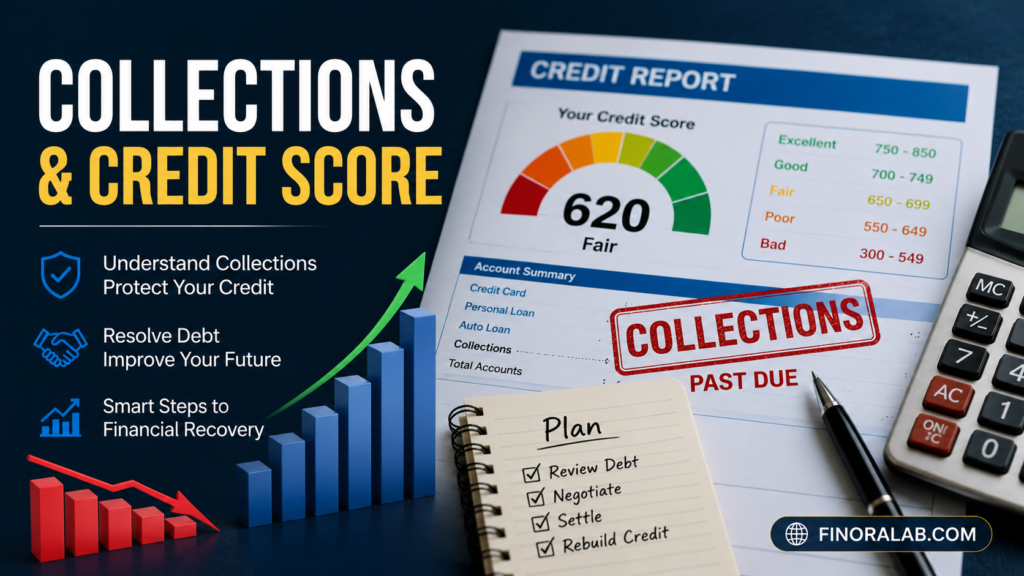
Collections: How to Remove Debt Collections and Fix Your Credit Score Fast
Shanzay Arain·Jul 26, 2026
Collections are one of the most stressful topics in personal finance because they often appear when someone is already facing financial challenges. A collections account usually means that an unpaid debt has moved beyond the original creditor and has been assigned or sold to a debt collection agency. Understanding how collections work can help consumers protect their credit scores, negotiate effectively, and make better financial decisions.
Many people misunderstand collections and assume that a single collection account will permanently damage their financial future. While collection accounts can negatively affect credit reports and borrowing opportunities, consumers have rights, options, and strategies available. By learning how debt collectors operate, how collection accounts impact credit, and what steps can be taken to resolve them, individuals can regain control of their financial situation.
What Are Collections and How Do Debt Collection Accounts Work?
Collections occur when a borrower fails to pay a debt for an extended period and the account becomes seriously delinquent. Typically, a creditor such as a credit card company, medical provider, utility company, lender, or service provider attempts to collect the unpaid balance internally before transferring the account to a collection agency. Once the account enters collections, the consumer usually begins receiving communication from a third party debt collector.
The collection process generally follows several stages. First, the original creditor reports missed payments and attempts recovery. If payment is not received, the account may be charged off or transferred to a collection company. The collection agency then contacts the consumer to request payment. In some cases, the agency purchases the debt for a fraction of its original value and attempts to recover the full balance or negotiate a settlement.
For example, suppose someone has a $2,000 credit card balance that remains unpaid for several months. The credit card company may eventually sell that debt to a collection agency. The agency may have purchased the account for much less than $2,000 but can still legally attempt to collect the full amount, depending on applicable laws and agreements.
Understanding this process is important because many consumers react emotionally when contacted by collectors. Knowing the difference between a legitimate collection account and an inaccurate claim allows individuals to respond strategically instead of making rushed decisions.
How Collections Affect Your Credit Score and Credit Report
Collection accounts can significantly affect credit history because payment behavior is one of the most important factors used in credit scoring models. When an account reaches collections, it signals to lenders that previous payment obligations were not completed as agreed. This can make lenders view the borrower as a higher risk applicant.
The impact of collections depends on several factors, including the credit scoring model being used, the age of the collection account, the amount owed, and the consumers overall credit profile. Newer collection accounts generally have a greater negative effect than older accounts. As time passes, the impact may decrease, especially if the consumer builds positive credit behavior afterward.
Credit reports from the three major U.S. credit bureaus — Equifax, Experian, and TransUnion — may include collection information. Consumers should regularly review their credit reports to check for inaccurate information, duplicate accounts, incorrect balances, or debts that do not belong to them.
For example, a person may discover a collection account for a medical bill they already paid. In this situation, they may have the right to dispute the information and request correction. Monitoring credit reports is an important part of financial planning because errors can affect mortgage approvals, auto loans, insurance pricing, and employment related credit checks.
Different Types of Collections Consumers Should Understand
Collections can involve many different types of debt, and each category may have unique rules and considerations. Credit card collections are among the most common because revolving debt often becomes difficult to manage when interest charges accumulate. When payments are missed for several months, the account may eventually be sent to collections.
Medical collections are another major category. Unexpected healthcare expenses can create financial hardship, even for people with insurance coverage. Medical debt collections have received increased attention because healthcare costs can sometimes result from emergencies rather than poor financial decisions. Consumers should carefully review medical bills before making payments because billing errors are possible.
Other common collection types include student loan collections, utility collections, personal loan collections, rental debt collections, and unpaid service bills. Each type requires a different approach. For instance, resolving a medical collection may involve negotiating with the healthcare provider, while resolving a credit card collection may involve settlement discussions with a collection agency.
Understanding the source of a collection account helps consumers choose the correct solution. Before paying any collection, individuals should confirm the debt details, verify the amount owed, and understand how payment may affect their credit history.
How to Verify a Collection Account Before Making Payments
Before paying a collection agency, consumers should verify that the debt is accurate and belongs to them. This process is known as debt validation. Under the Fair Debt Collection Practices Act (FDCPA), consumers have certain rights when dealing with debt collectors, including the ability to request information about the debt.
A debt validation request can help confirm important details such as the original creditor, account number, amount owed, date of delinquency, and whether the collection agency has authority to collect the debt. This step is especially important because collection mistakes happen, including identity errors, duplicate reporting, and debts that are beyond the legal collection period.
For example, imagine receiving a collection notice for a $900 account you do not recognize. Instead of immediately paying, you can request documentation showing where the debt came from. If the collector cannot provide proper verification, you may have grounds to challenge the collection.
Consumers should also understand the difference between legitimate debt verification and ignoring collectors completely. Avoiding communication may allow problems to continue growing. A better approach is to respond professionally, gather information, and make decisions based on accurate facts.
Strategies to Remove or Resolve Collections
Removing collections from a credit report depends on the situation, the creditor, and applicable reporting rules. One common strategy is disputing inaccurate collection information. If a collection account contains incorrect information, consumers can file disputes with credit bureaus and provide supporting documentation.
Another option is negotiating directly with the collection agency. Some consumers negotiate a settlement where they agree to pay a reduced amount in exchange for resolving the debt. For example, a collector may accept $600 to settle a $1,000 account. However, consumers should understand the terms before making payment because settlement does not always guarantee removal from a credit report.
A pay for delete agreement is another strategy sometimes discussed by consumers. This involves requesting that a collection agency remove the account from credit reporting after payment. However, not all agencies offer this option, and consumers should get any agreement in writing before paying.
Building positive financial habits after resolving collections is equally important. Paying current bills on time, reducing credit card balances, maintaining a healthy credit utilization ratio, and avoiding unnecessary debt can gradually strengthen credit profiles.
Should You Pay Collections or Ignore Them?
Ignoring collections is usually not a recommended financial strategy because unresolved debts may create additional problems. Collection agencies may continue contacting consumers, and depending on state laws and circumstances, creditors may have legal options to pursue repayment.
However, paying a collection immediately without understanding the situation can also create problems. Consumers should first confirm the debt, understand their rights, and determine whether payment is the best option. Financial decisions should consider the age of the debt, current financial situation, and long term goals.
For someone preparing to apply for a mortgage, resolving collections may improve their chances of approval. For another person dealing with multiple debts and limited income, creating a broader debt management plan may be more effective.
The best approach depends on individual circumstances. Consumers should consider budgeting, emergency savings, credit goals, and other financial obligations before deciding how to handle collection accounts.
The Relationship Between Collections, Debt Management, and Financial Planning
Collections are often a symptom of broader financial challenges, such as insufficient budgeting, unexpected expenses, income changes, or excessive borrowing. Addressing only the collection account without improving financial habits may lead to future problems.
Effective debt management begins with understanding income, expenses, and existing obligations. Creating a realistic budget can help identify areas where money can be redirected toward debt repayment. Emergency savings can also reduce reliance on credit cards when unexpected costs occur.
Credit management is another important part of financial planning. Maintaining low credit utilization, making payments on time, and reviewing credit reports regularly can help prevent future collections. Financial education allows consumers to make decisions based on long term goals rather than short term pressure.
For example, someone who resolves a $1,500 collection but continues spending beyond their income may face similar challenges again. A complete financial strategy includes debt resolution, budgeting, saving, and responsible credit use.
How Collections Influence Loans, Credit Cards, and Major Financial Decisions
Collection accounts can affect access to financial products because lenders evaluate credit history when determining risk. A borrower with recent collections may face higher interest rates, stricter approval requirements, or loan rejection.
Mortgage lenders often pay close attention to collection accounts because buying a home involves significant financial responsibility. Auto lenders and credit card issuers also review credit history when making approval decisions.
However, collections are not the only factor considered. Income, employment stability, debt to income ratio, savings, and overall financial behavior also influence lending decisions. Someone with an older collection account but strong current financial habits may have better opportunities than someone with no collections but poor recent credit management.
Consumers should focus on improving their complete financial profile rather than only removing one negative item. Responsible borrowing habits, consistent payments, and smart budgeting create stronger financial foundations over time.
Common Mistakes People Make When Handling Collections
One common mistake is paying a collection without confirming the debt. Consumers may accidentally pay incorrect or outdated accounts. Verification should come before payment decisions.
Another mistake is believing that paying a collection automatically removes it from a credit report. Payment can resolve the debt, but credit reporting outcomes depend on multiple factors. Consumers should understand what payment will and will not accomplish before agreeing to terms.
Some people also communicate with collectors emotionally or provide unnecessary personal information. A professional approach is usually more effective. Consumers should keep records of communication, request written agreements, and avoid making promises they cannot afford.
Finally, ignoring financial problems can allow them to become larger. Collections are easier to manage when addressed early. Creating a plan, seeking reliable financial education, and understanding consumer rights can make the process less overwhelming.
How to Prevent Future Collections and Build Stronger Financial Health
Preventing collections starts with proactive financial management. Paying bills on time, tracking expenses, maintaining emergency savings, and reviewing account statements regularly can reduce the risk of unpaid obligations.
Automatic payments and financial reminders can help prevent missed due dates. However, consumers should monitor bank accounts to avoid overdrafts. A strong budgeting system should include essential expenses, debt payments, savings goals, and unexpected costs.
Credit awareness is also important. Checking credit reports regularly helps identify problems early. Understanding credit scores, interest rates, and borrowing costs allows consumers to make better decisions before financial issues occur.
Long term financial health comes from consistent habits. Collections may be a temporary setback, but responsible money management can help individuals rebuild confidence, improve creditworthiness, and achieve future financial goals.
Conclusion
Collections can create significant financial stress, but understanding how they work gives consumers more control over their options. A collection account does not define someones entire financial future. With proper knowledge, individuals can verify debts, negotiate solutions, protect their credit, and develop stronger financial habits.The most effective approach combines immediate action with long term planning. Resolving existing collections is important, but preventing future debt problems through budgeting, saving, credit management, and responsible borrowing creates lasting financial stability.
A collections account on a credit report means an unpaid debt has been transferred or assigned to a collection agency. It usually appears after the original creditor has attempted to recover payment and the account becomes seriously overdue.
How long do collections stay on a credit report?
In many cases, collection accounts can remain on credit reports for up to seven years from the date of the original delinquency. The exact impact depends on reporting rules and the credit scoring model used.
Does paying collections improve your credit score?
Paying collections may help resolve outstanding debt, but the effect on credit scores depends on the scoring model and the rest of your credit history. Some newer scoring models treat paid collections differently than older models.
Can I remove a collection account from my credit report?
A collection account may be removed if it is inaccurate, cannot be verified, or if the reporting company agrees to remove it under certain circumstances. Consumers should dispute incorrect information and maintain documentation.
Should I negotiate with a debt collector?
Negotiating with a debt collector can be an option for many consumers. Before agreeing to payment terms, verify the debt and request written confirmation of any settlement agreement.
Can collections prevent me from getting a loan?
Collections can make borrowing more difficult because lenders may view them as a sign of repayment risk. However, lenders also consider income, debt levels, savings, and overall credit history.
What is the difference between a charge off and a collection?
A charge off happens when a creditor considers an account unlikely to be collected and records it as a loss. A collection occurs when the debt is transferred or assigned to a collection agency for recovery.
How can I rebuild my credit after collections?
Consumers can rebuild credit by paying bills on time, reducing credit card balances, maintaining low credit utilization, checking credit reports, and developing consistent financial habits.
Can debt collectors contact me anytime?
Debt collectors must follow federal and state consumer protection laws regarding communication practices. Consumers have rights regarding how and when collectors contact them.
Are all collection accounts legitimate?
No. Collection errors can happen due to incorrect reporting, identity mistakes, or outdated information. Consumers should verify collection accounts before making payments.
I am a professional finance content writer with expertise in personal finance investing, banking, loans, insurance, credit cards, budgeting, and market related topics. I create clear, SEO optimized, and reader friendly finance content that helps audiences understand complex financial concepts in simple words. My goal is to write trustworthy and engaging content that improves search visibility, builds credibility, and supports business growth.
I am a professional finance content writer with expertise in personal finance investing, banking, loans, insurance, credit cards, budgeting, and market related topics. I create clear, SEO optimized, and reader friendly finance content that helps audiences understand complex financial concepts in simple words. My goal is to write trustworthy and engaging content that improves search visibility, builds credibility, and supports business growth.